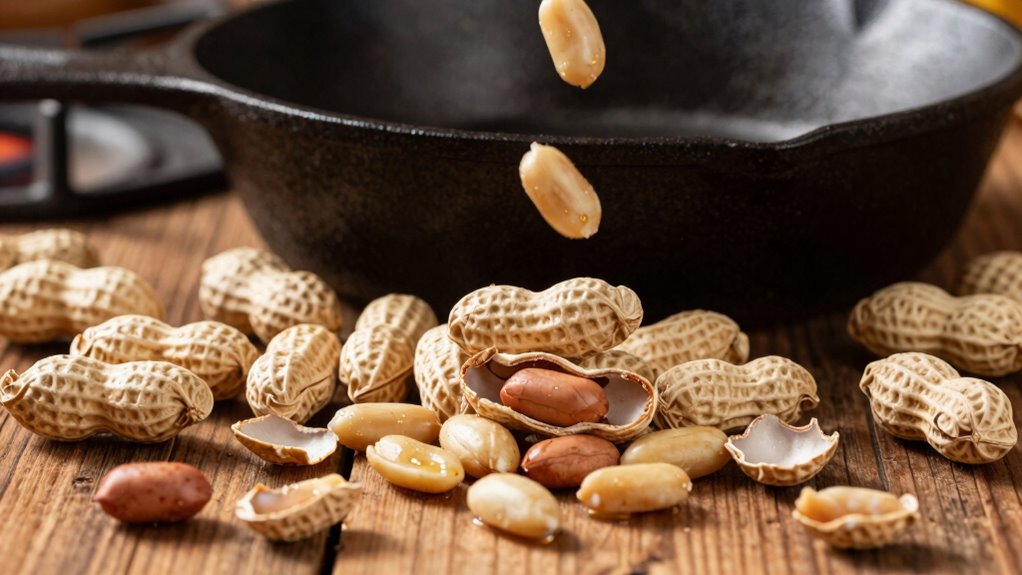

When peanuts taste raw despite heating, it’s often because they haven’t been roasted properly. Proper roasting develops their natural oils and complex flavors, making them taste toasted and rich. If they’re under-roasted or heated at too low a temperature, they may remain bland or raw. The right temperature and technique are key to *unleashing* their full flavor. Keep exploring, and you’ll discover the secrets to perfectly roasted peanuts for your cooking needs.

Get kitchen staples and gadgets delivered free — and shop member deals
- Fast, free delivery on millions of items
- Access to Prime Big Deal Days deals on October 6–7
- Prime Video, Amazon Music and more included
Key Takeaways
- Insufficient roasting time or temperature can leave peanuts tasting raw despite heating.
- Overly high heat may burn outer layers, preventing proper flavor development inside.
- Peanuts need even, consistent heat to fully develop their nutty, toasted flavors.
- Using the wrong roasting method or uneven spreading can result in underdeveloped taste.
- Improper storage or processing might affect flavor, making peanuts taste raw even after heating.
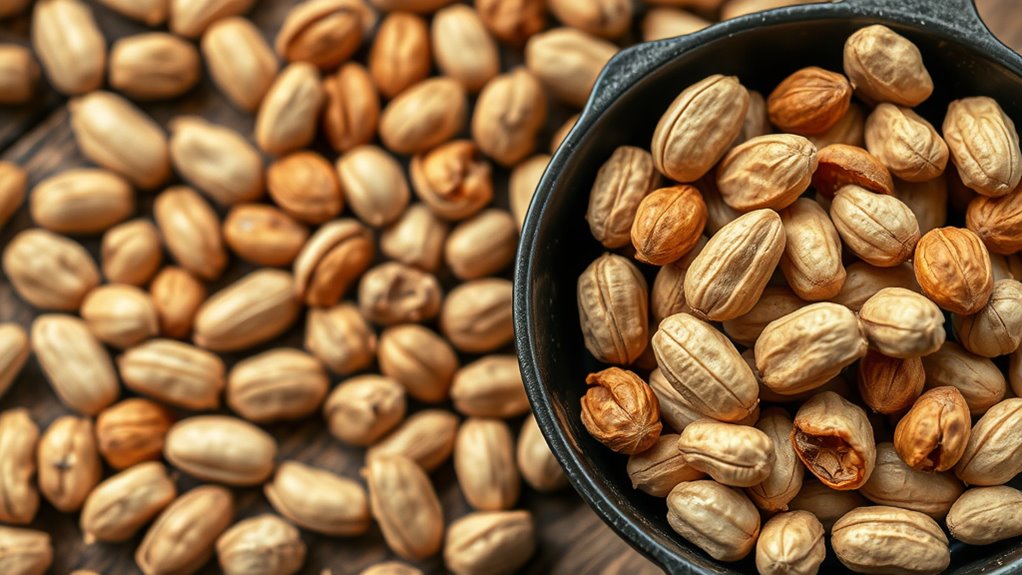
Have you ever wondered how peanuts can elevate your cooking? It’s fascinating because, despite their popularity in countless recipes, they often taste surprisingly raw even after you’ve heated them. The key lies in understanding their nut flavor profiles and how roasting techniques influence their taste and aroma. Peanuts have a complex range of flavors that can be subtle or robust, depending on how they’re processed. When raw, they tend to have a mild, somewhat earthy taste, but roasting transforms these flavors, developing nutty, sweet, and toasted notes that deepen their appeal. Yet, even when you roast them, some peanuts retain a raw-like flavor if not roasted properly, which can throw off the intended flavor profile of your dish. That’s why mastering roasting techniques is *vital* if you want to bring out their full potential.
Roasting isn’t just about heating peanuts; it’s about carefully controlling temperature and time to *reveal* their flavor profiles. Proper roasting techniques involve spreading peanuts evenly on a baking sheet and applying consistent heat, usually around 350°F (175°C), for a specific duration. This process enhances their natural oils, making their nut flavor profiles richer and more complex. When you roast peanuts too quickly or at too high a temperature, you risk burning the outer layers while leaving the insides underdeveloped, which results in an uneven flavor. Conversely, roasting too lightly or briefly might not activate enough aroma and flavor compounds, leaving the peanuts tasting bland or even raw.
You can also experiment with different roasting techniques, such as dry roasting in the oven or pan roasting on the stovetop, each offering distinct flavor nuances. Dry roasting tends to bring out a deeper, toasted flavor, whereas oil roasting can add a slight richness and smoothness. Once roasted, peanuts can be used in various ways—chopped into salads, blended into sauces, or ground into peanut butter—but their flavor is at its peak when properly roasted. Remember, the goal is to enhance their nut flavor profiles without losing the fresh, natural essence that makes peanuts so versatile.
As an affiliate, we earn on qualifying purchases.
Frequently Asked Questions
Why Do Peanuts Sometimes Taste Raw Even After Cooking?
You might notice peanuts still taste raw after cooking because improper cooking techniques or insufficient heat can prevent the peanut flavor from developing fully. Peanuts need thorough roasting or boiling to bring out their nutty taste, and uneven heat can leave some parts undercooked. To avoid this, make certain you cook peanuts evenly at the right temperature, giving enough time for the flavors to deepen and taste fully roasted.
Can Roasting Peanuts Eliminate Their Raw Flavor?
As you scoop warm peanuts from the oven, you’ll notice their rich aroma hints at a deeper flavor. Roasting peanuts can eliminate their raw taste, especially if you use proper roasting techniques like even heat and sufficient time. This process enhances their peanut texture, making them crisp and flavorful. Keep an eye on them to prevent burning, ensuring they develop that perfect toasted flavor without remaining raw.
Are There Specific Cooking Methods That Prevent Peanuts From Tasting Raw?
You can avoid peanuts from tasting raw by using high-temperature roasting or frying, which promotes better flavor development. Using peanut oil for sautéing or deep-frying helps enhance their aroma and taste, making them less likely to taste raw. Properly preheating your oven or pan ensures even heat distribution, allowing the peanuts to cook thoroughly and develop rich flavors without any raw notes.
Do Different Peanut Varieties Affect Their Flavor When Cooked?
Did you know that over 90% of commercial peanuts are of the Virginia or Runner varieties? These impact peanut flavor when cooked, as different peanut varieties like Spanish or Valencia have unique nutty profiles. Roasting techniques also influence flavor; some varieties respond better to high heat, enhancing their richness. So, choosing the right peanut type and roasting method can considerably improve your dish’s flavor and guarantee a perfectly roasted taste.
How Does Storage Affect the Raw Taste of Peanuts?
Your peanut storage habits considerably impact their raw taste. If you store peanuts in a cool, airtight container, you help preserve their natural flavor and prevent them from turning stale or rancid. Exposure to heat, light, or moisture accelerates flavor loss, making them taste fresher longer. Proper storage keeps your peanuts flavorful and maintains their quality, ensuring they taste just right whether eaten raw or cooked.
As an affiliate, we earn on qualifying purchases.
Conclusion
So, next time you heat peanuts and they still taste raw, remember—they’re like that stubborn friend who refuses to change, even when you try. Their raw flavor lingers, despite the heat, reminding you that some things need more time or different methods. Just like patience in cooking, sometimes you have to wait for those flavors to fully develop. Embrace the journey, and your peanuts will reward you with the taste you’re craving.
As an affiliate, we earn on qualifying purchases.
As an affiliate, we earn on qualifying purchases.
Evergreen bestsellers Picks
bestsellers
As an affiliate, we earn on qualifying purchases.