Wireless thermometer sensors for a fridge and freezer help you spot temperature changes without opening either appliance, but the right pick depends on whether you need a nearby alarm or alerts when you’re away. I’d start with the MOCREO H5Pro for its Wi-Fi monitoring and two waterproof sensors; the GoveeLife WiFi Refrigerator Thermometer 2-Pack is a strong alternative with a gateway and display, while the YoLink Freezer Thermometer Hygrometer Kit suits households that want several monitored locations. The main tradeoffs are local versus remote alerts, number of sensors, hub requirements, and how well a signal reaches through appliance walls. Read on for the full comparison and guidance on matching a sensor system to your refrigerator and freezer.

Get kitchen staples and gadgets delivered free with Prime
- Fast, free delivery on millions of items
- Prime Video, Amazon Music and more included
- Member-only deals all year
Key Takeaways
- MOCREO H5Pro leads the lineup for buyers seeking Wi-Fi monitoring with two IP66 waterproof sensors, though app-based monitoring may be more than a nearby-only setup needs.
- GoveeLife’s two-sensor kits combine Wi-Fi connectivity, a gateway, and an LCD display, making them a notable fit for households that want remote checks plus a local readout.
- YoLink’s three-pack options prioritize coverage across multiple storage locations; several require a hub, so check what the kit includes before choosing.
- AcuRite, U UNNI, BaldrTherm, AMIR, and generic alarm models represent a simpler local-monitoring direction, where a receiver and audible alerts can matter more than app access.
- More sensors do not automatically mean better refrigerator monitoring: match the sensor count to the number of compartments you need to watch, and verify freezer temperature range, alert behavior, and signal reach.
| MOCREO H5Pro WiFi Remote Thermometer |  | Best for Long-Range Monitoring | Temperature Range: -4°F to 131°F | Accuracy: ±0.9°F | Wireless Range: 1/3 mile (1640 ft) open air | VIEW ON AMAZON | See Our Full Breakdown |
| YoLink Freezer Thermometer Hygrometer Kit | 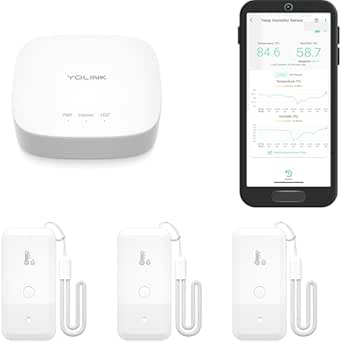 | Best for Multi-Location Coverage | Connectivity Technology: LoRa | Temperature Accuracy: ±0.36 °F (0 °C‑54 °C) | Battery Life: Up to 5 years | VIEW ON AMAZON | See Our Full Breakdown |
| AcuRite Digital Wireless Fridge and Freezer Thermometer (00515M) |  | Best for Simplicity and Local Display | Display Type: LCD Digital | Connectivity: Wireless Radio | Power Source: Battery Powered (7 AA) | VIEW ON AMAZON | See Our Full Breakdown |
| Digital Wireless Refrigerator Thermometer with Alarm |  | Best Compact Display with Backlight | Display Size: 4.5 inches | Temperature Range: -40ºF to +158ºF | Accuracy: +/-1.8ºF | VIEW ON AMAZON | See Our Full Breakdown |
| GoveeLife WiFi Refrigerator Thermometer 2-Pack | 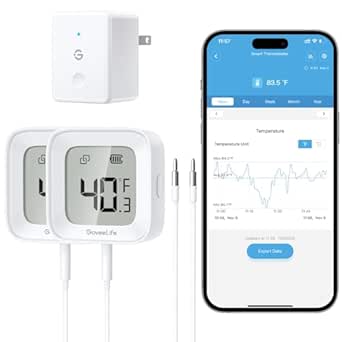 | Best for Smart Home Integration | Connectivity: WiFi (2.4GHz) & Bluetooth | Temperature Range: -40°F to 158°F | Accuracy: ±0.9°F / 0.5°C | VIEW ON AMAZON | See Our Full Breakdown |
| YoLink Smart Wireless Temperature & Humidity Sensor (3-Pack) |  | Best for Smart Home Integration | Connectivity: LoRa-based wireless protocol | Number of Sensors: 3 | Humidity Monitoring: Yes | VIEW ON AMAZON | See Our Full Breakdown |
| U UNNI Wireless Refrigerator & Freezer Thermometer with Alarm |  | Best for High-Visibility Display | Brand: U UNNI | Display Size: 4.5 inches | Temperature Range: -40°F to 158°F | VIEW ON AMAZON | See Our Full Breakdown |
| BaldrTherm Digital Wireless Refrigerator Freezer Thermometer with 3 Remote Sensors |  | Best for Multi-Zone Monitoring | Brand: BaldrTherm | Transmission Range: 328 ft (100 m) | Temperature Range: -40°F to 158°F (-40°C to 70°C) | VIEW ON AMAZON | See Our Full Breakdown |
| AcuRite Wireless Fridge and Freezer Thermometer with Alarm (00523M) |  | Best for Versatile Mounting | Brand: AcuRite | Model Number: 00523M | Display Type: Digital LCD | VIEW ON AMAZON | See Our Full Breakdown |
| AcuRite Digital Wireless Fridge and Freezer Thermometer with Alarm, Max/Min Temperature, LCD Display, White |  | Best Budget-Friendly Simplicity | Display Type: LCD | Temperature Range: -40°F to 100°F (-40°C to 37°C) | Power Source (Display): Battery Powered (2 AAA) | VIEW ON AMAZON | See Our Full Breakdown |
| YoLink Smart Wireless Thermometer Hygrometer, 3-Pack |  | Best for Humidity Monitoring | Temperature Range: -4°F to 129°F (-20°C to 54°C) | Humidity Range: 0% to 100% | Temperature Accuracy: ±0.36°F (0°C to 54°C), ±0.72°F (-20°C to 0°C) | VIEW ON AMAZON | See Our Full Breakdown |
| AMIR Wireless Refrigerator Thermometer with Alarm |  | Best Budget Standalone | Brand: AMIR | Indoor Temperature Range: -10°C to 60°C (14°F to 140°F) | Outdoor Temperature Range: -40°C to 60°C (-40°F to 140°F) | VIEW ON AMAZON | See Our Full Breakdown |
| Wireless Freezer & Fridge Thermometer with Alarm |  | Best Display Visibility | Temperature Range: -58 °F to 158 °F | Humidity Range: 20%–95% | Accuracy: ±1.8 °F temperature, ±5% humidity | VIEW ON AMAZON | See Our Full Breakdown |
| YoLink Freezer Temperature Sensor Kit – 3-Pack with Hub |  | Best Long-Range Smart Sensor | Connectivity Technology: LoRa | Upper Temperature Range: 122 °F | Temperature Accuracy: ±0.36 °F (32‑129 °F range) | VIEW ON AMAZON | See Our Full Breakdown |
| GoveeLife WiFi Refrigerator Thermometer Sensor with Alarm (2-Pack & Gateway) | 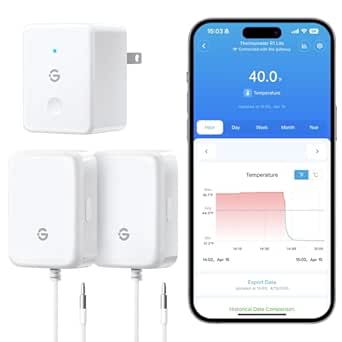 | Best for Wi-Fi Users | Brand: GoveeLife | Connectivity: 2.4G Wi-Fi, Bluetooth | Temperature Range: -40°F to 158°F (-40°C to 70°C) | VIEW ON AMAZON | See Our Full Breakdown |
| wireless thermometer sensors for fridge and freezer | Temperature Range |
|---|---|
| MOCREO H5Pro WiFi Remote Therm | -4°F to 131°F |
| YoLink Freezer Thermometer Hyg | — |
| AcuRite Digital Wireless Fridg | — |
| Digital Wireless Refrigerator | -40ºF to +158ºF |
| GoveeLife WiFi Refrigerator Th | -40°F to 158°F |
| YoLink Smart Wireless Temperat | — |
| U UNNI Wireless Refrigerator & | -40°F to 158°F |
| BaldrTherm Digital Wireless Re | -40°F to 158°F (-40°C to 70°C) |
| AcuRite Wireless Fridge and Fr | — |
| AcuRite Digital Wireless Fridg | -40°F to 100°F (-40°C to 37°C) |
| YoLink Smart Wireless Thermome | -4°F to 129°F (-20°C to 54°C) |
| AMIR Wireless Refrigerator The | — |
| Wireless Freezer & Fridge Ther | -58 °F to 158 °F |
| YoLink Freezer Temperature Sen | — |
| GoveeLife WiFi Refrigerator Th | -40°F to 158°F (-40°C to 70°C) |
More Details on Our Top Picks
MOCREO H5Pro WiFi Remote Thermometer
This system stands out for its exceptional wireless range, capable of maintaining connectivity up to one-third of a mile in open air. Compared to the AcuRite Model 00515M, which relies on shorter-range radio frequencies, the MOCREO H5Pro uses a hub with multiple connectivity options (Wi-Fi, Ethernet, BLE, LoRa), making it far more robust for large properties or detached garages. The IP66 waterproof rating is a key differentiator, allowing sensors to be placed in humid freezers or outdoor environments without degradation. However, the reliance on 2.4 GHz Wi-Fi or a wired connection means it requires a stable network infrastructure, unlike standalone units. If you need to monitor a deep freezer in a basement or a greenhouse far from your main house, this model offers the reliability that shorter-range competitors lack.Pros:- Unmatched wireless range of up to 1/3 mile in open air
- IP66 waterproof sensors withstand condensation and humidity
- No subscription fees for data export and alerts
- Versatile hub connectivity including Ethernet and LoRa
Cons:- Requires 2.4 GHz Wi-Fi or Ethernet for the hub to function
- Metal freezer doors may interfere with signal strength
- Auto-defrost cycles can trigger false alarms if not tuned
Best for: Homeowners with large properties, detached garages, or outbuildings who need reliable monitoring over long distances.
Not ideal for: Users without a stable 2.4 GHz Wi-Fi network or those who prefer a completely offline, subscription-free standalone display.
- Temperature Range:-4°F to 131°F
- Accuracy:±0.9°F
- Wireless Range:1/3 mile (1640 ft) open air
- Connectivity:Wi-Fi (2.4 GHz), Ethernet, BLE, LoRa
- Battery Life:Up to 2 years
- Sensor Protection:IP66 Waterproof
Our verdict“This is the go-to choice for monitoring freezers in distant locations where standard wireless sensors lose signal.”
YoLink Freezer Thermometer Hygrometer Kit
The YoLink kit shines with its LoRa connectivity, which bypasses Wi-Fi congestion and penetrates thick walls better than standard 2.4 GHz signals found in the GoveeLife WiFi Refrigerator Thermometer. Including three sensors in one package makes this the most cost-effective entry point for monitoring multiple zones, such as a fridge, a chest freezer, and a pantry. The ±0.36°F accuracy is notably precise, providing peace of mind for storing sensitive items like vaccines or premium cuts of meat. A significant tradeoff is the lack of a local display; you must rely on the app for all readings, which can be inconvenient if you want a quick glance without pulling out your phone. However, the five-year battery life significantly reduces maintenance compared to options requiring annual battery swaps.Pros:- Includes three sensors and a hub for multi-zone coverage
- LoRa technology offers superior wall penetration and range
- Extremely high precision with ±0.36°F accuracy
- Up to five-year battery life minimizes maintenance
Cons:- No built-in display requires app usage for all readings
- Humidity data is not accessible via Alexa voice queries
- Requires the proprietary YoLink hub for operation
Best for: Users who need to monitor multiple distinct zones simultaneously and want low-maintenance, long-battery-life sensors.
Not ideal for: People who prefer checking temperatures on a dedicated countertop display rather than via a smartphone app.
- Connectivity Technology:LoRa
- Temperature Accuracy:±0.36 °F (0 °C‑54 °C)
- Battery Life:Up to 5 years
- Sensors Included:3
- Humidity Measurement:0%–100%
- Range:Up to 2,034 ft
Our verdict“Ideal for those scaling up monitoring to multiple appliances or rooms who prioritize battery life and app-based precision.”
AcuRite Digital Wireless Fridge and Freezer Thermometer (00515M)
This model appeals to users who want immediate visual feedback without opening an app. Unlike the YoLink kit which is app-dependent, the AcuRite provides a clear LCD countertop display that shows current, max, and min temperatures at a glance. It comes with dedicated sensors for both the fridge and freezer, simplifying the setup process. The customizable alarms are straightforward and effective for catching temperature spikes. However, the tradeoff is its limited wireless range and lack of smart home integration; it does not send emails or push notifications. It is a purely local system. While it lacks the advanced data logging of the MOCREO or GoveeLife systems, its simplicity makes it perfect for those who find smart home setups overly complex.Pros:- Clear LCD display shows real-time and historical data locally
- Includes dedicated sensors for both fridge and freezer
- Versatile mounting options including magnet and stand
- Customizable high/low alarms with audible alerts
Cons:- No remote alerts via email or push notification
- Shorter wireless range compared to Wi-Fi or LoRa systems
- Sensors are rated for indoor use only
Best for: Users who prefer a dedicated local display and simple, no-nonsense temperature monitoring without app dependencies.
Not ideal for: People who need remote alerts via phone or email when away from home, or those with large properties.
- Display Type:LCD Digital
- Connectivity:Wireless Radio
- Power Source:Battery Powered (7 AA)
- Upper Temperature Range:122 °F
- Response Time:500 ms
- Resolution:1°F
Our verdict“A straightforward, reliable choice for households that want a visible thermometer on the counter rather than notifications on a phone.”
Digital Wireless Refrigerator Thermometer with Alarm
This unit distinguishes itself with a large 4.5-inch display that includes an adjustable backlight, making it easier to read in dim kitchens compared to the smaller screens on the AcuRite 00515M. The inclusion of USB power support for the display is a thoughtful touch, eliminating the need to replace batteries in the main unit frequently. It offers solid accuracy with a Swiss-made sensor and records max/min temperatures effectively. However, the wireless range is modest at 328 feet, which is less robust than the MOCREO or YoLink systems. Additionally, the display backlight tends to turn off quickly in battery mode to save power, which can be annoying if you rely on it in dark environments. It is a strong contender for renters or apartment dwellers who want a prominent, easy-to-read display.Pros:- Large 4.5-inch display with adjustable backlight
- USB power option for the display reduces battery usage
- High-accuracy Swiss-made sensor
- Loud 90dB alarm for immediate local notification
Cons:- Backlight turns off quickly when running on batteries
- Limited wireless range of 328 feet
- No smartphone app or remote alert capabilities
Best for: Apartment dwellers or renters who want a large, backlit display and dual-sensor monitoring without complex smart home integration.
Not ideal for: Users needing remote smartphone alerts or those with thick walls that block standard wireless signals.
- Display Size:4.5 inches
- Temperature Range:-40ºF to +158ºF
- Accuracy:+/-1.8ºF
- Wireless Range:328 feet / 100 meters
- Power Sources:USB and Batteries
- Update Interval:30 seconds
Our verdict“Choose this for its superior readability and large screen, ideal for kitchens where visibility is a priority.”
GoveeLife WiFi Refrigerator Thermometer 2-Pack
The GoveeLife system balances smart features with a local display, offering a middle ground between the app-only YoLink and the display-only AcuRite. Its anti-false alarm technology is a significant advantage, preventing notification spam when you briefly open the fridge door—a common annoyance with other Wi-Fi sensors. The 2-second refresh rate ensures rapid detection of temperature changes, outperforming the slower update intervals of basic digital thermometers. However, it requires a separate gateway to connect to the internet for remote alerts, adding a component to your setup. While it includes an LCD display, it lacks the audible local siren found on the AcuRite, relying primarily on phone notifications. This makes it perfect for tech-savvy users who want detailed data logging and reliable alerts without false positives.Pros:- Smart anti-false alarm logic reduces notification spam
- Fast 2-second refresh rate for quick temperature changes
- Includes LCD display for local viewing and app for remote
- 2 years of free data storage with export options
Cons:- Requires a separate Wi-Fi gateway for remote alerts
- No audible local alarm from the display unit
- Limited to 2.4 GHz Wi-Fi networks only
Best for: Tech-savvy users who want smart alerts, data history, and a local display without being overwhelmed by false alarms.
Not ideal for: Users without a dedicated Wi-Fi gateway port or those who prefer a purely audible local alarm over phone notifications.
- Connectivity:WiFi (2.4GHz) & Bluetooth
- Temperature Range:-40°F to 158°F
- Accuracy:±0.9°F / 0.5°C
- Response Time:2 seconds
- Data Storage:2 years free online
- Range:Up to 197 ft from gateway
Our verdict“The best choice for smart home enthusiasts who value accurate, spam-free alerts and a hybrid display/app interface.”
YoLink Smart Wireless Temperature & Humidity Sensor (3-Pack)
This 3-pack stands out for its LoRa-based connectivity, which extends far beyond typical WiFi range without congesting your home network. Unlike the U UNNI Wireless Refrigerator & Freezer Thermometer, which relies on a dedicated RF signal to a local display, YoLink pushes data to the cloud, enabling remote monitoring via app, email, and SMS. This makes it ideal for users who want to check fridge temperatures while away on vacation. However, the requirement for a separate hub adds complexity and cost compared to standalone units like the AcuRite 00523M. If you already own a YoLink hub, this is a seamless expansion; if not, the added hardware hurdle may outweigh the convenience of remote alerts.Pros:- LoRa technology offers superior range and low power consumption
- Includes batteries with a lifespan exceeding two years
- Supports multiple alert channels including SMS and email
Cons:- Requires a dedicated hub for full functionality
- Limited SMS alerts (5 per month) restrict frequent notifications
Best for: Smart home enthusiasts who already use YoLink hubs and want remote access via smartphone.
Not ideal for: Users seeking a plug-and-play solution without additional hubs or cloud subscriptions.
- Connectivity:LoRa-based wireless protocol
- Number of Sensors:3
- Humidity Monitoring:Yes
- Batteries:2 AAA batteries, included
- Battery Life:Over 2 years
- Hub Required:Yes
- App Alerts:Yes
- Email Alerts:Yes
- SMS Alerts:Yes, up to 5 messages per device per month
Our verdict“Choose this if you want app-based remote monitoring and already have a compatible smart home ecosystem.”
U UNNI Wireless Refrigerator & Freezer Thermometer with Alarm
The U UNNI distinguishes itself with a large 4.5-inch LCD display, making it significantly easier to read from across the kitchen than the compact screens on the AcuRite 00523M. It uses a Swiss-made sensor for high accuracy (-40°F to 158°F) and includes two sensors, allowing simultaneous monitoring of fridge and freezer zones. The 90dB alarm is notably louder than many competitors, ensuring you hear an alert even from another room. However, the display turns off after 10 seconds on battery power, requiring a button press to view current temps, which is less convenient than always-on displays. It is a strong choice for those prioritizing legibility and audible warnings over smart features.Pros:- Large 4.5-inch LCD display for easy readability
- High-precision Swiss-made sensor
- Loud 90dB alarm ensures alerts are heard
- Flexible power options with USB and battery support
Cons:- Screen auto-off feature requires manual wake-up on battery
- Batteries are not included in the package
Best for: Users who need a large, easy-to-read display and a loud alarm for immediate local alerts.
Not ideal for: Tech-savvy users who prefer checking temperatures remotely via smartphone apps.
- Brand:U UNNI
- Display Size:4.5 inches
- Temperature Range:-40°F to 158°F
- Accuracy:+/- 1.8°F
- Transmission Range:328 ft / 100 m
- Power Source:USB and Battery
- Alarm Volume:90 dB
- Included Components:1 indoor thermometer, 2 outdoor sensors, 1 USB cable, manual
Our verdict“This model is best for those who want a simple, high-contrast display and a powerful local alarm system.”
BaldrTherm Digital Wireless Refrigerator Freezer Thermometer with 3 Remote Sensors
BaldrTherm caters to users managing multiple cold storage areas by including three remote sensors, compared to the standard two found in the U UNNI or AcuRite models. This allows monitoring of a fridge, freezer, and a third zone like a wine cellar or pantry simultaneously. The solar-powered display with an auto-adjusting backlight reduces the need for frequent battery changes, a distinct advantage over battery-only units. However, the setup process involves pairing three sensors, which can be more tedious than simpler two-sensor kits. In dark environments, solar charging efficiency drops, potentially limiting the battery-saving benefit. This is a robust choice for homes with multiple distinct cooling zones.Pros:- Monitors up to three distinct zones with included sensors
- Solar-assisted power extends battery life significantly
- Long 328-foot transmission range covers large homes
Cons:- Initial setup requires pairing multiple sensors
- Solar charging is less effective in low-light areas
Best for: Households or small businesses needing to monitor three separate temperature zones simultaneously.
Not ideal for: Users who want the simplest possible setup with minimal pairing steps.
- Brand:BaldrTherm
- Transmission Range:328 ft (100 m)
- Temperature Range:-40°F to 158°F (-40°C to 70°C)
- Accuracy:±1°C
- Refresh Rate:30 seconds
- Power Source:Solar Photovoltaic / Alkaline Battery
- Item Weight:300 g
Our verdict“Pick this if you need to track more than two temperature zones and want to minimize battery maintenance.”
AcuRite Wireless Fridge and Freezer Thermometer with Alarm (00523M)
The AcuRite 00523M offers exceptional flexibility with magnetic, wall, and stand mounting options, allowing you to place the display exactly where it is visible. It monitors both fridge and freezer zones on a single unit, similar to the U UNNI, but adds historical temperature tracking (high/low records) which is invaluable for diagnosing intermittent cooling issues. While the AcuRite B004QJVU78 is a simpler alternative, the 00523M’s silicone casing and robust design feel more durable. A significant drawback is the battery consumption; it requires seven AA batteries, and lithium batteries are recommended for freezer sensors to maintain accuracy in deep cold, which adds to long-term costs.Pros:- Versatile mounting options including magnetic backing
- Tracks historical high and low temperatures
- Customizable audible and visual alarms
Cons:- High battery consumption (7 AA batteries required)
- Lithium batteries needed for optimal freezer accuracy
Best for: Users who value historical data logging and flexible placement options for the display unit.
Not ideal for: Budget-conscious buyers who want to minimize ongoing battery replacement costs.
- Brand:AcuRite
- Model Number:00523M
- Display Type:Digital LCD
- Power Source:Battery Powered
- Batteries Required:7 AA batteries
- Upper Temperature Range:100 °F
- Material:Silicone
- Warranty:1 Year Limited
Our verdict“This is the best choice for those who want diagnostic data and flexible display placement.”
AcuRite Digital Wireless Fridge and Freezer Thermometer with Alarm, Max/Min Temperature, LCD Display, White
As a more basic entry in the AcuRite lineup, this model strips away some of the bells and whistles found in the AcuRite 00523M, focusing on reliable max/min temperature recording and straightforward wireless transmission. It uses separate sensors for the fridge and freezer, transmitting to a compact display. While it lacks the advanced historical logging interface of its sibling, it remains a dependable workhorse for basic safety monitoring. The suction cup and clip options for sensors offer secure attachment without adhesive damage. However, like many competitors, it does not include batteries, and the sensor response time is slower than high-end digital models, potentially delaying alerts by a few minutes.Pros:- Simple setup with wireless dual sensors
- Records max/min temperatures for troubleshooting
- Secure sensor mounting with suction cups and clips
Cons:- Batteries not included for display or sensors
- Slower response time compared to premium digital models
Best for: Users looking for a no-frills, reliable thermometer for basic fridge and freezer safety.
Not ideal for: Those who need real-time app connectivity or advanced data visualization features.
- Display Type:LCD
- Temperature Range:-40°F to 100°F (-40°C to 37°C)
- Power Source (Display):Battery Powered (2 AAA)
- Power Source (Sensor):Battery Powered (2 AA)
- Response Time:500 milliseconds
- Battery Life:8760 hours
- Material:Silicone
- Warranty:1-year limited
Our verdict“A solid, straightforward option for those who want reliable alerts without complex features.”
YoLink Smart Wireless Thermometer Hygrometer, 3-Pack
This YoLink 3-pack stands out because it measures both temperature and humidity, a feature many dedicated fridge sensors lack. While most competitors like the AMIR Wireless Refrigerator Thermometer focus solely on temperature, this model gives you a fuller picture of your storage environment, which is valuable if you store produce or sensitive items that degrade with moisture changes. The LoRa connectivity offers superior range compared to standard RF sensors, ensuring stable signals even in large homes. However, the requirement for a hub adds complexity and cost compared to standalone units. If you only need to know if your freezer is cold enough, this is overkill. But for those wanting to monitor climate conditions broadly, it is a versatile choice.
Pros:- Measures both temperature and humidity for comprehensive environmental monitoring
- LoRa technology provides exceptional wireless range up to 1/4 mile
- Extremely long battery life of up to 5 years reduces maintenance
- Versatile alert system via app, email, and SMS
Cons:- Requires a separate hub for full functionality, adding to the initial setup
- SMS alert limits (5 per device/month) may be restrictive for frequent issues
Best for: Users who need to monitor humidity levels alongside temperature in fridges, greenhouses, or wine cellars.
Not ideal for: Buyers looking for a simple, plug-and-play temperature alarm without needing to set up a central hub.
- Temperature Range:-4°F to 129°F (-20°C to 54°C)
- Humidity Range:0% to 100%
- Temperature Accuracy:±0.36°F (0°C to 54°C), ±0.72°F (-20°C to 0°C)
- Humidity Accuracy:±3%
- Battery Life:Up to 5 years
- Connectivity:LoRa-based wireless protocol
- Hub Required:Yes
- Sensor Quantity:3
Our verdict“Choose this if you need humidity data and long-range coverage, but skip it if you want a simple temperature-only alarm.”
AMIR Wireless Refrigerator Thermometer with Alarm
The AMIR Wireless Refrigerator Thermometer is a straightforward choice for those who want immediate local alerts without relying on smartphone apps or hubs. Unlike the GoveeLife WiFi Refrigerator Thermometer, which requires Wi-Fi setup, this unit uses simple RF transmission to a base station, making it less prone to network dropouts. It features a large LCD display with min/max history, which is helpful for checking overnight fluctuations. However, its range is significantly shorter than LoRa-based options, and it lacks remote notifications. If you are often away from home, this might not be enough. But for checking your fridge from another room in the house, it performs its job reliably and affordably.
Pros:- Simple RF connectivity with no hub or Wi-Fi required
- Large LCD display with easy-to-read numbers and min/max history
- Versatile mounting options including magnetic attachment for fridges
- Audible and visual alarms for immediate local notification
Cons:- Batteries are not included, requiring immediate purchase
- No remote alerts via phone, limiting utility when away from home
Best for: Homeowners who want a simple, low-maintenance temperature alarm with a local display and no internet dependency.
Not ideal for: Users who need remote monitoring via smartphone or have large properties requiring long-range signal stability.
- Brand:AMIR
- Indoor Temperature Range:-10°C to 60°C (14°F to 140°F)
- Outdoor Temperature Range:-40°C to 60°C (-40°F to 140°F)
- Transmission Range:100m (328ft) in open area
- Display Type:Digital LCD
- Power Source:Battery Powered
- Connectivity:Wireless RF
- Response Time:500 milliseconds
Our verdict“Ideal for simple, local monitoring, but inadequate for users needing remote smartphone alerts.”
Wireless Freezer & Fridge Thermometer with Alarm
This Wireless Freezer & Fridge Thermometer prioritizes visual feedback with a large 3.5-inch multicolored display, making it easier to read from a distance than the smaller screens on the AMIR model. The adjustable backlight is a thoughtful addition for checking temperatures in dimly lit kitchens at night. It covers a wide temperature range and offers a decent 330-foot wireless range, suitable for most single-family homes. However, it lacks smart connectivity, meaning you cannot check temperatures remotely via an app. The requirement for four AA batteries for the receiver is also a minor annoyance compared to battery-saving smart sensors. It is a solid analog-style monitor for those who prefer physical displays over digital dashboards.
Pros:- Large 3.5-inch display with adjustable backlight for high visibility
- Long wireless range of 330 feet allows flexible sensor placement
- High volume 90dB alarm ensures alerts are heard throughout the house
- Monitors both temperature and humidity with decent accuracy
Cons:- No Wi-Fi or Bluetooth connectivity for remote monitoring
- Requires four AA batteries for the receiver, which are not included
Best for: Users who value a large, bright, easy-to-read local display and do not need remote app access.
Not ideal for: Tech-savvy users who want to monitor fridge temperatures remotely via a smartphone app.
- Temperature Range:-58 °F to 158 °F
- Humidity Range:20%–95%
- Accuracy:±1.8 °F temperature, ±5% humidity
- Monitoring Range:330 ft / 100 m
- Display Size:3.5″
- Number of Sensors:2
- Alert Sound Level:Up to 90 dB, 1 minute duration
- Power Source:4 AA batteries (receiver) and USB (backlight)
Our verdict“A strong choice for local visibility, but it fails to provide the remote monitoring capabilities of modern smart sensors.”
YoLink Freezer Temperature Sensor Kit – 3-Pack with Hub
The YoLink Freezer Temperature Sensor Kit distinguishes itself with LoRa technology, offering a massive 2,034-foot range that far exceeds the Wi-Fi limitations of the GoveeLife WiFi Refrigerator Thermometer. This makes it ideal for large properties or homes with poor Wi-Fi coverage in the kitchen or garage. The ±0.36°F accuracy is precise enough for critical freezer monitoring, and the five-year battery life minimizes upkeep. Unlike the AMIR model, this kit requires a hub, but it provides robust remote alerts via SMS and app. While it lacks humidity sensing found in the YoLink Hygrometer version, its focused temperature monitoring and superior range make it a top-tier smart option for serious users.
Pros:- Exceptional 2,034-foot range using LoRa, independent of Wi-Fi strength
- High precision ±0.36°F accuracy for critical temperature monitoring
- Includes hub and three sensors, allowing multi-point monitoring
- Long battery life of up to 5 years reduces maintenance frequency
Cons:- SMS alerts are capped at 5 per device per month
- No native support for Alexa routines for home automation
Best for: Users with large homes, poor Wi-Fi reception in the kitchen, or who need reliable long-range remote monitoring.
Not ideal for: Renters or apartment dwellers who cannot or do not want to install a central hub device.
- Connectivity Technology:LoRa
- Upper Temperature Range:122 °F
- Temperature Accuracy:±0.36 °F (32‑129 °F range)
- Operating Temperature Range:-4 °F to 122 °F (-20 °C to 50 °C)
- Battery Life:Up to 5 years
- Number of Batteries:6 AA (included)
- Package Contents:1 Hub + 3 Sensors
- Indoor/Outdoor Usage:Both
Our verdict“The best choice for large properties or unreliable Wi-Fi environments, offering superior range and precision.”
GoveeLife WiFi Refrigerator Thermometer Sensor with Alarm (2-Pack & Gateway)
This GoveeLife kit is designed for users already immersed in the Wi-Fi ecosystem, offering seamless integration with the Govee app. Compared to the YoLink kit, which uses LoRa, this system relies on your home’s 2.4G Wi-Fi, which is simpler for some to set up but potentially less reliable if your router is far from the kitchen. The ±0.9°F accuracy is solid for general fridge monitoring, and the 80dB buzzer provides a local backup alert. It includes two sensors and a gateway, making it a ready-to-go solution for monitoring a fridge and freezer simultaneously. However, it requires a specific 2.4G connection, which can be tricky with modern dual-band routers. It is a convenient smart option if your network setup is compatible.
Pros:- Fast 2-second response time with high-precision NTC probes
- Scalable system supports up to 10 sensors on a single gateway
- Includes batteries and mounting accessories for easy installation
- Triple alert system via App, Email, and local buzzer
Cons:- Requires 2.4G Wi-Fi, which may not work with all modern routers
- Audible alarm requires manual silencing, which can be disruptive
Best for: Users with stable 2.4G Wi-Fi coverage in their kitchen who prefer app-based monitoring over dedicated hubs.
Not ideal for: Homes with 5G-only routers or poor Wi-Fi signal strength in the kitchen area.
- Brand:GoveeLife
- Connectivity:2.4G Wi-Fi, Bluetooth
- Temperature Range:-40°F to 158°F (-40°C to 70°C)
- Accuracy:±0.9°F / ±0.5°C
- Response Time:2 seconds
- Alarm Volume:80dB
- Included Components:1 WiFi Gateway, 2 Sensors, Batteries, Accessories
- Power Source:4 AAA batteries (included)
Our verdict“A convenient smart monitoring solution for homes with strong 2.4G Wi-Fi, but less robust than LoRa alternatives for large spaces.”
How We Picked
I ranked these 15 options by how directly they serve refrigerator and freezer monitoring: sensor count and placement flexibility, alert options, connectivity, display usability, and suitability for cold or damp environments. I gave extra weight to products that clearly pair sensors with a receiver, gateway, or app path, since buyers need to know how a temperature change reaches them—not just what the sensor measures.
The order also reflects setup demands and the range of use cases. Wi-Fi and hub-based kits rank well for remote alerts and multiple locations, while simpler wireless alarm models remain relevant for buyers who mainly need a nearby warning. I treated hub requirements, reliance on an app, and the added complexity of multi-sensor kits as tradeoffs rather than automatic advantages. Product details supplied for this roundup do not establish every model’s range, accuracy, or alert thresholds, so buyers should confirm those specifications before purchase.
Factors to Consider When Choosing Wireless Thermometer Sensors For Fridge And Freezer
Before choosing a sensor, decide what problem you are trying to catch: a door left ajar, an appliance failure, or a temperature change you need to know about while away. The right system follows from that answer, along with how many compartments you want to monitor and whether your home’s wireless signal can reach them.
Choose Local Alarms or Remote Notifications
A local receiver with an audible alarm can be enough if you are usually at home and want to notice a problem nearby. Wi-Fi or hub-connected systems make more sense when a refrigerator failure could go unnoticed during work or travel. Remote monitoring adds setup steps and usually depends on a gateway, internet connection, or app access. Ask whether alerts arrive when your phone is locked and whether the product sends notifications only through an app or through other channels too. A common mistake is to buy for remote access without checking what happens during a router or internet outage. If local warning matters most, choose a system with a usable display or receiver as well as any app features.
Match Sensor Count to Compartments
Count the places that need separate readings before picking a one-, two-, or three-sensor kit. A refrigerator and a freezer usually need two sensors, while a second freezer, cooler, or other storage space may justify a larger pack. Avoid assuming that more sensors improve readings inside a single compartment; placement and clear identification matter more. Check whether the display or app labels sensors in a way that makes it easy to tell which reading belongs to which appliance. Extra sensors can also mean more batteries to maintain and more readings to interpret. If you only need one refrigerator reading, a multi-pack may add cost and setup without solving a real problem.
Check Freezer Compatibility and Sensor Placement
A sensor intended for refrigerator use may not be specified for the colder conditions inside a freezer. Confirm the stated operating range for the sensor itself, not just the display or gateway. Waterproofing can matter where condensation, spills, or frost are possible, but it does not replace checking the product’s temperature limits. Place a sensor where it can measure the storage area without being pressed against a cold wall or buried beneath food. For a refrigerator, avoid a location directly beside the door if frequent opening gives a misleading picture of the interior. If monitoring stored food closely, consider whether a probe or sensor design can be positioned consistently without getting in the way.
Plan for Signal Range Through Appliances and Walls
Wireless range claims are usually measured under conditions that differ from a kitchen with metal appliances, walls, and cabinets. A freezer can weaken a sensor’s signal, so the receiver or gateway may need to sit outside the appliance and relatively close to it. If a kit uses a hub, check whether the hub connects to your network directly and where it can be placed. A system with more reach on paper may still need a practical signal check in your home. Do not place the receiver in a cabinet or beside other electronics before confirming that readings update reliably. When monitoring a detached freezer or basement appliance, prioritize the system’s stated range and alert path over a large display.
Compare Alert Thresholds, History, and Readout
An alarm is useful only if its threshold fits the food-storage task and can be set in a way that avoids constant nuisance alerts. Check whether the model provides high- and low-temperature limits, delay settings, or only a fixed alarm behavior. Max/min records can help identify a brief temperature excursion that happened while you were away, while a live display answers a different question: what is the temperature now? App history can be useful for recurring issues, but it depends on the product’s software and connectivity. Read the instructions for clearing records and silencing alarms before relying on them. Prioritize the feature you will use during a real appliance problem rather than choosing a long feature list by default.
Account for Power, Hub Needs, and Ongoing Upkeep
Battery life claims can reduce maintenance, but actual upkeep depends on battery type, alert frequency, connectivity, and how often readings are transmitted. Find out whether batteries are included and whether the sensor uses a common replacement size. Hub-based kits can support remote monitoring, but they add another device that needs power and a suitable network connection. App-connected products may also require account setup and permissions for notifications. Before buying, check whether sensors can be paired or replaced individually if one is lost or damaged. Paying for a simpler alarm system can be the better choice when you want low setup effort and do not need remote access.
Frequently Asked Questions
Do I need Wi-Fi to monitor both a refrigerator and a freezer?
No. A wireless sensor and receiver can show readings or sound an alarm nearby without sending data to your phone. Wi-Fi or a hub becomes useful when you want to check temperatures while away or receive alerts outside the home. Some products need a separate gateway, so confirm whether it comes in the kit and how it connects to your network. If the appliances are in a basement or garage, local wireless range may matter as much as internet access. Choose remote monitoring only if you will use it and can support the required setup.
Can one sensor system monitor a fridge and a chest freezer?
It can if the kit includes enough sensors and each sensor is rated for the freezer’s operating temperatures. Check the sensor’s specified temperature range rather than relying on a general product title. You will also need to confirm that the display, receiver, or gateway can receive readings from both locations through appliance walls and any intervening walls. Give each sensor a clear label so the two readings are not confused during an alert. If one appliance is far away, test the signal before relying on the system for warnings.
Are app alerts enough if my internet or power goes out?
App alerts may stop when the gateway loses power or internet access, depending on the system. A local alarm or display can provide a second way to notice a temperature problem, but it may also depend on batteries or power. Check what the product does when a sensor stops communicating, since a lost signal can otherwise look like a normal reading. For food storage where a missed warning would be costly, favor a setup with a clear local indication as well as remote notifications. Keep the gateway and receiver in a location where they can stay powered and communicate with the sensors.
Should I choose a three-sensor kit if I only have a fridge and freezer?
Not automatically. Two sensors may be enough for one refrigerator and one freezer, while a third is useful for a second freezer, a separate compartment, or another storage area. A spare sensor can help replace one that is damaged, but it still adds pairing and battery upkeep. Compare the included display or app’s ability to identify multiple sensors before choosing a larger pack. If you do not have a planned location for the extra sensor, a two-sensor kit may be simpler to manage.
What should I check before trusting an alarm during an appliance failure?
Confirm that the alarm threshold can be set for your needs, that the sensor is within its rated temperature range, and that the receiver or gateway gets a reliable signal from inside the appliance. Test the alert path after setup rather than assuming a pairing indicator proves the alarm will reach you. Check whether the alarm warns about a lost sensor connection as well as a temperature change. If the system sends phone notifications, review app permissions and test them with the phone locked. A thermometer can alert you to a problem, but it cannot prevent food from warming if nobody can respond.
Conclusion
For most buyers who want refrigerator and freezer coverage with remote monitoring, I’d start with the MOCREO H5Pro; its two waterproof sensors and Wi-Fi focus make it the best overall fit in this lineup. The GoveeLife WiFi Refrigerator Thermometer 2-Pack is a strong alternative for buyers who want a gateway and LCD readout together, while the GoveeLife single-sensor listing may suit a narrower monitoring need. For best value, compare the simpler AcuRite, U UNNI, AMIR, and generic alarm models by their included sensors, receiver, and alarm behavior rather than assuming the least complex option is interchangeable with a connected system. For best premium-style coverage, consider a YoLink three-pack if you need several locations and are comfortable with its hub requirements. Beginners who want a straightforward nearby warning may prefer a basic receiver-and-alarm model; buyers with multiple appliances or a need for remote alerts should favor a connected kit. Before ordering, verify freezer temperature limits, signal reach, and which gateways or sensors are included.