
For a 4K projector for home theater, my best overall pick is the Epson Home Cinema 3800, which pairs 4K PRO-UHD processing with three-chip 3LCD imaging. The Optoma UHZ36 is a stronger fit for buyers who want a 4K UHD laser model, while the Epson Home Cinema 2350 adds smart streaming for a simpler setup. The main tradeoffs are true 4K detail versus 4K decoding, room brightness versus dark-room contrast, and theater-focused performance versus portable convenience. Many compact options in this roundup accept 4K signals but display at native 1080p, so that distinction matters. Read on for the full comparison and guidance on which type best matches your room and viewing habits.

Get kitchen staples and gadgets delivered free with Prime
- Fast, free delivery on millions of items
- Prime Video, Amazon Music and more included
- Member-only deals all year
Key Takeaways
- The Epson Home Cinema 3800 and Optoma UHZ36 are the clearest home-theater-oriented choices: the Epson uses 4K PRO-UHD 3LCD imaging, while the Optoma offers 4K UHD laser projection.
- 4K support does not always mean native 4K output. Several compact picks—including the Kogata, WiMiUS, HAPPRUN, VIDAA, and XuanPad models—are native 1080p projectors that decode 4K sources.
- Portability and convenience dominate the 1080p group. Auto focus, keystone correction, built-in smart features, and rotating stands can simplify casual setup, but they do not replace higher native resolution.
- Streaming arrangements differ across models. The Pemoon includes a Google TV Stick, while other projectors list smart platforms or wireless features; buyers should check which apps and services are actually supported.
- Audio features are not a substitute for a theater sound system. The ONOAYO ONO5Pro advertises 60W Dolby Audio, but buyers planning dedicated speakers should prioritize image performance and connection options over built-in sound claims.
| Kogata GC357 Smart Projector |  | Best for Built-In Streaming | Native resolution: 1920 × 1080 | Maximum supported resolution: 3840 × 2160 pixels | Brightness: 550 lm | VIEW ON AMAZON | See Our Full Breakdown |
| WiMiUS P62 Pro Smart Projector |  | Best for Flexible Connections | Native resolution: 1080p | Video support: 4K | Brightness: 600 ANSI lumens | VIEW ON AMAZON | See Our Full Breakdown |
| Pemoon Portable 1080p Projector with Google TV Stick |  | Best for Flexible Placement | Native resolution: 1920 × 1080 | Maximum display resolution: 1920 × 1080 pixels | 4K support: 4K decoding | VIEW ON AMAZON | See Our Full Breakdown |
| HAPPRUN 2000 ANSI Portable 1080p Projector |  | Best for Multiple Mounting Options | Native resolution: 1920 × 1080 | Brightness: 2000 ANSI lumens | Contrast ratio: 20000:1 | VIEW ON AMAZON | See Our Full Breakdown |
| VIDAA Smart Projector with Native 1080p |  | Best for VIDAA and AirPlay | Operating system: VIDAA OS | Native resolution: 1920 × 1080 | Maximum supported resolution: 3840 × 2160 pixels | VIEW ON AMAZON | See Our Full Breakdown |
| ONOAYO ONO5Pro 2.0 Smart Projector with 4K Support and 60W Dolby Audio |  | Best for Built-In Sound and Easy Setup | Resolution support: 4K | Audio: Dual 60W Dolby Audio | Operating system: Smart TV Pro OS 2.0 | VIEW ON AMAZON | See Our Full Breakdown |
| Optoma UHZ36 4K UHD Laser HDR Home Theater Projector |  | Best for Bright, Dedicated Home Theaters | Native resolution: 3840 x 2160 | Display type: DLP | Brightness: 3,500 lumens | VIEW ON AMAZON | See Our Full Breakdown |
| VOPLLS G7 4K Projector with Google TV |  | Best for Streaming and Flexible Placement | Native resolution: 1920 x 1080 | Maximum display resolution: 3840 x 2160 pixels | Display type: LCD | VIEW ON AMAZON | See Our Full Breakdown |
| Epson Home Cinema 3800 4K PRO-UHD 3-Chip 3LCD Projector |  | Best for Color-Conscious Movie Viewing | Projection technology: 3-chip 3LCD | Resolution: 3840 x 2160 | Brightness: 3,000 lumens | VIEW ON AMAZON | See Our Full Breakdown |
| ONOAYO ONO3Pro 2.0 Portable 4K-Support Smart Projector with AI Auto Focus and Dolby Audio |  | Best Compact Smart Pick | Video support: 4K decoding | Audio: Dolby Audio, dual 50W speakers, eARC | Wireless connectivity: Wi-Fi 6, Bluetooth | VIEW ON AMAZON | See Our Full Breakdown |
| Epson Home Cinema 2350 4K PRO-UHD Smart Streaming Projector | 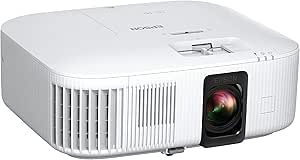 | Best for Bright, Colorful Home Theater | Resolution: 3840 x 2160 listed maximum; 4K PRO-UHD resolution enhancement | Display type: 3-chip 3LCD | Brightness: 2,800 lumens | VIEW ON AMAZON | See Our Full Breakdown |
| XuanPad Portable Mini Projector, Native 1080p with 4K Support, Wi-Fi, Bluetooth 5.2, Autofocus, and 360° Stand |  | Best Compact Option for Flexible Setups | Native resolution: 1920 x 1080 | Maximum supported resolution: 3840 x 2160 input | Display type: LCD | VIEW ON AMAZON | See Our Full Breakdown |
| X9 Pro Smart Projector with VIDAA OS, Native 1080p, 4K Decoding, HDR10, Wi-Fi 6 and Bluetooth 5.4 |  | Best for Built-In Streaming and Smart-Home Features | Native resolution: 1080p | Video decoding: 4K | Brightness: 920 ISO lumens | VIEW ON AMAZON | See Our Full Breakdown |
| 4k projector for home theater | Native resolution | Brightness |
|---|---|---|
| Kogata GC357 Smart Projector | 1920 × 1080 | 550 lm |
| WiMiUS P62 Pro Smart Projector | 1080p | 600 ANSI lumens |
| Pemoon Portable 1080p Projecto | 1920 × 1080 | 3000 ANSI lumens |
| HAPPRUN 2000 ANSI Portable 108 | 1920 × 1080 | 2000 ANSI lumens |
| VIDAA Smart Projector with Nat | 1920 × 1080 | 550 ANSI lumens |
| ONOAYO ONO5Pro 2.0 Smart Proje | — | — |
| Optoma UHZ36 4K UHD Laser HDR | 3840 x 2160 | 3,500 lumens |
| VOPLLS G7 4K Projector with Go | 1920 x 1080 | — |
| Epson Home Cinema 3800 4K PRO- | — | 3,000 lumens |
| ONOAYO ONO3Pro 2.0 Portable 4K | — | — |
| Epson Home Cinema 2350 4K PRO- | — | 2,800 lumens |
| XuanPad Portable Mini Projecto | 1920 x 1080 | — |
| X9 Pro Smart Projector with VI | 1080p | 920 ISO lumens |
More Details on Our Top Picks
Kogata GC357 Smart Projector
The Kogata GC357 is a sensible pick for a home theater where convenience matters more than native 4K detail. Its built-in Netflix, YouTube, and Prime Video apps reduce the need for a separate streaming box, while auto focus and 6D keystone correction help get an image aligned with less manual adjustment. Like the WiMiUS P62 Pro, it decodes 4K content but displays it at native 1080p, so the label does not mean you get a 4K-resolution picture. Its listed 550 lumens also make a darkened room a better fit than daytime viewing or a large, brightly lit space. Choose the GC357 for an all-in-one setup; skip it if sharper 4K detail or stronger brightness is your priority.
Pros:- Built-in Netflix, YouTube, and Prime Video simplify streaming without a separate device.
- Auto focus and 6D keystone correction make positioning easier.
- Wi-Fi 6 and Bluetooth support wireless streaming and external audio.
- HDR10+ and Dolby Audio and DTS Audio support add format compatibility.
Cons:- Native resolution is 1920 × 1080; 4K content is decoded rather than shown at 4K resolution.
- Listed brightness of 550 lumens favors darkened rooms.
- The projector must remain plugged in during system updates.
Best for: Viewers who want built-in major streaming apps and easy image setup in a room they can darken.
Not ideal for: Buyers seeking native 4K resolution or a bright picture for a large room with ambient light.
- Native resolution:1920 × 1080
- Maximum supported resolution:3840 × 2160 pixels
- Brightness:550 lm
- Display type:LCD
- HDR:HDR10+
- Connectivity:Wi-Fi 6, Bluetooth
- Keystone correction:6D
- Zoom:50%–100%
Our verdict“Choose the GC357 for straightforward built-in streaming in a darkened room, not for native 4K sharpness or bright-room viewing.”
WiMiUS P62 Pro Smart Projector
The WiMiUS P62 Pro suits a home theater built around several sources: it has two HDMI ports, two USB ports, and a 3.5 mm audio output, alongside Wi-Fi 6 and Bluetooth 5.2. That makes it more adaptable to connected players and audio gear than the Kogata GC357, whose listed strengths lean more toward built-in apps and setup convenience. The P62 Pro also includes streaming apps, auto focus, auto keystone, obstacle avoidance, and screen alignment, so it can handle a mixed-device setup without making image adjustment wholly manual. Its 600 ANSI lumens are only a modest step above the GC357’s listed 550 lumens, and 4K video still displays at native 1080p. Treat it as a well-connected 1080p projector, not a true 4K home theater upgrade.
Pros:- Two HDMI and two USB ports provide useful flexibility for connected devices.
- Built-in apps include Prime Video and YouTube.
- Auto focus, auto keystone, obstacle avoidance, and screen alignment ease setup.
- Dual 10W speakers with Dolby audio provide built-in sound.
Cons:- Native resolution is 1080p, so 4K video is displayed at 1080p.
- The supplied information does not include a carrying case.
- Its 600 ANSI lumens do not make it a substitute for a brighter home theater projector.
Best for: Viewers who switch among HDMI sources, USB media, built-in apps, and external audio equipment.
Not ideal for: Buyers who require native 4K resolution or a carrying case for frequent travel.
- Native resolution:1080p
- Video support:4K
- Brightness:600 ANSI lumens
- HDR:HDR10
- Wireless:Wi-Fi 6, Bluetooth 5.2
- Speakers:Dual 10W with Dolby audio
- Ports:2 HDMI, 2 USB, 3.5 mm audio output
- Image adjustment:Auto focus, auto keystone, obstacle avoidance, screen alignment
Our verdict“Pick the P62 Pro if you want a feature-rich connection hub for a 1080p theater, and look elsewhere for native 4K.”
Pemoon Portable 1080p Projector with Google TV Stick
The Pemoon portable projector stands apart from the Kogata GC357 and WiMiUS P62 Pro with a 360° rotating stand that makes projecting onto different walls or surfaces easier. A Google TV Stick supplies access to streaming apps, while AI auto focus and keystone correction reduce setup work when the projector is repositioned. That flexibility is useful for occasional home theater use across rooms, but it is not a reason to treat the Pemoon as a native 4K cinema projector: its native resolution is 1920 × 1080, and the listed maximum display resolution is also 1080p despite 4K decoding support. The listed 3000 ANSI lumens are a higher brightness figure than those supplied for the Kogata and VIDAA models, though picture conditions still matter. Choose it for adaptable placement, not 4K pixel detail.
Pros:- 360° rotating stand supports flexible aiming in different locations.
- Included Google TV Stick provides access to streaming apps.
- AI auto focus and auto keystone help after repositioning.
- Wi-Fi 6 and Bluetooth 5.2 support wireless devices and audio.
Cons:- Native resolution and maximum display resolution are 1080p, not 4K.
- 4K decoding does not provide native 4K image detail.
- Digital zoom is limited to a 50%–100% range.
Best for: Viewers who move a projector between rooms and want an adjustable stand plus a streaming device.
Not ideal for: Dedicated home theater buyers prioritizing native 4K resolution or a fixed, fully optimized cinema installation.
- Native resolution:1920 × 1080
- Maximum display resolution:1920 × 1080 pixels
- 4K support:4K decoding
- Brightness:3000 ANSI lumens
- Display type:LED
- Wireless:Wi-Fi 6, Bluetooth 5.2
- Stand:360° rotating
- Warranty:2 years
Our verdict“Choose the Pemoon for portable, adaptable placement with streaming, rather than for a fixed theater demanding native 4K.”
HAPPRUN 2000 ANSI Portable 1080p Projector
The HAPPRUN 2000 ANSI is the most installation-flexible option in this group: it supports ceiling, tripod, tabletop, wall, or floor mounting and offers two HDMI and two USB ports. Auto focus, 6D auto keystone, obstacle avoidance, and screen alignment help with setup, though its autofocus may fail when the projector angle exceeds 15°. Unlike the Pemoon, it does not include a rotating stand; its advantage is a wider range of mounting choices and a stated throw-distance range for planning a room. Streaming is less self-contained than on the Kogata GC357 or WiMiUS P62 Pro, since some services need an external streaming device. Its native 1080p resolution also rules it out for buyers expecting true 4K image detail.
Pros:- Supports ceiling, tripod, tabletop, wall, and floor mounting.
- Two HDMI and two USB ports accommodate multiple connected devices.
- Auto focus, 6D keystone, obstacle avoidance, and screen alignment aid setup.
- Stated 2000 ANSI lumens and image sizes from 50 to 300 inches provide room-planning information.
Cons:- Native resolution is 1080p; 4K content is decoded rather than displayed at native 4K.
- Autofocus may fail when the projector angle exceeds 15°.
- Some streaming services require an external streaming device due to app restrictions.
Best for: Home theater owners who need several mounting choices, multiple wired inputs, and a planned throw distance.
Not ideal for: Viewers seeking built-in access to every streaming service, dependable autofocus at steep angles, or native 4K.
- Native resolution:1920 × 1080
- Brightness:2000 ANSI lumens
- Contrast ratio:20000:1
- Maximum image size:300 inches
- Throw distance:4.72–28.4 feet
- Audio:Built-in 8W speaker
- Connectivity:Wi-Fi 6, Bluetooth 5.2, 2 HDMI, 2 USB, AV, 3.5 mm audio
- Mounting options:Ceiling, tripod, tabletop, wall, or floor
Our verdict“Choose the HAPPRUN for mounting flexibility and wired-source options, provided you are comfortable adding a streaming device and viewing in 1080p.”
VIDAA Smart Projector with Native 1080p
The VIDAA Smart Projector is a better fit for viewers who want its VIDAA OS, AirPlay, and broad stated app selection in one unit. It lists access to more than 1,200 apps and 1,000 live TV channels, along with automatic focus, 6D keystone correction, obstacle avoidance, and screen alignment. That makes it more self-contained on paper than the HAPPRUN, which may need an external streaming device for some services. The tradeoff is that this model lists just 550 ANSI lumens, lower than the HAPPRUN’s 2000 ANSI lumens and the Pemoon’s 3000 ANSI lumens; a dark room is the safer setting. Its 4K support is decoding, not native 4K display, so the appeal is streaming convenience and wireless sharing rather than sharper pixel detail.
Pros:- VIDAA OS lists access to more than 1,200 apps and 1,000 live TV channels.
- AirPlay and Bluetooth 5.4 support wireless sharing and audio connections.
- Auto focus, 6D keystone, obstacle avoidance, and screen alignment help with setup.
- Supports image sizes up to 300 inches.
Cons:- Native resolution is 1080p; 4K is supported through decoding.
- Listed brightness is 550 ANSI lumens, favoring a darkened room.
- A large maximum image size does not remove the practical limits of low listed brightness.
Best for: Viewers who use AirPlay or want VIDAA apps and live channels integrated into a dark-room 1080p setup.
Not ideal for: Buyers who need higher listed brightness, native 4K resolution, or a projector for a brightly lit room.
- Operating system:VIDAA OS
- Native resolution:1920 × 1080
- Maximum supported resolution:3840 × 2160 pixels
- Brightness:550 ANSI lumens
- HDR:HDR10+
- Connectivity:Wi-Fi 6, Bluetooth 5.4, HDMI 2.1, 3.5 mm jack
- Maximum image size:300 inches
- Audio:Dolby Audio
Our verdict“Choose this VIDAA model for integrated apps and AirPlay in a dark room, but skip it if brightness or native 4K detail leads your list.”
ONOAYO ONO5Pro 2.0 Smart Projector with 4K Support and 60W Dolby Audio
The ONO5Pro 2.0 is a convenience-focused pick for a living room where streaming, setup, and sound matter as much as the image. Its built-in apps and Chromecast reduce the need for extra devices, while autofocus, screen fit, and obstacle avoidance can simplify placement. The listed dual 60W Dolby Audio is a more ambitious onboard sound setup than the Epson Home Cinema 3800’s dual 10W speakers, though neither replaces a dedicated theater audio system. The main limitation is image certainty: this listing says 4K support but gives no native resolution or brightness figure, making it harder to judge sharpness and performance in a lit room. I’d choose it for a flexible, all-in-one setup, not for buyers who need verified projection specifications.
Pros:- Built-in streaming apps and Chromecast reduce reliance on external playback devices.
- Dual 60W Dolby Audio speakers offer more onboard audio power than the Epson Home Cinema 3800’s listed dual 10W speakers.
- Autofocus, keystone correction, screen fit, and obstacle avoidance simplify placement.
- Wi-Fi 6 and a listed 18 ms game mode add flexibility for streaming and gaming.
Cons:- Native resolution and brightness are not stated, limiting confidence about image detail and room-light performance.
- The 4K support and 18 ms latency claims are not accompanied by testing details.
- Powerful built-in speakers do not establish how well the sound performs in a full home theater.
Best for: Living-room viewers who want built-in streaming, automatic image adjustment, and substantial onboard audio without adding a streaming stick.
Not ideal for: Buyers planning a dark-room 4K theater who need a stated native resolution and brightness level before choosing.
- Resolution support:4K
- Audio:Dual 60W Dolby Audio
- Operating system:Smart TV Pro OS 2.0
- Wireless connectivity:Wi-Fi 6
- Ports:HDMI 2.1
- Input latency:18 ms
- Casting:Built-in Chromecast
- Screen adjustment:50%–100% dynamic zoom
Our verdict“Choose the ONO5Pro 2.0 for a convenient streaming-and-sound setup, but skip it if verified resolution and brightness are priorities.”
Optoma UHZ36 4K UHD Laser HDR Home Theater Projector
The Optoma UHZ36 is the most clearly specified choice here for buyers prioritizing a bright, dedicated 4K theater image. Its native 3840 x 2160 resolution and 3,500-lumen laser output make a stronger case for image detail and room flexibility than the ONOAYO ONO5Pro 2.0, whose listing omits both native resolution and brightness. Filmmaker Mode targets viewers who want motion and color presentation closer to the source, while MEMC offers a different option for smoother movement. The laser is rated for up to 30,000 hours, reducing the need for frequent lamp replacement. The tradeoff is a more stripped-back setup: its 15W speaker is modest for theater use, and the supplied specs do not list built-in streaming apps. I’d pair it with separate audio and a streaming device.
Pros:- Native 3840 x 2160 resolution gives buyers a clearly stated 4K image specification.
- 3,500 lumens offers more stated brightness than the Epson Home Cinema 3800’s 3,000 lumens.
- Laser light source is rated for up to 30,000 hours.
- Filmmaker Mode, HDR support, and MEMC provide options for different viewing preferences.
Cons:- The built-in 15W speaker is limited for a dedicated home theater.
- Built-in streaming apps are not listed, so a separate streaming device may be needed.
- The light source warranty is listed as one year or 20,000 hours, shorter than its stated maximum light-source life.
Best for: Home theater buyers who want specified native 4K resolution, strong stated brightness, and a long-life laser source.
Not ideal for: Viewers seeking an all-in-one projector with strong built-in sound and streaming apps, or anyone who needs flexible installation features not listed here.
- Native resolution:3840 x 2160
- Display type:DLP
- Brightness:3,500 lumens
- Contrast ratio:1,500,000:1
- Light source life:Up to 30,000 hours
- Maximum image size:300 inches
- Throw distance:3.19–34.6 feet
- Speaker:15W
Our verdict“Pick the UHZ36 for a well-specified, bright 4K laser image if you’re willing to add separate audio and streaming gear.”
VOPLLS G7 4K Projector with Google TV
The VOPLLS G7 makes sense for viewers who value a simple streaming setup and portable placement more than native 4K detail. Licensed Google TV provides app access on the projector, while its casting options and HDMI, USB, and USB-C connections cover several ways to play content. The key distinction is that the G7’s native resolution is 1920 x 1080; it accepts up to 4K input but does not display native 4K. That puts it behind the Optoma UHZ36 for buyers building a resolution-first home theater, though the G7 offers a more integrated streaming experience. Autofocus, 6D keystone correction, and obstacle avoidance help with casual room-to-room use. HDR10+ support is listed, but outdoor viewing still depends on ambient light, and no brightness figure is provided.
Pros:- Licensed Google TV provides access to streaming apps without a separate stick.
- AI autofocus, 6D keystone correction, screen fit, and obstacle avoidance simplify setup.
- AirPlay, Miracast, Chromecast, Wi-Fi 6, and multiple wired ports offer flexible playback.
- Three-year warranty is specified.
Cons:- Native resolution is 1920 x 1080, unlike the Optoma UHZ36’s stated native 4K.
- No brightness figure is provided, so performance in ambient light is difficult to judge.
- Outdoor viewing can be limited by surrounding light.
Best for: Streaming-first households that want Google TV, easy setup, casting, and a portable projector for indoor or occasional outdoor use.
Not ideal for: Home theater buyers seeking native 4K detail or viewers who need a stated brightness level for a well-lit room.
- Native resolution:1920 x 1080
- Maximum display resolution:3840 x 2160 pixels
- Display type:LCD
- Throw ratio:1.24:1
- Audio:16W dual Dolby Audio
- Wireless connectivity:Wi-Fi 6, Bluetooth 5.2
- Image features:HDR10+, autofocus, 6D keystone correction, screen fit, obstacle avoidance
- Warranty:3 years
Our verdict“Choose the G7 for Google TV and easy portable viewing, not for a native-4K home theater image.”
Epson Home Cinema 3800 4K PRO-UHD 3-Chip 3LCD Projector
The Epson Home Cinema 3800 suits movie fans who want bright color and a traditional theater-oriented projector, rather than an all-in-one streaming device. Its 3-chip 3LCD design avoids the rainbow effect associated with some single-chip DLP projectors, a point of difference from the Optoma UHZ36. Epson lists 3,000 lumens, HDR, and 4K video support at up to 60 Hz, giving buyers a useful mix for movies and varied content. Lens shift also offers more placement flexibility than setups that rely mainly on digital keystone correction. The listed 3840 x 2160 output uses pixel shifting, so buyers should distinguish it from a native-4K claim. Its dual 10W speakers are basic for theater sound, and a full setup will likely call for external audio.
Pros:- 3-chip 3LCD projection avoids the rainbow effect that some viewers notice with DLP models such as the Optoma UHZ36.
- 3,000-lumen brightness supports a bright image across a range of viewing conditions.
- Lens shift provides placement flexibility beyond basic digital image correction.
- Supports HDR, 4K video up to 60 Hz, and active 3D.
Cons:- 4K PRO-UHD uses pixel shifting rather than a stated native 4K imaging chip.
- Dual 10W speakers are limited for a full home theater audio setup.
- Active 3D viewing requires separate compatible glasses.
Best for: Movie viewers sensitive to DLP rainbow artifacts who want bright 4K HDR support and lens-shift placement flexibility.
Not ideal for: Buyers who want native 4K projection, built-in streaming apps, or theater-grade sound without external equipment.
- Projection technology:3-chip 3LCD
- Resolution:3840 x 2160
- Brightness:3,000 lumens
- Contrast ratio:100,000:1
- HDR:Full 10-bit HDR
- HDMI:HDMI 2.0, 18 Gbps
- Maximum image size:300 inches
- Built-in speakers:Dual 10W
Our verdict“Choose the Home Cinema 3800 if color presentation, reduced rainbow artifacts, and lens shift matter more than native 4K or onboard streaming.”
ONOAYO ONO3Pro 2.0 Portable 4K-Support Smart Projector with AI Auto Focus and Dolby Audio
At 2.4 pounds, the ONO3Pro 2.0 is the portability pick in this group, better suited to moving between rooms or taking outdoors than the more theater-focused Optoma UHZ36. It combines built-in streaming apps, Chromecast, Wi-Fi 6, and automatic focus and image adjustment, so setup and playback need fewer add-ons. Its dual 50W Dolby Audio speakers and eARC support give it a stronger stated onboard audio package than the Epson Home Cinema 3800, whose speakers are dual 10W. But the ONO3Pro’s listing describes 4K decoding, not native 4K resolution, and gives no brightness figure. That leaves its suitability for a dark-room theater or ambient-light viewing hard to judge. I’d treat it as a flexible smart projector, not a confirmed native-4K home theater display.
Pros:- At 2.4 pounds, it is easier to move than the 10.4-pound Optoma UHZ36.
- Built-in apps, Chromecast, Wi-Fi 6, and Bluetooth support flexible streaming and playback.
- AI focus, keystone correction, screen fit, obstacle avoidance, and orientation detection simplify setup.
- Dual 50W Dolby Audio speakers and eARC provide a more substantial stated audio setup than the Epson Home Cinema 3800’s dual 10W speakers.
Cons:- The listing specifies 4K decoding, not native 4K resolution.
- Brightness is not stated, leaving image performance in ambient light uncertain.
- Portability and automatic adjustments do not establish its image performance for a dedicated theater.
Best for: Buyers who want a lightweight smart projector they can move between rooms, mount in several ways, and use without a separate streaming stick.
Not ideal for: Dedicated theater buyers who need confirmed native 4K resolution and a stated brightness level.
- Video support:4K decoding
- Audio:Dolby Audio, dual 50W speakers, eARC
- Wireless connectivity:Wi-Fi 6, Bluetooth
- Casting:Chromecast
- Auto adjustment:AI focus, keystone correction, obstacle avoidance, screen fit, orientation detection
- Zoom:50%–100%
- Weight:2.4 lb
- Mounting options:Desktop, tripod, wall, or ceiling
Our verdict“Pick the ONO3Pro 2.0 for portable smart viewing and easy setup, but choose a better-specified model for a resolution-focused home theater.”
Epson Home Cinema 2350 4K PRO-UHD Smart Streaming Projector
The Epson Home Cinema 2350 is the strongest fit here for buyers who want a home-theater picture that holds up better with some ambient light. Its 2,800-lumen output and 3-chip 3LCD color distinguish it from the X9 Pro, whose listed output is 920 ISO lumens, and from both XuanPad and X9 Pro, which have native 1080p panels. Epson’s 4K PRO-UHD enhancement is paired with a listed 3840 x 2160 maximum resolution, while HDR10 and HLG add compatible high-dynamic-range formats. Android TV and a 10 W speaker reduce the need for extra gear, and under-20-ms input lag makes it a more credible choice for casual gaming than a projector without a stated lag figure. The tradeoffs are that streaming depends on a sufficiently fast Wi-Fi connection, and Bluetooth audio is limited to Android TV content. Its tabletop design and vertical lens shift offer some placement flexibility, but it is less portable than the XuanPad.
Pros:- Listed 2,800-lumen brightness suits a multipurpose viewing room better than the X9 Pro’s listed 920 ISO lumens.
- 3-chip 3LCD design produces vivid color without rainbowing.
- Android TV, a built-in 10 W speaker, and Bluetooth audio support reduce setup needs.
- Under-20-ms input lag and vertical lens shift help with gaming and placement.
Cons:- 4K PRO-UHD uses resolution enhancement rather than a native 4K panel.
- Streaming requires a wireless network connection of at least 5 Mbps, and some apps need paid subscriptions.
- Bluetooth audio is limited to content played through Android TV.
Best for: Home-theater buyers who want brighter, vivid color for a multipurpose room and also plan to stream or play games on the projector.
Not ideal for: Buyers who need a genuinely portable projector, native 4K imaging, or Bluetooth audio from every connected source.
- Resolution:3840 x 2160 listed maximum; 4K PRO-UHD resolution enhancement
- Display type:3-chip 3LCD
- Brightness:2,800 lumens
- HDR formats:HDR10 and HLG
- Smart platform:Android TV
- Speaker:Built-in 10 W bass-reflex speaker
- Connectivity:HDMI and Wi-Fi
- Input lag:Under 20 ms
- Placement and audio:Tabletop mounting, vertical lens shift, and Bluetooth audio support
Our verdict“Choose the Epson if brightness, color, and low-latency gaming matter more for your home theater than portability or native 4K imaging.”
XuanPad Portable Mini Projector, Native 1080p with 4K Support, Wi-Fi, Bluetooth 5.2, Autofocus, and 360° Stand
The XuanPad is the portability pick in this group, not a substitute for a dedicated 4K home-theater projector. Its 1.89-pound weight and detachable 360° stand make it easier to move between rooms or take outdoors than the tabletop Epson Home Cinema 2350. Setup is also less hands-on: AI autofocus, keystone correction, and adjustable zoom help adapt the image when the projector or screen position changes. The key resolution distinction is easy to miss: it accepts 4K input, but its native image is 1920 x 1080, unlike the Epson’s listed 3840 x 2160 maximum. Built-in apps, Wi-Fi, Bluetooth 5.2, and HDMI give it useful flexibility, while its 40–200-inch image-size range accommodates varied spaces. The major home-theater limitation is that no brightness rating is provided, so I can’t compare its room-light performance directly with the Epson or X9 Pro.
Pros:- Light 1.89-pound design and detachable 360° stand make relocation straightforward.
- AI autofocus, keystone correction, and 50%–100% zoom help adapt to different setups.
- Built-in apps plus HDMI, Wi-Fi, and Bluetooth 5.2 support several playback options.
- Listed image size spans 40–200 inches.
Cons:- Native resolution is 1920 x 1080; 4K support refers to input compatibility, not native 4K imaging.
- No brightness rating is provided, making it difficult to judge performance in rooms with ambient light.
- Its portable feature set is less focused on home-theater brightness and image detail than the Epson Home Cinema 2350.
Best for: People who want a light projector for casual movie nights in different rooms or outdoors and value easy setup over native 4K detail.
Not ideal for: Dedicated home-theater buyers who need a stated brightness level or native 4K resolution for a large, detailed screen.
- Native resolution:1920 x 1080
- Maximum supported resolution:3840 x 2160 input
- Display type:LCD
- Connectivity:3.5 mm jack, Bluetooth, HDMI, USB, and Wi-Fi
- Wireless:Bluetooth 5.2; dual-band 2.4 GHz and 5 GHz Wi-Fi
- Weight:1.89 lbs
- Image size:40–200 inches
- Image setup:AI autofocus, keystone correction, adjustable 50%–100% zoom, and detachable 360° stand
- Warranty:Two-year replacement warranty
Our verdict“Pick the XuanPad for a lightweight, easy-to-reposition projector, but skip it if your priority is verified brightness or native 4K detail.”
X9 Pro Smart Projector with VIDAA OS, Native 1080p, 4K Decoding, HDR10, Wi-Fi 6 and Bluetooth 5.4
The X9 Pro makes the most sense for a buyer who wants streaming, casting, and sound built into one projector. VIDAA OS, AirPlay 2, and HomeKit offer a broader smart-home and Apple-device angle than the XuanPad’s listed built-in apps and basic wireless connectivity. Its two 20 W speakers, Dolby Audio, HDMI ARC/CEC, and Bluetooth 5.4 also make it better equipped for a self-contained setup than the Epson Home Cinema 2350, which lists a single 10 W speaker. That convenience comes with a clear picture tradeoff: the X9 Pro is native 1080p with 4K decoding, not a native 4K projector, and its 920 ISO lumens are well below Epson’s listed 2,800 lumens. Autofocus, 6D keystone correction, obstacle avoidance, and auto screen fit simplify placement, but those conveniences can’t replace brightness or resolution for a dedicated cinema room.
Pros:- VIDAA OS, AirPlay 2, HomeKit, and over 1,000 live TV channels support a connected, app-focused setup.
- Two 20 W speakers with Dolby Audio provide more listed onboard speaker power than the Epson Home Cinema 2350.
- Autofocus, 6D keystone correction, obstacle avoidance, and auto screen fit reduce manual adjustment.
- Wi-Fi 6, Bluetooth 5.4, and HDMI ARC/CEC offer flexible wireless and audio connections.
Cons:- Native resolution is 1080p; 4K decoding does not make the displayed image native 4K.
- Listed brightness is 920 ISO lumens, substantially below the Epson Home Cinema 2350’s 2,800 lumens.
- The supplied product details do not include independent evidence to verify its performance claims.
Best for: Apple-device households and casual home viewers who want built-in streaming, casting, and substantial onboard audio in one setup.
Not ideal for: Home-cinema buyers seeking native 4K detail or stronger listed brightness for a large screen or a room with ambient light.
- Native resolution:1080p
- Video decoding:4K
- Brightness:920 ISO lumens
- HDR:HDR10
- Operating system:VIDAA OS
- Speakers and audio:2 × 20 W speakers with Dolby Audio
- Wireless connectivity:Wi-Fi 6 and Bluetooth 5.4
- Image setup:Autofocus, 6D keystone correction, obstacle avoidance, auto screen fit, and 50%–100% zoom
- Connections and smart-home support:HDMI ARC/CEC, USB, 3.5 mm headphone jack, AirPlay 2, and HomeKit
Our verdict“Choose the X9 Pro for built-in smart features and strong onboard audio, not for buyers whose main goal is a bright, native-4K home-theater picture.”

How We Picked
I ranked these projectors by how well their stated features suit a home theater setup, giving more weight to imaging technology, resolution, and suitability for regular movie viewing than to portability alone. I also considered setup aids, streaming options, audio features, and flexibility, since those can make a projector easier to use in a shared living space or a room that serves more than one purpose.
The ranking distinguishes native 1080p models with 4K decoding from projectors that use 4K-oriented imaging or are described as 4K UHD. A projector that accepts a 4K source may still display at 1080p, so I did not treat that claim as equivalent to higher-resolution output. The Epson Home Cinema 3800 leads for its 4K PRO-UHD 3LCD design and home-theater focus; the Optoma UHZ36 follows as a laser 4K UHD alternative. Portable models sit lower for a dedicated theater role, though their smart features and simpler placement can make them better choices for casual viewing.
Factors to Consider When Choosing 4k Projector For Home Theater
Before choosing, decide how the projector will be used day to day. A fixed dark room, a bright family room, and a projector that moves between rooms call for different compromises. These factors can help you avoid paying for a feature that does not improve your actual setup.
Check What “4K” Means in the Specifications
Start by checking the projector’s native resolution and imaging method, not just whether it accepts a 4K signal. “4K decoding” or “4K support” can mean the device handles a 4K source but displays the image at native 1080p. That can be fine for casual viewing, especially when ease of use matters more than fine detail, but it is different from a projector designed around 4K UHD or 4K PRO-UHD imaging. Compare manufacturer specifications carefully, since similar marketing language can describe different capabilities. If you sit close to a large screen or watch a lot of detailed films, resolution deserves more weight. If you mostly stream from farther away, room fit and setup may matter more.
Match Brightness to the Room, Not the Screen Size Alone
A projector’s brightness matters most when your room cannot be made fully dark. Ambient light can flatten contrast and make dark scenes harder to see, even when a projector has a large-screen image. For a dedicated theater, controlling light with curtains or shades may produce a bigger improvement than choosing a brighter model. In a living room, think about when you watch and whether lights will stay on; do not assume a projector will overcome every bright-room condition. Screen material and screen size also affect perceived brightness, so avoid choosing based on a brightness number alone. Plan the room and screen together before settling on a projector.
Plan Placement, Throw Distance, and Lens Flexibility
Measure the distance from the planned projector position to the screen before buying. A model that cannot create your desired image size from that spot may force a ceiling mount, furniture changes, or a smaller screen. Check the manufacturer’s throw-distance guidance and whether the projector offers optical zoom or lens shift; digital keystone correction can help square an image but may affect image quality. Auto focus and keystone features are convenient for portable use, yet they do not remove the need for a workable projection angle. For a permanent theater, installation flexibility can be more useful than a long list of automatic adjustments. Mark the intended screen and projector positions before you commit.
Choose Smart Features Around Your Streaming Setup
Built-in smart platforms and included streaming devices can reduce setup steps, but they should fit the services you actually use. Check app availability, software support, and whether the projector needs an external streaming stick for your preferred content. Wireless connectivity is handy for flexible viewing, though a wired source may be preferable for a fixed system or when you want fewer connection variables. Confirm the inputs you need for a streaming box, game console, receiver, or disc player. Do not assume that a “smart” label means every app works the same way across brands. A simple external streamer can also make it easier to replace or update the streaming interface later.
Decide Whether Built-In Audio Is a Temporary Fix or the Plan
Built-in speakers can make a portable setup quick to use, but a home theater usually benefits from separate speakers or a soundbar. Before buying, check how the projector connects to your audio gear and whether your receiver or speakers can sit near the intended sources. Wireless Bluetooth audio may be convenient, but verify compatibility and consider whether audio delay could affect viewing. If you already own a sound system, projector speaker output should carry less weight in your decision. If you need an all-in-one setup for a bedroom or occasional movie night, stronger built-in audio can reduce extra equipment. Treat speaker claims as a convenience feature, not proof of full theater sound.
Balance Portability Against a Permanent Theater Setup
A compact projector with a rotating stand and automatic setup can be easier to move and reposition than a dedicated theater model. That flexibility is useful when the projector will serve different rooms, but a permanent installation has different priorities: stable placement, appropriate inputs, and consistent image alignment. Portable models in this roundup often pair convenience features with native 1080p imaging, so buyers should decide whether mobility is worth that resolution tradeoff. A fixed projector may take more planning at the start, but it can better suit a screen-centered room. Avoid buying for a rare use case at the expense of your main viewing habit. Pick the setup you will use most often.
Frequently Asked Questions
Does a projector with 4K decoding show movies in native 4K?
Not necessarily. Some projectors accept or decode 4K video but display it at their native 1080p resolution. That distinction applies to several compact models in this roundup, so check the stated native resolution rather than relying on “4K support” alone. A 4K source can still be useful for compatibility, but it does not by itself make the projected image native 4K. If fine detail is your priority, look for a model whose imaging specifications describe 4K-oriented output, such as the Epson Home Cinema 3800 or Optoma UHZ36.
Is the Epson Home Cinema 3800 a better choice than the Optoma UHZ36?
They suit different priorities rather than offering a universal winner. The Epson Home Cinema 3800 is a strong pick for buyers interested in 4K PRO-UHD and three-chip 3LCD imaging, while the Optoma UHZ36 is the more direct match for someone seeking a 4K UHD laser projector. Compare their installation requirements, room conditions, and connection needs before deciding. The product names and headline resolution are not enough to settle the choice. Check the current manufacturer specifications for the features that matter to your setup.
Can a native 1080p projector still be a good choice for movie nights?
Yes, if you value simple setup, portability, or casual viewing more than maximum detail. Models such as the Pemoon, HAPPRUN, and XuanPad add convenience features that can suit a bedroom, shared room, or occasional backyard-style setup. Their 4K support should not be confused with native 4K display, though. Screen size, viewing distance, and room light all affect how noticeable the resolution difference is. If you are building a dedicated theater around a large screen, compare them carefully with the more theater-focused 4K options.
Should I choose a projector with built-in streaming or use a separate streaming device?
Choose based on app support, ease of updates, and how you connect the rest of your system. The Pemoon includes a Google TV Stick, while other models advertise smart features or platforms; verify that your preferred services work before relying on them. A separate streamer can be easier to replace if its software becomes outdated, and it may offer a familiar interface across different projectors. Built-in streaming can reduce cables and setup steps. Whichever route you choose, confirm the projector has the inputs and network options your system needs.
Do I need a special screen and a completely dark room for a home theater projector?
You do not always need a dedicated screen or total blackout, but both can affect the image. A plain, smooth, neutral-colored wall may work for casual viewing, while a proper screen can provide a more consistent surface. Reducing ambient light helps preserve perceived contrast, especially in dark scenes. If your room stays bright, choose based on real viewing conditions rather than assuming a projector can overpower sunlight or strong overhead lighting. Measure your available wall, screen size, and throw distance together before buying.
Conclusion
For a dedicated home theater, I would start with the Epson Home Cinema 3800 as the best overall choice, with the Optoma UHZ36 as my best premium fit for buyers seeking a laser 4K UHD model. The Epson Home Cinema 2350 is a sensible option for buyers who want smart streaming alongside 4K PRO-UHD features, while the HAPPRUN 2000 ANSI is a more approachable pick for casual viewers who prioritize portability and setup aids over native 4K output. For a compact, flexible setup, I would compare the Pemoon and XuanPad based on their included streaming and stand features. If native 4K detail is the main goal, do not mistake 4K decoding on a 1080p projector for the same thing; choose a theater-focused model and confirm its installation fit before making the final decision.