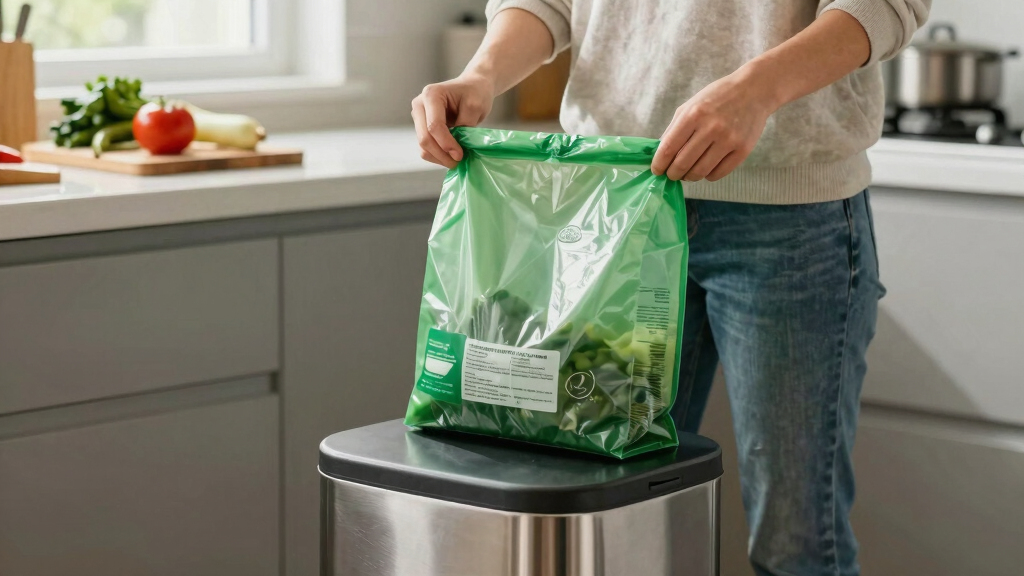

For most kitchen bins, I’d start with SUPERBIO’s 13-gallon drawstring bags, which pair a familiar size with a listed BPI and OK Compost certification. AYOTEE’s 13–15-gallon liners stand out for shoppers who want a larger fit, while UNNI’s 2.6-gallon bags suit small countertop or bathroom bins. The main tradeoffs are fit, leak resistance, closure style, and whether a bag’s certification matches the composting service you use. A larger count or heavier build can be useful, but neither guarantees that a bag will work in your bin or facility. Read on for the full comparison and guidance on choosing a bag that fits your waste and disposal routine.

Get kitchen staples and gadgets delivered free with Prime
- Fast, free delivery on millions of items
- Prime Video, Amazon Music and more included
- Member-only deals all year
Key Takeaways
- SUPERBIO’s certified drawstring option has the clearest named certification in the product details provided, giving buyers a concrete starting point for checking local composting rules.
- Bin size changes the shortlist: most entries target 13-gallon kitchen cans, while BioBag’s 48-gallon, Stout’s 30-gallon, and Reli.’s 33-gallon bags serve larger household or commercial-style bins.
- Small-bin buyers have a dedicated option: UNNI’s 2.6-gallon bags are sized for compact bins, and Matter’s 3- and 13-gallon variety pack lets shoppers cover two common sizes.
- Closures are not interchangeable: SUPERBIO, Simply Bio, and Matter list drawstrings, while other options list handles or no closure detail, affecting how each bag is lifted and tied.
- Claims need context: terms such as heavy duty, leak-resistant, or compostable do not alone establish compatibility with a home pile or municipal facility; check the exact certification and accepted materials.


| compostable trash bag | Count | Capacity | Material |
|---|---|---|---|
| Compostable Trash Bags | 80 bags | 13 gallons | Plant starch (biomaterial) |
| SUPERBIO 13 Gallon Compostable | 30 bags | 13 gallons (49.2 L) | — |
| AYOTEE Compostable Trash Bags | 60 bags | 13–15 gallons | Plant-based compostable PSM |
| BioBag The Original Compostabl | 80 bags | 48 gallons | Plant-based starches, vegetable oils, compostable polymers |
| Simply Bio 13 Gallon Compostab | 30 bags | 13 gallons | Polylactic acid (PLA) and polybutylene adipate terephthalate (PBAT) |
| Compostic Compostable Trash Ba | 50 bags | 13 gallons | Biopolymers |
| Stout Compostable Trash Bags | 48 bags per case | 30 gallons | ASTM 6400 compostable material |
| UNNI 2.6 Gallon Compostable Ba | 100 bags | 2.6 gallons | Compostable, plant based material |
| Envision Compostable Trash Bag | 45 bags per case | 13 gallons | Compostable |
| SUPERBIO 13 Gallon Compostable | 30 bags | 49.2 liters (13 gallons) | Plant based compostable material |
| Matter Compostable Variety Pac | 70 bags | — | Plant-based biopolymer |
| 13 Gallon Compostable Trash Ba | 50 bags | 13 gallons | Plant-based PLA and PBAT |
| Reli. Compostable 33 Gallon Tr | 80 bags | Designed for 30- to 33-gallon bins | Green compostable plastic |
More Details on Our Top Picks
Compostable Trash Bags – 13 Gallon, 80 Count, Unscented, Green
For a standard kitchen bin, this pick emphasizes quantity and straightforward fit: its 13-gallon capacity and 24.8-by-31.4-inch dimensions suit small household waste cans, while the 80-count pack means fewer restocks than the 30-count SUPERBIO or Simply Bio options. Its plant-starch material carries ASTM D6400 and EN 13432 certifications, and the unscented design avoids adding fragrance around food scraps. The tradeoff is that the listing gives no thickness measurement or closure feature, so buyers who want handles or a drawstring should look at SUPERBIO or Simply Bio. The supplied product details also caution against leaving heavy or wet waste in the bag for long periods. I’d choose it for routine, lighter kitchen or bathroom waste, rather than demanding loads.
Pros:- 80 bags per pack reduces how often households need to restock
- 13-gallon capacity fits many small kitchen waste bins
- Plant-starch material is listed as ASTM D6400 and EN 13432 certified
- Unscented design suits indoor use where fragrance is unwanted
Cons:- Not recommended for heavy or wet waste held for long periods
- No closure feature or thickness measurement is provided in the supplied specs
Best for: Households with a 13-gallon bin that want a larger pack of certified compostable liners for routine, lighter waste
Not ideal for: People who need a drawstring or handles, or regularly collect heavy, wet waste
- Capacity:13 gallons
- Dimensions:24.8 x 31.4 inches
- Material:Plant starch (biomaterial)
- Count:80 bags
- Color:Green
- Scent:Unscented
- Certification:ASTM D6400, EN 13432
Our verdict“Choose this for a steady supply of certified, unscented liners for lighter 13-gallon-bin waste; pick SUPERBIO if handles matter more.”
SUPERBIO 13 Gallon Compostable Kitchen Waste Bags with Handles, 30 Count
Built-in handles give this 13-gallon bag a practical edge when tying and carrying kitchen waste; the reinforced bottom is also intended for heavier loads. Its listed 36.6-inch length makes it taller than the Compostable Trash Bags 80 Count, while the smaller 30-bag pack means more frequent replenishment. For buyers who prioritize easy carrying and a secure tie-off, that tradeoff may be worthwhile. The certifications include BPI and OK compost INDUSTRIAL, alongside ASTM D6400 and EN 13432, but industrial compostability does not mean every home composting setup can process it. The approximate one-year shelf life also favors buying only what you can store and use in time. Compared with Simply Bio, this is the more handle-focused option; Simply Bio instead specifies a drawstring closure.
Pros:- Handles make tying and carrying the filled bag easier
- Reinforced bottom is designed for heavier loads
- BPI and OK compost INDUSTRIAL certifications are specified
- 13-gallon size suits common kitchen bins
Cons:- 30-count pack runs out sooner than the 80-count option
- Approximate one-year shelf life calls for mindful storage and use
- Industrial compostability may not suit home composting methods
Best for: Cooks who carry tied kitchen-scrap bags to an outdoor or shared collection point and want handles
Not ideal for: Buyers relying on backyard composting or seeking a large stock-up pack with a longer storage horizon
- Capacity:13 gallons (49.2 L)
- Dimensions:22.8 x 36.6 inches
- Thickness:0.87 mil
- Count:30 bags
- Certifications:BPI, OK compost INDUSTRIAL, TÜV Seedling, ASTM D6400, EN 13432
- Shelf life:Approximately 1 year
- Closure:Handles
Our verdict“Pick SUPERBIO if handles and carrying convenience matter more than pack size or backyard compost compatibility.”
AYOTEE Compostable Trash Bags, 13-15 Gallon Tall Kitchen Trash Liners, Heavy Duty, Unscented, 60 Count
1.18-mil thickness is the clearest point of difference here: among these 13-gallon choices, AYOTEE specifies a thicker liner than SUPERBIO’s 0.87 mil, which may appeal to households wanting a sturdier feel for everyday kitchen and garden scraps. Its 13–15-gallon range gives a little more sizing flexibility than the fixed-capacity Simply Bio, and the 60-count pack sits between that option’s 30 bags and the 80-count green liners. The listed dimensions are 23.6 by 31.5 inches, so check your can before buying if it is unusually tall or wide. The material is described as plant-based compostable PSM, but the supplied details say it is not suited to backyard composting. It also lacks a stated handle or drawstring feature, so closure convenience is limited.
Pros:- Specified 1.18-mil thickness distinguishes it from thinner listed alternatives
- 13–15-gallon capacity accommodates a range of tall kitchen cans
- 60 bags offers a middle ground between 30- and 80-count packs
- Unscented material avoids adding fragrance to kitchen waste
Cons:- Not suitable for backyard composting according to the product details
- No handles or drawstring are specified
- Dimensions may not fit unusually shaped or larger bins
Best for: Households with a 13–15-gallon kitchen bin that prefer a specified thicker liner for routine scraps
Not ideal for: People who compost bags in a backyard pile or need an integrated closure for carrying waste
- Capacity:13–15 gallons
- Material:Plant-based compostable PSM
- Thickness:1.18 mil
- Count:60 bags
- Dimensions:23.6 x 31.5 inches
- Color:Green
- Scent:Unscented
Our verdict“Choose AYOTEE for a thicker, unscented liner across 13–15-gallon bins if backyard composting is not your plan.”
BioBag The Original Compostable Trash Bag, 48 Gallon, 80 Count
With a 48-gallon capacity and 42-by-48-inch dimensions, BioBag serves a different job from the lineup’s kitchen-size options: it is aimed at large household or commercial collection bins. The 80-count quantity matches the smaller Compostable Trash Bags 80 Count, but each BioBag is made for substantially more volume. Its plant-based blend includes starches, vegetable oils, and compostable polymers, and the listing identifies BPI and ASTM D6400 certification. The 0.80-mil thickness is the thinnest explicitly specified among the products here, so I would not treat its large capacity as a promise of suitability for heavy mixed refuse. The product details flag condensation in closed containers and recommend use within a year. Compared with Stout’s 30-gallon option, this BioBag offers more capacity for larger bins, with storage and moisture management to plan around.
Pros:- Large 48-gallon capacity suits collection bins beyond kitchen scale
- 80 bags per pack supports repeated use in commercial or household settings
- BPI and ASTM D6400 certification are specified
- Plant-based material blend is detailed
Cons:- 0.80-mil thickness is relatively light for heavy mixed waste
- Condensation may form in closed containers
- Product details recommend using bags within one year
Best for: Facilities or households lining large 48-gallon bins for organic waste collection
Not ideal for: Kitchen-bin users, or anyone who leaves wet mixed waste in a closed container for extended periods
- Capacity:48 gallons
- Dimensions:42 x 48 inches
- Thickness:0.80 mil
- Count:80 bags
- Material:Plant-based starches, vegetable oils, compostable polymers
- Certifications:BPI, ASTM D6400
- Made in:USA
Our verdict“Choose BioBag for large scale organic waste collection when the 48-gallon fit matters and you can manage moisture and storage time.”
Simply Bio 13 Gallon Compostable Organic Bag Liners, Drawstring, Heavy Duty, 1 Mil, 30 Bags
Drawstring closure is Simply Bio’s main advantage for anyone who wants to close a kitchen liner and lift it out without tying separate handles. The 1-mil PLA and PBAT material is listed as leak-resistant and puncture-proof, giving it a sturdier stated build than SUPERBIO’s 0.87-mil bag, though AYOTEE specifies an even thicker 1.18 mil. At 23.7 by 29.4 inches, it is shorter than SUPERBIO’s 36.6-inch bag, so check the fit on a deep can before choosing it. Its 30-bag pack is smaller than the 60-count AYOTEE and 80-count option, making closure convenience the priority over quantity. The product details say it meets environmental compostability standards, but do not name specific certifications; buyers who need named certification details should compare those listings carefully.
Pros:- Drawstring makes closing and carrying the bag straightforward
- 1-mil PLA and PBAT construction is listed as leak-resistant and puncture-proof
- 13-gallon capacity fits common kitchen waste bins
- Plant-based compostable material is specified
Cons:- 30-bag pack is smaller than the 60- and 80-count alternatives
- 29.4-inch height is shorter than SUPERBIO’s listed 36.6-inch bag
- Specific certification names are not supplied in the product data
Best for: Kitchen users who want to close and lift a 13-gallon liner using an integrated drawstring
Not ideal for: Buyers who need a longer liner for a deep bin, a larger pack, or explicitly named certifications
- Capacity:13 gallons
- Material:Polylactic acid (PLA) and polybutylene adipate terephthalate (PBAT)
- Thickness:1 mil
- Count:30 bags
- Dimensions:23.7 in wide x 29.4 in high
- Item weight:2.1 pounds
- Closure:Drawstring
Our verdict“Choose Simply Bio when drawstring closure is your priority and its shorter dimensions fit your kitchen bin.”
Compostic Compostable Trash Bags, 13 Gallon Tall Kitchen, 50 Count
Compostic is the clearest fit for households with a home compost system: its plant based biopolymers are described as breaking down in home compost within 12 to 24 weeks, and the bags are unscented and certified non toxic. The 13 gallon size suits a standard tall kitchen bin, while the stated tear resistance is useful for heavier food scraps. Compared with SUPERBIO, which is certified for industrial composting, Compostic is the more relevant choice for buyers who want a home composting option. The tradeoff is that its compostability depends on suitable home compost conditions, and the product may cost more than conventional plastic liners. Choose it for the disposal route and household fit; skip it if you need bags for a municipal industrial composting program.
Pros:- Described as suitable for home composting within 12 to 24 weeks
- 13 gallon capacity fits tall kitchen bins
- Unscented and certified non toxic
- Stated tear resistance suits household food scraps
Cons:- Home composting conditions are required for the stated disposal route
- May cost more than regular plastic bags
Best for: Households with a home compost setup that want unscented liners for a standard 13 gallon kitchen bin
Not ideal for: Buyers relying on industrial compost collection or seeking a conventional low cost trash liner
- Capacity:13 gallons
- Count:50 bags
- Material:Biopolymers
- Material feature:Compostable
- Color:Light green
- Form:Bag
- Home compost breakdown time:12 to 24 weeks, as described
- Scent:Unscented
Our verdict“Choose Compostic if you have home composting and want a 13 gallon unscented liner; look elsewhere if your collection accepts only industrially compostable bags.”
Stout Compostable Trash Bags, 30 Gallon, 30″ x 39″, Green, 48 Bags
Stout serves a different job from the 13 gallon kitchen liners: its 30 gallon capacity and 30 by 39 inch dimensions are aimed at larger bins collecting organic waste. That extra room can suit shared kitchens, community compost stations, or cleanup areas where small liners need frequent changing. Compared with Envision’s 13 gallon bags, Stout is the better match when bin size matters more than a fit for a standard kitchen can. The product is described as meeting ASTM 6400 compostability and being made in America, with a stated employment connection for visually impaired people. Its drawbacks are practical: the large format will be awkward in smaller bins, and the listing limits its use to composting rather than ordinary mixed trash. Confirm your facility accepts the material before choosing it.
Pros:- 30 gallon capacity suits larger organic waste containers
- 30 by 39 inch dimensions are specified for fit planning
- Described as meeting ASTM 6400 compostability
- Made in America with a stated employment connection for visually impaired people
Cons:- Too large for many standard kitchen bins
- Intended for composting use rather than regular mixed trash
- Facility acceptance should be checked before purchase
Best for: Community kitchens, shared compost stations, and households with large organic waste bins
Not ideal for: People lining standard 13 gallon kitchen bins or disposing of mixed household trash
- Capacity:30 gallons
- Bag dimensions:30 x 39 inches
- Count:48 bags per case
- Material:ASTM 6400 compostable material
- Color:Green
- Made in:America
Our verdict“Pick Stout for a large organic waste bin and an accepted composting route; choose Envision or another 13 gallon option for a typical kitchen can.”
UNNI 2.6 Gallon Compostable Bags, 100 Count, 10 Liter, Extra Thick 0.71 Mil
UNNI is the small bin specialist in this group. Its 2.6 gallon capacity and stated 0.71 mil thickness target countertop or under sink food scrap containers, not the full size kitchen cans served by Compostic and Envision. The 100 bag count supports frequent changes, while certifications from BPI, CMA, and TÜV AUSTRIA give buyers specific compostability credentials to check against local collection rules. Compared with the larger liners, UNNI takes less space and suits a dedicated scraps routine; it will not replace a tall kitchen bag for general household waste. The main limitation is disposal availability: commercial composting may not be offered locally, and the bags are said to perform best when used within nine months. This pick makes sense for a small bin that gets emptied regularly.
Pros:- Small 2.6 gallon size is suited to countertop scrap bins
- 0.71 mil thickness is specified for added durability
- 100 bags per pack supports frequent bin changes
- BPI, CMA, and TÜV AUSTRIA certifications are listed
Cons:- Commercial composting may not be available in every area
- Use within nine months is recommended for best performance
- Too small for standard tall kitchen trash cans
Best for: Home cooks who collect daily food scraps in a 2.6 gallon countertop or under sink bin
Not ideal for: Buyers who need tall kitchen liners, or who cannot use the available composting service
- Capacity:2.6 gallons
- Metric capacity:10 liters
- Count:100 bags
- Thickness:0.71 mil
- Material:Compostable, plant based material
- Certifications:BPI, CMA, TÜV AUSTRIA
- Item dimensions:4.6 x 4.13 x 4.06 inches
- Recommended use period:Within 9 months for best performance
Our verdict“Choose UNNI for frequent food scrap collection in a small bin, and select Compostic or Envision if you need a full size kitchen liner.”
Envision Compostable Trash Bags, 13 Gallon, 24 x 30 inches, Green, 45 Bags per Case
Envision pairs a familiar 13 gallon capacity with a clear organic waste focus, making it a practical candidate for offices or households that already separate food scraps. The 24 by 30 inch dimensions give buyers a concrete way to compare bin fit, while the listing cites ASTM 6400 and American manufacture. Compared with Stout’s 30 gallon format, Envision is easier to match to a typical kitchen or break room bin; compared with Compostic, the supplied data does not describe home compost breakdown. The case includes 45 bags, but the stated size may not fit every can, so measuring the bin is sensible. Its intended use is composting, and the right local disposal option remains part of the buying decision.
Pros:- 13 gallon capacity suits many kitchen and break room bins
- 24 by 30 inch dimensions support fit checks
- ASTM 6400 standard is listed
- Made in America and supports employment for visually impaired people, as described
Cons:- May not fit all trash cans
- Intended for composting rather than ordinary mixed trash
- No home compost breakdown timeframe is supplied
Best for: Offices and households with 13 gallon bins that collect organic waste for a compatible composting program
Not ideal for: Buyers seeking a home composting claim, a guaranteed fit for an unmeasured bin, or a liner for mixed trash
- Capacity:13 gallons
- Dimensions:24 x 30 inches
- Count:45 bags per case
- Material:Compostable
- Standard:ASTM 6400
- Color:Green
- Made in:America
Our verdict“Choose Envision for a measured 13 gallon organic waste bin and a compatible composting program; Stout is better suited to larger containers.”
SUPERBIO 13 Gallon Compostable Drawstring Kitchen Waste Bags, 49.2 Liter, 30 Count, Heavy Duty Food Scrap Bags, BPI & OK Compost Certified
SUPERBIO stands out for its drawstring closure and named industrial compost certifications. At 13 gallons, it targets the same kitchen bin range as Compostic and Envision, while its stated 1 mil thickness and tear resistance are intended for heavier food scraps. The drawstring can help close a loaded bag for carrying, a useful difference from products whose closure style is not specified. Its certification list includes BPI, OK compost INDUSTRIAL, and SEEDLING; unlike Compostic, the description points to industrial composting rather than home compost. That makes local facility acceptance especially relevant. The pack contains 30 bags, and the product calls for use within about a year and recommends disposing of organic waste within three days. Those limits suit regular collection, not long storage.
Pros:- Drawstring closure helps secure the bag for carrying
- 1 mil thickness and stated tear resistance target heavier food scraps
- BPI, OK compost INDUSTRIAL, and SEEDLING certifications are listed
- Unscented plant based compostable material
Cons:- Industrial composting access is needed for the stated disposal route
- Only 30 bags are included
- Organic waste disposal is recommended within three days and shelf life is about one year
Best for: Households with industrial compost access that want drawstring bags for carrying frequent food scrap loads
Not ideal for: People without an accepted industrial composting service or those who store scraps in the bag for several days
- Capacity:49.2 liters (13 gallons)
- Count:30 bags
- Material:Plant based compostable material
- Thickness:1 mil
- Certifications:BPI, OK compost INDUSTRIAL, SEEDLING
- Scent:Unscented
- Item weight:2.2 pounds
- Item dimensions:9.5 x 3.54 x 3.54 inches
Our verdict“Pick SUPERBIO if your local facility accepts its industrial compost certifications and you want a drawstring for food scrap loads; choose Compostic for the listed home composting option.”
Matter Compostable Variety Pack 3 & 13 Gallon Kitchen Trash Bags with Drawstring, Unscented, Durable, Leak-Resistant, Eco-Friendly, 70 Count
Two capacities in one pack make Matter the flexible pick for homes that collect scraps in a small countertop bin and use a larger kitchen bin for everyday waste. Its 3- and 13-gallon bags have drawstring closures, which help keep contents contained when carrying them to a compost collection point. The plant-based biopolymer construction is described as leak-resistant, a useful fit for damp food waste. Compared with the single-size 13 Gallon Compostable Trash Bags, 50 Count, Matter trades a larger supply of one size for a mix that can serve two bins. That variety also means fewer bags in each size, and the listing limits these bags to compostable waste. They need proper disposal to break down within the stated 12 months, so they suit buyers with a suitable composting route.
Pros:- Includes both 3- and 13-gallon bags for two common bin sizes
- Drawstrings make bags easier to close and carry
- Plant-based biopolymer material
- Described as leak-resistant for damp compostable waste
Cons:- Fewer bags of each size than a dedicated single-size pack
- Intended for compostable waste rather than general mixed rubbish
- Breakdown depends on proper disposal conditions
Best for: Households that collect food scraps in a small bin and also need liners for a standard kitchen bin
Not ideal for: Buyers who need a large, single-size supply or who lack access to suitable composting
- Capacities:3 and 13 gallons
- Count:70 bags
- Material:Plant-based biopolymer
- Closure:Drawstring
- Color:Opaque
- Scent:Unscented
- Breakdown claim:Within 12 months when disposed of properly
Our verdict“Choose Matter if you want one pack for both a small food-scrap bin and a larger kitchen bin and can dispose of the bags appropriately.”
13 Gallon Compostable Trash Bags, 50 Count, Heavy Duty Tall Kitchen Food Scrap Waste Bags
Published compostability credentials set this 13-gallon option apart for buyers choosing bags for a kitchen or yard waste stream: the listing states ASTM D6400 compliance and BPI certification. The plant-based PLA and PBAT blend gives it a specific materials profile, while the 50-bag pack keeps the focus on one standard tall-kitchen size. Compared with Matter’s mixed 3- and 13-gallon pack, this is a more direct fit if every bag needs to fit the same larger bin. The tradeoff is a narrower disposal path: the description specifies industrial composting, so certification does not mean the bags will break down in a backyard pile or landfill. The listing also advises using them within nine months and changing bags every two days, which may not suit infrequent collection or buyers seeking longer storage.
Pros:- Listing states BPI certification and ASTM D6400 compliance
- Plant-based PLA and PBAT material
- 50 bags in a single 13-gallon size
- Described as suitable for kitchen and yard waste
Cons:- Requires industrial composting for proper breakdown, per the description
- Best quality requires use within nine months
- Frequent bag changes may be inconvenient for low-volume households
Best for: Households with a 13-gallon kitchen or yard waste bin and access to an industrial composting program
Not ideal for: People who compost only at home, store bags for long periods, or need liners for multiple bin sizes
- Capacity:13 gallons
- Count:50 bags
- Material:Plant-based PLA and PBAT
- Standards:BPI certified; ASTM D6400
- Intended waste:Kitchen and yard waste
- Use guidance:Use within nine months for best quality
- Change guidance:Change bags every two days
Our verdict“Pick these if you need standard-size compostable liners with stated certifications and have access to industrial composting.”
Reli. Compostable 33 Gallon Trash Bags, 80 Count, Green, Eco-Friendly
Large-bin coverage is Reli.’s clearest advantage: these bags fit 30- to 33-gallon containers, a size better suited to bulky compostable waste than the 13-gallon kitchen liners elsewhere in this roundup. The 80-count pack also supplies more bags than the 50-count, 13-gallon option, though the bags themselves serve a different bin size. Reli. states that the bags meet ASTM D6400 and contain 30% plant-based materials; the listed green compostable plastic is described as tear-resistant. The compromises matter: the plant-based content is stated as 30%, and the description points to municipal or industrial composting rather than universal disposal. Landfill conditions may slow breakdown, and these large bags make little sense for a standard kitchen bin. Compared with the smaller Matter variety pack, Reli. is for capacity over everyday kitchen flexibility.
Pros:- Fits large 30- to 33-gallon bins
- 80 bags per pack
- ASTM D6400 certification stated in the description
- Tear-resistant construction is suited to bulky loads
Cons:- Contains 30% plant-based materials, according to the description
- Suitable composting facilities may not be available locally
- Landfill conditions can slow breakdown
Best for: Facilities or households with 30- to 33-gallon bins and access to municipal or industrial composting
Not ideal for: Kitchen users with standard 13-gallon bins or anyone relying on landfill disposal
- Capacity:Designed for 30- to 33-gallon bins
- Count:80 bags
- Plant-based content:30%
- Material:Green compostable plastic
- Certification:ASTM D6400
- Material feature:Tear-resistant
- Intended disposal:Municipal and industrial composting facilities
Our verdict“Choose Reli. for a large bin and a suitable composting collection route; skip it for ordinary kitchen bins or landfill-bound waste.”

How We Picked
I compared the 13 products using the details supplied: stated capacity and dimensions, closure type, thickness where listed, count, intended use, and any named certification. Those details matter because a bag that fits securely and closes in a way the household can manage is more useful than one whose capacity or strength claims do not match the job. I gave extra weight to concrete, buyer-checkable details, such as UNNI’s stated 0.71-mil thickness and SUPERBIO’s listed BPI and OK Compost certifications, while treating broad claims like “heavy duty” as claims rather than verified performance results.
The order favors options with a clear everyday use case and useful supporting details, then separates them by bin size, closure, and specialized need. The 13-gallon bags lead because they match a common kitchen-bin format; small and large capacity picks follow for buyers whose bins fall outside that range. Where listings omit details needed for a confident comparison, such as certification or precise dimensions, I treat that as a limitation. I did not infer real-world durability, leak performance, or acceptance by a particular composting program from product names alone.
Factors to Consider When Choosing Best Compostable Trash Bags
I’d choose a compostable bag by starting with the bin and the disposal route, then checking how the bag will be handled day to day. The label alone cannot tell you whether a liner will fit, hold wet scraps, or be accepted by your local composting service.
Match the Bag to the Bin, Not Just the Gallon Label
Capacity figures give a useful first filter, but two bags with the same gallon rating can differ in width, height, and fit around the rim. Measure the bin’s opening and height, then compare those dimensions with the bag listing when they are available. A liner that barely reaches the rim may slip when loaded, while excess material can bunch where it gets in the way of the lid. For tapered cans, check the opening and base rather than relying on capacity alone. If a listing lacks dimensions, treat fit as uncertain and look for a return option before buying a large quantity. Small countertop bins often need a purpose-sized liner; a tall kitchen bag folded down can be awkward to secure.
Check Which Composting System Accepts the Bag
“Compostable” does not mean every bag belongs in every composting stream. A municipal facility may accept only bags carrying a particular certification, or it may reject liners altogether; home composting also has different conditions from industrial processing. Check your waste service’s accepted-materials list before choosing a bag, and match the certification named on the package to that requirement. Product wording without a named standard gives you less to verify. If your scraps go in a home pile, look for clear directions that specifically address home composting rather than assuming an industrial certification covers it. When in doubt, separate the scraps from the liner at disposal.
Choose a Closure You Can Use With Wet or Heavy Scraps
Closure style affects how easily a full liner comes out of the bin and how securely you can carry it. Drawstrings can gather the top for lifting, while handles offer a direct grip; a bag with neither listed may require tying or another method. Consider whether you regularly carry scraps outdoors, or whether the bag stays in a caddy until collection. A closure can make handling easier, but it does not prove that seams or film will withstand a heavy load. Keep the bag comfortably below capacity if it will contain wet food waste, since a tight, heavy load can strain the bottom during lifting. For frequent small food scraps, a caddy liner that is easy to remove may matter more than a tall-kitchen style closure.
Treat Thickness and Strength Language as Clues, Not Guarantees
A stated thickness gives a more concrete comparison than an unqualified “heavy duty” label, but it still does not predict every failure point. Seams, film composition, bag dimensions, and the weight and moisture of the waste all affect performance. The product list includes a stated 0.71-mil thickness for UNNI and a 1-mil figure for Simply Bio, but those values apply to different sizes and use cases, so they are not a direct head-to-head test. If your bin collects food scraps, avoid overfilling and place sharp packaging or sticks elsewhere. When leakage is a concern, use a rigid caddy or bin that can contain drips and clean it regularly. Buy a modest quantity first if a listing makes strength claims without giving test details.
Balance Count Against Storage and How Quickly You Use Bags
Pack count is useful only when the bag size fits your routine and the liners stay in usable condition during storage. Large counts can reduce how often you reorder, but they also take up space and leave you with many bags if the fit is wrong. Compostable liners can be more sensitive to heat, sunlight, and prolonged storage than conventional plastic bags, so follow the package’s storage directions. Keep the roll in a cool, dry place and open only what you can use in a reasonable period. Households that generate little waste may prefer a compact pack or variety pack instead of committing to one capacity. For workplaces or larger bins, a high count is more practical when size and disposal rules have already been confirmed.
Decide Whether You Need One Size or Several
Many households use a tall kitchen bin plus a smaller container for food scraps or bathroom waste. A single-size pack keeps purchasing simple, but it can encourage using an oversized liner in a small bin or stretching a small bag too far. A variety pack can cover more than one location and help you compare which size suits your routine, though it may leave you with an imbalance if one size gets used much faster. Before buying, list the bins you actually want to line and note their capacities. Do not assume a bag labeled for a kitchen bin will suit every room. Choose a mixed pack for flexibility only when both included sizes have a clear role in your home.
Frequently Asked Questions
Will a compostable trash bag break down in my home compost bin?
Not necessarily. Some products are intended for industrial composting, where controlled heat and processing conditions differ from a backyard pile. Check the package for a home-compost claim or certification and read your local composting guidance. If the product only names an industrial standard, do not assume it will break down fully in a home system. You can also remove food scraps from the bag before adding them to your pile.
How can I tell whether my local compost pickup accepts these bags?
Check the waste service’s current accepted-materials page or ask the program directly, since rules differ between facilities and can change. Look for whether it accepts any compostable liners or only bags carrying a specified certification. Then compare that requirement with the exact certification on the product package, not just the listing title. A certification can help identify the bag, but local acceptance is the deciding factor. If the program does not accept liners, empty the scraps into the collection bin and discard the bag as directed.
Should I choose a drawstring bag or one with handles?
Choose based on how you lift and carry a full liner. A drawstring gathers the opening and can make it easier to close, while handles give you grips for carrying; both can be convenient, but neither confirms how well a bag’s bottom or seams handle weight. For wet scraps, avoid filling to the top and lift from beneath the bag when possible. If your waste goes into a small countertop caddy, easy removal may matter more than a closure designed for a tall kitchen can. Check the product details because closure styles vary across this roundup.
Can I use a 13-gallon compostable liner in any 13-gallon kitchen bin?
No. Gallon capacity is a guide, and bin shapes and bag dimensions vary. Compare the liner’s stated width and height with the bin’s opening and depth, especially if the can is tapered or has a wide rim. A bag that technically holds the right volume may not fold over the edge or stay in place when scraps are added. If dimensions are missing, buy a small pack before committing to a high-count case. A secure fit can make daily use less frustrating and reduce strain when removing the liner.
Does a thicker bag mean it is the best choice for food scraps?
Thickness can be one useful clue, but it does not tell you how the seams perform or whether the bag is suited to your composting system. The product details list thickness for some options, while many rely on general strength language, so the available specifications are uneven. Match the bag to the volume and moisture of your scraps, and avoid leaving wet waste in a liner longer than needed. A rigid caddy can contain drips if a bag leaks. Check certification and local acceptance separately from strength claims.
Conclusion
For an everyday tall kitchen bin, I’d choose SUPERBIO’s certified 13-gallon drawstring bags as the best overall starting point because the listing names certifications and a practical closure. For value-minded buyers, the 80-count, 13-gallon unscented option offers a larger stated pack, though its listing details provide less to verify, so confirm fit and local acceptance first. For a premium-style choice, Simply Bio’s 1-mil drawstring liners have a specific thickness and closure listed, but the pack contains 30 bags and does not have the certification detail named in the SUPERBIO listing. Beginners can start with Matter’s 3- and 13-gallon variety pack to match two common bin sizes, provided both sizes suit their home. For compact bins, pick UNNI’s 2.6-gallon bags; for larger cans, compare BioBag, Stout, and Reli. by exact dimensions and disposal requirements. The best fit is the bag that suits your bin and is accepted by the composting route you actually use.
NFL season / tailgating Picks
team gear
As an affiliate, we earn on qualifying purchases.