
To prevent tamarind from tasting raw or bitter, add it early during slow cooking to let the flavor mellow and break down, especially if you’re using paste or pulp. For quick dishes like stir-fries or salsas, add tamarind near the end to preserve its bright, tangy flavor. Adjust timing based on your recipe and taste as you go, so the tamarind enhances your dish perfectly—if you want to master the technique, keep exploring further.
Key Takeaways
- Add tamarind early during slow cooking to allow flavors to mellow and prevent raw bitterness.
- Introduce tamarind near the end for a fresh, tangy flavor without a raw taste.
- Incorporate tamarind in the middle of cooking to balance softness and sharpness.
- Adjust the amount based on cooking duration; less initially, more toward the end for desired tang.
- Continuously taste and monitor to prevent raw flavor development and ensure a well-rounded dish.
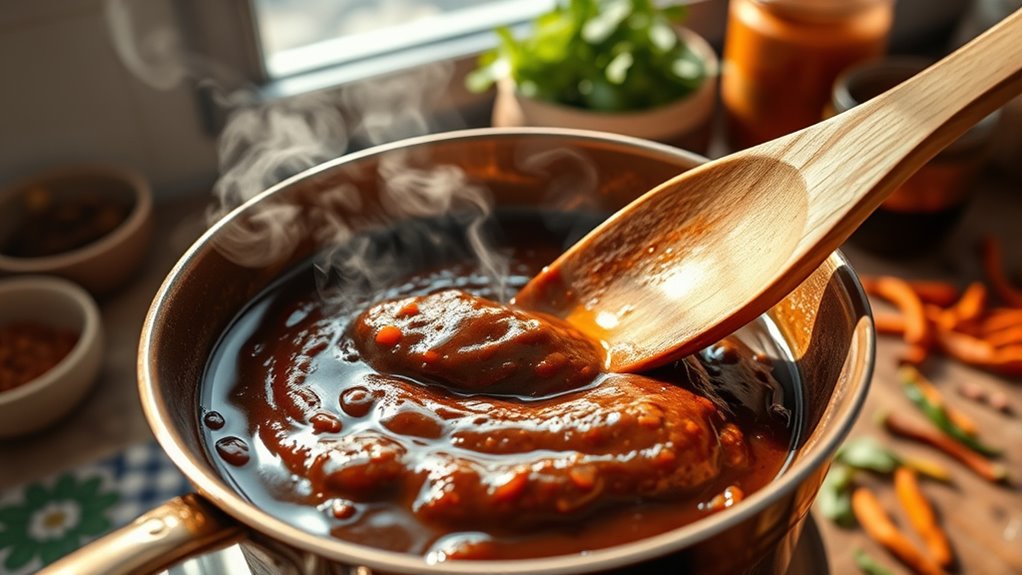
Tamarind is a versatile ingredient that can add a tangy depth to a wide range of dishes. Its unique tamarind flavor brings a sweet and sour note that can elevate everything from curries to sauces. When you’re cooking with tamarind, understanding the best time to add it to your dish is key to avoiding that raw, bitter taste that can sometimes overpower the meal. The timing affects how well the flavors meld and develop, so paying attention to this detail helps you make the most of its culinary uses.
Typically, if you add tamarind early in the cooking process, especially in dishes that simmer for a long time, its flavors will have time to mellow and integrate smoothly. This is especially true when using tamarind paste or pulp, which benefits from slow cooking to soften its sharpness. When you add it at the beginning, the heat allows the tamarind flavor to break down and blend with other ingredients, creating a balanced, well-rounded taste. However, if you’re using it in a quick-cook recipe, such as a stir-fry or a fresh salsa, adding it too early can result in a raw, harsh flavor that doesn’t develop fully.
Add tamarind early for mellow flavor; add later to preserve tanginess and prevent raw bitterness.
In many recipes, the best approach is to add tamarind toward the middle or near the end of cooking. This timing lets the dish simmer just enough for the tamarind to soften and impart its tanginess without becoming overpowering. For example, if you’re making a tamarind-based sauce or chutney, adding it after the initial sautéing of spices allows the flavors to meld without risking that raw taste. Taste as you go, and if the tamarind flavor still tastes sharp, give it a few more minutes of cooking, which will help it mellow out.
Another tip is to adjust the amount of tamarind used based on how long your dish cooks. If you’re adding it at the start, use a smaller amount since the flavor will intensify as it cooks. Conversely, if you add it later, you might want to add a bit more to achieve the desired tangy depth. Remember, tamarind’s culinary uses are versatile, so don’t be afraid to experiment with timing to find what works best for your dish. The goal is to incorporate the tamarind flavor fully, ensuring it enhances rather than dominates, and that you avoid that raw, bitter note. Timing truly makes all the difference when cooking with this tangy ingredient.
Frequently Asked Questions
Can I Substitute Tamarind Paste With Tamarind Concentrate?
Yes, you can substitute tamarind paste with tamarind concentrate, but keep in mind that concentrate is more potent. Start with a smaller amount and adjust to taste to get the right tamarind flavor without overpowering your dish. Since concentrate is thicker and more concentrated, you might need to dilute it slightly with water before adding it as a paste substitution. This way, your dish retains balanced flavors.
How Long Does Tamarind Need to Cook to Remove Raw Flavor?
Think of tamarind as a simmering symphony, where flavors need time to develop fully. You should cook tamarind for about 10-15 minutes, stirring often, to allow its raw flavor to fade. This cooking time adjustment helps with tamarind flavor development, ensuring it melds smoothly into your dish without overpowering. Keep tasting as you go, and you’ll strike the perfect balance between raw and rich, tangy goodness.
Is Dried Tamarind Different From Tamarind Paste in Cooking?
Dried tamarind and tamarind paste differ in flavor and texture, affecting your cooking. Dried tamarind needs soaking and straining to release its tangy flavor, which can intensify during cooking, offering a more complex profile. Tamarind paste is more concentrated and ready to use, providing consistent flavor instantly. Depending on your desired cooking flavor profile, choose dried tamarind for depth or paste for convenience.
Can I Add Tamarind at the End of Cooking?
Yes, you can add tamarind at the end of cooking to preserve its bright, tangy flavor. Adding it late in the cooking process helps maintain the tamarind flavor without developing a raw taste. The right cooking timing is key; if you add it too early, it might lose its vibrant acidity. For a sharper, fresher taste, stir in tamarind paste during the final minutes of cooking.
Does Tamarind Affect the Shelf Life of Dishes?
Tamarind doesn’t substantially affect the shelf life of your dishes, but it can influence preservation effects and flavor stability. Its acidity helps inhibit bacteria growth, potentially extending freshness slightly. However, improper storage or prolonged exposure can still lead to spoilage. To maintain flavor stability, store tamarind-based dishes in airtight containers in the fridge and consume them within a few days. Proper handling ensures your dish stays safe and tasty longer.
Conclusion
Remember, adding tamarind at the right moment transforms your dish from raw to refined. Like a symphony reaching its crescendo, timing is everything—wait too long, and its vibrant tang may fade; add too early, and it risks losing its depth. By mastering when to incorporate tamarind, you reveal its full potential, turning everyday cooking into an artful dance of flavors. Embrace this knowledge, and let your dishes sing with authentic, balanced brilliance.