To thicken curry without creating slime, try adding pureed vegetables like carrots or zucchini, which blend seamlessly and boost nutrition. You can also stir in nut butters for a creamy texture or simmer the curry uncovered to allow excess liquid to evaporate naturally. Using coconut milk or cream near the end adds richness without slipperiness. For a wholesome option, incorporate pureed lentils or cooked chickpeas. Keep exploring these methods to perfect your curry’s consistency.
Key Takeaways
- Incorporate vegetable purees gradually to thicken without creating slime, adding flavor and nutrition.
- Simmer the curry uncovered to reduce excess liquid through evaporation naturally.
- Add coconut milk or cream near the end to emulsify and thicken the sauce without starches.
- Use cooked lentils or chickpeas as natural thickeners that enhance texture and protein content.
- Stir in nut pastes like cashew or almond for richness and a creamy consistency without slime.

If you want a thicker curry but prefer to avoid starch slime, there are plenty of effective methods you can try. One of the simplest ways is to incorporate vegetable purees. Blending cooked vegetables like carrots, cauliflower, or zucchini into a smooth puree and stirring it into your curry can add body without the slimy texture that starches sometimes produce. These purees blend seamlessly, thickening the sauce naturally while boosting flavor and nutrition. When adding vegetable purees, do so gradually, tasting as you go, until you reach your desired consistency. This approach is especially helpful if you want a healthier, more wholesome curry, since the pureed vegetables contribute fiber and vitamins.
Another effective technique involves using nut pastes. Nut butters, such as cashew or almond paste, are excellent for thickening curry because they add richness and creaminess without relying on traditional starches. To use nut pastes, stir in a small amount at a time, allowing it to melt into the sauce and thicken naturally. Not only does this give your curry a velvety texture, but it also enhances the flavor with nutty undertones. Be mindful of the quantity; too much can overpower the dish or make it overly thick. Incorporating nut pastes works particularly well in curries with coconut milk or tomato bases, as they complement the existing flavors.
Use nut pastes like cashew or almond for rich, velvety curry thickening.
Beyond purees and nut pastes, you can also think about reducing the sauce. Simmer your curry uncovered over medium-low heat to allow excess liquid to evaporate, naturally thickening the sauce. Keep stirring occasionally to prevent burning. This method preserves the fresh ingredients’ flavors and avoids adding any extra ingredients that might alter the taste.
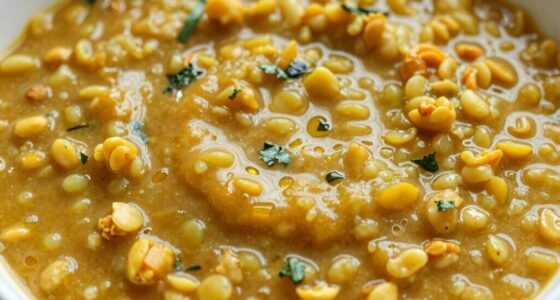
Another quick tip involves adding a splash of coconut milk or cream near the end of cooking. The fats help to emulsify the sauce, giving it a richer, thicker consistency without the need for starches. Just be sure to add it gradually and stir well. If you’re open to experimenting, a touch of pureed lentils or cooked chickpeas can also serve as a natural thickener, adding both texture and protein.
Frequently Asked Questions
Can I Use Cornstarch Substitutes to Thicken Curry?
Yes, you can use cornstarch substitutes to thicken curry. Gluten-free options like arrowroot powder or potato starch work well, while vegan thickeners like xanthan gum or ground flaxseed can also do the trick. Just mix your chosen thickener with cold water first, then add it to your curry while stirring. These alternatives help you achieve a rich, thick consistency without relying on traditional cornstarch.
Will Adding Coconut Milk Thicken the Curry?
Did you know coconut milk makes up about 50% of the fat content in many curry recipes? Adding coconut milk benefits your dish by naturally thickening it without starch, giving your curry a rich, creamy texture. When you pour it in, it helps to thicken the sauce as it simmers, making it a great alternative if you want to avoid starch-based thickeners. So yes, coconut milk will definitely thicken your curry!
How Long Should I Simmer to Reduce Curry Thickness?
You should simmer your curry for about 15 to 30 minutes to reduce thickness effectively. Keep an eye on the consistency and stir occasionally to prevent burning. Longer simmering allows the liquid to evaporate, thickening the sauce naturally. If you want a quicker result, simmer in shorter intervals, checking the consistency frequently. This method gives you control over the thickness without overcooking or losing flavor.
Can I Use Pureed Vegetables as a Thickening Agent?
Yes, you can definitely use vegetable purees as healthy thickeners for your curry. Simply blend cooked vegetables like carrots, zucchini, or spinach until smooth, then stir them into your dish. This not only thickens the curry naturally but also boosts its nutritional value. Vegetable purees are a great alternative to starch-based thickeners, providing a wholesome, flavorful way to achieve the desired consistency without adding extra carbs or processed ingredients.
Does Adding Yogurt Affect the Curry’s Texture?
Adding yogurt can affect your curry’s texture by causing yogurt curdling if added directly to hot liquid. To prevent this, temper the yogurt by mixing it with some warm curry first, then stir it in slowly. This process helps maintain a smooth, creamy texture and avoids unwanted texture change. Keep the heat low after adding yogurt, and stir continuously for the best results.
Conclusion
So, next time your curry’s too thin, why rely on starch slime when natural thickeners like coconut milk or pureed vegetables can do the trick? With a few simple tweaks, you can achieve that rich, hearty texture you crave. Isn’t it worth trying these healthier, flavor-enhancing options instead of resorting to artificial thickeners? Give them a shot and enjoy a delicious, perfectly thickened curry every time!