To season your carbon steel pan like a pro, start by thoroughly cleaning and drying it to remove residue. Apply a thin, even layer of high smoke point oil, then heat the pan gradually in the oven at around 400°F for 20-30 minutes. Repeat this process several times to build up strong, non-stick layers. With proper maintenance and re-seasoning, you’ll guarantee your pan stays in top shape for years—if you keep going, you’ll master it completely.
Key Takeaways
- Properly clean and dry the pan before applying a thin, even layer of high smoke point oil.
- Preheat the oven to around 400°F and heat the pan gradually for 20-30 minutes to bond the oil.
- Apply multiple thin coats of oil, heating after each to build durable, non-stick layers.
- Maintain the seasoning by cleaning with hot water and reapplying oil when dull or food sticks.
- Regularly re-season and build layers to ensure a long-lasting, pro-level non-stick surface.

Made In Cookware – Carbon Steel Seasoning Wax (6 Oz) – Crafted in Canada – Rice Bran Wax, Canola Oil and Grapeseed Oil
Contains: Rice Bran Wax | Canola Oil | Grapeseed Oil
As an affiliate, we earn on qualifying purchases.
As an affiliate, we earn on qualifying purchases.
Why Properly Season Your Carbon Steel Pan Matters

Seasoning your carbon steel pan is essential because it creates a natural, non-stick surface that improves with use. Proper pan seasoning helps prevent food from sticking and protects the pan from rust. When you focus on oil selection, you ensure the coating bonds well during the seasoning process, resulting in a durable finish. Using the right oil creates a smooth, even layer that builds up over time, enhancing the pan’s performance. Skipping or rushing the seasoning can lead to uneven layers that chip or peel, reducing non-stick qualities. Consistent seasoning also adds a layer of protection against corrosion. Investing time in this step guarantees your pan will develop a seasoned surface that improves with every use, making cooking easier and more enjoyable. Proper oil choice plays a crucial role in achieving a durable, long-lasting seasoning layer. Additionally, understanding the chemical properties of oils can help you select the best one for a resilient and effective seasoning, ensuring a long-lasting non-stick surface. Recognizing how oil smoke point impacts the seasoning process can also help you achieve a more durable and effective coating.
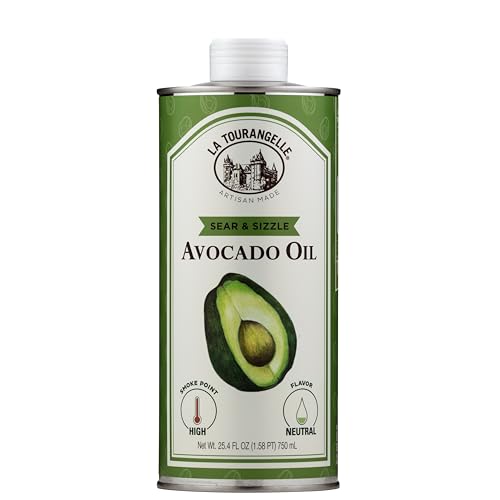
La Tourangelle, Sear & Sizzle Avocado Oil, Handcrafted from Premium Avocados, High Smoke Point Refined Oil Great for High Heat Cooking, Frying, Cast Iron Seasoning, 25.4 fl oz
Healthy High Heat Oil: Expeller-pressed from fresh avocados and protected in our iconic light-blocking tin, this smooth, neutral…
As an affiliate, we earn on qualifying purchases.
As an affiliate, we earn on qualifying purchases.
How to Choose the Best Oil for Seasoning Carbon Steel
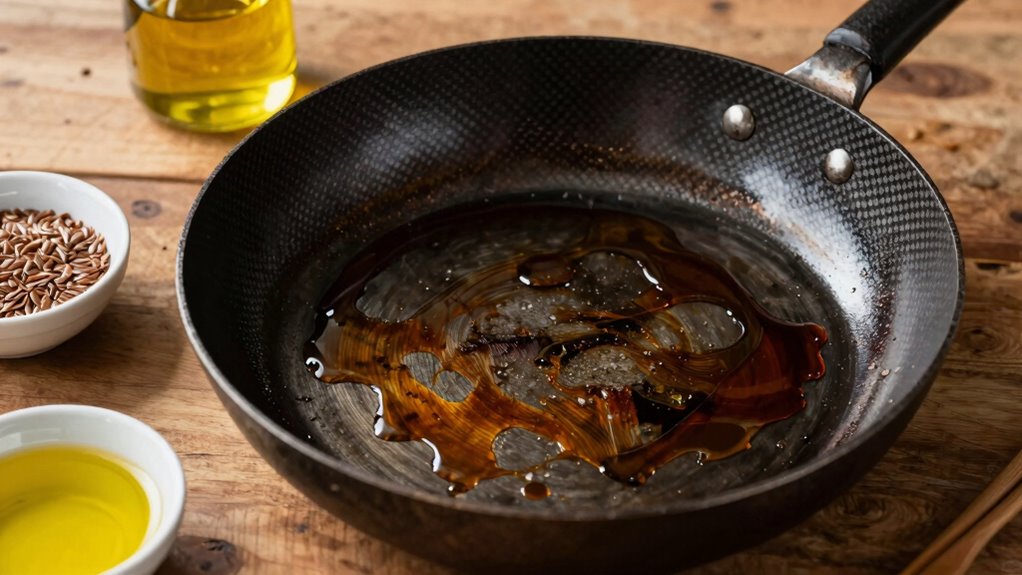
Choosing the right oil is key to achieving a durable, non-stick seasoning layer on your carbon steel pan. You’ll want an oil with a high smoke point and good durability to handle high temperatures, while also ensuring it’s food-safe and non-GMO. Ease of application matters too, so pick an oil that spreads smoothly and evenly for the best results. Using an oil with proper body jewelry measurements can also help ensure an even coating and prevent pooling during seasoning. Additionally, selecting oils that are naturally stable at high temperatures can contribute to a longer-lasting seasoning layer, making your cookware more reliable over time. Opting for high-temperature stable oils can further enhance the effectiveness of your seasoning process. Incorporating oils with proven resistance to oxidation can improve the longevity of your seasoned surface. Choosing oils with a high smoke point is essential, as it prevents smoke and flavor transfer during seasoning, ensuring a clean seasoning layer.
Smoke Point and Durability
When selecting oil for seasoning your carbon steel pan, paying attention to its smoke point and durability is essential. A high smoke point ensures the oil can withstand the high heat needed for proper seasoning without burning or breaking down. A high smoke point prevents the oil from smoking excessively or degrading during the seasoning process, resulting in a more effective coating. Durability relates to how well the oil forms a resilient, non-stick coating that lasts through multiple uses. Consider the metal composition of your pan, as some oils bond better with certain types of steel, enhancing heat resistance and coating longevity. Oils with a higher smoke point, like flaxseed or grapeseed, resist breaking down during seasoning, creating a stronger, more resilient finish. Proper air purifier maintenance and filter replacement practices can ensure the air in your kitchen stays clean and free from airborne particles during your seasoning process. Additionally, selecting oils with desirable oxidative stability can help maintain the seasoning layer’s integrity over time and prevent rancidity. Using oils with excellent thermal stability can further enhance the longevity of your seasoned pan, ensuring it performs well through many cooking sessions.
Non-GMO and Food Safety
Ever wondered how to select an oil that’s both safe and free from genetically modified ingredients? When choosing an oil for seasoning your carbon steel, prioritize options with non-GMO ingredients. This ensures you’re avoiding genetically modified components that might raise health concerns or conflict with your food safety practices. Look for labels that specify “non-GMO” or “certified organic,” which often guarantee the absence of genetically modified crops. Additionally, consider oils that align with food safety standards, free from harmful additives or processing chemicals. Using non-GMO oils supports your commitment to healthier, safer cooking. Incorporating halal-certified oils can further enhance food safety and align with dietary guidelines, especially for those adhering to halal standards. Opting for oils with verified food safety certifications can provide extra assurance about their quality and purity. By making mindful choices, you help maintain the integrity of your cookware and promote overall food safety, ensuring your seasoning process is both effective and aligned with your health-conscious values.
Ease of Application
Selecting the right oil for seasoning your carbon steel pan is essential because it affects how easily and evenly the seasoning process unfolds. A good oil should spread smoothly during application, ensuring even coverage across the surface. When preparing the surface, clean and dry it thoroughly to promote proper oil adhesion. For easy oil application, choose oils with a high smoke point and thin consistency, like flaxseed or grapeseed oil. These oils spread thinly and evenly, reducing streaks or pooling. Avoid thick or sticky oils that can create uneven layers or require multiple coats. Proper surface preparation combined with the right oil makes the seasoning process more straightforward, resulting in a durable, non-stick surface that improves with each use.
BuzzyWaxx Original Blend – Cast Iron and Carbon Steel Seasoning
Experience the pinnacle of cast iron care with our exceptional Cast Iron Seasoning Blend. Crafted from a harmonious…
As an affiliate, we earn on qualifying purchases.
As an affiliate, we earn on qualifying purchases.
Clean and Dry Your Pan Before Seasoning

Before you start seasoning your carbon steel pan, it’s essential to clean it thoroughly and guarantee it’s completely dry. Proper pan cleaning removes any residue or manufacturing oils that could interfere with seasoning. After cleaning, dry the pan completely to prevent rust and ensure even oil absorption. To do this, wipe it with a clean towel or heat it briefly on the stove. When selecting oil, choose one with a high smoke point, like flaxseed or vegetable oil, to create a durable coating. Remember, moisture is the enemy during seasoning, so never skip drying. Additionally, understanding the horsepower of electric dirt bikes can give you insight into the power output and performance, which is useful if you plan to use or upgrade your bike for off-road adventures. Proper preparation and knowledge of your equipment can make all the difference in achieving a professional seasoning on your pan. Recognizing the importance of cleaning techniques can also help you maintain your pan’s condition over time, especially since proper maintenance extends the life of your cookware. Developing good seasoning practices can result in a more non-stick surface and better cooking results.
Knapp Made Cast Iron Seasoning Wax and Carbon Steel Seasoning Wax – 2 Oz Unique Blend of Natural Oils and Beeswax – Restore Cast Iron, Steel, Cutting Board, Kitchenware.Wood Furniture
Perfect Seasoning and Conditioning: Cast Iron Seasoning Blend of Oil and Beeswax. Perfectly Seasons and Conditions Cast Iron…
As an affiliate, we earn on qualifying purchases.
As an affiliate, we earn on qualifying purchases.
How to Apply the First Coat of Oil on Your Pan
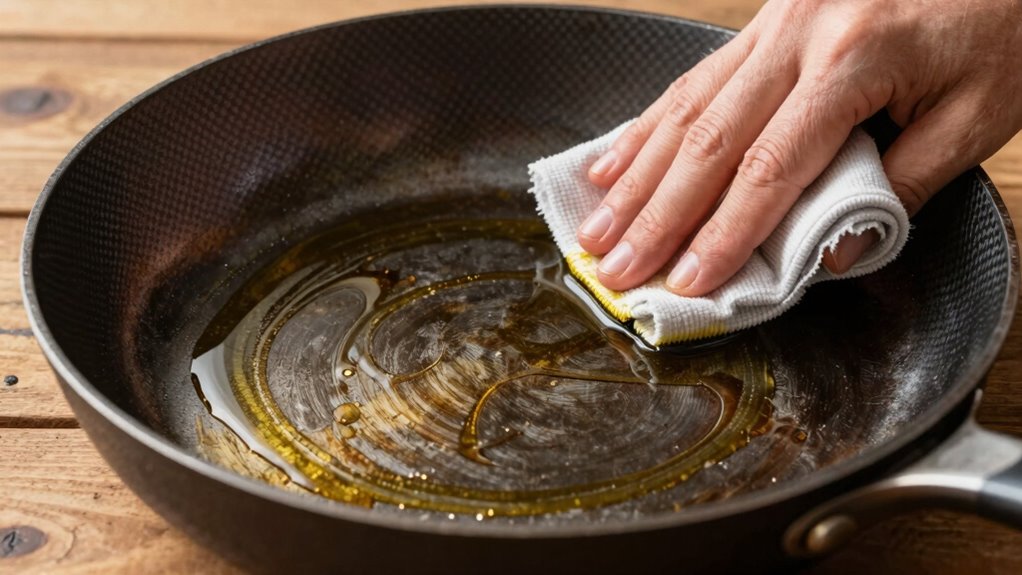
Start by ensuring your pan is clean and thoroughly dry. Then, apply a very thin layer of oil, using a cloth or paper towel, to avoid excess buildup. Finally, spread the oil evenly across the surface to create a smooth, uniform coating. For best results, choose the right oil type that is suitable for seasoning and provides a durable, protective layer. Using the proper seasoning methods can also help achieve a better non-stick surface over time. Remember, a well-seasoned pan develops a natural non-stick coating that improves with each use.
Clean and Dry Pan
Ever wonder why a clean and dry pan is essential before seasoning? It’s because proper pan cleaning and moisture removal make certain your seasoning bonds well and prevents rust. If your pan has residue or leftover moisture, the oil won’t adhere properly, leading to uneven seasoning. To prepare, scrub the pan thoroughly to remove any debris, then rinse and dry it completely. Here are key steps:
- Wipe the pan with a clean cloth or paper towel
- Heat the pan slightly to evaporate residual moisture
- Ensure no water droplets remain before adding oil
This process creates a perfect surface for the initial oil coat, setting the stage for a durable, seasoned pan. Always prioritize a clean, moisture-free surface for best seasoning results.
Apply Thin Oil Layer
Applying a thin, even layer of oil is essential for a successful seasoning process. Proper oil application guarantees the coating bonds well to the pan’s surface and prevents sticky spots. Use a high-smoke-point oil, like flaxseed or grapeseed, and pour a small amount onto the pan. With a clean cloth or paper towel, spread the oil evenly, covering every surface. Focus on achieving a thin layer thickness—too much oil can result in a sticky or uneven finish. Wipe off excess oil to avoid pooling, which can lead to blotchy spots during seasoning. The goal is a light, uniform coating that will polymerize smoothly when heated. This step sets the foundation for a durable, seasoned finish that improves with each use.
Spread Oil Evenly
Once you’ve poured a small amount of oil onto the pan, the next step is to spread it evenly across all surfaces. Proper oil distribution guarantees an even coating, preventing hotspots and uneven seasoning. Use a clean cloth or paper towel to gently spread the oil, making sure to cover the entire interior, including the sides and edges. Focus on achieving a uniform layer that’s thin but complete. To help with this, you can:
- Tilt and rotate the pan to cover all areas
- Use a cloth or paper towel to buff the oil into the surface
- Check for any missed spots and reapply if necessary
This process guarantees a smooth, even coating, which is essential for a successful seasoning layer and a durable, non-stick finish.
How to Bake or Heat Your Pan for a Strong, Non-Stick Surface?

To build a strong, non-stick surface on your carbon steel pan, you need to bake or heat it properly before use. Start by preheating your oven to around 400°F (200°C). Place the pan inside and let it heat gradually for about 20-30 minutes. This pan heating process helps open the pores of the steel, allowing the oil to bond better during seasoning. Make sure the pan is dry before placing it in the oven to prevent rust. After heating, carefully remove the pan and apply a thin layer of oil, then return it to the oven for additional seasoning. Consistent oven temperature during this process guarantees even heating, which is key to developing a durable, non-stick surface.
How to Build Up Multiple Layers for Better Seasoning
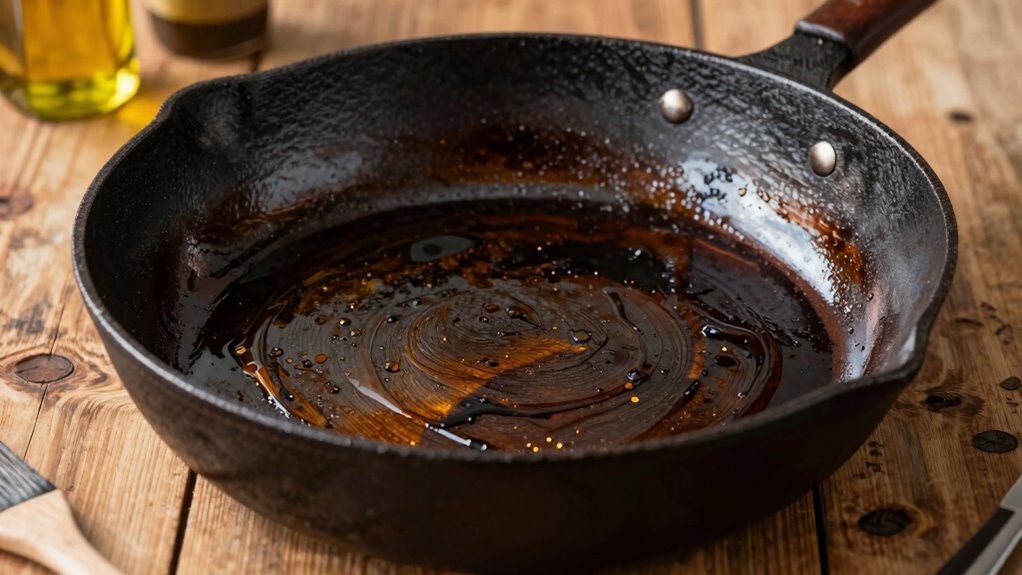
Building up multiple layers of seasoning is essential for creating a durable, non-stick surface on your carbon steel pan. Each additional layer strengthens the layer buildup, improving the pan’s performance over time. To achieve this, apply thin coats of oil and heat the pan thoroughly, allowing each seasoning layer to bond properly. Repeating this process builds up seasoning layers gradually, resulting in a smoother, more resilient surface. Focus on these key steps:
- Apply a thin, even layer of oil before each heating session
- Bake the pan at high temperature to promote layer bonding
- Repeat the process several times for a thicker, more durable seasoning build-up
Consistent layering ensures your pan’s seasoning layers develop and improve, giving you a superior non-stick experience.
How Many Coats Do You Need for a Non-Stick Carbon Steel Pan?
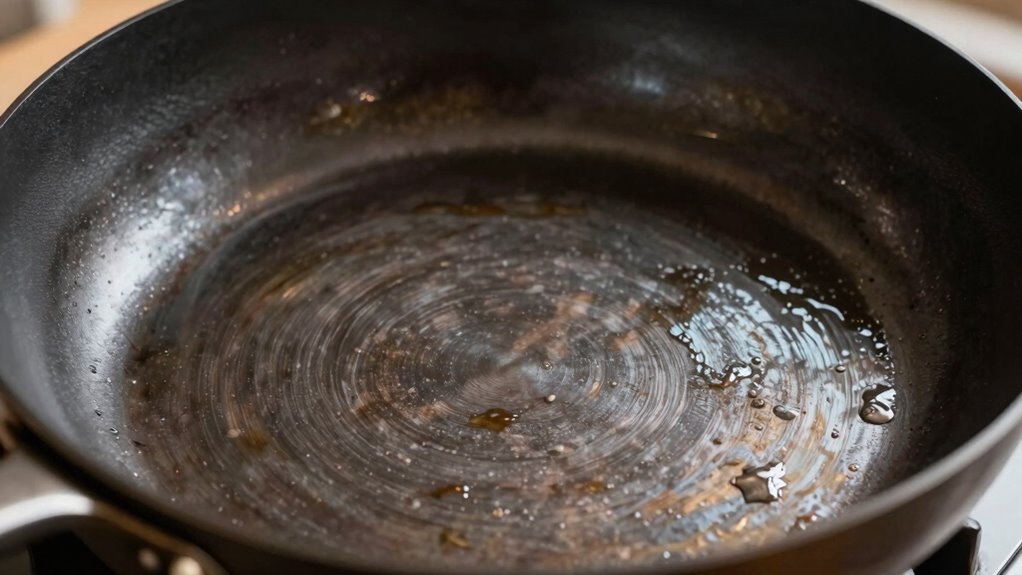
Achieving a non-stick surface on your carbon steel pan typically requires multiple seasoning coats, but the exact number depends on how often you cook with it and your desired level of non-stick performance. Generally, 3 to 5 coats are enough to build an effective seasoning layer. Focus on applying a thin, even layer of oil each time; thicker coatings can hinder seasoning thickness and reduce coating adhesion. Multiple thin layers promote better seasoning development and ensure the coating bonds well to the pan’s surface. Patience is key—allow each coat to heat and bond properly before applying the next. With consistent seasoning, you’ll develop a durable, non-stick surface that improves with time and use.
How to Maintain and Re-Season Your Pan for Long-Term Use

Maintaining and re-seasoning your carbon steel pan is essential for ensuring its longevity and ideal performance over time. Regular care keeps the seasoning intact and prevents rust. When re-seasoning, focus on proper oil selection and a consistent seasoning process.
To keep your pan in top shape:
- Clean it gently with hot water and a soft brush, avoiding soap.
- Dry thoroughly to prevent rust.
- Apply a thin layer of high smoke point oil, like flaxseed or grapeseed, during the seasoning process.
Re-season as needed, especially if food starts sticking or the surface dulls. Consistent maintenance will build a durable, non-stick patina that enhances cooking and extends your pan’s lifespan.
Troubleshooting Sticky or Rusty Carbon Steel Pans
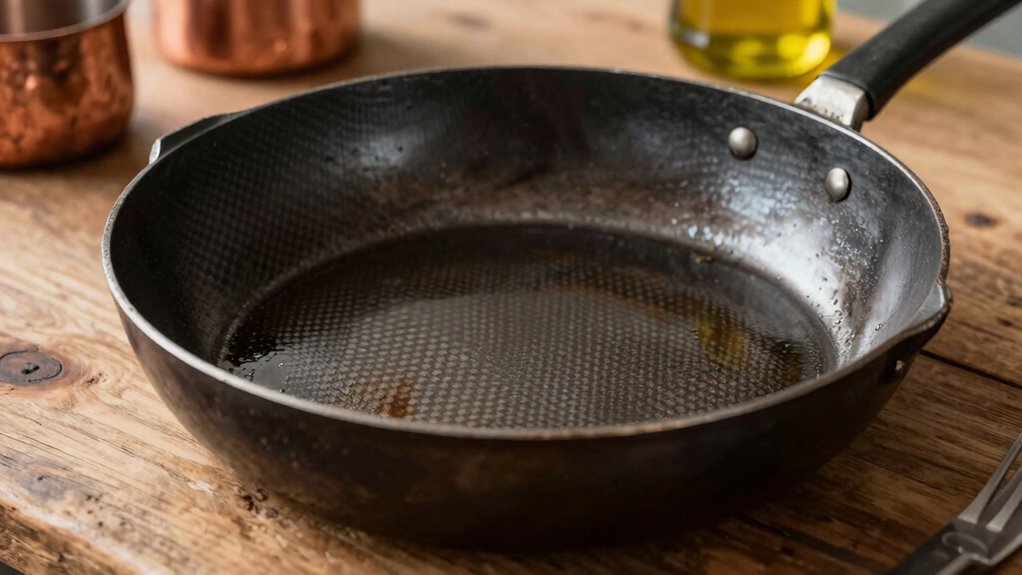
If your carbon steel pan becomes sticky or develops rust, quick action is essential to restore its surface and prevent further damage. Sticky residue often results from incomplete seasoning or leftover food, so start by scrubbing the pan with hot water and a gentle brush or steel wool. For pan rust, use a mixture of coarse salt and a bit of vinegar or lemon juice to scrub away the rust spots. Rinse thoroughly and dry immediately to prevent future rust formation. Once clean, re-season the pan by applying a thin layer of oil and heating it until it smokes, then let it cool. Regular maintenance will keep your pan non-stick and rust-free, ensuring it performs like a pro.
Frequently Asked Questions
Can I Use Soap to Clean My Seasoned Carbon Steel Pan?
You can use dish soap to clean your seasoned carbon steel pan, but it’s best to do so sparingly. Soap can strip away the seasoning if used excessively, so for regular pan cleaning, stick to hot water and a stiff brush. Save dish soap for deep cleaning or removing stubborn grime. After cleaning, dry your pan thoroughly and apply a light layer of oil to maintain its seasoning.
How Often Should I Re-Season My Carbon Steel Pan?
You should re-season your carbon steel pan when the surface shows signs of rust, dullness, or sticking issues, typically after several months of regular use. For ideal pan maintenance, maintain a consistent seasoning frequency—lightly re-season every few months or when needed. This helps preserve the non-stick layer and prevents rust, ensuring your pan stays in top condition. Regular seasoning keeps your pan performing well and extends its lifespan.
Is It Okay to Cook Acidic Foods on a Seasoned Pan?
Cooking acidic foods on a seasoned pan is like pouring rain on a delicate umbrella; it can wear down the seasoning durability. Acidic ingredients, like tomatoes and citrus, can strip away the seasoning layer, making your pan more prone to rust. While occasional use is okay, regularly cooking acidic foods may require you to re-season more often to maintain that smooth, non-stick surface. Use caution to keep your pan in top shape.
What’s the Best Way to Remove Rust From My Pan?
To remove rust from your pan, start by scrubbing the rusted areas with steel wool or a scrub brush dipped in a mixture of baking soda and water. For stubborn rust, you can also use vinegar soak and then scrub again. Rinse thoroughly, dry completely, and re-season the pan to restore its non-stick surface. This rust removal process helps with pan restoration, keeping your cookware in top shape.
Can I Use a Dishwasher to Clean My Carbon Steel Cookware?
Did you know that dishwashers can strip away your pan’s seasoning? You should avoid using a dishwasher for your carbon steel cookware because of dishwasher dangers like harsh detergents and high heat, which can cause rust and damage the surface. Instead, opt for cleaning alternatives like hand washing with hot water and a brush, then drying thoroughly. This preserves your cookware’s seasoning and extends its lifespan.
Conclusion
Now that you know how to season your carbon steel pan like a pro, you’re all set to turn that rough diamond into a shining tool in your kitchen. Remember, patience is key—building a perfect seasoning takes time, but the results are worth it. With proper care and maintenance, your pan will serve you for years to come. Stick with it, and you’ll be cooking like a seasoned veteran in no time!