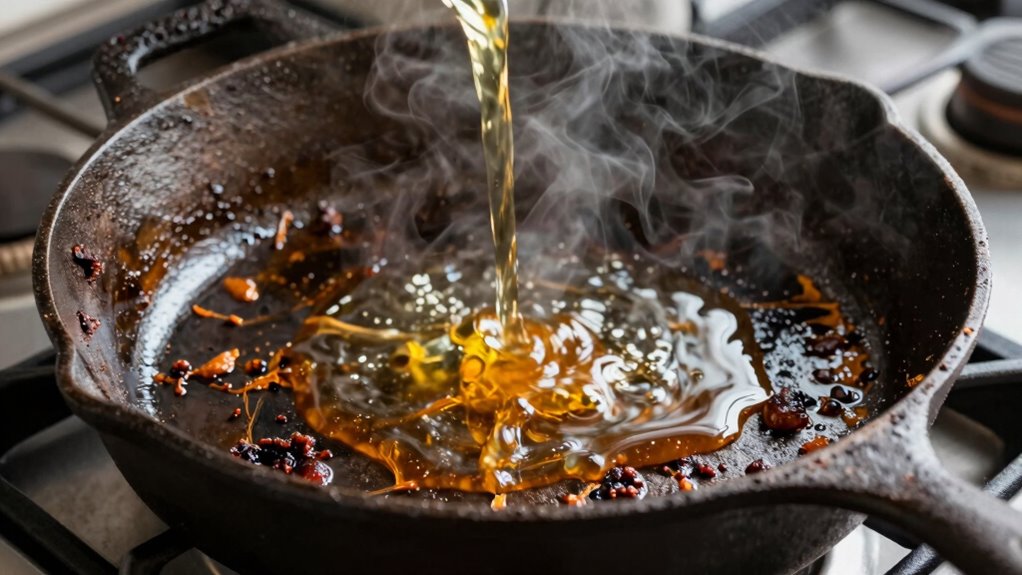
To deglaze, simply remove cooked ingredients and keep the pan on medium heat. Pour in a small amount of liquid like broth, wine, or water, and immediately use a wooden spoon or spatula to scrape the browned bits off the bottom. This quick 10-second step captures the flavor-packed fond, transforming it into a rich sauce base. Mastering this simple technique will help you create delicious dishes with minimal effort—keep going to discover more tips and tricks.
Key Takeaways
- Add a small amount of liquid (broth, wine, or water) to the hot pan immediately after cooking.
- Keep the pan on medium heat to avoid burning the fond.
- Use a wooden spoon or spatula to scrape up browned bits as the liquid sizzles.
- Stir for about 10 seconds to dissolve the fond and release concentrated flavors.
- This quick step creates a rich base for sauces, preventing burnt bits from going to waste.

Have you ever wondered how to turn browned bits stuck to the bottom of your pan into a flavorful base for sauces and gravies? This simple technique, called deglazing, is a game-changer in the kitchen. When you cook meat or vegetables, those tasty browned bits—called fond—stick to the pan. Instead of tossing them away or letting them burn, you can use deglazing to release their flavor potential. It’s a quick step that transforms leftover residue into a rich foundation for pan sauces, elevating your dishes with minimal effort.
To start, remove your cooked meat or vegetables from the pan and set them aside. Keep the pan on medium heat, and pour a small amount of liquid—such as broth, wine, or even water—into the hot pan. The moment the liquid hits the pan, you’ll hear it sizzle and see steam rise. Use a wooden spoon or spatula to gently scrape the bottom, loosening the browned bits from the surface. These bits are packed with concentrated flavor, and by dissolving them into the liquid, you’re creating a robust base for your sauce. Incorporating cooking techniques like this maximizes flavor extraction and enhances your dish’s overall depth. Being mindful of pan temperature helps prevent burning the fond and ensures optimal flavor release. Additionally, maintaining proper heat control prevents the fond from burning and ensures the best flavor extraction. Using temperature management techniques like this can help keep your fond from burning and preserve its delicate flavors.
Remove cooked ingredients; add liquid and scrape to unlock rich, flavorful fond for your sauce.
This process is all about flavor enhancement. The liquid you add doesn’t just loosen the fond; it infuses your sauce with depth, richness, and complexity. As the liquid simmers, it reduces slightly, intensifying the flavors. You can add aromatics like garlic, shallots, or herbs at this stage to build even more layers of taste. Once the liquid has reduced to your desired consistency, you can stir in butter or cream for a silky finish, or pour it over your cooked meat or vegetables. The resulting pan sauce is not only flavorful but also saves you from wasting those flavorful browned bits.
Deglazing is especially valuable when you’re making a quick sauce or gravy. It’s a simple technique that makes use of ingredients you probably already have on hand. Plus, it’s fast—usually just 10 seconds or so—and it instantly elevates your dish. Instead of ending with a bland or greasy plate, you finish with a sauce that highlights the natural flavors of your ingredients. The key is to be attentive and act promptly, so you don’t let the fond burn or dry out. Being aware of the core kitchen technique involved helps prevent mistakes and ensures maximum flavor extraction. With this technique, you’ll maximize flavor and create impressive, delicious pan sauces every time you cook.
Frequently Asked Questions
Can Deglazing Be Done Without Wine or Broth?
Yes, you can deglaze without wine or broth by using substitute liquids like water, apple cider, or fruit juices. These alternatives help loosen flavorful browned bits from the pan, enhancing your dish’s taste. While they may not add as much depth as wine or broth, they still provide essential flavor enhancements. Just pour your chosen liquid into the hot pan, scrape up those tasty bits, and continue cooking to develop rich flavors.
What Types of Pans Are Best for Deglazing?
Oh, the grandeur of choosing the perfect pan! For deglazing, cast iron pans are champions—retaining heat and adding flavor, making them ideal. But if you prefer less fuss, non-stick pans do the job with ease, preventing sticking and making cleanup a breeze. Ultimately, your choice depends on your culinary style, but both can turn those burnt bits into gold, elevating your dish with minimal effort.
How Long Should I Deglaze the Pan?
You should deglaze the pan for about 30 seconds to a minute. Keep the pan at medium heat and add enough liquid—like wine, broth, or water—to loosen the browned bits. Stir constantly, scraping the bottom to dissolve those flavorful bits. Once the liquid reduces slightly and the bits are dissolved, your deglazing is done. Adjust the time if you want a thicker sauce or more concentrated flavor.
Can Deglazing Be Skipped Without Affecting the Dish?
You might think skipping deglazing is okay, but it really impacts your dish’s flavor enhancement. Investigate this theory, and you’ll find that deglazing captures those flavorful browned bits, enriching your sauce. While it’s a shortcut some ignore, skipping it can leave your dish lacking depth and complexity. For the best results, don’t skip this step—it’s quick, easy, and well worth the flavor boost it provides.
What Are Common Mistakes to Avoid When Deglazing?
When deglazing, avoid overcrowding the pan, which can cool it down and prevent proper flavor release. Also, don’t use high heat, as it can cause burning or uneven cooking, making deglazing less effective. Instead, keep the heat moderate, scrape up browned bits quickly, and work in batches if needed. These mistakes can ruin your sauce, so stay attentive and gentle for the best results.
Conclusion
Now that you know how quick deglazing is, you’ll never leave those tasty browned bits behind. Just 10 seconds can turn burnt leftovers into rich, flavorful sauces—saving you time and reducing waste. Did you know that Americans throw away about 25% of their food each year? Mastering this simple step not only boosts your cooking but also helps cut down on food waste. So next time, deglaze confidently and make every bite count!