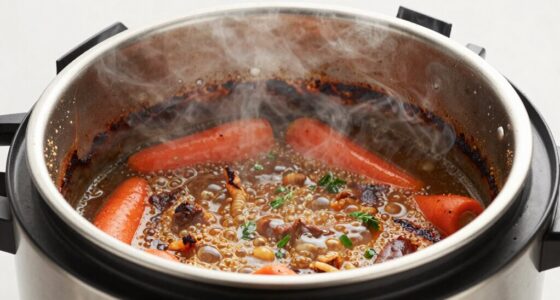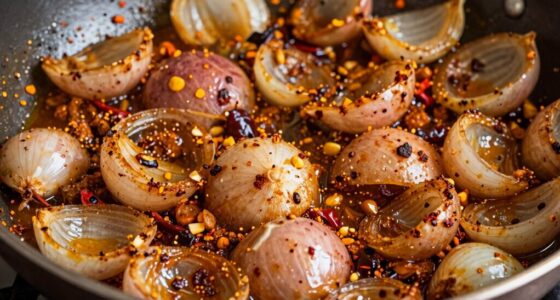
The secret to a creamy dal isn’t heavy cream but choosing the right lentils, like red or yellow varieties, that break down easily during cooking. Proper soaking, thorough rinsing, and gentle simmering in a heavy-bottomed pot help release natural starches, creating a velvety texture. Adding cooked vegetables, blending, or mashing also enhances creaminess naturally. If you want to master the art of smooth, delicious dal, there’s more to explore below.
Key Takeaways
- Use naturally soft lentil varieties like red or yellow, which break down easily and create a creamy texture during cooking.
- Proper soaking and thorough rinsing help lentils cook evenly and release starches that enhance creaminess.
- Cook lentils slowly with a lid on, stirring frequently to allow natural starches to develop and thicken the dal.
- Incorporate cooked vegetables or blend part of the dal to naturally thicken and add richness without cream.
- Use techniques like mashing, blending, and tempering spices to achieve a smooth, velvety consistency naturally.
red lentils for creamy dal
As an affiliate, we earn on qualifying purchases.
As an affiliate, we earn on qualifying purchases.
How to Choose the Right Lentils for a Creamy Dal
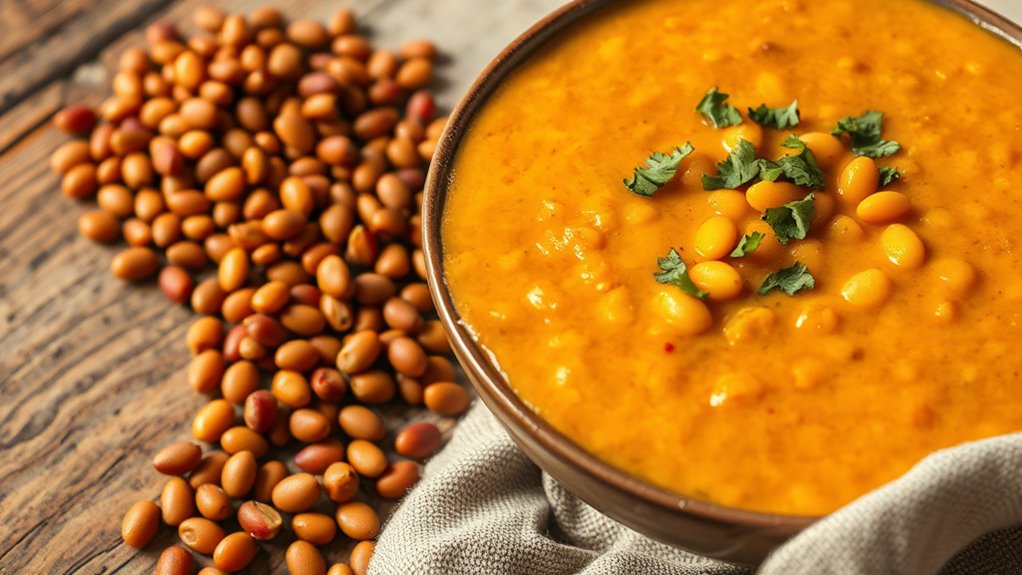
Choosing the right lentils is key to making a creamy dal. When selecting lentil varieties, opt for ones that naturally break down during cooking, like red or yellow lentils, which become soft and creamy without extra effort. These varieties don’t require advanced cooking equipment; a simple pot or pressure cooker works perfectly. If you prefer a more traditional approach, a sturdy saucepan will do. Avoid lentils that hold their shape, like green or brown, unless you want a firmer texture. The right lentil choice ensures your dal turns out smooth and velvety. Keep in mind that quality also matters—fresh, well-stored lentils will cook evenly and enhance the dish’s creaminess. Proper storage techniques help maintain lentil quality and ensure consistent results. Additionally, understanding cooking times for different lentil types can help achieve the perfect texture. Being aware of processing methods can also influence how quickly lentils break down and contribute to creaminess. Selecting appropriate lentils and proper equipment sets the foundation for a perfect, creamy dal. Using proper measuring techniques ensures consistent results and helps maintain the ideal balance of ingredients.
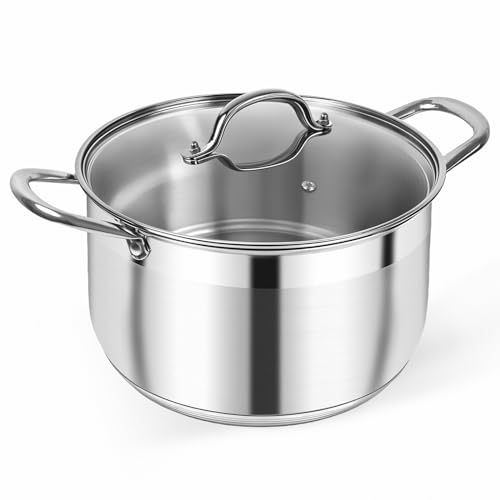
Kirecoo Stainless Steel Stock Pot – 8 Quart Heavy Duty Induction Cooking Pot with Visible Lid for Pasta, Soup, Spaghetti, Nonstick Thick Bottom Big Stockpot, Deep Cookware for Canning, Boiling, Simmer
Stainless steel and 5 layers bottom: Kirecoo 8-Quart Stainless Steel Stockpot with Lid is an essential kitchen cookware,…
As an affiliate, we earn on qualifying purchases.
As an affiliate, we earn on qualifying purchases.
Why Lentils Naturally Make Your Dal Creamy
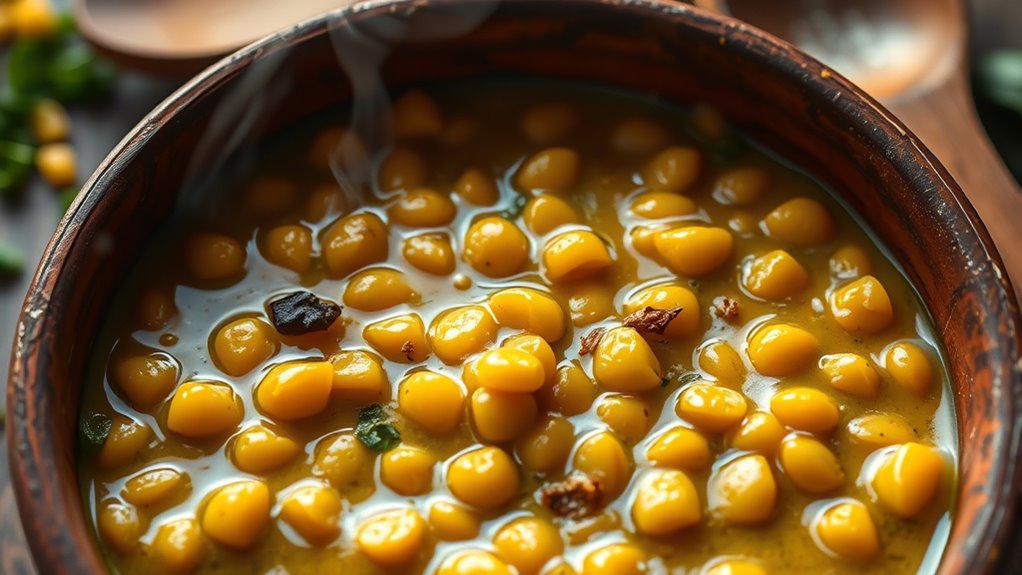
Lentils naturally make your dal creamy because they release starch when cooked, creating a smooth texture. Their high protein content also contributes to a richer, velvety mouthfeel. Plus, gentle cooking helps preserve these qualities, ensuring your dal stays perfectly creamy. Additionally, understanding energy last can help you recognize how subtle changes in ingredients and techniques influence the final dish. Being aware of pinball machine weight can also remind you of the importance of proper handling and timing when preparing your dal, especially when using larger quantities or cooking methods that require careful attention. Paying attention to study techniques and exam preparation can inspire you to refine your cooking process, leading to more consistent results. Recognizing the significance of haute couture in design can inspire you to pay attention to the finer details in your cooking process, resulting in a more refined dish.
Natural Starch Release
When you cook lentils, they naturally release starches that help thicken and cream up your dal. Different lentil varieties, like red or brown, release varying amounts of starch, impacting the final texture. Using the right cooking utensils, such as a heavy-bottomed pot, can also influence starch release by maintaining consistent heat. To maximize this effect:
- Rinse lentils thoroughly to remove excess surface starch.
- Avoid stirring too much during cooking to prevent breaking lentils and releasing more starch.
- Cook lentils with a lid on, allowing steam to build and retain starch within the dish.
Protein Content Boosts Creaminess
Because lentils are rich in natural proteins, they contribute substantially to the creamy texture of your dal. Different lentil varieties, like red, yellow, and green, are excellent protein sources that help create that smooth, velvety consistency. These proteins bind with water and starches during cooking, enhancing the creaminess without any added dairy or cream. The high protein content in lentils naturally thickens the dal, giving it a luxurious mouthfeel. As you cook, the proteins break down slightly, blending seamlessly with other ingredients to produce a rich, cohesive texture. Moreover, the protein-rich nature of lentils can influence the leaching process, improving the overall mouthfeel and richness of the dish. Selecting the right lentil variety ensures a luscious, creamy dal every time, highlighting how their natural protein content is key to achieving that perfect, velvety finish.
Gentle Cooking Enhances Texture
Gentle cooking allows lentils to release their natural starches gradually, which plays an essential role in making your dal creamy. When you cook lentils with patience, their starches soften without breaking down completely, creating a smooth, velvety texture. To maximize this effect, focus on three key steps:
- Use consistent, moderate heat to prevent overcooking and preserve the delicate starch release.
- Incorporate well-balanced spice combinations early in cooking to enhance flavor without disturbing the lentils’ natural creaminess.
- Finish with thoughtful presentation techniques, like a drizzle of ghee or fresh herbs, to complement the creamy texture and elevate the dish’s visual appeal.
Gentle cooking ensures your dal remains irresistibly smooth, highlighting the natural qualities of the lentils.
blender for making smooth dal
As an affiliate, we earn on qualifying purchases.
As an affiliate, we earn on qualifying purchases.
How to Properly Soak and Rinse Lentils for Best Results
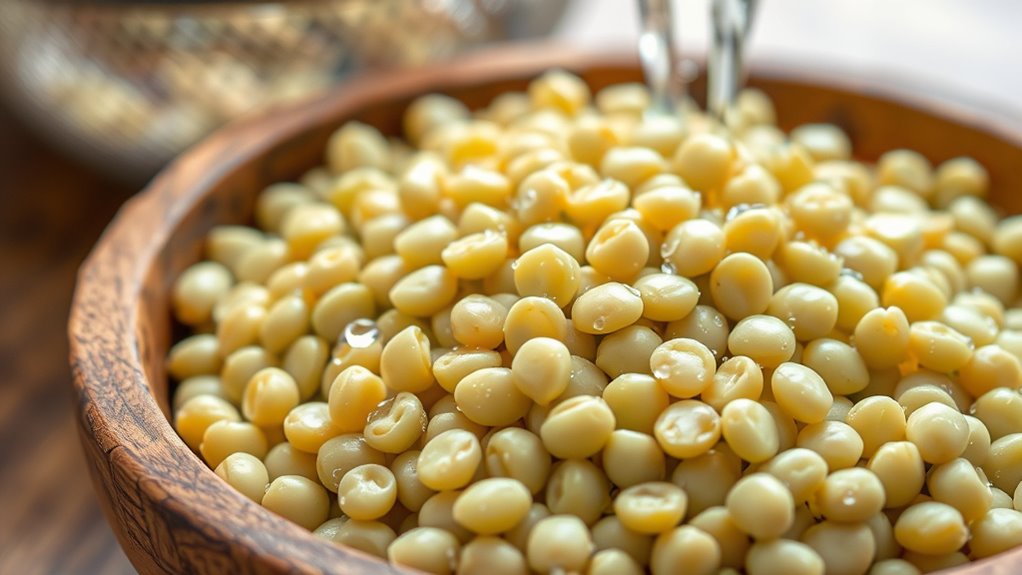
Start by rinsing your lentils thoroughly to remove dirt and impurities. Then, soak them for the right amount of time to achieve ideal softness. Finally, drain any excess water before cooking to guarantee the perfect creamy texture.
Rinse Thoroughly Before Soaking
Before soaking your lentils, it’s vital to rinse them thoroughly to remove any dirt, debris, or impurities. This step guarantees you’re working with clean lentil varieties, which improves flavor and texture. To do this effectively:
- Place the lentils in a fine-mesh strainer and rinse under cold running water, swishing gently.
- Check for any small stones or damaged lentils and remove them.
- Transfer the rinsed lentils to a bowl, cover with fresh water, and let soak for the recommended soaking duration based on your lentil variety. Proper rinsing sets the foundation for even soaking and ideal cooking, making your dal creamy and delicious.
Soak for Optimal Softness
To achieve perfectly soft and creamy dal, you need to soak your lentils long enough for them to absorb water and soften evenly. Different lentil varieties, like red, green, or black, require varying soaking times and techniques. For best results, rinse your lentils thoroughly, then soak them in plenty of water. Use this guide to perfect your soaking process:
| Lentil Variety | Soaking Time | Tips |
|---|---|---|
| Red Lentils | 30 minutes | Use warm water for faster absorption |
| Green Lentils | 1-2 hours | Rinse again before cooking |
| Black Lentils | 2-4 hours | Soak in ample water, avoid over-soaking |
Proper soaking guarantees even cooking and a smooth, creamy dal.
Drain Excess Water Properly
Once your lentils have soaked for the recommended time, draining the excess water properly guarantees they are ready for rinsing and cooking. Different lentil varieties, like red, green, or brown, may require slightly different handling, but the key is thorough drainage. Use a fine-mesh sieve or colander as your primary cooking utensil to prevent small lentils from slipping through.
- Hold the lentils over the sink and gently shake to remove surface water.
- Tap the sieve or colander lightly to encourage excess water to drip away completely.
- Ensure the lentils are well-drained before rinsing under cold water for a clean, even cook. Proper drainage helps achieve tender, creamy dal every time.

Presto 01362 6-Quart Stainless Steel Pressure Cooker
Chicken, fish, meat, and vegetables cook to perfection fast; Helps tenderize economical cuts of meat
As an affiliate, we earn on qualifying purchases.
As an affiliate, we earn on qualifying purchases.
Cooking Techniques to Unlock Rich, Velvety Flavors in Lentils
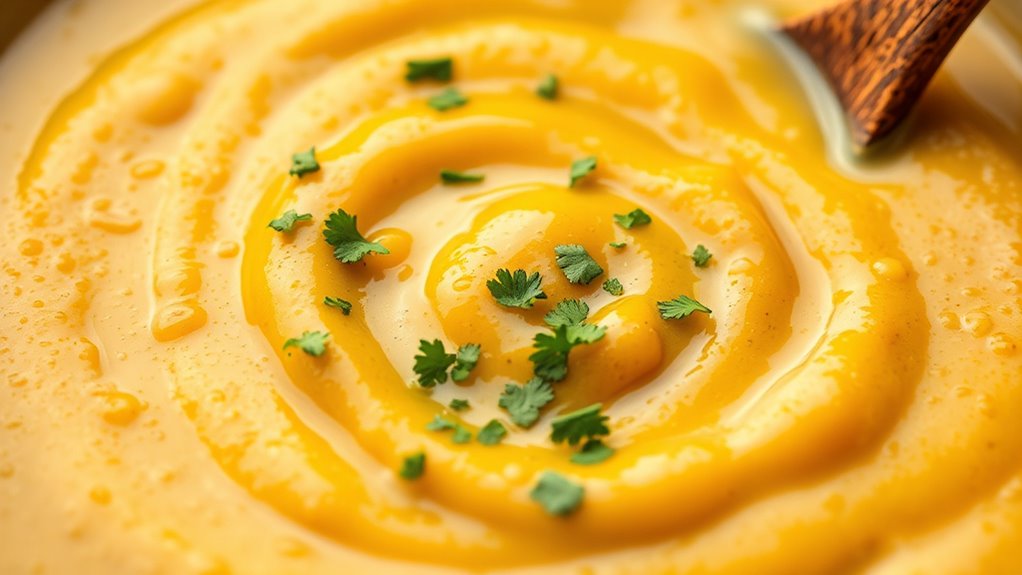
Mastering the right cooking techniques can transform ordinary lentils into a rich, velvety delight. To achieve this, start by rinsing your lentils well and soaking them if needed, which helps them cook evenly and develop depth of flavor. When cooking, use a gentle simmer rather than a rapid boil to prevent breaking down the lentils too quickly. Incorporate vegetable pairing—like tomatoes, onions, or carrots—that release natural sugars, enhancing creaminess. Proper storage methods also matter; store cooked lentils in airtight containers in the fridge to preserve freshness and flavor. This way, when you reheat, they retain their velvety texture. Adjust seasoning gradually, adding spices and aromatics late in the process for a richer taste. These techniques will elevate your dal to new levels of creaminess.
Natural Ways to Make Your Dal Creamy Without Dairy
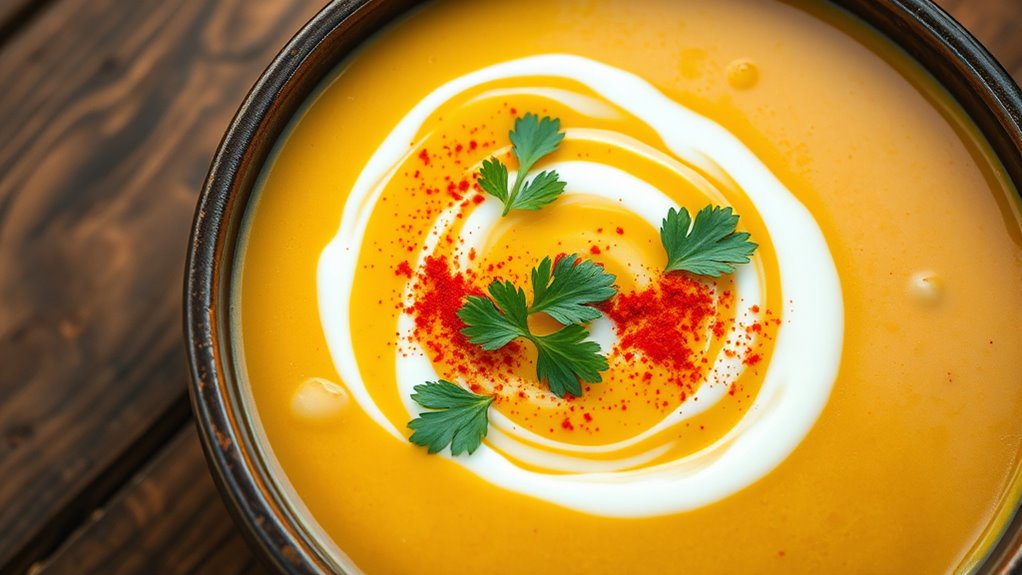
You can achieve that irresistibly creamy texture in your dal without relying on dairy by using natural ingredients and cooking techniques. First, choose the right lentil varieties like red or yellow lentils, which break down easily and create a naturally smooth consistency. Second, incorporate a blender or an immersion blender during cooking; blending a portion of the cooked lentils helps thicken the dal without added cream. Third, use cooking utensils like a heavy-bottomed pot to ensure even heat distribution, preventing sticking and burning. These methods maximize the natural starchy qualities of the lentils, giving you a rich, velvety texture. Additionally, understanding the types of lentils can help you select the best varieties for achieving creaminess. Using the appropriate cooking techniques can further enhance the smoothness and richness of your dal. With the right ingredients and tools, you can craft a creamy dal that’s dairy-free yet irresistibly smooth. Incorporating natural thickeners like mashed cooked vegetables or coconut milk can also contribute to that luxurious texture without compromising on health, and experimenting with different culinary methods can help you perfect your recipe. Exploring traditional cooking methods can reveal additional ways to enhance creaminess naturally.
Using Tomatoes and Onions to Naturally Thicken Your Dal

Adding tomatoes and onions to your dal is a natural way to enhance its thickness and flavor. These ingredients, when cooked properly, break down and release natural pectins that thicken the dish. You can adapt cooking methods by sautéing onions first for sweetness or blending cooked tomatoes for a smoother consistency. If you don’t have fresh tomatoes, canned or pureed versions work as effective ingredient substitutions.
| Cooking Method | Best For | Ingredient Substitution |
|---|---|---|
| Sautéing onions | Adds sweetness and depth | Onion powder or shallots |
| Simmering tomatoes | Creates a rich, thick sauce | Tomato paste or canned puree |
| Pureeing cooked | Achieves smooth, creamy texture | Using a blender or immersion blender |
These techniques naturally thicken your dal while enriching its flavor.
How to Use Spices and Tempering to Enhance Creaminess
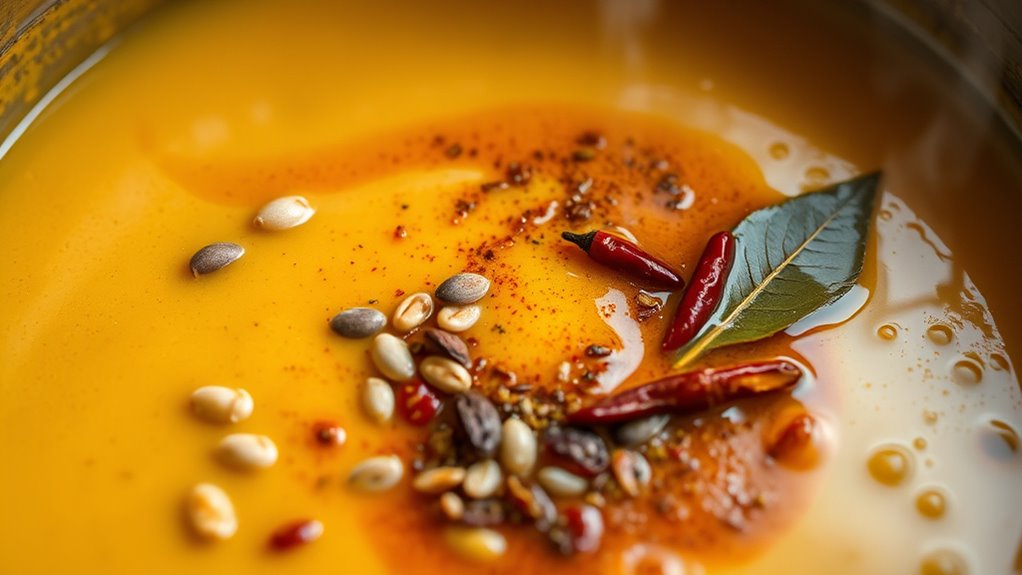
Adding the right spices can elevate the flavor of your dal, making it richer and more aromatic. Tempering spices in hot oil releases their essential oils, creating a velvety texture that enhances creaminess. With thoughtful use of these techniques, you’ll achieve a deeply flavorful and luscious dal every time. Ensuring proper safety during tempering helps prevent accidents and preserves the integrity of your dish. Incorporating natural ingredients can also contribute to a more wholesome and authentic flavor profile. Additionally, understanding cooking techniques can help you better control the texture and consistency of your dal for optimal creaminess. Employing connected kitchen technology can further refine your cooking process and consistency. Using quality spices ensures the fullest flavor extraction and vibrant aroma in your dal.
Flavor Boosting With Spices
Spices and tempering techniques can profoundly elevate the creaminess of your dal by revealing deep, aromatic flavors that complement its smooth texture. To achieve this, focus on strategic spice combinations that enhance flavor balancing. First, toast cumin seeds and coriander to liberate their full aroma, adding warmth and earthiness. Second, incorporate garam masala or a pinch of turmeric for layered complexity without overpowering the dish. Third, add a dash of red chili powder or paprika for subtle heat and color. These spices, when properly tempered, release essential oils that boost flavor depth and create a rich, creamy profile. Additionally, choosing the right spice balance can subtly enhance the aroma and overall sensory experience. Proper spice toasting techniques are essential to unlock maximum flavor potential. For best results, understanding how to temper spices correctly can significantly improve the dish’s overall quality. Remember, balancing spices is key—too much can overshadow the dish’s natural creaminess, so adjust according to taste.
Tempering for Rich Texture
Tempering is a essential step for opening the full richness of your dal’s flavor and texture. This seasoning technique involves heating spices in a small amount of oil or ghee to release their essential oils and deepen their aroma. Choosing the right cooking vessel, like a thick-bottomed pan, helps prevent burning and ensures even heat distribution, which is critical during tempering. When you add spices—such as cumin, mustard seeds, or dried chilies—wait until the oil is hot enough to sizzle them. This process infuses the dal with a complex, rich flavor profile and creates a silky, creamy texture without the need for cream. Proper tempering elevates your dal, making it more flavorful and irresistibly smooth.
Mashing or Blending Lentils for a Smooth, Lush Dal

To achieve a creamy, luscious dal, mashing or blending the cooked lentils is essential. The right technique depends on the lentil varieties you use and the cooking utensils at hand.
- Use a fork or potato masher for firmer lentils like whole masoor or brown lentils to mash them smoothly.
- For softer lentil varieties like red or yellow split peas, blend with an immersion blender or transfer to a food processor for a silky texture.
- Always cook your lentils until tender before mashing or blending to guarantee they break down easily.
Choosing the proper utensils and understanding your lentil types helps create that perfect creamy consistency, elevating your dal to restaurant-quality perfection.
Troubleshooting: What to Do If Your Dal Isn’t Creamy

If your dal isn’t turning out as creamy as you’d like, don’t worry—there are straightforward fixes you can try. First, check your cooking utensils; using a sturdy spoon or a whisk can help mash the lentils more thoroughly. If the dal remains too chunky, add a splash of warm water or broth and gently stir to loosen the texture. Sometimes, overcooked lentils can become less creamy, so next time, cook them a bit less or blend part of the dal using a blender or immersion tool. To enhance creaminess, serve your dal with compatible side dishes like rice or bread, which can balance the texture. Remember, patience and proper tools are key to achieving that perfectly creamy consistency you’re after.
Serving and Garnishing Tips to Impress With Your Creamy Dal
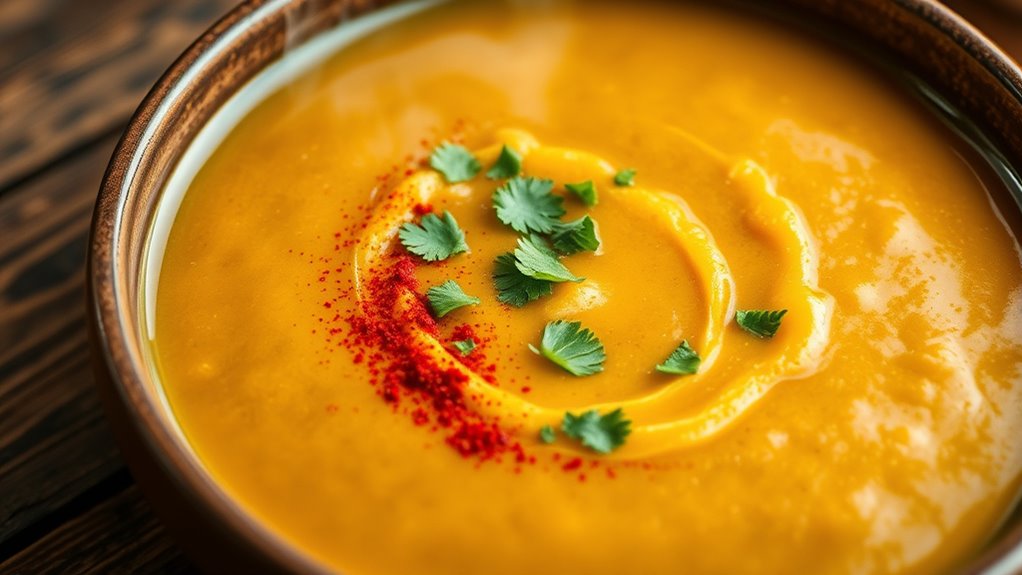
Once your dal reaches that perfect creamy consistency, the right serving and garnishing techniques can elevate it to a whole new level. Start by choosing the right lentil varieties, like red or yellow lentils, for a smooth texture. For serving suggestions, pair your dal with steamed rice, naan, or crusty bread to complement its richness. Garnish thoughtfully to impress:
- Sprinkle fresh cilantro or chopped green chilies for color and heat.
- Drizzle a spoonful of ghee or aromatic oil for added flavor.
- Add a squeeze of lemon or lime for a tangy contrast.
These simple tips make your dal visually appealing and enhance its flavor, turning an everyday dish into a memorable meal. Your attention to presentation and garnishing can truly impress everyone at the table.
Frequently Asked Questions
Can I Use Canned Lentils for a Creamy Dal?
Yes, you can use canned lentils for a creamy dal. Canned lentil benefits include quick cooking and convenience, saving you time. To get the best results, rinse the lentils thoroughly to remove excess salt and preservatives. For a smoother, creamier texture, mash some lentils or blend part of the mixture. These lentil preparation tips help you achieve a delicious, creamy dal without needing dried lentils or extra soaking.
Does Adding Coconut Milk Make Dal More Creamy?
Adding coconut milk transforms your dal into a velvety river of flavor, making it irresistibly creamy. Coconut milk benefits include natural richness and a subtle sweetness, perfect for vegan dairy alternatives. It’s like turning a simple dish into a luxurious experience, enhancing texture and taste without dairy. So, yes, coconut milk makes dal creamier, and it’s an easy way to boost flavor while keeping your meal plant-based and wholesome.
What Are Alternative Thickeners for Vegan Creamy Dal?
You can use dairy substitutes like coconut milk or cashew cream to thicken vegan dal, giving it a rich, creamy texture. For gluten-free options, mashed potatoes or cooked lentils also work well as natural thickeners. These alternatives add body without sacrificing flavor and cater to various dietary needs, ensuring your dal remains delicious and smooth while keeping it vegan and gluten-free.
How Does Cooking Time Affect Dal’s Creaminess?
You might think longer cooking times make dal creamier, but it’s actually about simmering time. As you increase the cooking duration, the lentils break down further, releasing natural starches that thicken the dish naturally. Keep a close eye on the simmering process; too long, and it can become overly thick or mushy. Properly timed simmering balances creaminess and texture, ensuring your dal is rich and smooth without overdoing it.
Can I Prepare Creamy Dal in a Slow Cooker?
Yes, you can prepare creamy dal in a slow cooker. Its benefits include even cooking and enhanced flavors, which help achieve a smooth, velvety dal texture. To get the creamiest results, blend some of the cooked dal before serving or add a splash of coconut milk or yogurt at the end. This method simplifies the process and guarantees your dal remains rich, flavorful, and perfectly creamy.
Conclusion
Think of your dal as a canvas; with the right techniques and patience, you craft a masterpiece of velvety richness without a drop of cream. Selecting the perfect lentils, soaking them well, and using flavorful spices will transform simple ingredients into a smooth, luscious dish that feels like a warm hug. So, embrace these secrets and let your dal shine as bright and inviting as a well-loved family recipe.