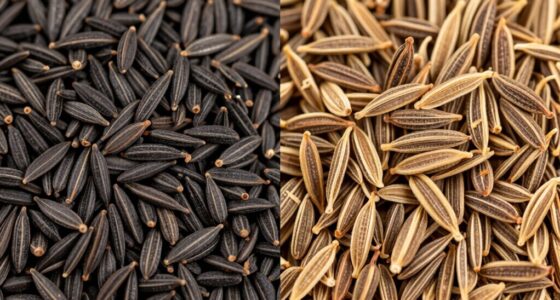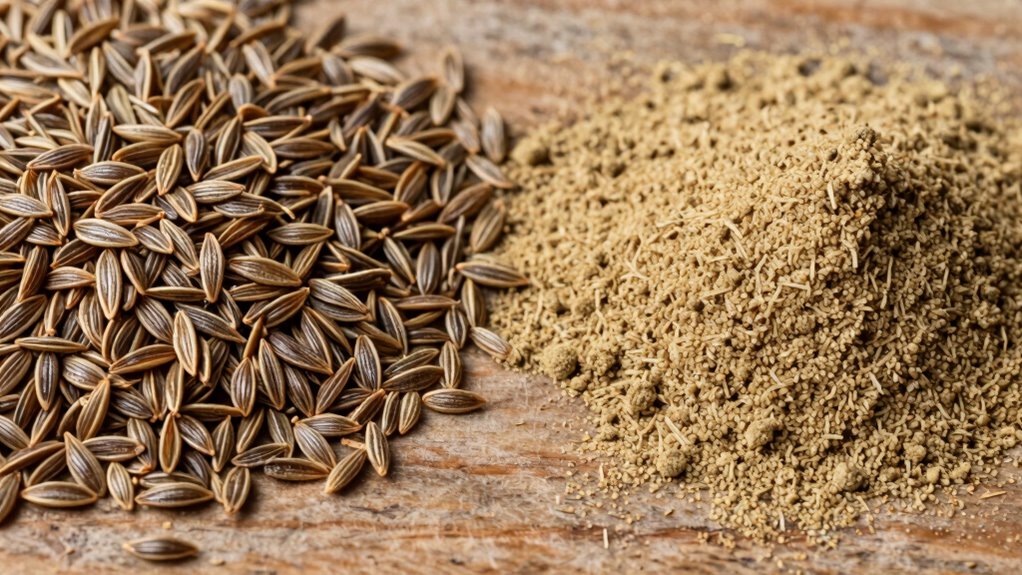
Cumin seeds and powder each have their ideal uses. Seeds develop richer, more complex aromas when toasted or simmered slowly, perfect for dishes like stews or toasting first. Powder provides quick, intense flavor and works well in spice blends or marinades for faster cooking. Whole seeds last longer and retain flavor better, while powder offers convenience. If you want to maximize flavor, knowing the best techniques for each can elevate your cooking—details that are just a scroll away.
Key Takeaways
- Use whole cumin seeds for slow-cooked dishes and toasting to develop deeper, nuanced flavors.
- Opt for cumin powder for quick, uniform flavor addition in marinades, sauces, or spice blends.
- Toast seeds before grinding to maximize aroma and flavor; add powder during cooking for immediate impact.
- Store cumin seeds longer and retain aroma better; use powder early before it loses potency.
- Add seeds early in cooking for flavor development; use powder near the end for fresh, bright aroma.

Badia Cumin Seeds, 16 oz – Whole Comino Seeds, Aromatic Flavor for Cooking, Spice Blends & Seasonings
Distinct flavor: Adds a warm, slightly peppery and nutty taste to dishes
As an affiliate, we earn on qualifying purchases.
As an affiliate, we earn on qualifying purchases.
What’s the Difference in Flavor and Aroma Between Cumin Seeds and Powder?
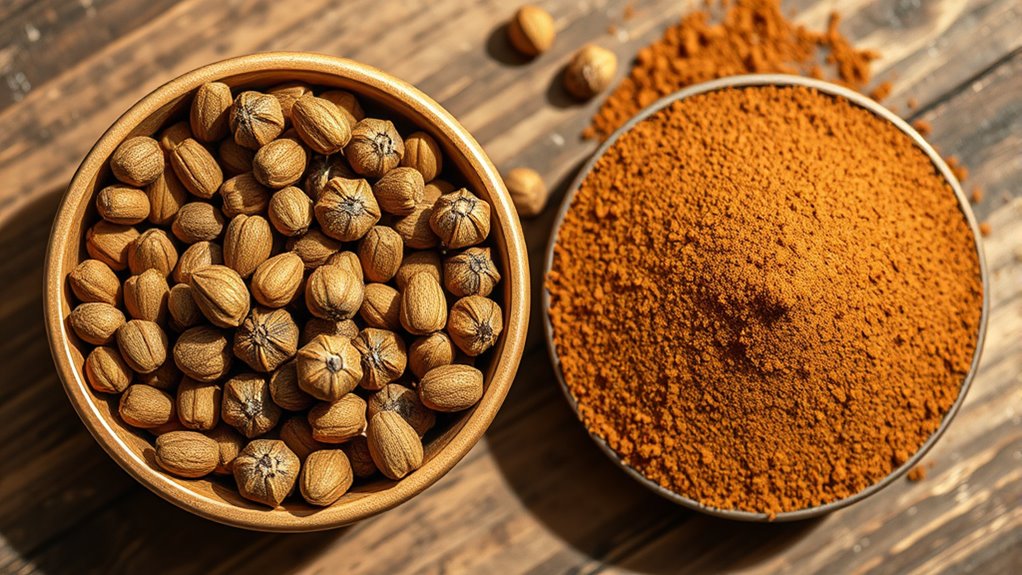
While cumin seeds and cumin powder both deliver the distinctive warm, earthy flavor, they actually have subtle differences in aroma and intensity. When you use whole seeds, you’ll notice a richer, more complex aroma that’s better preserved during cooking. The flavor intensity of seeds develops gradually, releasing nuanced notes as they toast or simmer. Conversely, cumin powder offers a more concentrated flavor right from the start, but its aroma tends to fade faster if not used promptly. The powdered form disperses evenly into dishes, ensuring a consistent taste. If you want a deep, lingering aroma and a gradual flavor build, whole seeds are your best choice. For quick, even distribution and immediate flavor, cumin powder provides convenience with a punch of intensity. Additionally, the color accuracy of cumin seeds remains intact longer in culinary preparations, enhancing visual appeal and overall sensory experience. Using whole seeds can also preserve essential oils, maintaining the full aromatic profile of cumin during cooking.

The Spice Way Ground Cumin – powder made from premium whole cumin seeds 4 oz resealable bag
PREMIUM GROUND CUMIN SEEDS – Cumin powder adds great flavor to so many wonderful dishes including beans, vegetables,…
As an affiliate, we earn on qualifying purchases.
As an affiliate, we earn on qualifying purchases.
How to Decide When to Use Whole Cumin Seeds or Ground Cumin Powder?
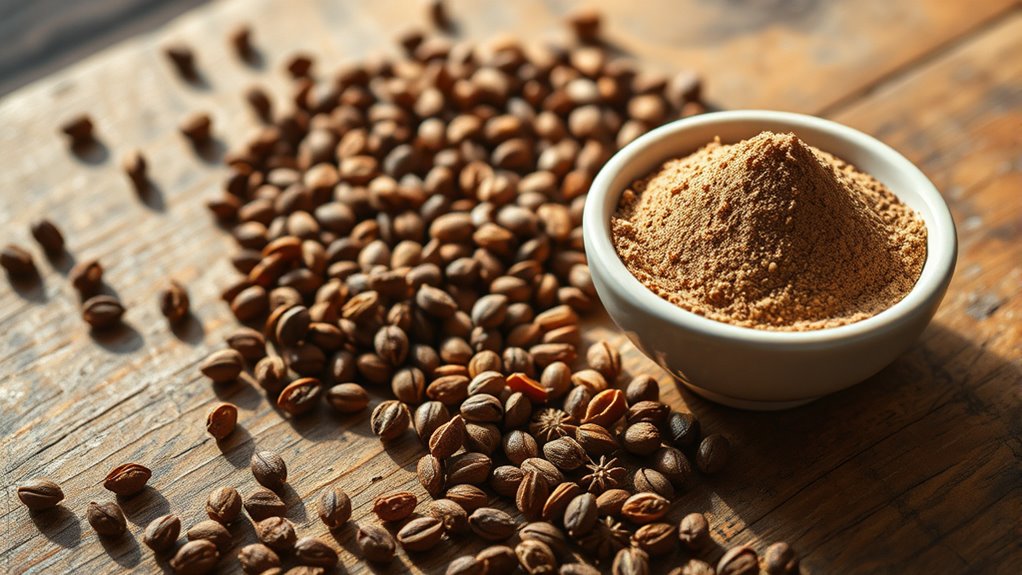
Deciding whether to use whole cumin seeds or ground cumin powder depends on your cooking needs and the flavor profile you want to achieve. If your dish requires a quick infusion of flavor, ground cumin works best because it releases aroma faster. For longer cooking durations, whole seeds are ideal—they soften and develop richer flavors over time. Consider storage tips as well; ground cumin loses potency faster, so keep it in an airtight container away from light and heat. Whole seeds have a longer shelf life and retain their flavor longer. Use whole seeds early in the cooking process to toast and deepen flavor. When you need a quick, intense burst of cumin aroma, ground powder is your go-to. Additionally, understanding the flavor release properties of cumin can help you choose the right form for your dish.
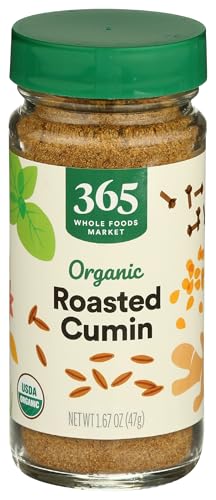
365 by Whole Foods Market, Organic Roasted Cumin, 1.67 Ounce
1.67 ounces of organic roasted cumin
As an affiliate, we earn on qualifying purchases.
As an affiliate, we earn on qualifying purchases.
Best Techniques for Cooking With Cumin Seeds and Powder

To maximize flavor when cooking with cumin, choose the right technique based on whether you’re using seeds or powder. Cumin seeds benefit from dry roasting or blooming in hot oil to release their aromatic oils, enhancing flavor. Ground cumin, however, is best added during cooking or at the end to prevent bitterness and preserve its bright flavor. Use the table below to understand how different cooking techniques impact flavor enhancement:
| Technique | Best For |
|---|---|
| Dry roasting | Developing deep, nutty flavors |
| Blooming in oil | Infusing dishes with aroma |
| Adding at the end | Brightening and freshening |
Selecting the appropriate method guarantees your dishes have vibrant, well-rounded cumin flavor. Incorporating connected equipment like spice grinders or smart cooktops can help you better control the cooking process for optimal flavor extraction. Additionally, understanding how flavor extraction works can help you tailor your technique for the most aromatic results, especially when using specialized tools designed for precise temperature control. A good grasp of technique selection ensures you apply the best method for each cooking stage.

Lawry's Casero Ground Cumin, 5.5 oz
Lawry's Casero Ground Cumin adds its signature flavor to Latin American cuisine
As an affiliate, we earn on qualifying purchases.
As an affiliate, we earn on qualifying purchases.
Factors to Consider When Choosing Cumin Form for Your Recipes?
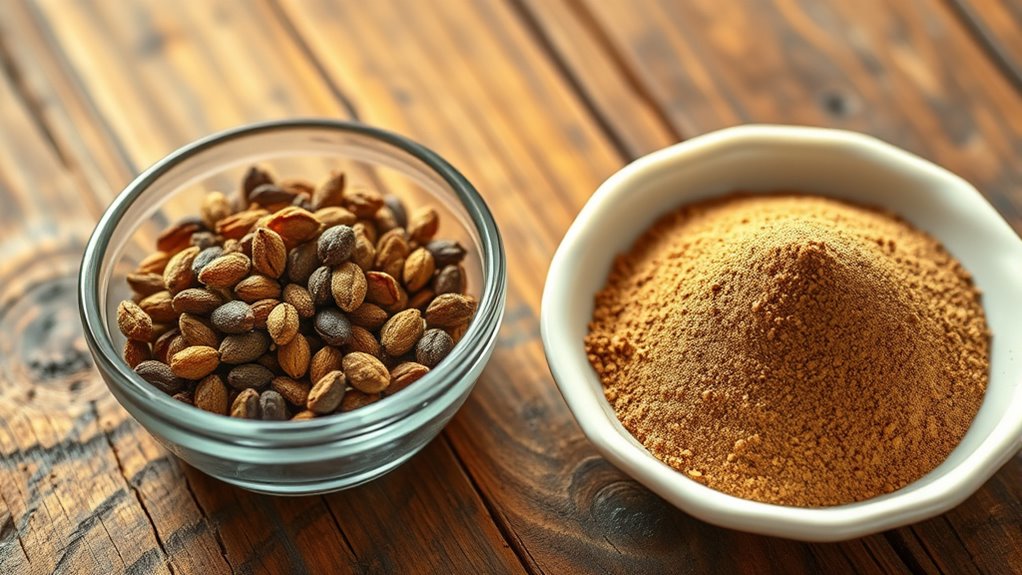
Choosing the right cumin form depends on your recipe’s flavor goals and cooking process. If you want a more intense, aromatic flavor, whole cumin seeds are ideal, especially for slow-cooked dishes or recipes where you can toast them first. Ground cumin powder works best for quick-cooking dishes or when you need a uniform flavor throughout. Consider the cooking methods: seeds release aroma slowly, while powder blends quickly. Storage tips are vital—keep cumin in an airtight container in a cool, dark place to preserve freshness. Whole seeds last longer and retain flavor better than ground. Think about whether you want a subtle infusion or a more prominent cumin presence, and choose accordingly to enhance your dish effectively.
Tips for Incorporating Cumin for Maximum Flavor

For maximum flavor, adding cumin at the right stage of your cooking process is vital. Using proper cooking techniques, such as toasting cumin seeds before grinding or adding cumin powder early in simmering dishes, enhances flavor extraction. Toasting seeds releases essential oils, boosting flavor enhancement, while adding cumin later in the cooking process preserves its aromatic qualities. When incorporating cumin, consider the dish’s complexity—whole seeds work well in slow-cooked stews, whereas powder blends seamlessly into spice blends or marinades. Remember, a little goes a long way; start with small amounts and adjust to taste. proper cooking techniques help maximize flavor extraction and aroma. Incorporating auditory cues can also aid in achieving optimal flavor perception and ensuring your dishes are perfectly seasoned. Paying attention to flavor development during cooking can further elevate the taste. By paying attention to timing and preparation methods, you guarantee cumin’s robust aroma and earthy flavor elevate your dishes perfectly.
Frequently Asked Questions
How Long Do Cumin Seeds and Powder Stay Fresh?
Cumin seeds stay fresh for about 1-2 years, while cumin powder typically lasts 6 months to a year. To maximize shelf life, store them in airtight containers in a cool, dark place away from sunlight and moisture. Proper storage tips help preserve their flavor and aroma longer. Regularly check for any signs of spoilage, like a dull smell or discoloration, and replace them when they lose their potency.
Can Cumin Powder Be Substituted for Seeds in Recipes?
Yes, you can substitute cumin powder for seeds in recipes, but keep in mind the cooking texture differences and flavor intensity variations. Powder disperses more evenly, giving dishes a smoother texture, while seeds add a crunch and a more nuanced flavor. Adjust quantities accordingly, as powder is more concentrated. If you want a milder flavor, use slightly less; for stronger flavor, add a bit more, tasting as you go.
What Are the Health Benefits of Cumin Seeds Versus Powder?
Did you know cumin seeds contain 22% more antioxidants than the powder? Cumin seeds offer superior nutritional benefits, including higher levels of essential oils and antioxidants, which support your immune system. They also provide better digestive benefits by stimulating enzyme production. While both forms boost your health, opting for seeds can maximize nutrient intake, helping you improve digestion and overall wellness effectively.
How Should Cumin Be Stored to Preserve Its Flavor?
You should store cumin in airtight storage containers to maintain its flavor fresh. Keep the containers in a cool, dark place away from direct sunlight, heat, and moisture. This helps prevent the spices from losing their aroma and potency. Avoid storing cumin near the stove or in humid areas, as exposure to heat and humidity can degrade its quality. Proper storage ensures your cumin stays flavorful for longer.
Are There Any Recipes That Specifically Require Cumin Seeds or Powder?
Yes, you’ll find recipes that specifically call for cumin seeds or cumin powder. Cumin seed recipes often include dishes like Indian curries or spice blends, where the whole seeds add crunch and aroma. Cumin powder dishes, such as chili or taco seasoning, use ground cumin for a smoother, more integrated flavor. Using the right form guarantees your dish tastes authentic, so follow the recipe’s specific cumin requirement for the best results.
Conclusion
Just like a maestro chooses the right instrument for each piece, selecting between cumin seeds and powder depends on your dish’s needs. By understanding their flavors and best uses, you’ll uncover the full potential of this ancient spice—transforming simple ingredients into culinary masterpieces. So, channel your inner alchemist, experiment boldly, and let cumin’s magic elevate every meal. After all, great cooking is about knowing when to wield the seed and when to grind the powder.