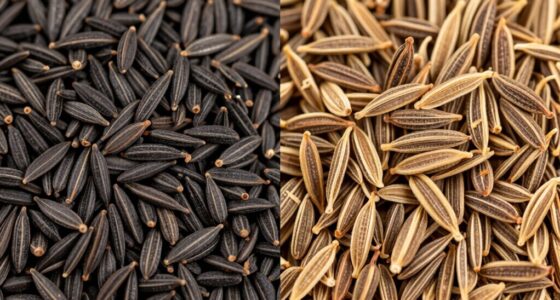
To make authentic Chettinad masala, you roast the spices until fragrant, which releases their oils and deepens their flavors. Once roasted, you grind them into a fine powder to guarantee even distribution and maximum aroma. This roast-and-grind process enhances the spice potency and preserves their freshness, giving your dishes the signature bold taste. Mastering this technique elevates your cooking, and if you keep exploring, you’ll discover even more tips to perfect your spice blend.
Key Takeaways
- The roast-and-grind method enhances Chettinad masala by unlocking deep, aromatic flavors through roasting spices to release essential oils.
- Roasting spices activates natural oils, intensifying aroma and color, which are crucial for authentic Chettinad flavor.
- Grinding roasted spices creates a fine, uniform powder that ensures even flavor distribution in dishes.
- Adjusting roasting times allows customization of spice heat and flavor intensity to suit personal preferences.
- Proper roasting preserves spice freshness and aroma, maintaining traditional quality and depth in Chettinad cuisine.

Have you ever wondered what makes Chettinad cuisine so flavorful and aromatic? The secret lies in its unique spice blending and the meticulous method of preparing masalas, especially the renowned Chettinad masala. This spice blend isn’t just thrown together; it’s crafted with care, using a roast-and-grind technique that *unlocks* deep, complex flavors. When you roast the spices, the heat releases essential oils, intensifying their aroma and flavor. This process isn’t merely about toasting; it’s about creating a fragrant foundation that transforms ordinary ingredients into extraordinary dishes. Once roasted, the spices are ground to a fine powder, which helps in flavor enhancement and *guarantees* a uniform distribution of taste throughout your dish. Proper spice storage can also help maintain freshness and preserve the aroma of your masala for longer periods.
Unlock deep flavors with the roast-and-grind technique for authentic Chettinad masala.
The roasting process is *paramount* because it activates the spices’ natural oils, making their flavors more vibrant and aromatic. You’ll notice that the spices develop a richer hue and a more pronounced fragrance as they are roasted. This step is *vital* for achieving the authentic Chettinad taste, as it brings out the depth and robustness that define this cuisine. When you grind the roasted spices, you’re *essentially* *unlocking* their full potential, creating a spice blend that’s more potent and aromatic than raw spices alone. This freshly ground masala forms the backbone of many Chettinad dishes, providing a bold, spicy kick that’s both complex and balanced. Additionally, incorporating proper spice storage can help maintain the freshness and aroma of your masala for longer periods.
Using the roast-and-grind method also allows you to control the spice levels and flavor profile, tailoring the masala to suit your preferences. You can adjust the roasting time for different spices, emphasizing certain flavors over others. This technique *assures* your masala isn’t just a mixture of spices but a carefully curated blend that enhances every ingredient it touches. Properly roasted spices also preserve their essential oils better, ensuring a fresher taste over time. The process of roasting and grinding also preserves the freshness of the spices, giving your final dish a vibrant aroma that’s hard to replicate with pre-made powders. Additionally, understanding the importance of spice roasting can help you appreciate how traditional techniques cultivate the depth of flavor characteristic of Chettinad cuisine.
In *fundamentally*, the roast-and-grind method is what sets Chettinad masala apart. It’s a traditional technique rooted in centuries of culinary expertise, designed to maximize flavor and aroma. When you follow this method, you’re not only making a spice blend; you’re creating a flavorful foundation that elevates your cooking. It’s this attention to detail in spice blending and flavor enhancement that makes Chettinad cuisine so distinct, inviting you to experience a symphony of taste and aroma with every bite.
Top picks for "chettinad masala roast"
Open Amazon search results for this keyword.
As an affiliate, we earn on qualifying purchases.
Frequently Asked Questions
Can Chettinad Masala Be Stored for Long Periods?
Yes, you can store Chettinad masala for long periods if you keep it in an airtight container away from sunlight and moisture. Proper storage helps prolong its storage longevity and preserves the flavor retention. Avoid exposing it to humidity or heat, as these can cause it to lose its aroma and taste over time. When stored correctly, your masala can stay fresh for several months, maintaining its rich, authentic flavor.
What Are the Key Ingredients in Chettinad Masala?
Imagine a treasure chest of spice blends that awakens your senses—Chettinad masala’s key ingredients include fiery red chilies, aromatic coriander seeds, cumin, fennel, and black pepper. These spices are the flavor enhancement heroes, creating a bold, complex profile. You’ll also find cinnamon, cloves, and star anise adding depth. Together, they form a vibrant symphony, transforming simple dishes into a fiery, flavorful feast that truly ignites your palate.
Is the Roast-And-Grind Method Necessary for Authentic Flavor?
You don’t necessarily need the roast-and-grind method for authentic flavor, but it definitely enhances it. Roasting brings out deeper, richer notes in the spices, boosting overall flavor enhancement. Plus, using fresh ingredients before grinding guarantees you preserve their essential oils and aroma. If you want an authentic, robust taste, this traditional method is worth the effort, as it intensifies the masala’s complexity and depth.
How Should Chettinad Masala Be Used in Cooking?
You should use Chettinad masala by adding it during cooking to maximize its flavor enhancement. Incorporate it into curries, stews, or stir-fries, allowing the spices to release their aroma and deepen the dish’s taste. Use proper cooking techniques like sautéing or simmering to bring out the masala’s full potential. This approach guarantees your dishes are authentic, flavorful, and rich with the traditional essence of Chettinad cuisine.
Are There Vegetarian Alternatives to Traditional Ingredients?
Yes, you can find plant-based substitutes and vegan options for traditional ingredients in Chettinad masala. For example, use roasted chickpeas or walnuts instead of dried fish or shrimp for umami flavor. You can also replace ghee with coconut oil or vegan butter. These alternatives maintain the rich, bold taste of the masala while aligning with vegetarian or vegan diets, making your dishes delicious and ethical.
Conclusion
Now that you know the roast-and-grind method for making Chettinad Masala, you’ll appreciate its rich flavors and aromatic depth. Did you know that traditional Chettinad masalas often contain over 15 different spices, showcasing their complexity? By mastering this technique, you not only preserve authentic tastes but also create vibrant dishes that honor centuries of culinary tradition. So go ahead, experiment with your blend and bring a taste of Chettinad to your kitchen!