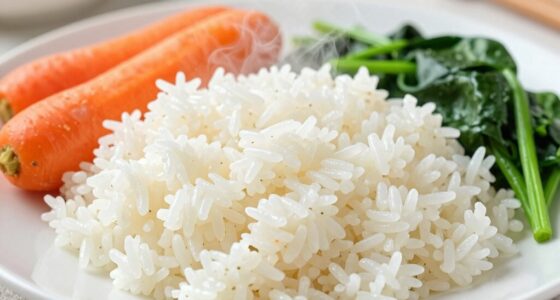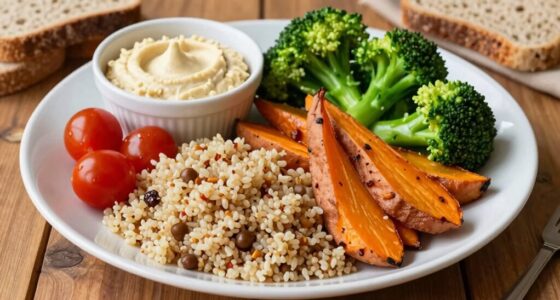
The Indian Plate Method helps you enjoy healthy eating without getting bored by focusing on balanced, flavorful meals using traditional ingredients. It divides your plate into sections for grains, vegetables, and proteins, promoting variety and moderation. By emphasizing whole foods, authentic spices, and mindful portions, it keeps meals interesting and satisfying. Stay on track with this practical approach, and you’ll discover how delicious and easy healthy eating can be in the Indian way.

Get kitchen staples and gadgets delivered free with Prime
- Fast, free delivery on millions of items
- Prime Video, Amazon Music and more included
- Member-only deals all year
Key Takeaways
- The Indian Plate Method emphasizes variety with balanced portions of grains, vegetables, and proteins, making meals flavorful and interesting.
- Incorporating traditional spices and herbs enhances natural flavors, reducing the need for boring, bland foods.
- Using a visual plate division encourages creative, colorful presentations that keep meals appealing and satisfying.
- Focusing on nutrient-dense, whole foods prevents monotony and boosts taste without sacrificing health.
- Mindful portion control and meal planning help maintain excitement around healthy, diverse, and flavorful eating habits.
Indian plate meal prep containers
As an affiliate, we earn on qualifying purchases.
As an affiliate, we earn on qualifying purchases.
What Is the Indian Plate Method and How Does It Promote Healthy Eating?

If you’re looking for a simple way to eat healthier without sacrificing variety, the Indian Plate Method offers an effective solution. This approach to meal planning divides your plate into sections, emphasizing balanced portions of grains, vegetables, and proteins. Its roots have cultural significance, reflecting traditional Indian eating habits that prioritize variety and moderation. By using this method, you naturally incorporate nutrient-rich foods and avoid overeating. It encourages mindful choices, making it easier to maintain a healthy diet without feeling restricted. The Indian Plate Method not only simplifies meal planning but also celebrates cultural diversity through food. This balance helps you stay satisfied and energized while supporting your health goals. Incorporating portion control principles into your meals can further enhance your ability to maintain a balanced diet. Additionally, understanding the nutritional balance involved in this method can help you optimize your health outcomes. Recognizing the importance of celestial influences on traits can also inspire a more holistic approach to health and wellness. Moreover, being aware of home environment factors can influence your food choices and overall health behaviors. For example, creating a conducive home environment with organized spaces can encourage healthier eating habits and consistent meal routines. It’s a practical, culturally respectful way to enjoy nutritious, flavorful meals daily.
spice jars set for Indian cooking
As an affiliate, we earn on qualifying purchases.
As an affiliate, we earn on qualifying purchases.
How to Portion Your Food the Indian Plate Way
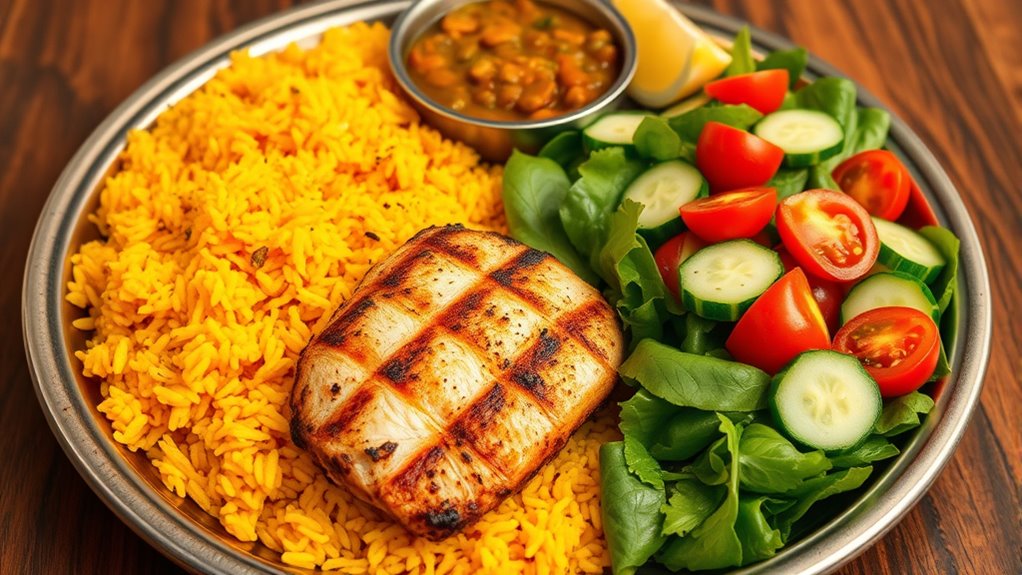
Once you understand the principles behind the Indian Plate Method, the next step is learning how to portion your food correctly. Portion control is essential for maintaining a balanced diet and avoiding overeating. To do this, visualize your plate divided into sections: fill half with vegetables, a quarter with grains or starchy foods, and a quarter with protein. This simple visual guide helps you plan your meals effectively. Incorporate meal planning by preparing balanced portions ahead of time, reducing impulsive eating. Using the Indian Plate Method, you’ll naturally manage portion sizes without strict counting, making healthy eating sustainable and enjoyable. Additionally, understanding portion size awareness techniques ensures that your healthy habits contribute positively to your overall well-being. Being mindful of serving sizes helps reinforce your understanding of proper portioning. Developing a habit of mindful eating can further enhance your awareness of hunger cues and fullness. Recognizing the importance of balanced meal composition supports your efforts in maintaining a nutritious diet.
As an affiliate, we earn on qualifying purchases.
How to Balance Carbohydrates, Proteins, and Vegetables on Your Plate
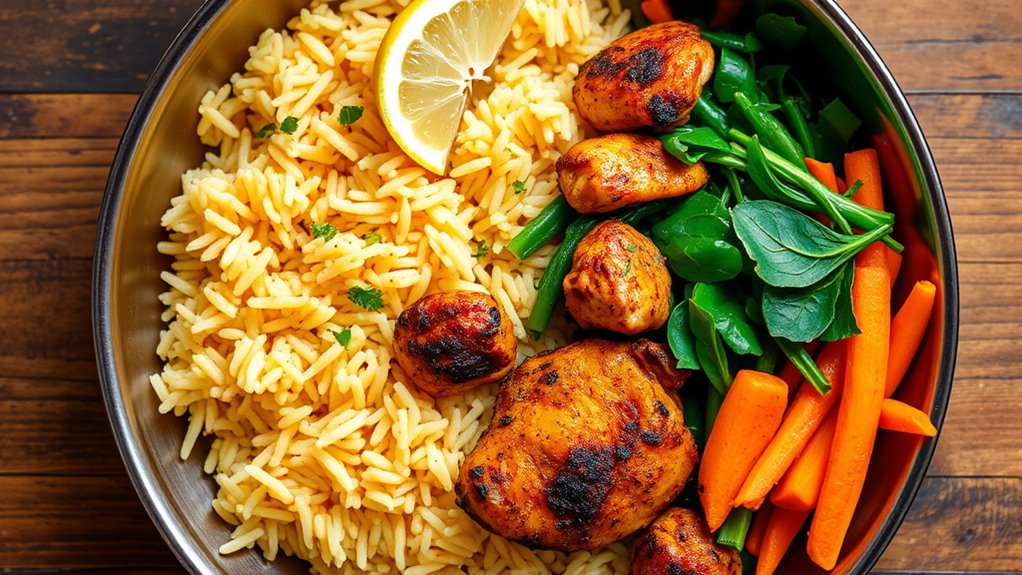
Achieving a balanced meal involves thoughtfully arranging carbohydrates, proteins, and vegetables on your plate to guarantee your body gets all the essential nutrients. Meal customization allows you to adjust portions and ingredients to suit your taste and dietary needs. To enhance flavor without extra calories, use herbs, spices, and natural seasonings. Fill half your plate with vegetables—they add fiber, vitamins, and color. Incorporate a variety of nutrient-rich foods to ensure you obtain a broad spectrum of nutrients necessary for good health. Including a mix of colors on your plate can also improve your overall visual appeal, making your meals more enticing and satisfying. Using visual presentation techniques can help you create more appealing and appetizing meals. Incorporating color accuracy considerations in your meal presentation can make your dishes more visually appealing and appetizing. Paying attention to heat distribution during cooking can help preserve the nutrients and texture of your vegetables, enhancing overall meal quality. By balancing your plate this way, you enjoy nutritious, colorful meals that satisfy your palate and support your health goals.
As an affiliate, we earn on qualifying purchases.
Choosing Whole Foods and Traditional Ingredients for a Healthy Indian Diet
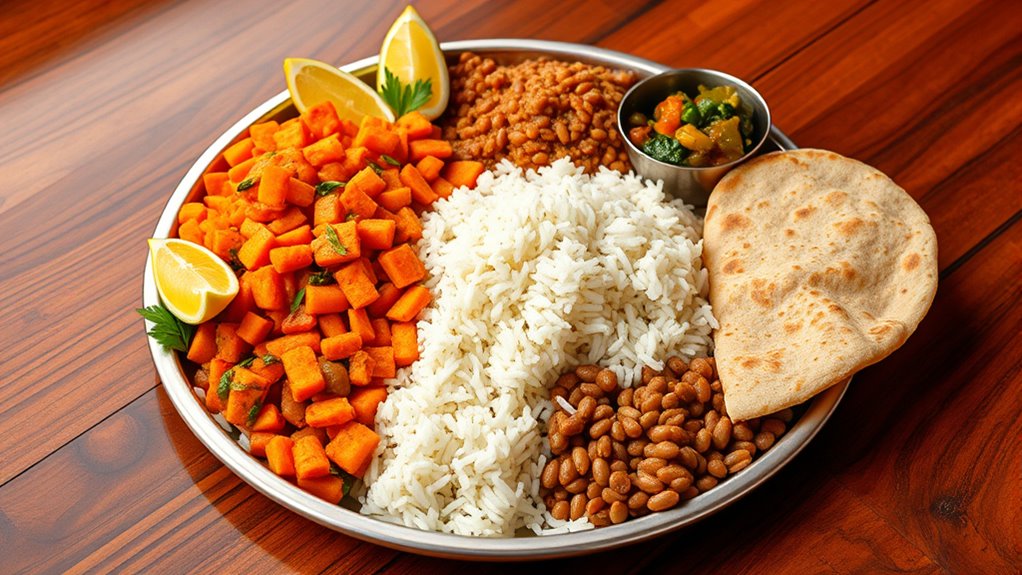
To eat healthier, focus on selecting fresh, whole ingredients like grains, vegetables, and legumes. Use traditional spices to enhance flavor naturally instead of relying on processed seasonings. Emphasizing natural tastes helps make your meals both nutritious and exciting. Incorporating whole foods such as fresh vegetables and legumes can also support a balanced diet. Paying attention to nutritional quality ensures that your meals provide essential vitamins and minerals for overall well-being.
Selecting Fresh, Whole Ingredients
Selecting fresh, whole ingredients is essential for maintaining a healthy Indian diet. Focus on seasonal produce, which is often more nutrient-rich and flavorful. When shopping, choose fruits and vegetables that look vibrant and feel firm. Incorporate food preservation techniques, like drying or fermenting, to extend the shelf life of seasonal items while retaining their nutrients. food preservation techniques can also help retain nutrients and add variety to your meals. Traditional fermentation methods not only preserve food but also enhance probiotic content, boosting gut health. Fresh ingredients verify you’re getting the maximum vitamins and minerals, supporting overall health. Incorporating traditional preservation methods can help retain nutrients and add variety to your meals. Avoid processed or packaged foods that may contain preservatives or additives. By prioritizing whole foods and traditional ingredients, you naturally reduce intake of unhealthy fats and sugars. Emphasizing local sourcing can also reduce your carbon footprint and support community farmers. This approach not only benefits your health but also enhances the authentic taste of your dishes, making healthy eating enjoyable and sustainable.
Incorporating Traditional Spices
Incorporating traditional spices into your cooking not only enhances flavor but also boosts the nutritional value of your meals. Traditional spices like turmeric, cumin, coriander, and garam masala add depth and authenticity to your dishes. Using spice blends allows you to easily incorporate multiple flavors at once, saving time and enriching your food. These spices are packed with antioxidants and anti-inflammatory properties, supporting overall health. When you select whole, fresh spices, you preserve their potency and maximize their benefits. Experiment with different combinations to find what suits your palate while maintaining a healthy balance. By thoughtfully incorporating traditional spices and spice blends into your meals, you add complexity and health benefits without sacrificing taste.
Emphasizing Natural Flavors
Building on the richness of traditional spices, emphasizing natural flavors by choosing whole foods and authentic ingredients can further elevate your healthy Indian meals. Opt for fresh vegetables, whole grains, and unprocessed staples to preserve their inherent taste. This approach allows the natural sweetness, earthiness, and aroma of ingredients to shine through, reducing reliance on artificial flavoring. Using authentic spice combinations enhances flavor without masking the food’s true character. Incorporate herbs like coriander, fennel, and cumin to add depth naturally. Here’s a visual to understand the impact:
| Whole Foods | Flavor Enhancement |
|---|---|
| Fresh vegetables | Natural sweetness |
| Whole grains | Nutty aroma |
| Unprocessed spices | Authentic taste |
| Fresh herbs | Bright, aromatic notes |
| Minimal processed foods | Pure, vibrant flavors |
This strategy celebrates food’s natural essence, making your meals both healthy and exciting.
Tips to Make the Indian Plate Method Easy and Practical at Home

To make the Indian Plate Method more practical at home, start by preparing your ingredients in advance. Meal prep is key—wash, chop, and portion vegetables and proteins ahead of time so you can assemble your plate quickly. Keep spice blends ready in small jars or containers; this saves time and ensures consistent flavor. Using pre-made spice blends also helps you avoid measuring each time, making cooking more efficient. Invest in quality containers for storing ingredients, and organize your pantry so essentials are within reach. Focus on simple, balanced combinations that you can customize each day. Additionally, understanding the nutritional balance of your meals can help you create more satisfying and healthful plates. Incorporating meal planning techniques can further streamline your cooking process and reduce daily stress. Practicing proper food storage methods can extend the freshness of your ingredients and minimize waste. With a little planning, you’ll find it easier to stick to the method and enjoy healthy, flavorful meals without stress or fuss.
Common Mistakes to Avoid When Using the Indian Plate Method
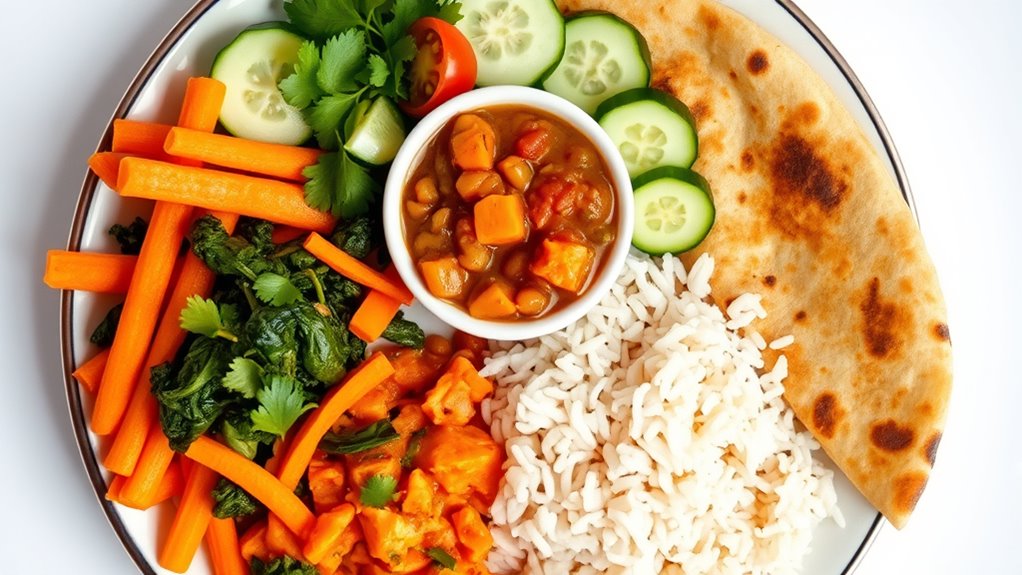
Many people make the mistake of overloading their plates, which can lead to overeating and imbalance. Ignoring food variety reduces nutrients and makes meals boring, so you should include different food groups. Finally, neglecting proper portions and balance can throw off your health goals, so watch your portions and aim for harmony in your meal.
Overloading Plate Portions
Overloading your plate can easily lead to overeating and negate the health benefits of the Indian plate method. Plate overloading makes it tempting to consume more calories than you need, disrupting portion control. To avoid this, fill your plate mindfully, ensuring each section has appropriate portions. Remember, the goal isn’t to pile on more food but to balance your meal with the right amount of vegetables, grains, and proteins. Use smaller plates if necessary to help regulate portion sizes, and resist the urge to heap your food high. Practicing portion control during plate overloading allows you to enjoy a variety of foods without overeating, supporting your health goals while still satisfying your taste buds. portion control is essential for creating a balanced and nutritious meal that promotes better health outcomes.
Ignoring Food Variety
Have you ever overlooked the importance of including a variety of foods on your plate? Relying on just a few staples can lead to food monotony, making meals feel dull and uninspired. When you ignore food variety, you miss out on essential nutrients and flavor diversity, which keeps your palate interested and satisfied. Sticking to the same foods every day can cause your taste buds to become desensitized, reducing your enjoyment of healthy eating. To avoid this mistake, try incorporating different vegetables, grains, and proteins regularly. Experimenting with spices and herbs also boosts flavor diversity without adding extra calories. Remember, a colorful, diverse plate not only nourishes your body but also keeps mealtime exciting, helping you stick with healthy habits long-term.
Neglecting Balance Balance
While the Indian Plate Method emphasizes filling your plate with a variety of food groups, neglecting balance can undermine its effectiveness. You might focus on portioning correctly but overlook the importance of meal timing and your snacking habits. Skipping meals or eating irregularly disrupts your body’s rhythm, leading to overeating later. Poor snacking choices, like chips or sugary treats, can throw off your nutritional balance, making it harder to meet your health goals. To maintain true balance, plan regular, well-timed meals that include diverse food groups and choose snacks wisely. This consistency helps you avoid overeating and keeps your energy steady throughout the day. Remember, balance isn’t just about portions; it’s about aligning your eating habits with your body’s needs.
Healthy Indian Recipes That Fit the Indian Plate Model
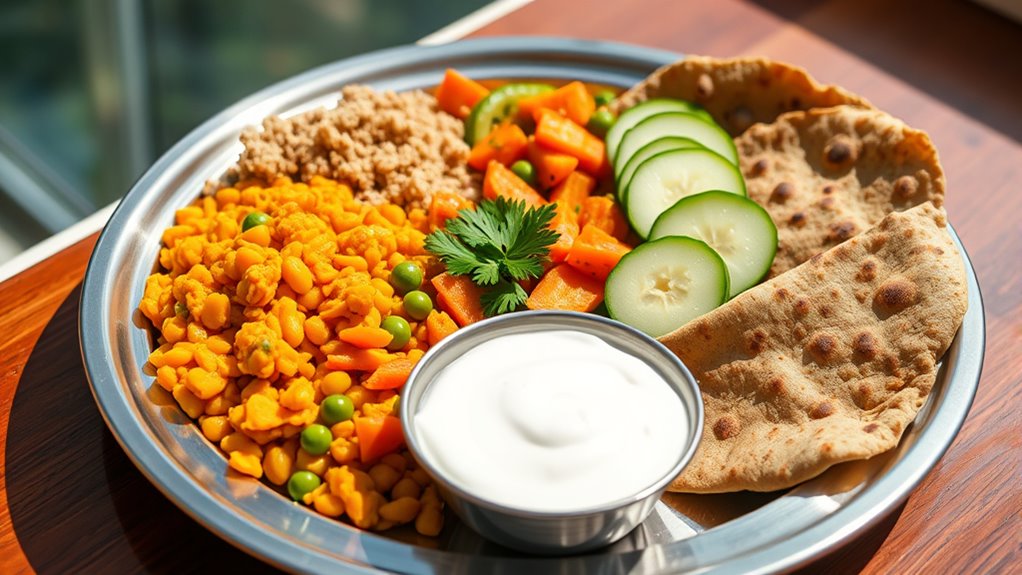
Are you looking for healthy Indian recipes that seamlessly fit into the traditional Indian plate model? You can easily incorporate balanced meals by using flavorful spice blends that add taste without extra calories. Recipes like vegetable dals, grilled tandoori chicken, and sautéed greens align perfectly with the Indian plate concept. Meal prepping is also a smart strategy—prepare your spice blends in advance, so you can quickly assemble nutritious dishes during busy weekdays. Focus on portion control by filling half your plate with vegetables, a quarter with lean proteins, and the rest with whole grains or legumes. These practices help you enjoy authentic Indian flavors while maintaining a healthy, balanced diet that fits the Indian plate model effortlessly.
How the Indian Plate Method Supports Weight Management and Energy

The Indian Plate Method helps you balance nutrients across your meals, ensuring you get the right mix of carbs, proteins, and fats. This balance keeps your energy steady throughout the day and prevents crashes. Plus, it supports weight control by encouraging portion sizes that satisfy without overeating.
Balanced Nutrients Distribution
The Indian Plate Method emphasizes balancing different food groups in your meal, ensuring you get the right mix of nutrients to support weight management and sustained energy. When you plan your meals using this method, you’re naturally guided to include grains, vegetables, proteins, and healthy fats in appropriate proportions. This approach simplifies meal planning by taking the guesswork out of portion sizes and nutrient balance. Food presentation plays a key role, as visually dividing your plate helps you see the ideal distribution at a glance. By maintaining this balance, you prevent overeating and nutrient deficiencies, supporting your weight goals. Ultimately, the Indian Plate Method makes healthy eating intuitive, helping you stay energized and satisfied throughout the day.
Promotes Steady Energy
Because the Indian Plate Method emphasizes balanced portions of grains, proteins, and healthy fats, it helps stabilize blood sugar levels and prevents energy spikes and crashes. This approach supports steady energy throughout the day, reducing the urge for unhealthy snacking habits. When you follow consistent meal timing with balanced plates, your body maintains consistent fuel levels, avoiding dips that cause fatigue. To illustrate, consider the impact of meal composition:
| Balanced Plate Components | Energy Levels Throughout the Day |
|---|---|
| Proper portions of grains, proteins, and fats | Steady, sustained energy without crashes |
| Regular meal timing | Reduced cravings and snacking urges |
| Avoiding processed foods | Maintains consistent blood sugar |
This method keeps your energy stable, helping you stay active and focused.
Supports Weight Control
By focusing on balanced portions of grains, proteins, and healthy fats, the Indian Plate Method naturally supports weight control. When you prioritize proper meal timing, you prevent unnecessary hunger and overeating, making it easier to stay on track. This method encourages mindful eating, reducing impulsive snacking habits that can sabotage your goals. By filling your plate with nutrient-dense foods, you stay satisfied longer, decreasing the urge to snack between meals. The balanced approach helps regulate blood sugar levels, which stabilizes energy and curbs cravings. Over time, these habits promote gradual, sustainable weight management without feeling restrictive. Adopting the Indian Plate Method makes controlling portions and maintaining consistent meal schedules simple, empowering you to manage your weight without sacrificing flavor or variety.
Adapting the Indian Plate for Different Dietary Needs and Preferences
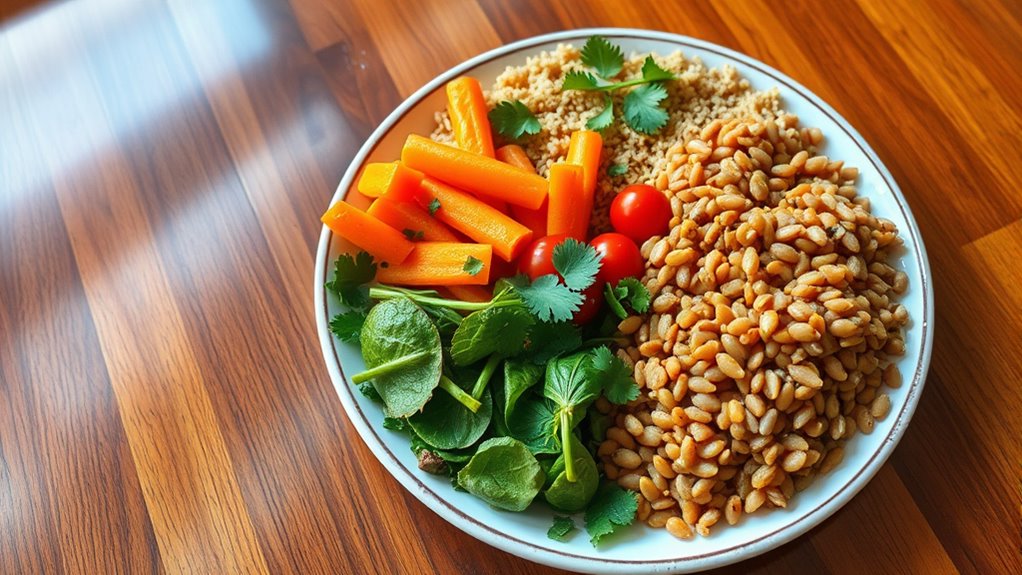
Adapting the Indian plate to suit various dietary needs and preferences allows you to enjoy its rich flavors while maintaining a balanced diet. Cultural adaptations play a key role in customizing meals to match different tastes and restrictions, whether you’re vegetarian, vegan, or need gluten-free options. By adjusting portion sizes and ingredient choices, you can create a meal plan that aligns with your health goals and cultural background. For example, replacing dairy with plant-based alternatives or incorporating local vegetables ensures the plate remains appealing and nutritious. This flexibility makes meal planning easier and more sustainable, allowing you to enjoy traditional flavors without compromising your dietary needs. With thoughtful adaptations, the Indian plate becomes a versatile tool for personalized, healthy eating.
Benefits of Using the Indian Plate Method for Long-Term Healthy Living
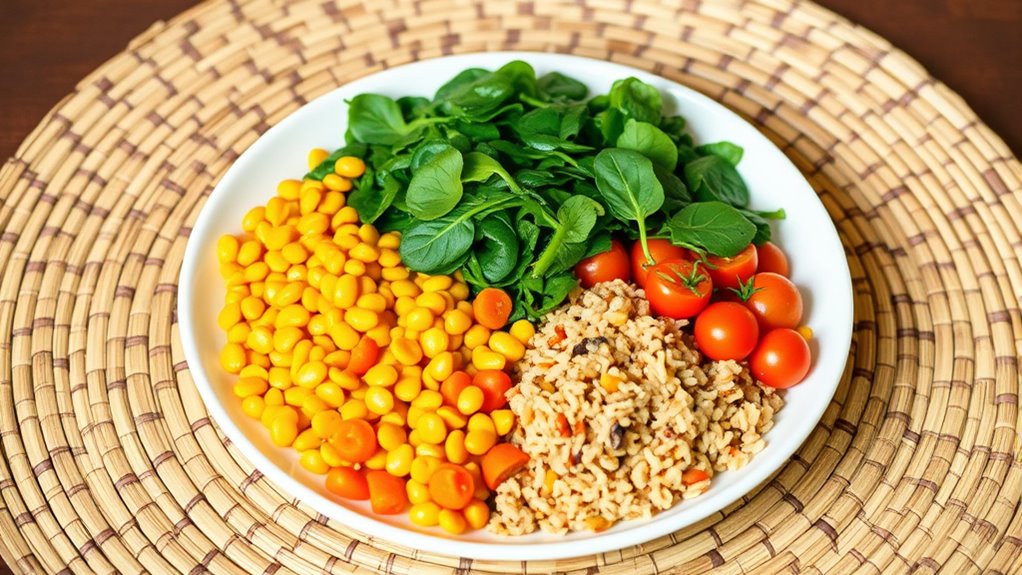
Have you ever wondered how a simple meal-planning method can support your long-term health goals? The Indian Plate method offers numerous benefits, especially for sustainable living. It encourages balanced nutrition by visually dividing your plate, making healthy choices easier. This approach also preserves cultural significance, connecting you to traditional eating habits that promote variety and moderation. Furthermore, it simplifies meal planning, reducing decision fatigue and ensuring consistent healthy eating. Using this method helps you develop habits that last, making your health journey enjoyable rather than restrictive.
| Benefit | Explanation |
|---|---|
| Balanced Nutrition | Ensures all food groups are included for ideal health |
| Cultural Significance | Connects you to traditional eating practices |
| Simplified Meal Planning | Easy to plan meals without stress |
| Long-term Sustainability | Creates lasting healthy habits |
Frequently Asked Questions
Can the Indian Plate Method Be Adapted for Vegetarian or Vegan Diets?
Yes, you can definitely adapt the Indian Plate Method for vegetarian or vegan diets. You just need to incorporate plant-based adaptations like legumes, tofu, or tempeh, and use vegan modifications such as dairy alternatives and varied vegetables. Focus on balancing protein, healthy fats, and carbs, just like with traditional methods. This way, you enjoy nutritious, colorful meals that suit your plant-based lifestyle without sacrificing flavor or variety.
How Does the Indian Plate Method Compare to Other Portion Control Techniques?
The Indian Plate Method offers a balanced approach to portion control, making it quite effective compared to other techniques. Its comparative effectiveness lies in its simplicity and emphasis on variety, which helps you stay satisfied. Plus, its cultural adaptability allows you to incorporate familiar foods, making it easier to stick with. Unlike strict calorie counting, this method encourages mindful eating, fostering healthier habits without feeling restrictive.
Is the Indian Plate Method Suitable for Children and Elderly Individuals?
Yes, the Indian Plate Method is suitable for children and elderly individuals. It helps you serve child-friendly portions, ensuring kids get appropriate nutrients without overeating. For elderly nutrition, it encourages balanced meals that support health and digestion. You can easily adapt the portions to meet their specific needs, making it a practical and flexible way to promote healthy eating for all ages while keeping meals enjoyable and nutritious.
What Are Some Quick Meal Ideas Using the Indian Plate Approach?
You can whip up quick Indian plate-style meals with snack options like roasted chickpeas or fruit chaat, and breakfast ideas such as vegetable upma or poha. These dishes are fast to prepare, balanced with carbs, proteins, and veggies, keeping your meals interesting and nutritious. Simply combine a small portion of grains, a side of protein, and colorful vegetables for a satisfying, healthy plate that energizes your day.
How Can I Modify the Indian Plate Method for Specific Health Conditions?
To tailor the Indian Plate Method for your health condition, keep in mind that every coin has two sides. You should focus on personalized modifications and health condition considerations. For example, if you have diabetes, limit carbs and choose whole grains. For heart health, reduce saturated fats and increase fiber. Always consult a healthcare professional to fine-tune your plate, ensuring it supports your specific health needs while keeping meals enjoyable.
Conclusion
By embracing the Indian Plate Method, you create a vibrant, balanced feast for your body—like a colorful tapestry of wholesome foods. It’s about filling your plate with the right portions, nourishing each part of you, and savoring traditional ingredients that fuel your day. As you make this a habit, you’ll find yourself walking a path of sustainable health, where every meal becomes a nourishing journey—transforming your eating habits into a joyful, lifelong celebration of wellness.
Fall Picks
fall essentials
As an affiliate, we earn on qualifying purchases.