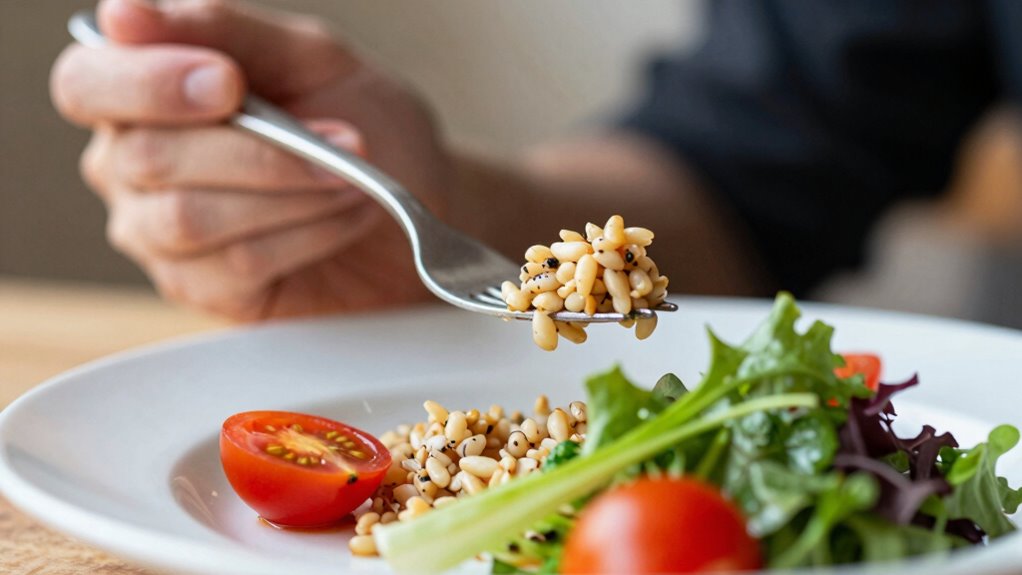

When you slow down your eating, you give your brain time to register fullness, preventing overeating and boosting satisfaction. By savoring each bite, you become more aware of textures and flavors, making meals more enjoyable. This mindful approach also helps you recognize genuine hunger and fullness cues, leading to better portion control and overall well-being. Keep exploring how this simple change can transform your eating experience and satisfaction levels.

Get kitchen staples and gadgets delivered free with Prime
- Fast, free delivery on millions of items
- Prime Video, Amazon Music and more included
- Member-only deals all year
Key Takeaways
- Slower eating allows more time for the brain to register fullness, increasing satisfaction and preventing overeating.
- Mindful awareness during slow meals enhances appreciation of flavors, textures, and overall enjoyment.
- Chewing thoroughly improves digestion, leading to comfort and a more fulfilling eating experience.
- Taking time to eat helps regulate hunger hormones, making satisfaction more accurate and sustained.
- Slower eating transforms meals into nourishing, mindful experiences that boost emotional and physical satisfaction.
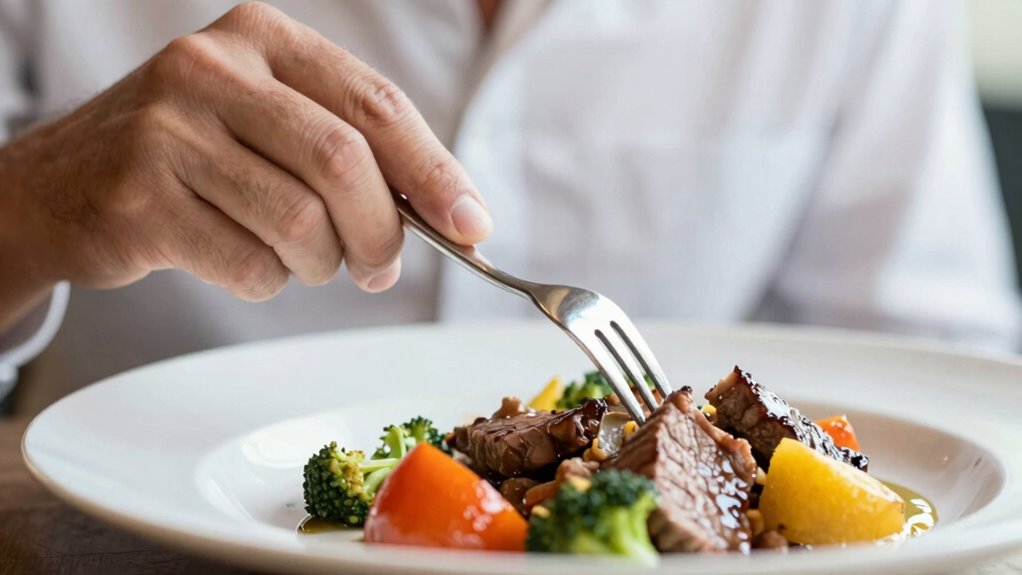
You might not realize it, but how quickly you eat can greatly influence how satisfied you feel after a meal. When you rush through eating, your brain doesn’t have enough time to register fullness, often leading to overeating or feeling unsatisfied even after consuming enough food. Slowing down your eating pace encourages mindful awareness of your body’s signals, helping you recognize when you’re genuinely full. This mindful awareness makes each bite more intentional, transforming the act of eating from a hurried task into a nourishing experience. By paying close attention to the textures, flavors, and sensations of your food, you become more attuned to your body’s cues, which can significantly boost your overall satisfaction with your meals. Additionally, practicing mindful awareness during meals can cultivate a deeper connection to your body’s needs and promote overall well-being. Recognizing the importance of chewing thoroughly can further enhance your digestion and satisfaction. Eating slowly isn’t just about mental focus; it also offers tangible digestion benefits. When you take your time, you allow your digestive system to work more efficiently. chewing thoroughly breaks down food into smaller, more manageable pieces, which makes it easier for your stomach and intestines to process. This reduces the likelihood of symptoms like bloating, indigestion, or discomfort. Slow eating also helps regulate your hunger hormones, which can prevent overeating and support weight management. Furthermore, taking your time during meals can help your body better signal satiety, preventing overeating before you even realize you’re full. Moreover, slower eating helps your body produce the right amount of saliva and digestive enzymes, setting the stage for optimal nutrient absorption. As a result, you not only feel more comfortable after eating but also maximize the nutritional value of your meals. These digestion benefits are especially important if you’re trying to manage weight, improve gut health, or simply enjoy your food more fully.
As an affiliate, we earn on qualifying purchases.
Frequently Asked Questions
Does Slow Eating Affect Long-Term Weight Management?
Yes, slow eating positively affects long-term weight management. When you eat mindfully and take your time, you become more aware of your body’s hunger and fullness signals. This mindful awareness helps you control portion sizes and prevents overeating. By practicing slow eating, you develop healthier habits, making it easier to maintain a balanced diet over time. Ultimately, this approach supports sustainable weight management and improves your overall well-being.
How Can I Train Myself to Eat More Slowly?
You can train yourself to eat more slowly by practicing mindful awareness during meals. Focus on each bite, savor the flavors, and pay attention to your body’s hunger cues. Use chewing techniques like slowly chewing each mouthful thoroughly before swallowing. This helps you stay present, enjoy your food more, and naturally slow down your eating pace, leading to increased satisfaction and better digestion.
Does Slow Eating Improve Digestion and Gut Health?
Yes, slow eating improves digestion and gut health. When you eat slowly, you give your gut flora more time to process food, promoting better nutrient absorption. It also stimulates the production of digestive enzymes, which aid in breaking down food efficiently. As a result, your gut functions more smoothly, reducing discomfort and supporting overall gut health. Taking your time during meals truly benefits your digestive system in multiple ways.
Are There Specific Foods That Benefit More From Slow Eating?
Think of your favorite dish as a symphony—slow eating lets you savor each note. Foods with complex textures, like steak or fresh vegetables, benefit most from slow eating, as it enhances texture and reveal deeper flavor appreciation. By taking your time, you allow the food’s true essence to unfold, making every bite more satisfying. Your palate becomes a storyteller, revealing layers of taste you might otherwise miss in haste.
How Does Slow Eating Influence Emotional Eating Habits?
Slow eating helps you manage emotional eating by fostering mindful awareness of your hunger and emotions. When you take your time, you become more attuned to true hunger cues, reducing impulsive eating driven by emotions. This practice enhances emotional regulation, making it easier to recognize and address emotional triggers without resorting to food. As a result, you develop healthier eating habits and gain better control over emotional eating patterns.
As an affiliate, we earn on qualifying purchases.
Conclusion
So, next time you sit down for a meal, take a moment to savor each bite. Imagine your taste buds as tiny concertgoers, enthusiastically waiting for the next song — slowing down lets them truly enjoy the show. Research shows that eating slowly can boost satisfaction by giving your brain time to catch up. Like savoring a fine wine, taking your time makes the experience richer, leaving you more fulfilled and less likely to overeat.
As an affiliate, we earn on qualifying purchases.
As an affiliate, we earn on qualifying purchases.
Halloween Picks
halloween
As an affiliate, we earn on qualifying purchases.