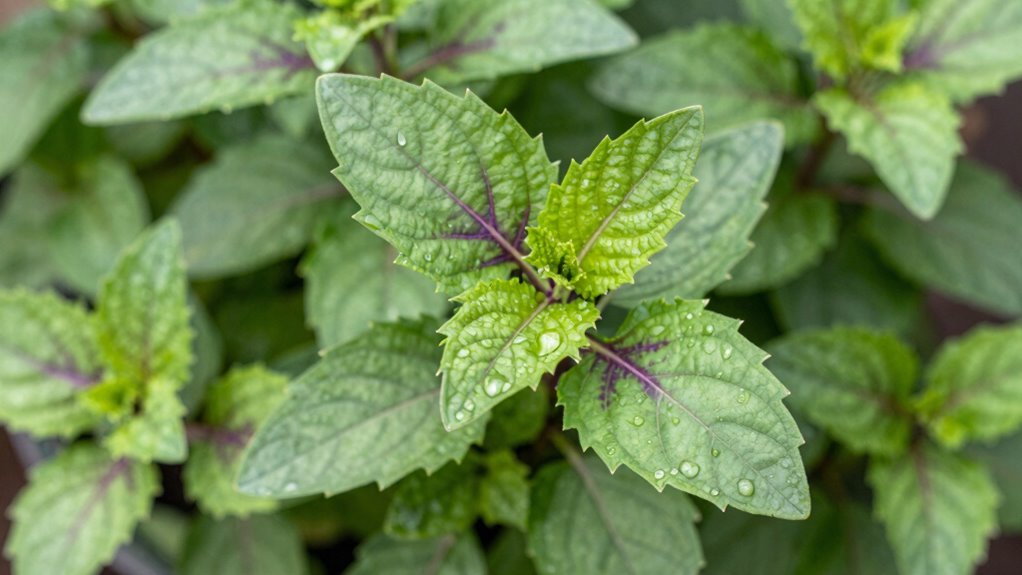

Tulsi, often called the herb that tastes like cloves and mint had a baby, offers a unique flavor combo that’s both warm and invigorating. You’ll notice its spicy richness paired with a revitalizing herbal note, making it perfect for teas, salads, and curries. Besides its flavor, tulsi is celebrated for its health benefits like boosting immunity and reducing stress. Keep exploring to discover how this versatile herb can enhance your dishes and well-being.
Key Takeaways
- Tulsi combines the warm spiciness of clove with the refreshing coolness of mint.
- Its unique flavor enhances salads, teas, curries, and herbal infusions.
- Known for its adaptogenic and immune-boosting properties in traditional medicine.
- Easy to grow at home, allowing fresh harvesting for maximum flavor and health benefits.
- Widely cherished for its versatile culinary uses and holistic wellness support.
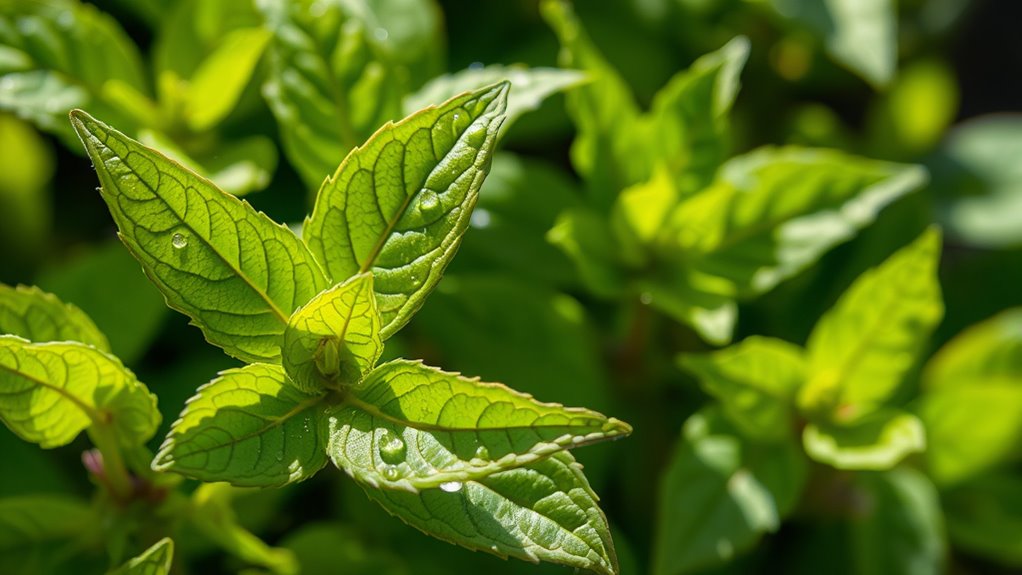
If you’ve ever wondered what it would be like if clove and mint had a flavorful baby, Tulsi is the herb to try. Known for its unique aroma and taste, Tulsi combines the warm spiciness of clove with the invigorating coolness of mint, creating a flavor profile that’s both energizing and soothing. Beyond its delightful flavor, Tulsi offers a range of herbal benefits that make it a popular choice in traditional medicine. It’s praised for its adaptogenic properties, helping your body manage stress and maintain balance. Many believe it can boost immunity, reduce inflammation, and improve respiratory health. Its antioxidant content also supports overall wellness, protecting cells from damage caused by free radicals. These herbal benefits have made Tulsi a staple in herbal teas, tinctures, and supplement formulations for centuries. Additionally, its adaptogenic properties help the body respond more effectively to stress, making it a valuable herb for overall resilience. Researchers have also found that Tulsi has antimicrobial qualities that can support your body’s ability to fight off infections, adding to its health benefits. Incorporating Tulsi into your routine can also support digestive health, as it is traditionally used to soothe stomach ailments and promote gut wellness. Its rich phytochemical profile further enhances its health-promoting effects, making it a versatile herb for holistic wellness.
When it comes to culinary uses, Tulsi is surprisingly versatile. Its fresh leaves add a distinctive flavor to salads, salsas, and even fruit dishes. You can also chop up the leaves and sprinkle them over grilled vegetables or meats to add a subtle aromatic note. In Indian cuisine, Tulsi is often used in curries, rice dishes, and chutneys, where its herbal aroma complements rich spices beautifully. It can be brewed into tea, either alone or mixed with other herbs, to create a soothing beverage that’s both flavorful and beneficial for your health. Some people even infuse oils with Tulsi leaves to add a herbal note to dressings or marinades. Because of its bold aroma, a little goes a long way—so you don’t need much to elevate your dishes or drinks. Additionally, the flavor profile of Tulsi makes it an excellent addition to herbal blends and infusion recipes, enhancing both taste and herbal potency.
Incorporating Tulsi into your culinary routine is simple and rewarding. Whether you’re brewing a calming tea or seasoning a savory meal, you’ll notice its distinct flavor and herbal benefits shine through. Plus, growing Tulsi at home is straightforward; it thrives in pots and gardens alike, and harvesting fresh leaves ensures you get the most potent flavor and herbal benefits. If you’re looking to explore a new herb that combines the best of both worlds—spice and freshness—Tulsi is an excellent choice. Its culinary versatility allows you to experiment in the kitchen, while its herbal benefits support your overall wellness. Once you try it, you’ll see why so many cultures have cherished this remarkable herb for centuries.

FGO Organic Tulsi Holy Basil Tea, 100 Count, Eco-Conscious Herbal Tea Bags, Resealable Bag, Caffeine Free, Packaging May Vary (Pack of 1)
ORGANIC TULSI HOLY BASIL TEA – The tea is filled into tea bags and packed into foil-lined kraft…
As an affiliate, we earn on qualifying purchases.
As an affiliate, we earn on qualifying purchases.
Frequently Asked Questions
Can Tulsi Be Used in Cooking Recipes Outside of Traditional Indian Cuisine?
Yes, you can definitely use tulsi in cooking outside traditional Indian dishes. Its unique flavor works well in cooking experimentation, adding a fresh, aromatic twist. Try pairing tulsi with ingredients like tomatoes, lemon, or even seafood to create exciting flavor pairings. Use it in salads, pasta, or herbal teas for a fresh, herby aroma. Its versatility makes it a great addition to many culinary adventures beyond Indian cuisine.
What Are the Potential Side Effects of Consuming Tulsi Regularly?
You might find that consuming tulsi regularly could lead to subtle issues like allergic reactions or, in rare cases, liver toxicity. While it’s generally safe, overdoing it might cause discomfort or sensitivities. Enjoy tulsi in moderation, listening to your body’s signals. If you notice allergies or unusual symptoms, consider reducing intake and consulting a healthcare professional. Balance is key to savoring its benefits without unwanted side effects.
How Does Tulsi Compare to Other Adaptogenic Herbs for Stress Relief?
You’ll find that tulsi stands out among adaptogenic herbs for stress reduction and immune boosting. It actively helps your body manage stress more effectively and enhances your immune system’s resilience. Compared to other adaptogens like ashwagandha or rhodiola, tulsi offers a soothing, calming effect that promotes mental clarity and relaxation. Its unique combination of properties makes it a versatile herb for supporting overall well-being during stressful times.
Is Tulsi Safe for Children or Pregnant Women to Consume?
About 25% of herbal products lack safety data for children and pregnant women. You should be cautious with herbal safety and pediatric consumption of tulsi, as research is limited. While some consider it safe in small amounts, it’s best to consult your healthcare provider before giving tulsi to kids or pregnant women, since individual responses vary. Always prioritize safety and professional guidance to avoid potential risks.
Can Tulsi Help Improve Skin Health or Treat Specific Skin Conditions?
You can use tulsi as an herbal skin remedy, as it’s known for its anti-inflammatory and antimicrobial properties. It may help soothe skin conditions like acne, eczema, and wounds by reducing redness and promoting healing. Incorporate tulsi into your natural remedies routine through teas, topical pastes, or extracts. Always do a patch test first, and consult a dermatologist if you have sensitive skin or severe conditions.

Starwest Botanicals Organic Tulsi Holy Basil – Dried Loose Leaf Herb for Tea & Cooking, Pure & Natural Ocimum Tenuiflorum (Rama), Cut & Sifted, Certified Kosher, Non-GMO – 4 oz Pouch
PURE HOLY BASIL (RAMA): This bag contains Ocimum tenuiflorum, the botanical name for Holy Basil. Holy Basil, or…
As an affiliate, we earn on qualifying purchases.
As an affiliate, we earn on qualifying purchases.
Conclusion
Next time you sip on tulsi tea, remember you’re enjoying a herb that’s not only delicious but also packs a punch—studies show it can boost your immunity and reduce stress. With its unique flavor blending clove and mint, tulsi truly is a gift from nature. So, why not add this versatile herb to your routine? It’s an easy way to enjoy a flavorful, health-boosting experience every day. Give it a try and savor the benefit!

Carlyle Holy Basil Capsules | 200 Count | Tulsi Holy Basil Leaf Extract | Herbal Supplement | Non-GMO, Gluten Free
HOLY BASIL: Sacred Indian herb with aromatic plant compounds used in ayurvedic practices
As an affiliate, we earn on qualifying purchases.
As an affiliate, we earn on qualifying purchases.

Gya Labs Holy Basil (Tulsi) Essential Oil – 0.34 Fl Oz – for Hair, Skin, Diffuser, Aromatherapy & DIY Candle Making Scent
Soothe your body. Holy Basil Essential Oil has soothing properties perfect in aromatherapy and body massages. Add a…
As an affiliate, we earn on qualifying purchases.
As an affiliate, we earn on qualifying purchases.