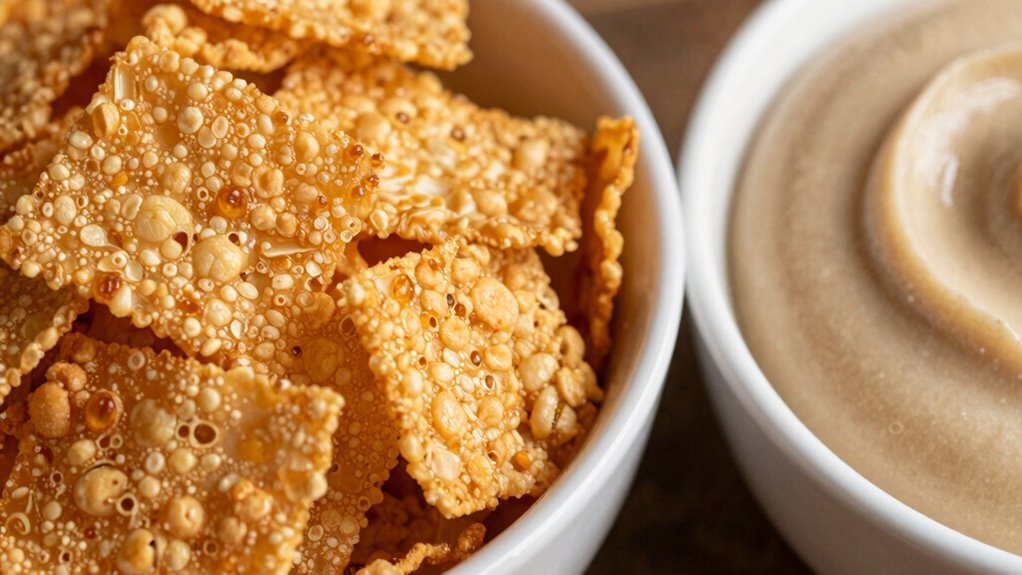

To make sooji crisp or soft, you control roasting, liquid addition, and cooking time. For crispy textures, roast the semolina until golden, add ghee, and cook with hot water or broth to dry out excess moisture. For soft, tender dishes, use less roasting, incorporate more liquids like milk, and simmer longer. Adjusting these techniques allows you to switch between crunchy snacks and smooth desserts—continue exploring to master each perfect texture.

Get kitchen staples and gadgets delivered free — and shop member deals
- Fast, free delivery on millions of items
- Access to Prime Big Deal Days deals on October 6–7
- Prime Video, Amazon Music and more included
Key Takeaways
- Roasting semolina longer and with ghee creates a crispy texture, while minimal roasting yields softer dishes.
- Adding more liquid and simmering results in soft, porridge-like consistency; less liquid and roasting produce crispier outcomes.
- The type of liquid (water, milk, coconut milk) influences moisture content and final softness or crispness.
- Incorporating fats like ghee enhances crispness, whereas using less fat promotes tenderness.
- Cooking duration and stirring control the absorption and moisture levels, determining whether the dish is crunchy or soft.
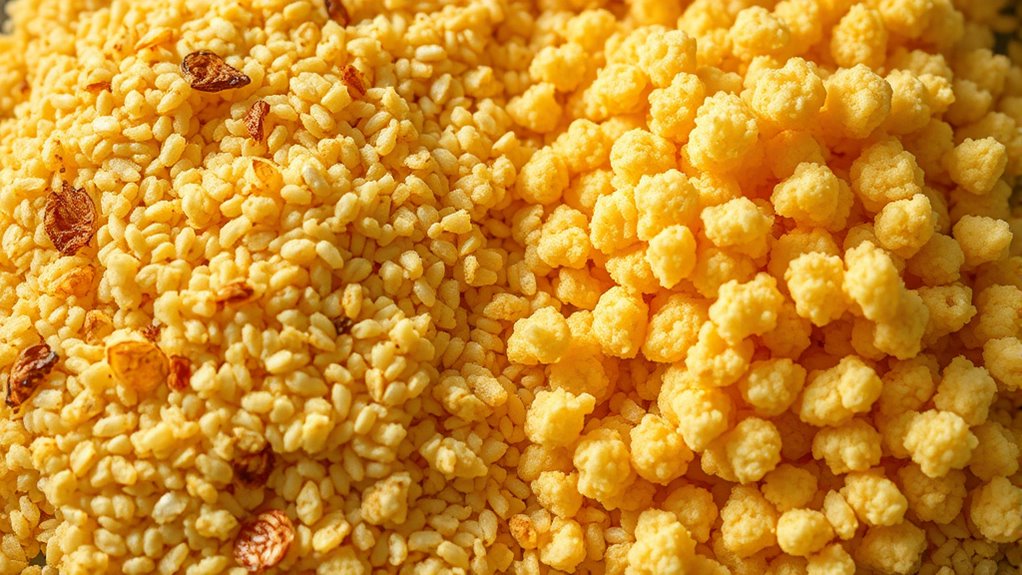
Have you ever wondered how to turn simple sooji (semolina) into irresistible treats? The secret lies in understanding the right cooking techniques and ingredient variations that influence its texture. Sooji is a versatile ingredient that can produce anything from crispy snacks to soft, melt-in-your-mouth desserts. Your approach to cooking it makes all the difference in achieving the desired outcome.
Mastering sooji techniques transforms simple semolina into crispy snacks or soft desserts.
When preparing sooji, the cooking techniques you choose are essential. For crispy dishes like upma or certain snack bars, you typically roast the semolina first. Roasting helps develop a nutty aroma and removes raw flour taste, giving your dish a distinct texture. You’ll want to stir constantly over medium heat until the sooji turns golden brown. Once roasted, adding hot water or broth gradually allows the semolina to absorb liquid evenly, creating a firm, crumbly consistency perfect for crispness. Conversely, if you aim for a soft, porridge-like consistency—for example, in halwa or rava kesari—you’ll use less roasting or skip it altogether. Instead, you simmer the sooji with more water or milk, stirring continuously to prevent lumps and achieve a smooth, creamy texture. The key is controlling the cooking time and moisture level to suit whether you want crunch or softness. Understanding cooking techniques is fundamental in shaping the final texture of your sooji dishes.
Ingredient variations also play a significant role in how sooji turns out. Using different liquids, for example, can dramatically change the texture. Water produces a neutral, soft result, while milk or coconut milk adds richness and creaminess. Incorporating ghee or butter during cooking can enhance crispness for snacks or make desserts more decadent. You can also experiment with additions like nuts, dried fruits, or spices, which influence both flavor and texture. For a crispier snack, incorporate a bit more ghee and roast the semolina longer. For softer dishes, use fresh ingredients and avoid over-roasting. Even the type of sooji matters; fine semolina tends to produce smoother, softer textures, while coarser varieties give a grainier, crunchier finish. Mastering these techniques allows you to tailor each dish precisely to your preference.
Ultimately, it’s about mastering these techniques and ingredient variations to suit each dish. Pay attention to how much you roast, the liquids you choose, and the timing of your cooking process. With practice, you’ll understand why sooji turns crisp in one dish and soft in another. The more you experiment, the better you’ll get at controlling its texture and revealing its full potential. So next time you cook with sooji, remember that your methods and ingredients shape the final result—whether it’s a crispy snack or a soft dessert.
As an affiliate, we earn on qualifying purchases.
Frequently Asked Questions
Can the Type of Sooji Affect Its Crispiness or Softness?
Yes, the type of sooji affects its crispiness or softness. You should consider grain size and moisture content; finer sooji tends to absorb more moisture, making dishes softer, while coarser types crisp up better. If your sooji has higher moisture content, it’ll turn softer when cooked. Choosing the right type based on these factors helps you achieve the perfect texture for your dish, whether crispy or soft.
Does the Brand of Sooji Influence the Texture Outcome?
You might think brand variation doesn’t matter, but surprisingly, it does influence your dish’s texture. Different brands often have subtle differences in grind and moisture content, affecting crispiness or softness. While some keep flavor consistency, others can turn your recipe unexpectedly, making you wonder if your go-to brand is worth sticking with. So, yes, the brand of sooji can profoundly impact the final outcome, even if it seems insignificant.
How Does Storage Affect Sooji’s Cooking Properties?
Your storage conditions impact sooji’s cooking properties, mainly through moisture content. If you store it in a cool, dry place, it stays crisp and dries out, making it perfect for crunchy dishes. However, if moisture seeps in, the sooji can become clumpy and soft, affecting texture. Always keep it in an airtight container to prevent moisture absorption and preserve its ideal cooking qualities.
Are There Specific Cooking Tools That Impact Sooji’s Texture?
Ever wonder if your cooking tools influence sooji’s texture? Yes, they do. Using a heavy-bottomed cooking vessel helps distribute heat evenly, preventing burning and ensuring a soft, fluffy result. Utensil material also matters—metal spoons heat quickly, while wooden ones avoid sticking and clumping. Choosing the right vessel and utensil material allows you to control whether your sooji turns crispy or soft, giving you perfect results every time.
Can Adding Liquids at Different Stages Change Sooji’s Final Texture?
Yes, adding liquids at different cooking stages can markedly change sooji’s final texture. When you add liquid early, it absorbs more, making the dish soft and porridge-like. If you add it later, the sooji stays drier and crisper. Timing matters; during cooking stages, adjust liquid amounts accordingly to get the desired texture, whether you want it soft or crisp.
coarse semolina for crispy snacks
As an affiliate, we earn on qualifying purchases.
As an affiliate, we earn on qualifying purchases.
Conclusion
Now that you know the secrets behind sooji’s versatile texture, you can master both crispy and soft dishes with confidence. Remarkably, semolina is one of the fastest-growing grain products worldwide, with a 12% increase in demand over the past five years. So, next time you cook with sooji, remember how simple tweaks can transform your dish perfectly—whether you crave crunch or tenderness. Keep experimenting, and enjoy the delicious results!
As an affiliate, we earn on qualifying purchases.
non-stick roasting pan for semolina
As an affiliate, we earn on qualifying purchases.
As an affiliate, we earn on qualifying purchases.
NFL season / tailgating Picks
team gear
As an affiliate, we earn on qualifying purchases.