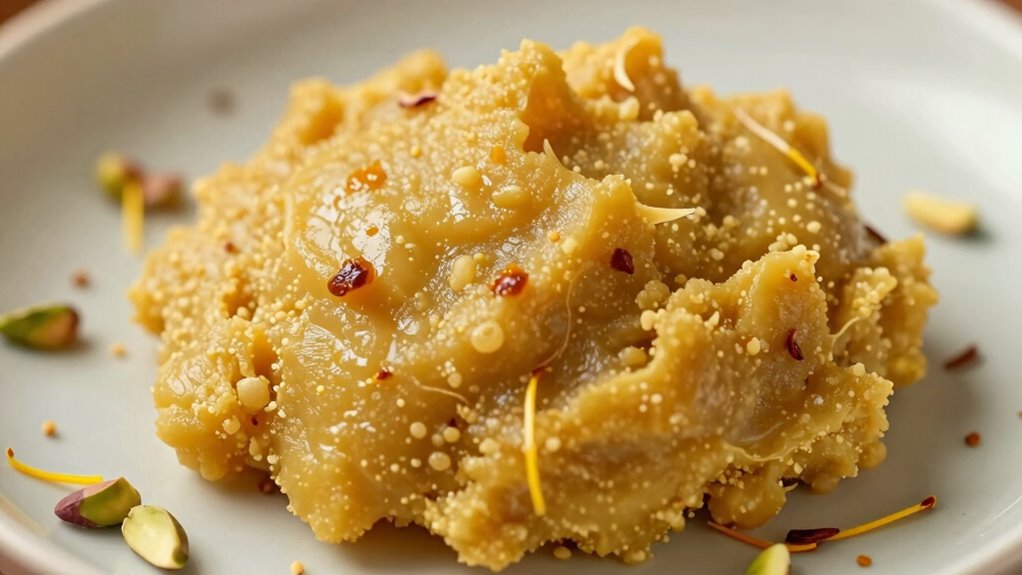

Khoya, or mawa, is a rich, creamy dairy product made by simmering milk until it thickens into a dense, crumbly mass. It is crucial to Indian sweets because it adds authentic flavor, creaminess, and helps bind ingredients. Its concentrated nature makes it a key base for treats like gulab jamun and barfi. If you want to understand how it elevates traditional desserts, keep exploring its role and preparation methods.
Key Takeaways
- Khoya Mawa is a dense, creamy dairy product made by simmering milk to concentrate its flavors.
- It serves as a fundamental ingredient in many traditional Indian sweets like gulab jamun, barfi, and peda.
- Its rich, crumbly texture and concentrated sweetness enhance the flavor and authenticity of Indian desserts.
- Proper preparation and quality control ensure the best aroma, texture, and taste in sweets.
- Khoya Mawa’s unique properties make it central to achieving the traditional richness and indulgence of Indian confections.
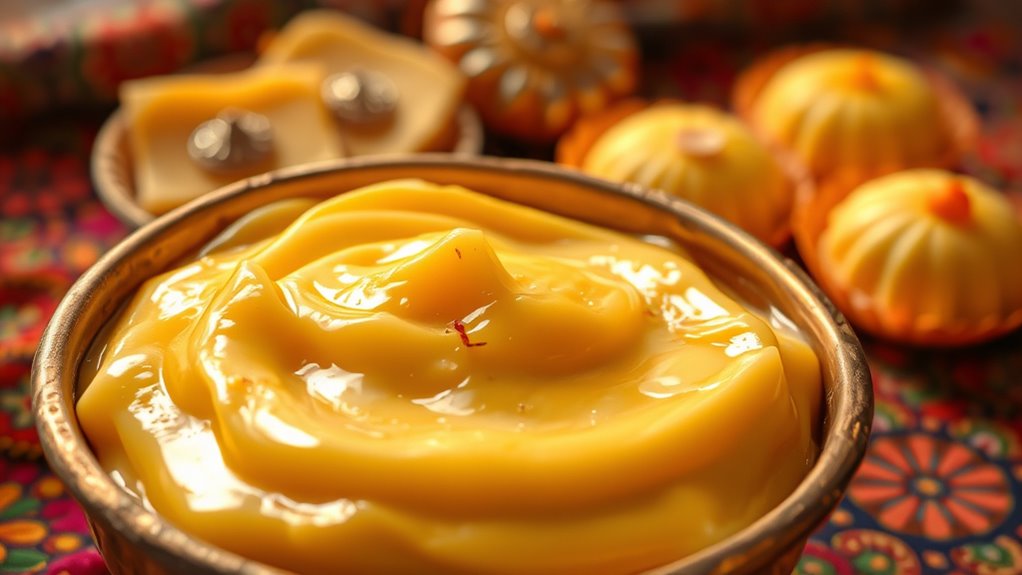
Khoya Mawa, a rich and creamy dairy product, is a cornerstone ingredient in many traditional Indian sweets. It’s made through a process called milk reduction, where milk is simmered and stirred continuously until most of the moisture evaporates, leaving behind a dense, solid mass. This technique concentrates the milk’s natural flavors and results in a thick, crumbly dairy ingredient that’s ideal for sweetening various confections. The process requires patience and attention, as it’s crucial to prevent burning or overcooking the milk. As you reduce the milk, you’ll notice it transforms from a liquid into a semi-solid form, with a texture that’s perfect for kneading or shaping into different sweets. This concentrated dairy ingredient is highly valued because it imparts a unique richness and depth of flavor that can’t be replicated with other substitutes.
When you’re making Khoya Mawa, you’re fundamentally creating a versatile base for a variety of Indian desserts. The milk reduction process intensifies the dairy’s natural sweetness, eliminating excess moisture without compromising the flavor. Once prepared, it can be crumbled, grated, or shaped into balls, discs, or other forms, depending on the recipe. This adaptability makes it a key ingredient in popular sweets like gulab jamun, barfi, and peda. Using Khoya Mawa adds a distinctive creaminess and smooth texture that elevates the final product, making it more indulgent and authentic. Because it’s a concentrated dairy ingredient, a little goes a long way, and it often serves as the primary component that binds other ingredients together.
You’ll find that the quality of your Khoya Mawa critically impacts the taste and texture of your sweets. Freshly prepared Khoya Mawa, with its rich aroma and firm consistency, yields the best results. If you’re buying pre-made, look for one that’s free from additives or preservatives, ensuring your sweets remain pure and traditional. Whether you’re making delicate pedas or decadent barfis, understanding how to handle and incorporate this dairy ingredient is key. The process of milk reduction not only preserves the essence of the milk but also allows you to control the sweetness and richness of your desserts. In essence, mastering the art of creating and using Khoya Mawa is crucial for anyone serious about authentic Indian sweets, as it’s truly the heart of many recipes, bringing traditional flavors to life.
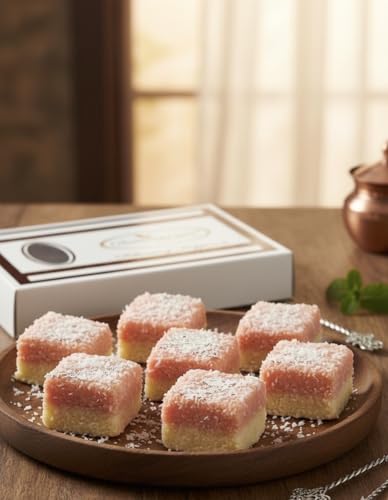
Ghasitaram Gifts Indian Sweets – Diwali Gifts Sweets- Mawa Coconut Barfi 200 GMS
Legacy: A legacy of four generations.Our treasured recipes have been passed down from grandfather to grandsons — a…
As an affiliate, we earn on qualifying purchases.
As an affiliate, we earn on qualifying purchases.
Frequently Asked Questions
Can Khoya Be Made at Home Easily?
Yes, you can make khoya at home easily with homemade preparation. Simply simmer milk on low heat, stirring constantly until it thickens and reduces to a dough-like consistency. To store it, let it cool completely and keep it in an airtight container in the refrigerator for up to a week. Make sure to frequently stir during cooking to prevent burning and achieve the perfect texture.
What Are the Different Types of Khoya?
You’ll find several types of khoya, each with unique qualities. Fresh khoya is soft and moist, perfect for delicate sweets, while dried khoya is firmer and used in richer desserts. Regional variations, like desi and batti khoya, add distinct flavors and textures. Knowing these types helps you choose the right khoya for your recipes, ensuring your Indian sweets turn out authentic and delicious every time.
How Long Does Homemade Khoya Last?
They say “A stitch in time saves nine,” so you’ll want to store homemade khoya properly. Typically, it lasts 3-4 days in the refrigerator when stored in an airtight container. For longer shelf life, freeze it for up to a month. Use storage tips like wrapping it tightly and avoiding moisture. Always check for sour smell or mold before use, as freshness is key to tasty sweets.
Is Khoya Suitable for Vegan Diets?
Khoya isn’t suitable for vegan diets since it’s made from dairy. However, you can explore vegan alternatives like plant-based substitutes such as coconut milk solids, almond paste, or soy-based products. These options mimic khoya’s texture and richness, allowing you to enjoy Indian sweets without dairy. Always check ingredient labels to verify they’re free from animal products, so your treats stay vegan-friendly.
Can Khoya Be Used in Savory Dishes?
Using khoya in savory recipes is like adding a rich, creamy layer to a complex dish. It can enhance curries, kebabs, or stuffed breads, offering a unique dairy flavor. Its culinary uses extend beyond sweets, bringing depth and texture to various savory dishes. You can incorporate khoya to balance spices or create a luscious gravy, making it a versatile ingredient that elevates the overall flavor profile of your savory creations.
buy pure Khoya Mawa online
As an affiliate, we earn on qualifying purchases.
As an affiliate, we earn on qualifying purchases.
Conclusion
Now that you know what khoya or mawa is and its importance in Indian sweets, you might wonder how these treats would taste without it. It’s the heart that gives them richness and authentic flavor. Without khoya, could those traditional delicacies truly shine? Next time you enjoy a sweet, remember it’s the magic of khoya that makes every bite memorable. Isn’t it amazing how a simple ingredient can elevate an entire dessert?
Indian sweet making ingredients Khoya
As an affiliate, we earn on qualifying purchases.
As an affiliate, we earn on qualifying purchases.
premium Khoya Mawa for desserts
As an affiliate, we earn on qualifying purchases.
As an affiliate, we earn on qualifying purchases.