Coriander leaves have a bright, citrusy, and slightly peppery flavor that adds freshness to dishes, perfect for garnishing or finishing. The stems have a milder, earthier taste with less aroma but still add subtle herbal notes. Stems bring crunch and texture, while leaves provide a soft, melted mouthfeel. Using both parts strategically enhances flavor and texture—if you want to learn how to maximize their potential, keep exploring for more tips.
Key Takeaways
- Leaves have a bright, citrusy, and peppery flavor, ideal for garnishing and raw dishes, while stems offer a milder, earthy taste for cooking.
- Leaves release a fresh aroma that mellows into warm, nutty flavors when cooked, whereas stems add subtle herbal depth during the cooking process.
- Use leaves at the end of cooking or raw for maximum brightness, and incorporate stems early to infuse aroma and flavor into dishes.
- Combining both parts enhances layered textures—tender leaves and crunchy stems—adding complexity to culinary creations.
- Proper storage preserves their distinct flavors: leaves in loose wrapping, stems in airtight containers, or frozen for extended freshness.

Schwartz Coriander Leaf Jar – 7g (0.02lbs)
As an affiliate, we earn on qualifying purchases.
As an affiliate, we earn on qualifying purchases.
What Do Coriander Leaves and Stems Taste Like?
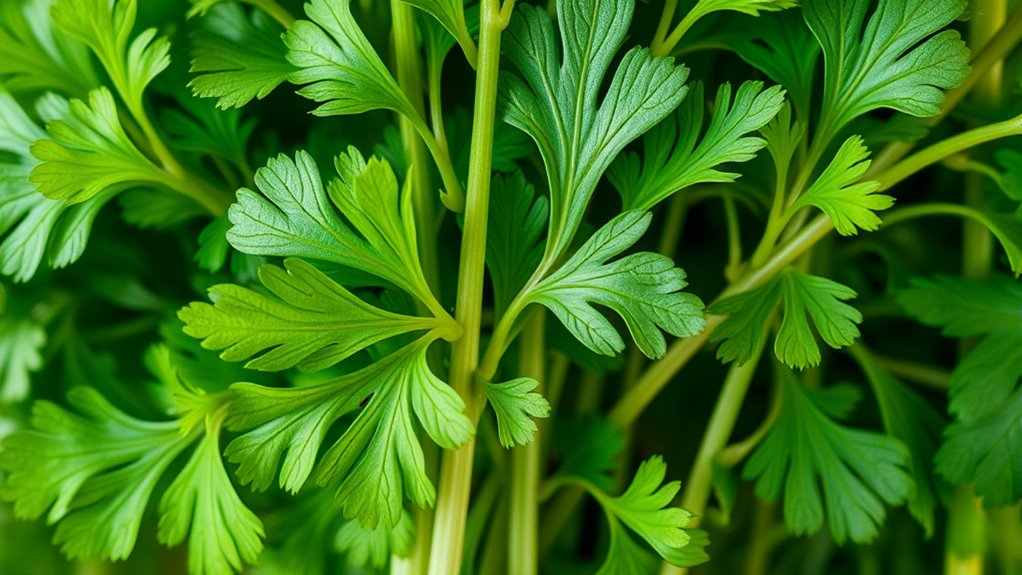
Coriander leaves and stems have distinct flavors that can influence how you use them in dishes. The coriander flavor of the leaves is fresh, citrusy, and slightly peppery, making them perfect for brightening up salads, salsas, and garnishes. They add a vibrant aroma and a burst of flavor that elevates many dishes. On the other hand, the stems have a milder, more muted taste, but they still carry the signature coriander aroma. Their culinary uses include adding depth to curries, soups, and marinades without overpowering other ingredients. Understanding these differences helps you decide whether to use the leaves for their bold, fresh flavor or the stems for a subtler, aromatic enhancement. Both parts bring unique qualities to your cooking, enriching your dishes in different ways.
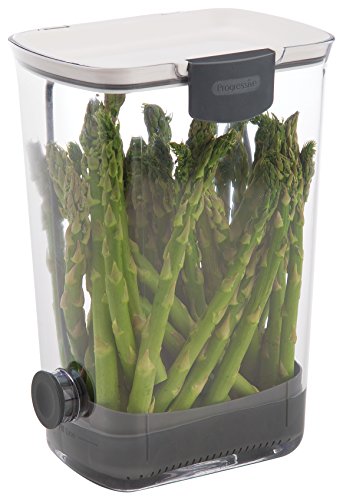
ProKeeper Herb Keeper – 1-Piece, White, with Removable Silicone Drain Plug, BPA-Free Plastic
Contains (1) ProKeeper BPA-Free Plastic Herb Keeper, White with Removable Silicone Drain Plug
As an affiliate, we earn on qualifying purchases.
As an affiliate, we earn on qualifying purchases.
How Do Coriander Leaves and Stems Enhance Your Cooking?

You can boost your dishes with coriander’s fresh aroma, making them more inviting. The different textures of leaves and stems add variety, giving your meals a pleasant mouthfeel. Plus, they deepen the flavor, making your cooking more complex and satisfying. Incorporating both parts can also enhance visual appeal and create a more balanced flavor profile. Understanding the culinary uses of herbs can help you make the most of coriander in your recipes. Additionally, recognizing the sustainable harvesting practices can ensure you select high-quality, ethically sourced coriander.
Fresh Aroma Boost
Ever wondered how adding fresh coriander leaves and stems can instantly elevate your dish’s aroma? The vibrant scent of coriander brings a lively, fresh note that awakens your senses. When you incorporate both leaves and stems, you create a layered herb pairing that enhances the overall fragrance. The leaves release a bright, citrusy aroma, while the stems add a subtle earthiness, together amplifying your dish’s freshness. This aroma boost not only energizes the flavor profile but also elevates your culinary presentation, making your dish more appealing. Using fresh coriander strategically offers an aromatic punch that transforms simple ingredients into a fragrant masterpiece. So, next time you cook, don’t forget to sprinkle in those herbs for an irresistible aroma boost.
Texture Variations Matter
While the aroma adds to coriander’s appeal, its texture also plays a crucial role in elevating your dishes. The crunchy stems provide a different mouthfeel compared to the tender leaves, adding variety and depth. Incorporating stems can add a slight chewiness, which enhances the overall texture. This is especially important in traditional dishes where texture was historically valued for nourishment and flavor balance. Coriander nutrition benefits come from both parts, but stems often carry more fibrous material, contributing to satiety. Using both parts creatively allows you to maximize flavor and texture, making your dishes more interesting. Understanding these Texture variations helps you decide when to add leaves for a delicate touch or stems for a more robust bite, enriching your culinary experience. Paying attention to culinary textures can also influence how well your dish appeals to the senses beyond just flavor.
Flavor Depth Enhancement
Coriander stems and leaves each bring unique flavor qualities that can substantially deepen the taste profile of your dishes. Their culinary versatility allows you to enhance flavor layers, adding freshness and aromatic complexity. Leafy tops provide a bright, citrusy note that lifts dishes, while the stems contribute a milder, earthy depth. Using both parts can intensify the overall flavor, making your recipe more nuanced. If you’re out of fresh coriander, stems can serve as an excellent ingredient substitution, maintaining flavor impact without sacrificing depth. Incorporating these parts thoughtfully allows you to build richer, more complex dishes. Whether in soups, salsas, or curries, leveraging coriander’s full flavor potential helps you achieve a more sophisticated and satisfying taste experience.

Birch & Meadow 1.25lb of Whole Coriander Seeds, Light Sweet Flavor, Dry Rubs & Pickling
Birch & Meadow Whole Coriander Seeds
As an affiliate, we earn on qualifying purchases.
As an affiliate, we earn on qualifying purchases.
When Should You Use Coriander Leaves or Stems?

You should consider using coriander leaves or stems based on your flavor preference and the recipe. If you want a stronger taste, leaves are ideal, while stems work well for milder flavors. Also, think about what’s fresh and available to decide the best part to include. Incorporating sustainability practices in your selection can also enhance the overall quality of your dish.
Flavor Intensity Preference
Deciding when to use coriander leaves or stems depends largely on the desired flavor intensity in your dish. If you want a subtle, fresh aroma, coriander leaves provide a bright, delicate flavor that enhances the aromatic balance without overpowering other ingredients. For a stronger, more robust flavor, stems offer a deeper earthiness that can intensify your flavor pairing. Consider the overall dish: lighter dishes benefit from leaves’ subtlety, while hearty recipes can handle the stems’ assertiveness. Think about how much flavor you want to contribute at different stages of cooking. Using leaves or stems strategically can help you achieve the perfect aromatic balance to elevate your dish’s flavor profile. Additionally, the choice between leaves and stems can influence the aromatic profile of your dish, allowing for more nuanced flavor layering. Understanding the yarn weight and stitch type can also be useful if you plan to incorporate fresh or dried herbs into craft projects, ensuring proper proportions and results.
Recipe Type Suitability
Choosing between coriander leaves and stems depends on the type of recipe you’re preparing. For dishes like salads or garnishes, fresh leaves are ideal since they add vibrant flavor and visual appeal. When cooking soups, stews, or curries, stems work well because they hold up during simmering and provide a milder, earthy taste. If you’re out of leaves, consider coriander substitutions that incorporate stems or dried herbs to maintain flavor. Herb pairing options also influence your choice; leaves complement citrus or spicy dishes, while stems suit savory, aromatic blends. Use the leaves when you want a burst of fresh flavor at the end, and stems during cooking for added depth. Understanding herb chemistry can help you maximize the flavor potential of both parts of the coriander plant. Additionally, recognizing the flavor profiles of each part can guide you in creating more balanced dishes.
Freshness and Availability
Freshness and availability play key roles in determining whether to use coriander leaves or stems. If you have fresh coriander on hand, using the leaves can enhance your dish with vibrant flavor and herbal pairing. However, when only stems are available, don’t hesitate—they still offer culinary versatility and can be used effectively, especially in cooked dishes. Timing matters because fresh leaves tend to wilt quickly, so use them promptly for maximum flavor. Stems last longer and are ideal for stock, sauces, or when you want a milder herbal note. Your choice depends on what’s fresh and accessible, ensuring you make the most of coriander’s flavor in your cooking. Free floating can also influence how you incorporate coriander into your backyard gatherings or outdoor cooking experiences.

2 Lbs Dried Cilantro Flakes – Despensa Colombiana Coriander Leaves, Cilantro Leaves Bulk 32 oz – Ideal for cooking new dishes, soups, chicken and more!
Dried cilantro offers a robust flavor that enhances chicken dishes. Its aromatic profile makes it perfect for marinades…
As an affiliate, we earn on qualifying purchases.
As an affiliate, we earn on qualifying purchases.
What Are the Textural Differences Between Leaves and Stems?

While coriander leaves are tender and delicate, the stems tend to be much firmer and more fibrous. This creates a noticeable texture contrast when you handle or chew them, as the leaves melt easily in your mouth, providing a soft, smooth mouthfeel variation. In contrast, the stems offer a crunchier, more rigid bite, requiring more effort to chew thoroughly. The difference in texture impacts how you incorporate them into dishes; leaves add a light, airy quality, while stems introduce a satisfying firm bite. Understanding this contrast helps you decide whether to use leaves for a silky mouthfeel or stems for more structure. Recognizing these textural differences lets you tailor your cooking to enhance both flavor and overall sensory experience. Additionally, being aware of ear wax odor can help you better understand subtle sensory cues in your environment. Cooking techniques can further influence how these textures are emphasized or softened during preparation.
How to Incorporate Coriander Stems for Flavor and Garnishing

Coriander stems are a versatile ingredient that can add depth and a fresh, herbal note to your dishes. To incorporate coriander stem uses effectively, chop them finely and add them early in cooking to infuse flavor. They work well in curries, soups, and stews, providing a subtle earthiness. For garnishing with coriander, use chopped stems alongside leaves for a visually appealing and flavorful finish. You can also blend stems into pestos or herb sauces, maximizing their herbal aroma. Remember, stems carry flavor but have a firmer texture, so balance their use with tender ingredients. This way, you enhance dishes without overpowering, creating a nuanced and aromatic profile. Incorporating coriander stems allows you to make full use of the herb’s potential. Additionally, understanding the different flavor profiles of coriander leaves and stems can help you better utilize each part in various culinary applications. Exploring herbal aroma can further elevate your dishes by highlighting the unique qualities of coriander stems versus leaves. Recognizing these culinary distinctions enables cooks to craft more balanced and flavorful dishes that highlight the herb’s full spectrum. Using both parts thoughtfully can also contribute to sustainable cooking practices by reducing waste and maximizing flavor extraction.
Do Flavors of Coriander Change When You Cook Them?

Cooking coriander transforms its flavor profile, often mellowing the herb’s bright, citrusy notes into a warmer, earthier taste. The cooking impact causes a noticeable coriander flavor change, especially when heated for longer periods. Fresh leaves offer a sharp, fresh aroma, while cooked coriander develops a deep, nutty flavor. This shift can enhance stews and curries, adding richness and complexity. The table below highlights the flavor differences:
| Raw Coriander | Cooked Coriander |
|---|---|
| Bright, citrusy aroma | Mellow, earthy flavor |
| Crisp texture | Soft, tender texture |
| Sharp, pungent taste | Deep, nutty undertones |
| Fresh, vibrant scent | Warm, roasted scent |
| Used as garnish | Integrated into dishes |
Understanding this coriander flavor change helps you decide when to add coriander fresh or during cooking. Flavor profile can vary significantly depending on the cooking method used, and the cooking process itself influences the overall flavor transformation. Additionally, the herb’s freshness impacts the intensity of the flavor change during cooking.
Practical Tips for Using Both Parts of Coriander Effectively
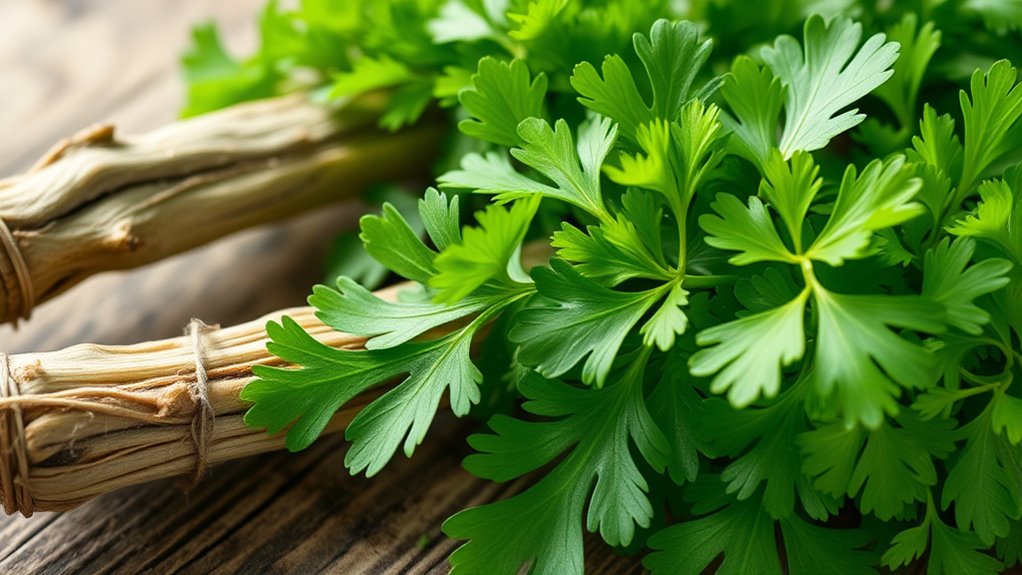
To make the most of both coriander leaves and stems, incorporate them thoughtfully into your dishes at the right moments. Add fresh leaves near the end of cooking to preserve their bright flavor, while stems can be added earlier to infuse subtler notes. Proper coriander storage helps maintain flavor preservation, ensuring both parts stay fresh longer. Use stems in soups, stews, or sauces where their flavor can develop, and sprinkle leaves as a garnish for a fresh burst. Keep herbs dry and wrapped loosely in a paper towel in the fridge to extend shelf life. Gold IRA Markets also emphasizes that proper investment strategies and storage are crucial for maintaining value over time. Additionally, understanding the cost considerations associated with different kitchen tools can help you plan better for efficient cooking and herb preservation. To optimize flavor retention, consider herb storage techniques that prevent wilting and spoilage, ensuring you get the most out of your fresh herbs. Proper herb storage methods are essential for maintaining herb quality, which can significantly extend the freshness and flavor of both coriander parts, making your culinary efforts more efficient and flavorful.
How to Store Coriander to Keep Both Parts Fresh
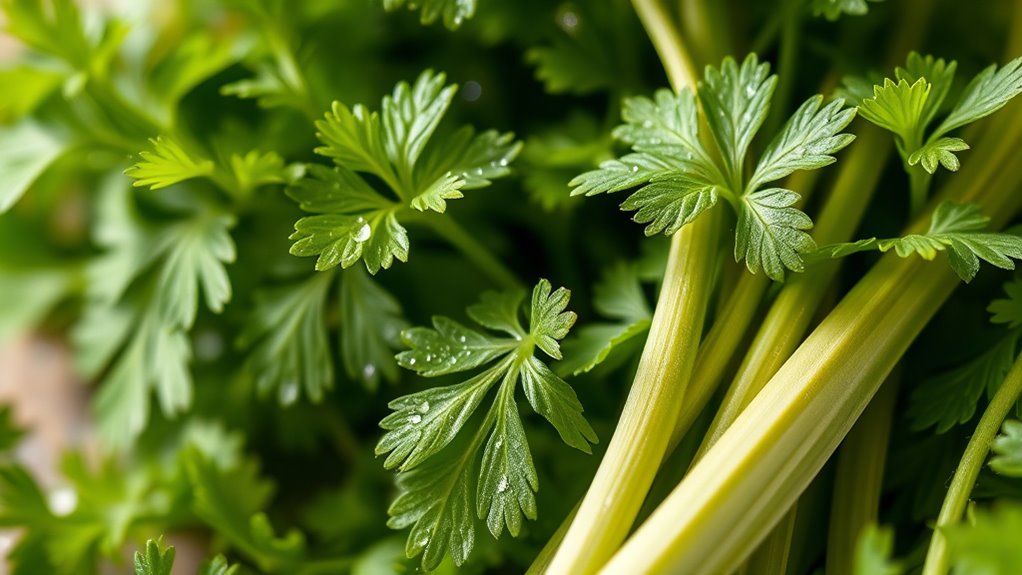
Keeping coriander fresh requires proper storage methods that protect both the leaves and stems from moisture loss and spoilage. To preserve freshness, store coriander properly by trimming the ends and removing any damaged leaves. Wrap the bunch loosely in a damp paper towel and place it inside a plastic bag or airtight container. Keep it in the refrigerator’s crisper drawer to maintain ideal humidity. For longer storage, consider freezing coriander stems and leaves separately in airtight containers. These storage tips help prevent wilting and spoilage, ensuring your coriander stays vibrant.
| Part | Best Storage Method | Tips |
|---|---|---|
| Leaves | Damp paper towel + airtight container | Keep moisture consistent |
| Stems | Freezer in airtight container | Preserve flavor |
| Overall | Refrigeration + proper wrapping | Maximize freshness |
Can Using Leaves and Stems Separately Improve Your Dishes?

Using leaves and stems separately can enhance your dishes by highlighting different flavor profiles and textures. Leaves add freshness and aroma, while stems bring a subtle earthiness and crunch. When you choose how to use each part, you can create more layered and interesting dishes.
Enhanced Flavor Profiles
Separating coriander leaves and stems can substantially enhance the flavor of your dishes. By using each part separately, you unlock unique culinary uses and maximize their nutritional benefits. Leaves add a bright, citrusy note perfect for garnishes and fresh salads, while stems provide a milder, earthy flavor ideal for simmered dishes and sauces. This approach lets you tailor flavors more precisely, elevating your recipes. Additionally, using stems in cooking preserves their nutritional benefits, such as antioxidants and vitamins, which might be overlooked if discarded.
- Maximize flavor complexity by highlighting each part’s unique qualities
- Improve dish balance with targeted flavor additions
- Boost nutritional intake through selective use of leaves and stems
Textural Variations Impact
When you choose to use coriander leaves and stems separately, you can considerably influence the texture of your dishes. This allows for a deliberate textural contrast that enhances sensory perception. Leaves tend to be tender and leafy, adding a soft, delicate mouthfeel that melts easily. In contrast, stems are more fibrous and firm, providing crunch or chewiness that adds structure. By combining both, you create layers of texture that make each bite more interesting. Using stems alone can give a dish a hearty, substantial feel, while leaves contribute a light, fresh element. This strategic use of texture not only improves the overall eating experience but also highlights the ingredient’s versatility, making your dishes more dynamic and appealing.
Summing Up: Making the Most of Coriander in Your Kitchen
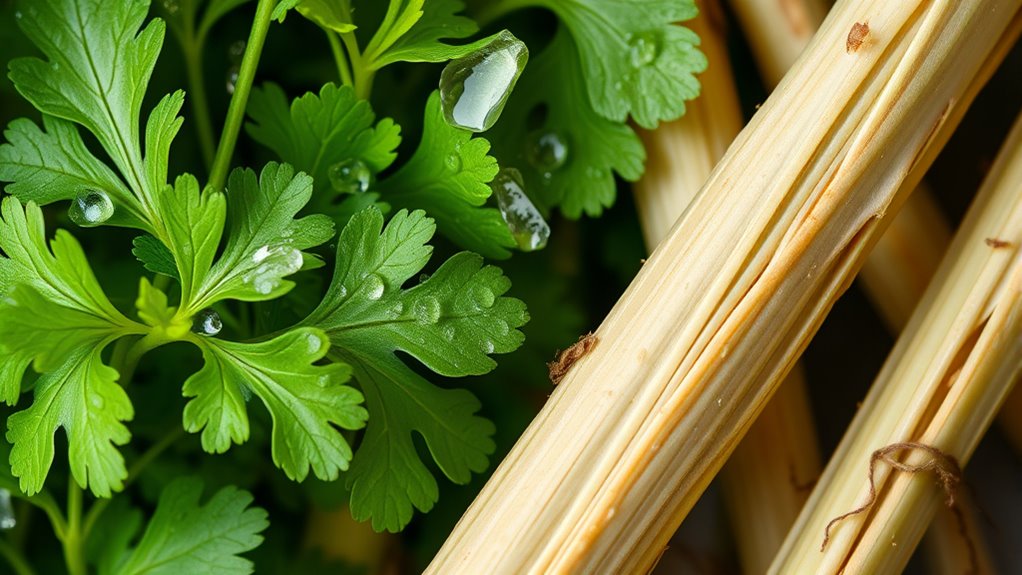
To get the most out of coriander in your kitchen, it is vital to know how to utilize both the leaves and stems effectively. Understanding coriander nutrition can help you maximize its health benefits, while appreciating its culinary history adds depth to your cooking. Use the vibrant leaves for garnishing and fresh flavor, and incorporate the stems into cooked dishes for added aroma and texture. Both parts are versatile and can elevate a variety of recipes. To make the most of coriander, consider these tips:
- Use leaves for raw dishes and final touches
- Incorporate stems into soups and stews for flavor
- Learn about its traditional uses across cuisines to inspire your cooking
Mastering these techniques helps you enjoy coriander’s full potential.
Frequently Asked Questions
Can Coriander Stems Be Substituted for Leaves in Recipes?
Yes, you can substitute coriander stems for leaves in recipes. Coriander stem usage offers a milder, slightly earthy flavor, making them a good alternative when you don’t have fresh leaves. When doing a leaf to stem substitution, chop the stems finely to release their flavor. Keep in mind, stems are more fibrous, so they work best in cooked dishes like soups or stews where they can soften and blend in.
Are There Health Benefits Specific to Coriander Stems?
You’ll find coriander stems offer notable health benefits through their herbal properties and nutritional content. They contain antioxidants that support your immune system, anti-inflammatory compounds that may reduce swelling, and vitamins like C and K that promote overall wellness. Incorporating stems into your diet can boost digestion, improve skin health, and provide essential nutrients. So, don’t overlook the stems—they’re a valuable, nutritious addition to your culinary and health routines.
How Do I Clean Coriander Stems Effectively?
To clean coriander stems effectively, start by removing any wilted or discolored parts. Use your kitchen tools, like a sharp knife or vegetable brush, to gently scrub the stems under running cold water. This herb preparation guarantees all dirt and residues are washed away. Be thorough but gentle to preserve the herbs’ freshness. Proper cleaning guarantees your coriander stems are ready for cooking or garnishing, enhancing flavor and safety.
Do Coriander Stems Have a Different Shelf Life Than Leaves?
Coriander stems typically have a slightly shorter shelf life than leaves due to their denser structure, but proper storage can extend freshness. To maximize shelf life, store stems and leaves in a sealed container or plastic bag in the refrigerator’s crisper drawer, and keep them dry. Use them within 3-5 days for the best flavor and texture, and always check for signs of spoilage before use.
Can I Use Dried Coriander Stems in Cooking?
Using dried coriander stems in cooking is like adding a whisper of fresh herb; it’s a practical way to extend flavor. Dried herb usage preserves their essence better than fresh, but their flavor may be milder. You can incorporate dried coriander stems into soups, stews, or spice blends, knowing that they’ll add aroma and depth, even if their freshness isn’t as vibrant as fresh stems.
Conclusion
By understanding the flavor and texture differences between coriander leaves and stems, you can elevate your cooking effortlessly. When you use each part thoughtfully—adding stems for depth and leaves for freshness—you’ll notice how your dishes come alive. It’s a small change that makes a big impact, just like discovering a new flavor at the perfect moment. So, keep experimenting, and let coriander’s versatility surprise your taste buds every time you cook.