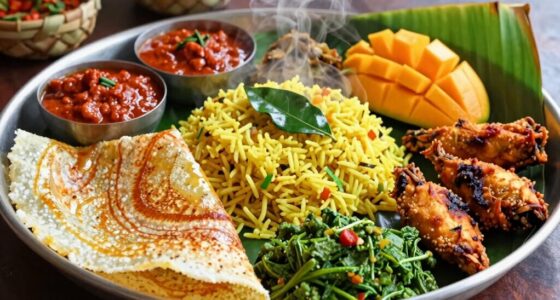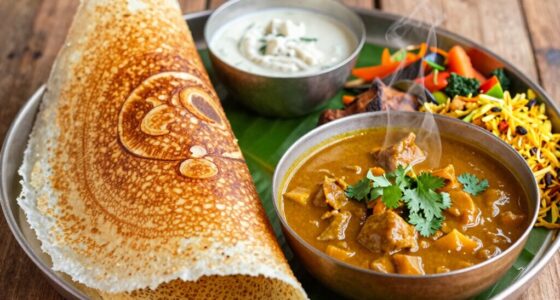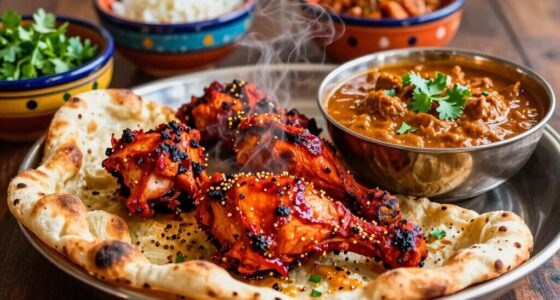
Tamil cooking is much more than just dosa and sambar; it’s a rich culinary tradition rooted in history and local culture. You’ll find diverse dishes that reflect regional ingredients and flavors, from coastal seafood to inland rice specialties. This cuisine emphasizes natural ingredients, traditional techniques, and unique spices that enhance, not overpower,. Exploring beyond the basics reveals a tapestry of flavors shaped by history and geography. If you continue exploring, you’ll uncover the true depth of Tamil cuisine.

Get kitchen staples and gadgets delivered free with Prime
- Fast, free delivery on millions of items
- Prime Video, Amazon Music and more included
- Member-only deals all year
Key Takeaways
- Tamil cuisine features a diverse range of regional dishes beyond dosa and sambar, reflecting local ingredients and cultural traditions.
- It encompasses seafood, rice-based dishes, lentil porridges, and intricate spice blends unique to various regions.
- Traditional cooking methods and regional variations highlight the rich culinary diversity within Tamil Nadu.
- The cuisine’s history and ingredients reveal a deep cultural significance beyond popular staples.
- Tamil food celebrates local produce, evolving over time while maintaining its traditional essence.

Tamil cuisine is often reduced to just dosa and sambar in popular imagination, but in reality, it’s a vibrant and diverse culinary tradition with much more to offer. When you dive deeper, you discover a rich culinary history that spans thousands of years, shaped by evolving cultures, trade routes, and regional influences. This history isn’t just about recipes; it’s woven into the very fabric of Tamil Nadu’s identity, reflected in its ingredients, cooking techniques, and flavors. You’ll find that each dish tells a story, often rooted in ancient traditions and local customs, giving you a window into the region’s cultural evolution.
One of the most striking aspects of Tamil cooking is its reliance on regional ingredients. Unlike cuisines that rely heavily on imported spices or processed foods, Tamil dishes highlight the bounty of the land. You’ll notice the prominence of rice, which serves as the staple grain, paired with a variety of vegetables, legumes, and coastal seafood. Spices like turmeric, tamarind, coriander, and mustard seeds play a pivotal role, but they’re used in ways that accentuate the natural flavors rather than overpower them. Fresh curry leaves, coconut, and bananas are also common, adding layers of taste that are deeply tied to the climate and geography of the region. Additionally, the traditional use of local ingredients underscores how Tamil cuisine is rooted in its environment and agricultural practices. Recognizing the regional variations in ingredients is key to understanding the full scope of Tamil culinary traditions.
Tamil cuisine emphasizes local ingredients like rice, vegetables, seafood, and aromatic spices, reflecting regional climate and traditions.
As you explore Tamil food, it becomes clear that its diversity is rooted in regional ingredients. Coastal areas, for example, feature seafood-rich dishes like meen kuzhambu, while inland regions focus more on rice-based dishes and lentil porridges like pongal. The use of ingredients varies from village to village, reflecting local farming practices and available resources. This regional variation means that Tamil cuisine isn’t monolithic; instead, it’s a tapestry of flavors that change depending on where you are. Whether it’s the fiery Chettinad cuisine with its bold spices or the milder, coconut-infused dishes from the Kongu region, each area offers something unique.
Understanding the culinary history and regional ingredients of Tamil cuisine helps you appreciate its depth beyond the popular staples. It’s a cuisine that celebrates local produce, respects traditional methods, and adapts over time while holding onto its roots. So, when you think of Tamil food, remember it’s far more than dosa and sambar — it’s a rich, evolving tradition that reflects the land, its history, and its people.
Tamil cuisine traditional spice blends
As an affiliate, we earn on qualifying purchases.
As an affiliate, we earn on qualifying purchases.
Frequently Asked Questions
What Are Some Lesser-Known Traditional Tamil Desserts?
You’ll find lesser-known traditional Tamil desserts like Arisapetti, a sweet made from rice flour and jaggery, and Palkova, a rich milk fudge. These ancient sweet recipes have been passed down through generations. Recently, chefs are blending traditional flavors with fusion dessert innovations, creating unique treats that honor history while appealing to modern tastes. Exploring these lesser-known sweets offers a deeper appreciation of Tamil culinary heritage.
How Has Tamil Cuisine Evolved Over Centuries?
You might think Tamil cuisine has barely changed, but it’s a rich tapestry woven with historical influences and culinary innovations. Over centuries, ancient recipes blended with foreign spices, colonial flavors, and modern techniques, transforming traditional dishes into vibrant, diverse creations. So, while the essence remains, today’s Tamil food reflects a dynamic evolution—much like a story constantly rewritten, yet rooted deep in centuries of flavorful history.
Which Spices Are Unique to Tamil Cooking?
You’ll find that Tamil cooking uses unique spices like kalpasi (stone flower) and paagu milagai (red chilies), creating distinct flavor profiles. Spice blends such as sambar podi and rasam powder are essential, offering authentic tastes. These spices give Tamil dishes their characteristic aroma and flavor, setting them apart from other cuisines. Your palate will appreciate the rich, complex layers of spice that define Tamil culinary traditions.
What Are Regional Variations Within Tamil Cuisine?
You’ll find regional variations in Tamil cuisine, especially in Tamil street foods and coastal seafood dishes. In Chennai, expect spicy, tangy flavors with a focus on street snacks like vada and murukku. In coastal areas like Tuticorin, seafood takes center stage with dishes like fish curry and crab roast. Each region adds its own local ingredients and cooking styles, creating a diverse and vibrant culinary landscape.
How Does Tamil Cuisine Influence Modern Indian Food?
Did you know that Tamil cuisine’s rich flavors have profoundly shaped modern Indian food? You’ll notice Tamil culinary fusion in popular dishes across India, blending traditional spices with contemporary ingredients. This influence introduces contemporary Tamil flavors to a wider audience, inspiring chefs to innovate. By integrating classic Tamil techniques and ingredients, modern Indian cuisine becomes more diverse and vibrant, creating exciting new dishes that celebrate Tamil culinary heritage in every bite you take.
As an affiliate, we earn on qualifying purchases.
Conclusion
You see, Tamil cooking is like a rich tapestry woven with countless flavors and traditions, far beyond just dosa and sambar. It’s a vibrant world waiting to be explored, offering a feast for your senses. Don’t just settle for the familiar; immerse yourself in the diversity and discover the true essence of Tamil cuisine. Like a song that keeps playing, its depth and variety will keep enticing you, making every meal a delightful journey.
South Indian rice cooker for Tamil dishes
As an affiliate, we earn on qualifying purchases.
As an affiliate, we earn on qualifying purchases.
As an affiliate, we earn on qualifying purchases.
Halloween Picks
halloween
As an affiliate, we earn on qualifying purchases.