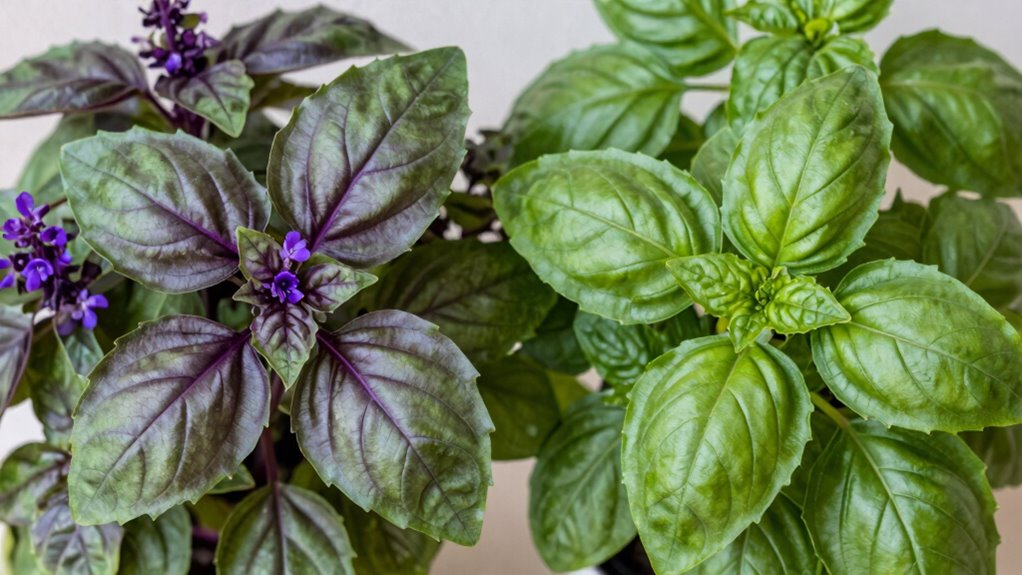

When choosing between Thai basil and Indian basil, don’t substitute blindly, as their flavors differ markedly. Thai basil has a spicy, anise-like taste that works well in Southeast Asian dishes, while Indian basil offers a more herbal, minty flavor suitable for Indian cuisine. Using the wrong one can shift the dish’s authentic flavor. To maintain the true taste, it’s important to understand their differences—if you want to learn more, keep exploring how each herb influences various recipes.
Key Takeaways
- Thai basil has a distinctive spicy-anise flavor, while Indian basil offers a more herbal, minty taste, making them not directly interchangeable.
- Substituting Indian basil in Thai dishes can alter authentic flavors and diminish the intended aromatic profile.
- Thai basil complements bold ingredients like chili, garlic, and lime, unlike Indian basil’s suitability for more subtle Indian spice blends.
- Using the wrong basil variety may result in flavor mismatches, disrupting the balance and authenticity of the dish.
- Recognize the distinct culinary roles of each herb to ensure the desired flavor and cultural integrity are maintained.

Have you ever run out of basil right before cooking your favorite dish? It’s frustrating, especially when you’re eager to get that fresh, vibrant flavor into your meal. But before grabbing any other herb, it’s important to understand that not all basil varieties are interchangeable, particularly Thai basil and Indian basil. Their flavor profiles differ markedly, and so do their culinary pairings. Recognizing these differences helps you avoid, for example, substituting Thai basil with Indian basil and ending up with a dish that tastes off or lacks the intended aroma.
Not all basil varieties are interchangeable; Thai and Indian basil have distinct flavors and culinary uses.
Thai basil has a distinctive, slightly spicy flavor with hints of anise or licorice, making it a favorite in Southeast Asian cuisines. Its flavor profile includes a subtle sweetness balanced with a peppery kick, which can elevate dishes like Thai stir-fries, noodle salads, or curries. When you’re cooking with Thai basil, think about its ability to complement bold, spicy, and aromatic ingredients. Its flavor pairs well with ingredients like garlic, chili, lime, fish sauce, and coconut milk. If you replace Thai basil with Indian basil, you might notice a notable shift in taste. Indian basil, often called “tulsi,” has a more herbal, slightly peppery, and sometimes minty flavor, lacking the sweet-spicy notes of Thai basil. Its flavor profile is more subdued and earthy, making it better suited for medicinal teas, gentle soups, or dishes with a focus on fresh herbs rather than bold spices.
Culinary pairings are vital here. Thai basil’s bright, anise-like flavor works beautifully with ingredients that can stand up to and enhance its unique taste. Think of pairing it with ingredients like lemongrass, ginger, fish, or chili peppers. Indian basil, on the other hand, pairs better with ingredients common in Indian cooking, such as cumin, coriander, turmeric, and lentils. If you try to substitute Indian basil into a recipe that calls for Thai basil, you risk disrupting the intended flavor balance. The dish may lose its authentic essence, and the overall flavor profile could become muddled or subdued.
Understanding these nuanced differences helps you make smarter substitutions and keeps your dishes authentic. While both herbs belong to the basil family, their distinctive flavor profiles and culinary pairings make each herb suited to specific cuisines. So, next time you’re out of Thai basil, think twice before reaching for Indian basil. Instead, consider what flavor you want to highlight and choose the herb that best complements your dish. This attention to detail ensures your cooking remains true to the authentic flavor profiles that make each cuisine special.

Amazon Grocery, Organic Thai Basil, 0.5 Oz
One 0.5 ounce package of Organic Thai Basil
As an affiliate, we earn on qualifying purchases.
As an affiliate, we earn on qualifying purchases.
Frequently Asked Questions
Can Thai Basil Be Used in Indian Recipes?
Yes, you can use Thai basil in Indian recipes, but keep in mind their herb origins and culinary uses differ. Thai basil has a distinct anise flavor, ideal for Southeast Asian dishes, while Indian basil, like holy basil, has a more pungent, spicy taste. Substituting blindly might change your dish’s flavor profile. Use Thai basil sparingly in Indian recipes to complement, not overshadow, traditional spices.
How Do I Distinguish Thai Basil From Indian Basil?
Did you know that Thai basil has a distinct herb aroma that can be recognized instantly? To distinguish Thai basil from Indian basil, focus on leaf shape and aroma. Thai basil features narrower, pointed leaves with a sweet, spicy scent, while Indian basil has broader, more rounded leaves with a stronger, peppery aroma. Paying attention to these differences helps guarantee you use the right herb for your recipe.
What Flavor Differences Are Noticeable Between the Two Types?
You’ll notice Thai basil has a sweet, licorice-like flavor with hints of anise, making it bright and aromatic. Indian basil, on the other hand, offers a more peppery, clove-like taste with a slightly spicy undertone. These flavor profiles influence their culinary versatility; Thai basil shines in fresh salads and stir-fries, while Indian basil complements hearty curries and spice blends. Don’t substitute blindly, as their distinct flavors impact your dish’s authenticity.
Are There Health Benefits Unique to Each Basil Type?
You’ll find that Thai basil offers herbal nutrition with anti-inflammatory properties, boosting your immune system, while Indian basil supports digestion and respiratory health. Their culinary versatility means you’re nourishing your body differently depending on which you choose. Relying on these herbs isn’t just about flavor; it’s about embracing the unique health benefits each provides, enriching your well-being while elevating your dishes with authentic, vibrant taste.
Can Dried Thai Basil Substitute Fresh Indian Basil?
You can’t effectively substitute dried Thai basil for fresh Indian basil because their flavors differ markedly. Dried Thai basil loses some of its aromatic oils, making it less vibrant, especially in dishes requiring fresh herbs. Use proper cooking techniques by adding dried Thai basil early to develop flavor, but remember storage tips—keep dried basil in a cool, dark place to preserve its potency. Fresh Indian basil offers a brighter, more aromatic flavor ideal for finishing dishes.

Spice Profile USDA Organic Indian Tulsi/Holy Basil Cut & Sifted, 2 oz, Lab Tested for Heavy Metals, Ocimum sanctum, Albahaca Sagrada
100% Organic Indian Tulsi – USDA Organic certified and made from carefully cut and sifted Holy Basil leaves…
As an affiliate, we earn on qualifying purchases.
As an affiliate, we earn on qualifying purchases.
Conclusion
Remember, basil is more than just a herb—it’s the heart of a dish’s soul. Like a key that opens a door, each variety unfastens a unique flavor story. Substituting blindly is like trying to fit a square peg in a round hole; it just doesn’t work. Trust your instincts, and choose the right basil to keep your culinary masterpiece authentic. When you honor its true nature, your dishes will sing with genuine harmony.

RosDee Menu Hot Basil Stir Fried Sauce Powder 50g X 4 Bags (Thai Food)
hot basil stir fried sauce powder
As an affiliate, we earn on qualifying purchases.
As an affiliate, we earn on qualifying purchases.
Spice Profile USDA Organic Indian Tulsi/Holy Basil Cut & Sifted, 2 oz, Lab Tested for Heavy Metals, Ocimum sanctum, Albahaca Sagrada
100% Organic Indian Tulsi – USDA Organic certified and made from carefully cut and sifted Holy Basil leaves…
As an affiliate, we earn on qualifying purchases.
As an affiliate, we earn on qualifying purchases.