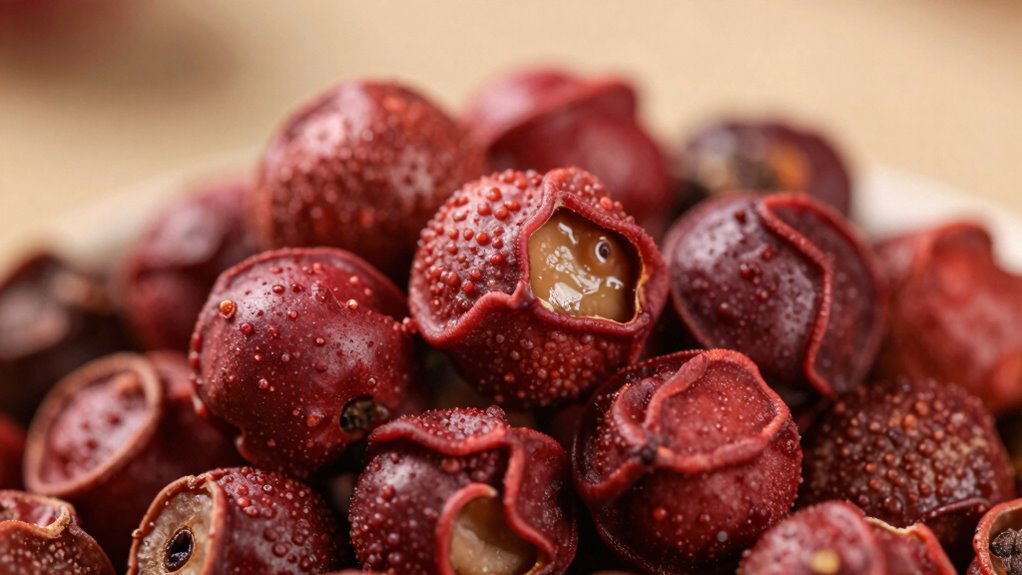

Sichuan peppercorns create a tingling, numbing sensation that isn’t caused by heat but by a compound called hydroxy-alpha-sanshool. This chemical stimulates your nerve endings, producing a buzzy feeling across your tongue and lips. Unlike chili peppers, which bring fiery heat from capsaicin, your experience with Sichuan peppercorns is a gentle, invigorating buzz. If you keep exploring, you’ll uncover how this fascinating science transforms your culinary adventures.
Key Takeaways
- The tingle from Sichuan peppercorns results from hydroxy-alpha-sanshool, not capsaicin, causing a numbing, buzzing sensation.
- This compound stimulates sensory nerves, creating a unique tingling and numbing effect distinct from chili heat.
- The sensation enhances flavor perception and adds an aromatic, citrusy brightness to dishes.
- The science behind the tingle transforms ordinary dishes into multi-sensory culinary experiences.
- Understanding this mechanism explains why Sichuan peppercorns provide a distinctive, science-backed flavor profile.

Have you ever wondered what gives Sichuan cuisine its distinctive tingle and numbing sensation? The answer lies in Sichuan peppercorns, a unique spice that transforms dishes with their complex flavor profile and fascinating effects. Unlike chili heat, which comes from capsaicin, the tingling from Sichuan peppercorns results from a different compound called hydroxy-alpha-sanshool. When you taste them, you’ll notice a gentle, buzzing numbness that gradually spreads across your tongue and lips, creating a sensation that’s both invigorating and unusual. This sensation isn’t about burning heat—it’s a tingling that heightens your awareness of flavors and textures, making each bite more dynamic.
The flavor profile of Sichuan peppercorns offers more than just their numbing effect. They present a citrusy, slightly floral aroma with hints of lemon and pine, balanced by earthy, woody undertones. This complexity allows them to serve as a versatile ingredient in various culinary uses. Chefs often incorporate Sichuan peppercorns into spice blends like Chinese five-spice, or they grind them into powders to season everything from stir-fries and braised dishes to sauces and marinades. Their unique properties make them especially effective at enhancing the overall flavor profile of a dish. When used correctly, they can elevate simple ingredients by adding layers of aroma, taste, and the memorable tingling sensation that defines Sichuan cuisine.
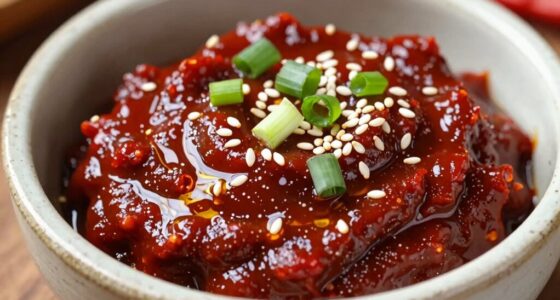
Culinary uses for Sichuan peppercorns extend beyond just flavoring traditional dishes. Chefs and home cooks alike use them to create signature sauces like mala, which combines the numbing spice with chili heat to produce a bold, complex flavor. They’re also used as a finishing touch, sprinkled over roasted vegetables, grilled meats, or even desserts like chocolates and fruit preserves, where their citrus notes can complement sweetness. Additionally, ground Sichuan peppercorns are often mixed with salt or sugar to craft seasoning blends that add a distinctive twist to everyday cooking.
In essence, Sichuan peppercorns aren’t just a spice—they’re a sensory experience. Their unique flavor profile and broad culinary uses allow you to explore new dimensions of taste, transforming ordinary dishes into extraordinary ones. When you understand the science behind their tingling effect, you’ll appreciate how they’re capable of turning simple ingredients into something memorable. So, next time you cook with Sichuan peppercorns, remember: you’re not just adding flavor, you’re creating a multi-sensory adventure that’s both stimulating and delicious.
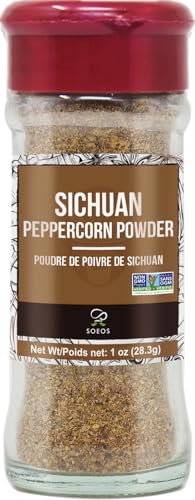
Soeos Sichuan Peppercorn Powder 1oz (28.3g), Non-GMO Verified, Szechuan Peppercorn, Ground Sichuan Green Peppercorns, Green Sichuan paper Powder, Mapo Tofu Essential Ingredient
STRONG AROMA AND FLAVOUR: Sichuan peppercorns unique aroma and flavor are not hot or pungent like black, white,…
As an affiliate, we earn on qualifying purchases.
As an affiliate, we earn on qualifying purchases.
Frequently Asked Questions
Are Sichuan Peppercorns Safe for Everyone to Consume?
Sichuan peppercorns are generally safe for most people, but you should be cautious if you have allergy concerns or are pregnant. Some individuals may experience allergic reactions, so it’s best to try a small amount first. During pregnancy, consult your healthcare provider before consuming, as certain sensitivities or potential risks could arise. Always listen to your body and seek medical advice if you notice any adverse effects.
How Should Sichuan Peppercorns Be Stored for Maximum Freshness?
Ever wondered how to keep Sichuan peppercorns at their peak? Store them in an airtight container away from direct sunlight and heat, ideally in a cool, dark place. Proper storage tips help preserve their freshness and flavor longer. Do you want your dishes to burst with that signature tingle? By maintaining ideal conditions, you guarantee your peppercorns stay vibrant and potent, ready to elevate every meal.
Can Sichuan Peppercorns Be Used as a Substitute for Black Pepper?
You can use Sichuan peppercorns as a substitute for black pepper, but keep in mind they offer a very different flavor comparison. While black pepper provides a spicy heat, Sichuan peppercorns deliver a unique tingle and citrusy note. Their culinary versatility shines in adding a numbing, aromatic quality to dishes, making them ideal for specific recipes, but they won’t fully replicate black pepper’s sharpness or heat.
Do Sichuan Peppercorns Have Any Health Benefits?
Like a hidden gem in a treasure chest, Sichuan peppercorns offer more than just a unique flavor—they have notable health benefits. Rich in nutritional properties, they may boost your immune system and improve digestion. Their antioxidant effects help combat free radicals, supporting overall health. Incorporating these peppercorns into your diet can add a flavorful punch while potentially enhancing your well-being naturally.
What Are the Traditional Dishes That Feature Sichuan Peppercorns?
You’ll find Sichuan peppercorns featured prominently in regional cuisine, especially in dishes like mapo tofu, hotpot, and kung pao chicken. They’re prized for their unique flavor pairing, which combines a citrusy, numbing tingle with savory ingredients. When cooking, add them to spice blends or sauces to enhance the flavor profile, creating that distinctive sensation that’s both exciting and traditional in Sichuan dishes.

NPG Authentic Chinese Five Spice Blend 1.08 Oz, Gluten Free, All Natural Ground Chinese 5 Spice Powder, No Preservative, No MSG, Mixed Spice Seasoning for Asian Cuisine & Stir Fry
AUTHENTIC CHINESE FIVE SPICE POWDER: An authentic Chinese five spice seasoning that includes five staples including star anise,…
As an affiliate, we earn on qualifying purchases.
As an affiliate, we earn on qualifying purchases.
Conclusion
So, next time you feel that tingling sensation from Sichuan peppercorns, remember—it’s not spicy heat but a scientific reaction. This unique numbing effect comes from compounds that activate your nerve receptors, creating that delightful buzz. Don’t dismiss it as just flavor; it’s a fascinating example of how science turns everyday ingredients into sensory experiences. Embrace the science behind the tingle, and elevate your culinary adventures with this intriguing spice!

Mekhala Organic Sichuan Mala Chili Cooking Paste. Versatile Condiment, Marinade Seasoning. Spicy Tingly, Vegan. Gluten-Free (3.53oz)
🌟 MADE FROM NATURAL, ORGANIC INGREDIENTS: This authentic Sichuan paste is spicy and numbing, MSG-free with complex flavours….
As an affiliate, we earn on qualifying purchases.
As an affiliate, we earn on qualifying purchases.

The Spice Lab Nom Nom Paleo Spicy Sichuan Peppercorn Powder, 2.8 oz French Jar, Gluten Free Seasoning with Szechuan Chili Flakes, Dried Sichuan Chili Powder, All Purpose Kosher, Non-GMO & Paleo Friendly
PALEO SZECHUAN CHILI FLAKES: 3-time New York Times bestselling cookbook author and blogger Michelle Tam created this paleo…
As an affiliate, we earn on qualifying purchases.
As an affiliate, we earn on qualifying purchases.