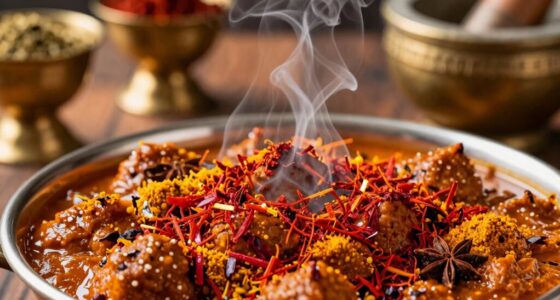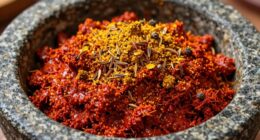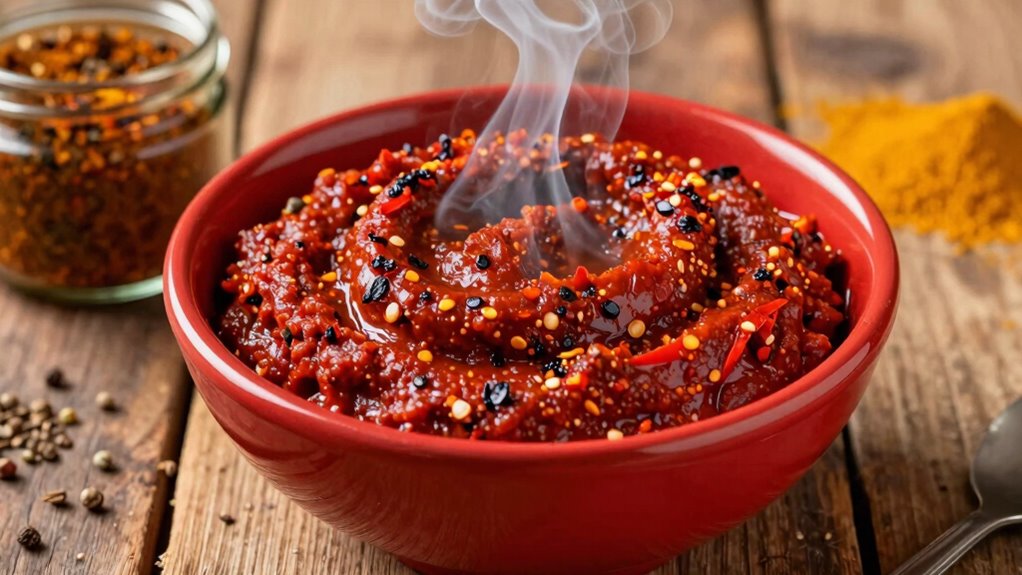

Harissa is a smoky, spicy North African chili paste made with chilies, garlic, cumin, and coriander, often smoked to add depth and charred flavors. Its flavor is complex, with heat balanced by smokiness and spices, creating a fiery yet aromatic taste. Unlike Indian masalas, which blend a variety of spices and herbs for layered flavor, harissa emphasizes smoky chilies and heat. To discover how these ingredients shape each condiment, continue exploring more.
Key Takeaways
- Harissa is a smoky, spicy chili paste with layered flavors from roasted or smoked chilies, garlic, and spices.
- It offers a fiery but balanced heat, enhanced by smokiness and aromatic spices, unlike Indian masala which varies in spice blends.
- Harissa is primarily a chili-based condiment or marinade, whereas Indian masala refers to complex spice mixtures used in various dishes.
- The smoking process deepens harissa’s flavor, giving it a distinctive smoky undertone absent in most Indian masalas.
- Indian masalas often contain a wide range of spices like turmeric, cumin, coriander, and cardamom, differing from harissa’s simpler chili and spice blend.
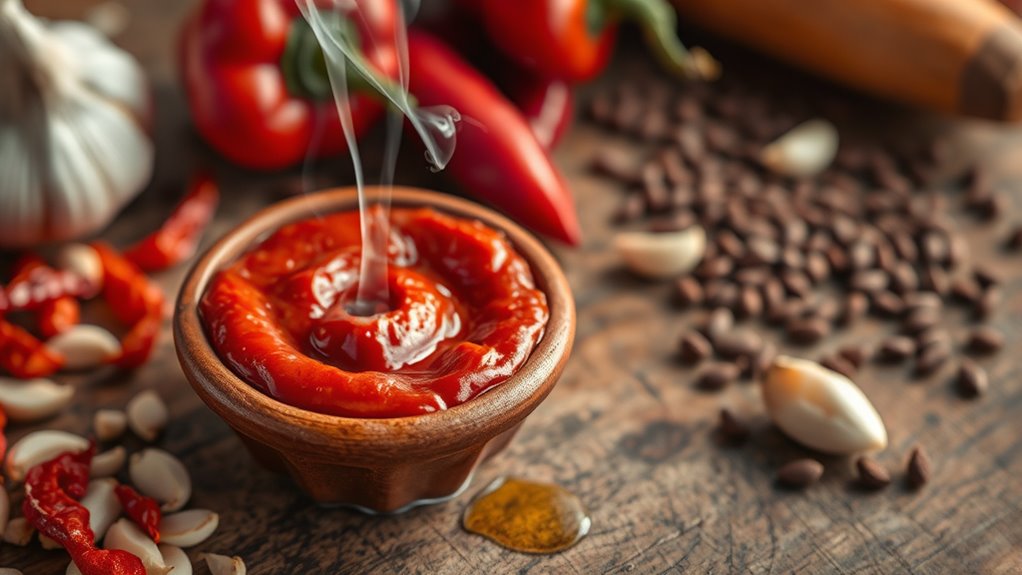
Have you ever wondered what gives North African dishes their vibrant and fiery flavor? The answer often lies in harissa, a bold chili paste that’s become a staple in many kitchens. Understanding harissa starts with its flavor profiles — it’s a complex blend of heat, smokiness, and spice that can elevate simple dishes into something extraordinary. Its flavor profiles are characterized by spicy chilies, garlic, cumin, coriander, and sometimes a hint of acidity from lemon juice or vinegar. These elements combine to create a rich, layered taste that’s both fiery and aromatic. Its versatility in the culinary world is remarkable; you can use it as a marinade, a condiment, or even as a base for soups and stews. Whether you’re adding a dollop to grilled meats or stirring it into couscous, harissa adapts seamlessly to different dishes, enhancing flavors without overpowering them. This culinary versatility makes it a favorite for both traditional North African recipes and modern fusion cuisines. Additionally, smoking process is a key step that imparts the distinctive smoky flavor characteristic of authentic harissa. This process often involves wood smoking to deepen the flavor and add a subtle charred undertone, enhancing its complexity. Understanding the smoked flavor helps one appreciate the depth and richness that authentic harissa offers compared to other chili pastes. What sets harissa apart from other spicy condiments is its unique preparation process. Typically, fresh or dried chilies are blended with garlic, spices, and oil, then roasted or smoked to deepen its flavor. The smoking process imparts a subtle charred note that’s distinctive and adds depth to the paste. This smoky undertone is one of harissa’s signature traits, giving it a complex aroma that’s unlike the straightforward heat of many other chili pastes. The heat level can vary depending on the type and amount of chilies used, but it’s usually meant to provide a fiery kick rather than an overwhelming burn. This controlled heat, combined with the smoky richness and aromatic spices, results in a flavor profile that’s both bold and harmonious.
Harissa chili paste jar
As an affiliate, we earn on qualifying purchases.
As an affiliate, we earn on qualifying purchases.
Frequently Asked Questions
Can Harissa Be Used as a Marinade or Only as a Condiment?
You can definitely use harissa as a marinade, and its marinade versatility really shines through. It’s perfect for infusing bold, smoky flavors into meats, vegetables, and even seafood. Just coat your ingredients with harissa and let them sit to achieve a deep flavor infusion. Whether you’re grilling, roasting, or pan-frying, using harissa as a marinade adds complexity and heat, making your dishes more exciting than just a condiment.
What Are the Best Storage Methods for Homemade Harissa?
To store your homemade harissa, keep it in an airtight container to preserve freshness. Refrigerate it using proper refrigeration methods, like placing it in a clean jar with a tight lid. For longer storage, consider covering the surface with a thin layer of olive oil before sealing, which helps prevent spoilage. Always use clean utensils when scooping, and consume within 2-3 weeks for ideal flavor and safety.
Is Harissa Suitable for Vegan or Vegetarian Diets?
Surprisingly, harissa is perfectly suitable for vegan or vegetarian diets. You can easily find vegan adaptations and vegetarian options that keep the fiery flavor alive without animal products. It’s naturally plant-based, relying on peppers, herbs, and spices. So, whether you’re vegan or vegetarian, you can enjoy harissa’s bold heat and smoky richness, making it a versatile addition to your meals without any guilt or compromises.
How Does Harissa’s Flavor Profile Change With Different Ingredients?
You’ll notice harissa’s flavor profile changes with different ingredient variations, impacting its flavor evolution. Adding roasted red peppers sweetens it, while extra chili peppers intensify heat. Incorporating smoky paprika enhances smokiness, and adding herbs like coriander shifts the aroma. These ingredient tweaks allow you to customize harissa’s flavor, balancing heat, smokiness, and freshness to suit your taste preferences. Experimentation with ingredients keeps your harissa versatile and uniquely yours.
Are There Regional Variations of Harissa Across North Africa?
Think of harissa as a chameleon, changing colors across North Africa. Regional flavor variations blossom with ingredient differences—some add roasted peppers, others include caraway or coriander. In Tunisia, it’s often spicier with more garlic, while in Libya, smoky and earthier flavors dominate. These subtle regional tweaks give each version its unique personality, making harissa a versatile and dynamic condiment that reflects local tastes and traditions.
Smoked harissa sauce
As an affiliate, we earn on qualifying purchases.
As an affiliate, we earn on qualifying purchases.
Conclusion
Now that you know what makes harissa unique—its fiery heat, smoky depth, and regional influences—you might wonder if it truly differs from Indian masala. While both add bold flavors, they serve different roles: harissa brings heat and smoke, whereas masala blends spices for complexity. Curiously, some believe harissa’s origins trace back to spice trade routes connecting Africa and the Middle East, highlighting how culinary traditions blend and evolve over time. So, next time you spice up a dish, consider these fascinating connections!
North African harissa marinade
As an affiliate, we earn on qualifying purchases.
As an affiliate, we earn on qualifying purchases.
Harissa spice blend
As an affiliate, we earn on qualifying purchases.
As an affiliate, we earn on qualifying purchases.