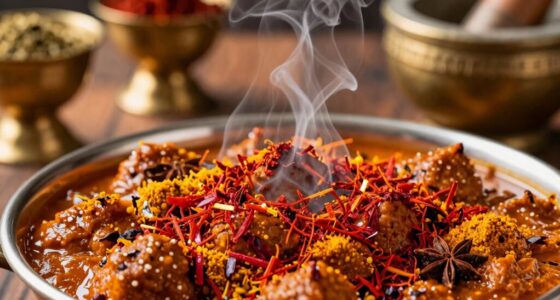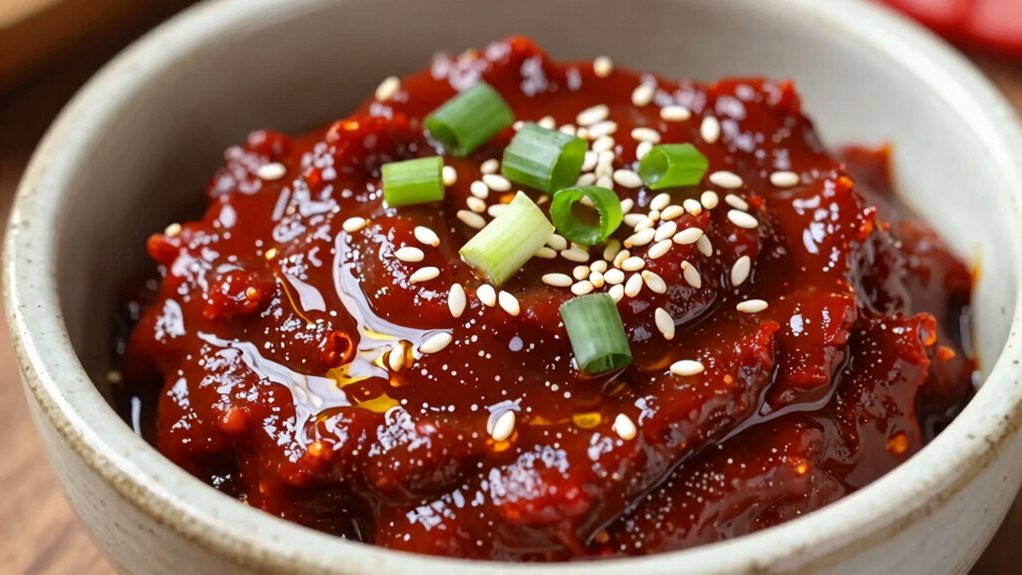

Gochujang is a traditional Korean fermented chili paste with a rich history dating back to the Joseon Dynasty. It combines chili powder, glutinous rice, soybeans, and salt, creating a unique blend of spicy, sweet, salty, and umami flavors. Beyond just a condiment, it’s a versatile ingredient used to elevate dishes like marinades, stews, and fusion recipes worldwide. To discover how this humble paste embodies centuries of culture and culinary craftsmanship, keep exploring.
Key Takeaways
- Gochujang is a traditional Korean fermented chili paste made from chili powder, rice, soybeans, and salt.
- Its fermentation process develops complex flavors, including umami, sweetness, and spiciness, lasting months or years.
- Beyond a condiment, it enhances dishes like bibimbap, soups, marinades, and fusion recipes globally.
- Its rich cultural history connects Korean culinary heritage with modern innovation and culinary versatility.
- Gochujang’s unique flavor profile and versatility make it an essential, multi-dimensional ingredient in diverse cuisines.
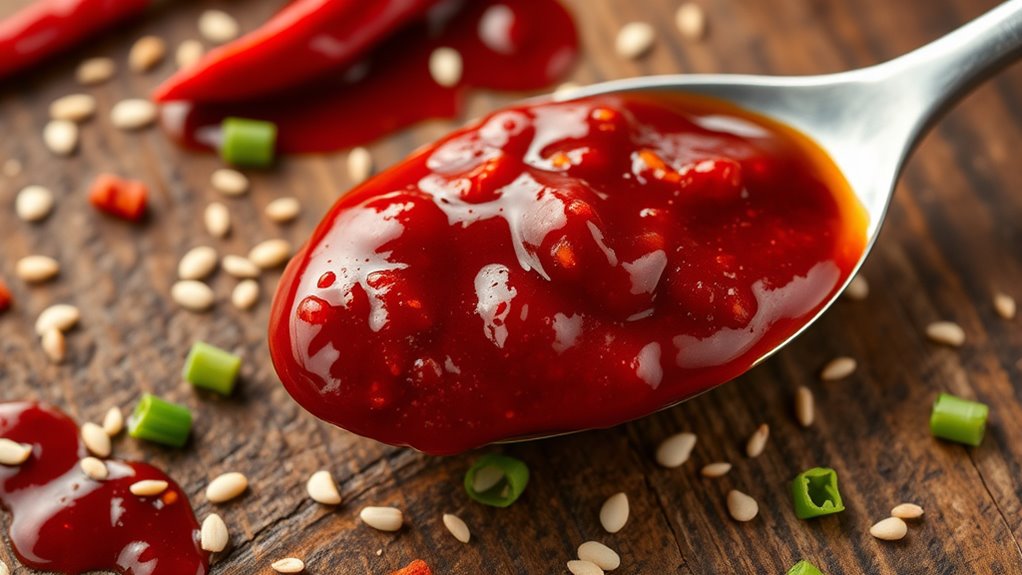
Have you ever wondered what makes Korean dishes so flavorful and spicy? The answer often lies in gochujang, a staple ingredient that adds depth, heat, and a touch of sweetness to countless recipes. To truly appreciate this versatile paste, it’s helpful to understand its history context and culinary applications. Gochujang’s origins trace back centuries, rooted in Korean history and culture. It’s believed to have been developed during the Joseon Dynasty, blending native ingredients with influences from neighboring regions. Traditionally, it was crafted by fermenting a mixture of chili powder, glutinous rice, fermented soybeans, and salt. This fermentation process, which can last months or even years, not only preserves the ingredients but also enhances the complex flavors that define gochujang. Over time, it became a fundamental part of Korean cuisine, used in everything from stews and marinades to dipping sauces and side dishes. Its historical context highlights how deeply intertwined it is with Korean food traditions, reflecting centuries of culinary ingenuity and cultural identity.
When it comes to culinary applications, gochujang’s uses are remarkably diverse. It’s not just a spicy chili paste; it’s a flavor enhancer that brings a unique umami richness to dishes. You might mix it into marinades for Korean BBQ, giving meats a smoky, spicy kick, or stir a spoonful into soups and stews to deepen their savory profile. It’s also essential for making bibimbap, the popular mixed rice dish, where its sweet and spicy qualities tie all the ingredients together. Beyond Korean cuisine, chefs worldwide have embraced gochujang for its bold flavor. It can be incorporated into fusion recipes like spicy mayo, dipping sauces, or even as a seasoning for roasted vegetables. Its versatility allows you to experiment with flavors and textures, creating dishes that are both familiar and novel.
Gochujang’s appeal stems from its complex flavor profile—spicy, sweet, salty, and umami all at once. Its rich history and adaptability in the kitchen explain why it’s more than just “Korean chili paste.” It’s a culinary ingredient that connects tradition with innovation, offering a unique taste experience rooted in centuries of Korean culinary practices. So, next time you add gochujang to your cooking, remember that you’re not just using a spicy condiment—you’re tapping into a rich cultural heritage and a versatile ingredient that elevates any dish.
![Gochujang – Korean Red Chili Paste [ Medium | 1.1 lb (500g) ] – 0 Fat/ 0 Cholesterol / (40 Calories/Serving) | Spicy & Sweet Savory Fermented Sauce | Great for Bibimbap, Marinades, Stews & BBQ - O’food](https://m.media-amazon.com/images/I/410i4jhhvxL._SL500_.jpg)
Gochujang – Korean Red Chili Paste [ Medium | 1.1 lb (500g) ] – 0 Fat/ 0 Cholesterol / (40 Calories/Serving) | Spicy & Sweet Savory Fermented Sauce | Great for Bibimbap, Marinades, Stews & BBQ – O’food
MADE WITH CARE IN KOREA – Korea’s historic chili pepper region, this gochujang delivers a deep, balanced sweet-spicy…
As an affiliate, we earn on qualifying purchases.
As an affiliate, we earn on qualifying purchases.
Frequently Asked Questions
How Long Does Homemade Gochujang Last?
Your homemade gochujang typically lasts about 6 months to a year when stored properly. For best homemade preservation, keep it in an airtight container in the refrigerator. Make sure to use clean utensils each time you scoop some out to prevent contamination. Over time, it may ferment slightly and develop a deeper flavor, but if it smells off or shows mold, discard it to stay safe.
Can Gochujang Be Used as a Marinade?
Did you know gochujang is one of the most versatile ingredients in Korean cuisine? Yes, you can definitely use it as a marinade. Its bold, spicy, and slightly sweet flavor enhances meats, tofu, and vegetables. Gochujang’s marinade versatility makes your dishes more flavorful and tender. Just mix it with soy, garlic, and sesame oil, and you’re ready to elevate your cooking with a simple, tasty marinade.
Is Gochujang Gluten-Free?
Yes, gochujang can be gluten-free, but you should verify ingredient variations carefully. Many brands use wheat or barley, which contain gluten, so they’re not suitable if you have gluten-free concerns. Look for labels that specify “gluten-free” or read the ingredients list to guarantee no gluten-containing additives are included. By doing this, you can enjoy gochujang safely in your dishes without worry.
What Are the Health Benefits of Gochujang?
You might find that adding gochujang to your meals offers subtle spice health perks, supporting your immune system and boosting metabolism. Its gut benefits come from fermentation, which promotes good bacteria in your digestive tract. The spice health benefits also include antioxidants that help fight free radicals. Incorporating gochujang into your diet can enhance flavor while potentially contributing to overall wellness, making every bite both delicious and nourishing.
How Does Gochujang Compare to Other Chili Pastes?
You’ll find that gochujang has a unique spice intensity and flavor complexity that sets it apart from other chili pastes. Unlike many, it balances heat with sweetness and umami, giving dishes a richer taste. Other pastes may be spicier or more straightforward, but gochujang’s layered profile enhances your cooking. Its fermentation adds depth, making it a versatile ingredient that elevates everything from stews to marinades.

NPG Premium Sichuan Pixian Broad Bean Chili Paste with Red Chili Oil 7 Oz, Salty Fermented Hongyou Doubanjiang, Authentic Ingredient for Hotpots, Mapo Tofu, and Flavorful Sichuan Cuisine
Ingredients: canola oil, broad bean, wheat flour, sichuan chili, ginger, garlic, sugar, star anise, foeniculum vulgare, sichuan pepper,…
As an affiliate, we earn on qualifying purchases.
As an affiliate, we earn on qualifying purchases.
Conclusion
So, next time you reach for that vibrant jar, remember, gochujang is more than just a chili paste—it’s a flavor journey, a cultural story simmered into every spoonful. Its fiery kick and sweet depth dance together like a well-composed melody, inviting you to explore new tastes and traditions. Embrace its versatility, and let each dollop remind you: in flavor, as in life, complexity makes everything richer. Plunge in, delight, and savor the magic.
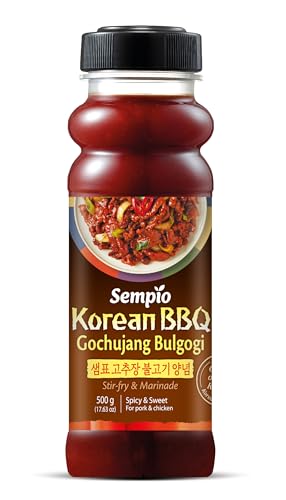
SEMPIO Korean Gochujang Bulgogi Marinade Sauce – Authentic Spicy & Sweet Flavor with Gochujang and Korean BBQ Sauce, Zero Trans Fat, Perfect for Meat and BBQ (17.63oz / 500g)
📅 EXPIRATION DATE FORMAT: DD.MM.YYYY
As an affiliate, we earn on qualifying purchases.
As an affiliate, we earn on qualifying purchases.
Gochujang – Korean Red Chili Paste [ Medium | 1.1 lb (500g) ] – 0 Fat/ 0 Cholesterol / (40 Calories/Serving) | Spicy & Sweet Savory Fermented Sauce | Great for Bibimbap, Marinades, Stews & BBQ – O’food
MADE WITH CARE IN KOREA – Korea’s historic chili pepper region, this gochujang delivers a deep, balanced sweet-spicy…
As an affiliate, we earn on qualifying purchases.
As an affiliate, we earn on qualifying purchases.