
Pans warp quickly when they experience thermal shock, which happens when you suddenly expose them to rapid temperature changes, like pouring cold water on a hot pan or overheating metal cookware. This rapid heating or cooling causes uneven expansion and contraction, stressing the material. Different materials react differently—metals like aluminum expand more than steel. If you want to understand how to prevent this damage and keep your pans flat, keep exploring how proper handling makes a difference.
Key Takeaways
- Rapid temperature changes cause uneven expansion or contraction, leading to internal stresses and potential warping.
- Materials like aluminum expand more quickly than stainless steel, increasing warping risk during quick temperature shifts.
- Sudden immersion in cold water or cold ingredients introduces thermal shock, stressing the cookware’s structure.
- Thin or low-quality pans lack sufficient rigidity, making them more susceptible to warping within a minute.
- Proper gradual heating and cooling help prevent thermal shock and minimize the chance of pans warping rapidly.

Tayama Stainless Steel Thermal Cooker,Black,5 Qt.
Capacity: 5 Qt.
As an affiliate, we earn on qualifying purchases.
As an affiliate, we earn on qualifying purchases.
What Is Thermal Shock and How Does It Damage Cookware?
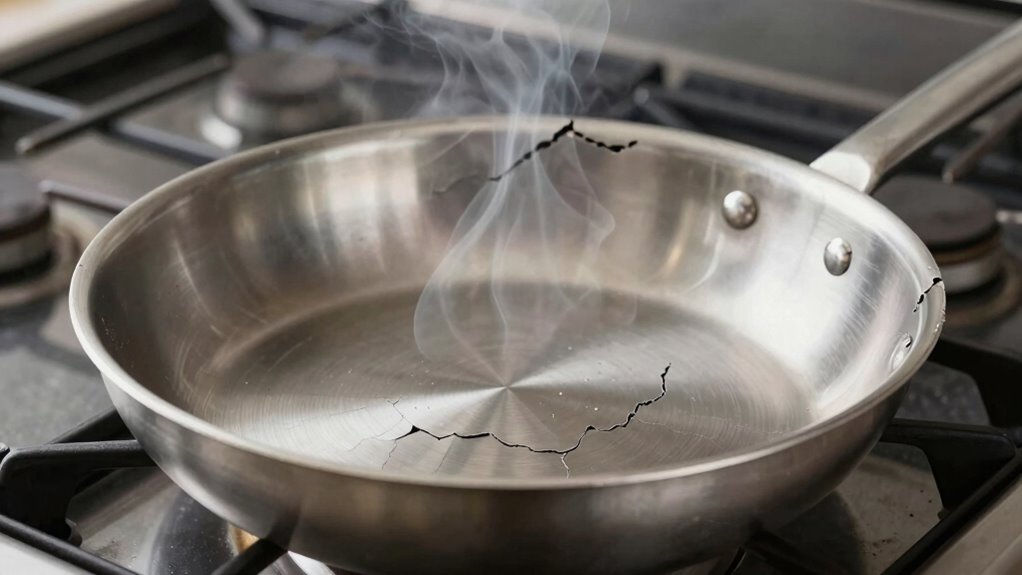
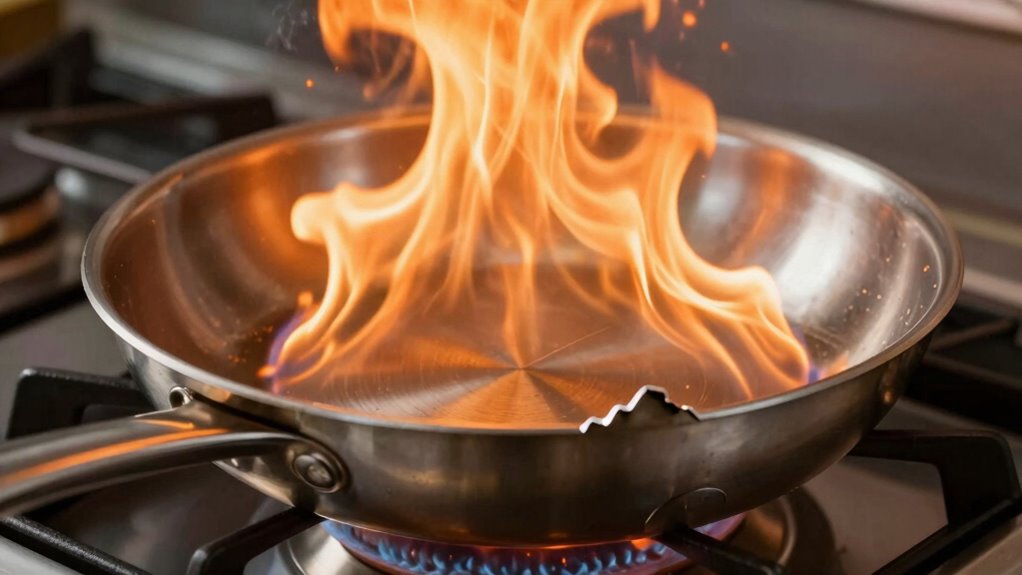
Thermal shock happens when cookware experiences a sudden change in temperature, causing it to expand or contract rapidly. This sudden shift can crack or warp your pans over time. The key to preventing damage lies in understanding pan material compatibility—some materials handle quick temperature changes better than others. For example, glass and ceramic pans are more vulnerable to thermal shock, so you should avoid abrupt heating or cooling with them. Proper cookware maintenance also helps; avoid immersing hot pans into cold water immediately. Gradually warming and cooling your cookware reduces stress on the material, preserving its shape and integrity. Additionally, being aware of thermal expansion properties can help you choose cookware that is more resistant to thermal shock. Material properties, such as the coefficient of expansion, influence how well a pan withstands rapid temperature changes. Choosing high-quality cookware with known resilience can further minimize the risk of warping and extend the lifespan of your cookware. Using appropriate heating techniques can further minimize the risk of warping and extend the lifespan of your cookware. Paying attention to material compatibility and practicing careful maintenance are essential for preventing warping caused by thermal shock.

VocVoi 12 inch Tri-Ply Stainless Steel Frying Pan with LID,PFOA&PTFE Free Skillets,Chef's Pans,Dishwasher and Oven Safe Cookware, Works on Induction,Ceramic and Gas Cooktops
【TRI-PLY STAINLESS STEEL】Tri-Ply Stainless Steel Pan Combines Ergonomic kitchenware Design and superior features for better cooking performance. Stainless…
As an affiliate, we earn on qualifying purchases.
As an affiliate, we earn on qualifying purchases.
Why Do Pans Warp When Heated or Cooled Quickly?
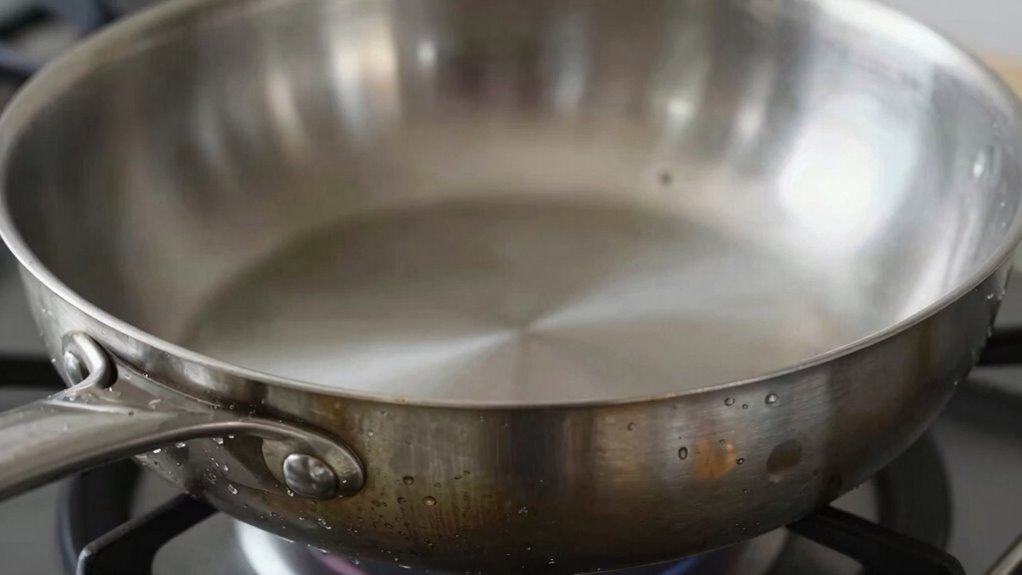
When you heat or cool a pan quickly, different parts expand or contract at different rates. This uneven change creates stress in the material, leading to warping. Understanding how material expansion differences and rapid temperature shifts cause warping can help you prevent damage. For example, thermal expansion varies between materials and contributes significantly to warping when temperature changes happen abruptly. Additionally, sudden temperature changes can cause thermal shock, which exacerbates the warping process. Rapid heating or cooling can also lead to material fatigue, weakening the pan over time and increasing the likelihood of warping. Variations in material properties among different cookware types further influence their susceptibility to warping during thermal shock. Recognizing these material behaviors can guide you in choosing cookware that resists warping under thermal stress.
Material Expansion Differences
Pans warp during rapid heating or cooling because different materials inside them expand or contract at varying rates. This happens because of their material composition, which influences how much each component expands when temperatures change. For example, metal alloys or layered materials may have different thermal expansion coefficients. Manufacturing processes also play a role, as uneven bonding or thin spots can cause stress points that lead to warping. When the pan heats quickly, these disparities create internal stresses that push the material out of shape. Similarly, cooling rapidly can cause contraction unevenly across the pan’s surface. Understanding these differences helps explain why some pans are more prone to warping, especially when they contain diverse materials or undergo specific manufacturing techniques.
Rapid Temperature Changes
Rapid temperature changes cause pans to warp because sudden heating or cooling creates uneven expansion or contraction across their surfaces. When you expose your cookware to quick temperature shifts, it stresses the pan’s material compatibility, leading to warping. For example, rapid cooling of a hot pan on a cold surface causes the metal to contract unevenly, especially if the material isn’t designed for such thermal shock. Proper cookware maintenance involves avoiding these drastic temperature changes to prevent warping. Using low to medium heat and allowing your pan to gradually reach the desired temperature helps maintain its shape. By understanding how different materials respond to rapid temperature shifts, you can extend your pan’s lifespan and ensure consistent cooking performance. Additionally, understanding Free Floating properties in cookware materials can help you choose options that are more resistant to warping during thermal shocks, which can be crucial for material resilience in varying cooking conditions. Recognizing the thermal expansion characteristics of your cookware allows you to select pieces that better withstand sudden temperature changes.

Benestanti 20 Pack Aluminum Pans Deep Foil Pans Full Size,21"x13" Large Disposable Roasting & Baking Pan, Heavy Duty Chafing Trays for Caterers, Steam Table, Hotels, Restaurants, Buffets & Bakeware
Full Size:Our disposable aluminum pans measure 20.67”L x 12.8”W x 3”H, whose size is fit for holding two…
As an affiliate, we earn on qualifying purchases.
As an affiliate, we earn on qualifying purchases.
How Metal Expands and Contracts in Pans: The Science Explained
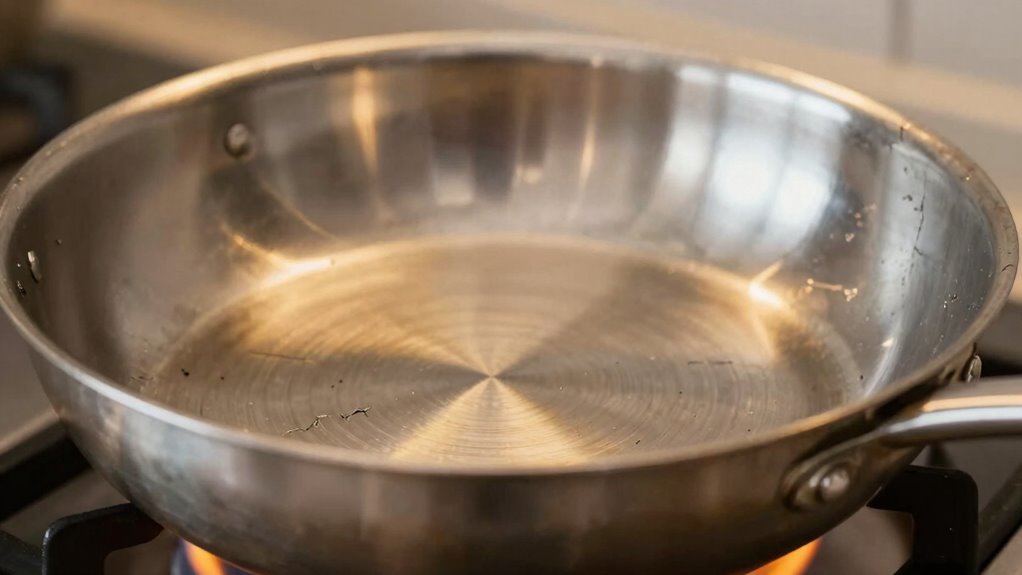
Metal expands and contracts because of temperature changes, which cause its atoms to move closer together or farther apart. This process depends on the properties of the metal alloy used in your pan. Different alloys have varying thermal expansion coefficients, meaning they expand more or less when heated. For example, aluminum’s thermal expansion coefficient is higher than stainless steel’s, so it expands more for the same temperature increase. When you heat or cool your pan rapidly, these differences in expansion rates can create stress within the material. Over time, repeated expansion and contraction can weaken the metal, leading to warping or cracking. Understanding how metal reacts to temperature changes helps explain why pans sometimes warp, especially with sudden thermal shifts.

CAROTE 21-Piece Ceramic Pots and Pans Cookware Set, Non Stick Induction Cook Ware Kitchen Cooking Set Non-Toxic Health, PFAS Free
Ceramic nonstick coating with durability of perfection is free of PFOA, PFOS, and the other harmful chemicals. You…
As an affiliate, we earn on qualifying purchases.
As an affiliate, we earn on qualifying purchases.
Common Causes of Thermal Shock in the Kitchen
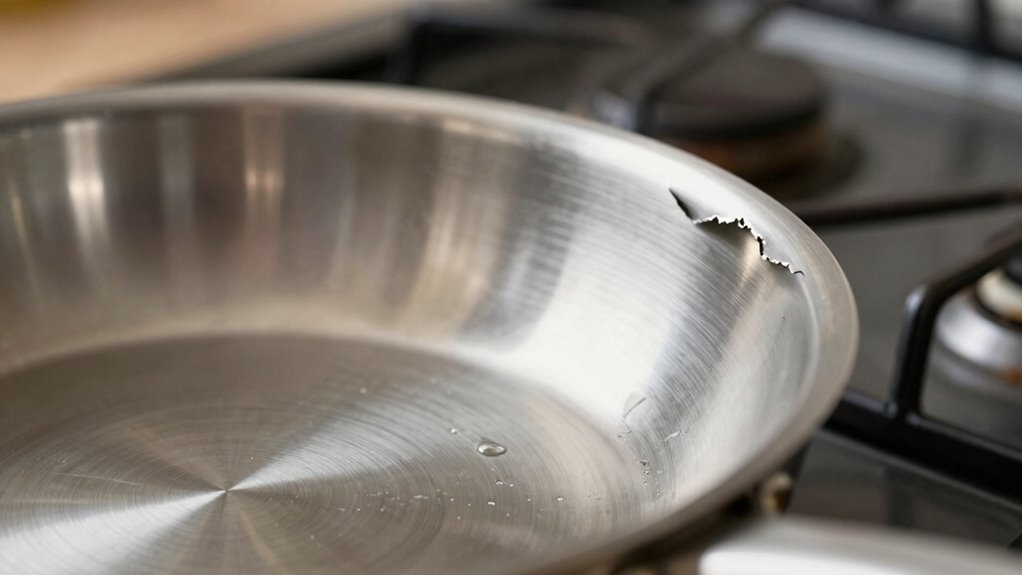
You might cause thermal shock in your pans by exposing them to rapid temperature changes. Pouring cold water into a hot pan or placing a hot pan into cold water can quickly stress the material. These sudden cooling methods increase the risk of warping or cracking your cookware. Proper temperature management can help prevent damage and ensure your cookware’s longevity. Understanding material properties can also guide you in choosing cookware better suited to withstand thermal stress. Additionally, selecting appropriate cookware materials designed to tolerate thermal fluctuations can reduce the risk of warping or damage. Being aware of warranty considerations can further inform your choice of durable cookware that is less prone to warping. Recognizing the thermal expansion characteristics of different materials can help you select pans that are more resilient to temperature shifts.
Rapid Temperature Changes
When hot cookware suddenly encounters cold water or a chilled surface, thermal shock can occur, causing the pan to warp. This is especially true with ceramic coatings and non-stick surfaces, which are sensitive to rapid temperature changes. If you pour cold water into a hot non-stick pan, the sudden temperature drop stresses the material, leading to warping or cracking. Ceramic coatings, while durable, can also crack if exposed to quick temperature shifts, compromising their non-stick properties. To avoid this, always allow your pan to cool slightly before cleaning or avoid pouring cold liquids directly onto hot surfaces. Gradual temperature changes help maintain the integrity of your cookware, preventing warping and prolonging its lifespan. Additionally, understanding the thermal properties of your cookware materials can help you better manage heat and prevent damage. Being aware of how different materials respond to heat can also guide you in choosing the right cookware for specific cooking techniques and temperature adjustments. Properly managing heat is essential for preserving the longevity and performance of your cookware and avoiding costly replacements. Recognizing the material sensitivity of your cookware can help prevent accidental damage caused by improper heat management. Being mindful of heat transfer principles can further assist in maintaining your cookware’s durability over time.
Sudden Cooling Methods
In the kitchen, sudden cooling methods often cause thermal shock that warps cookware. When you rapidly cool a hot pan, uneven heat distribution occurs, stressing the material. Over time, this leads to material fatigue, weakening the pan’s structure. To understand this better, consider the table below:
| Method | Effect on Heat Distribution | Risk of Warping |
|---|---|---|
| Running cold water over | Disrupts even heat flow | High |
| Plunging into ice water | Creates temperature gap | Very high |
| Adding cold ingredients | Sudden temperature drop | Moderate |
| Using cold utensils | Localized cooling | Low to moderate |
| Cooling on a cold surface | Uneven cooling | Moderate |
Avoid these practices to protect your cookware from warping caused by thermal shock. Understanding the material properties of your cookware can help prevent damage from sudden temperature changes.
How Temperature Changes Lead to Warping in Different Pans
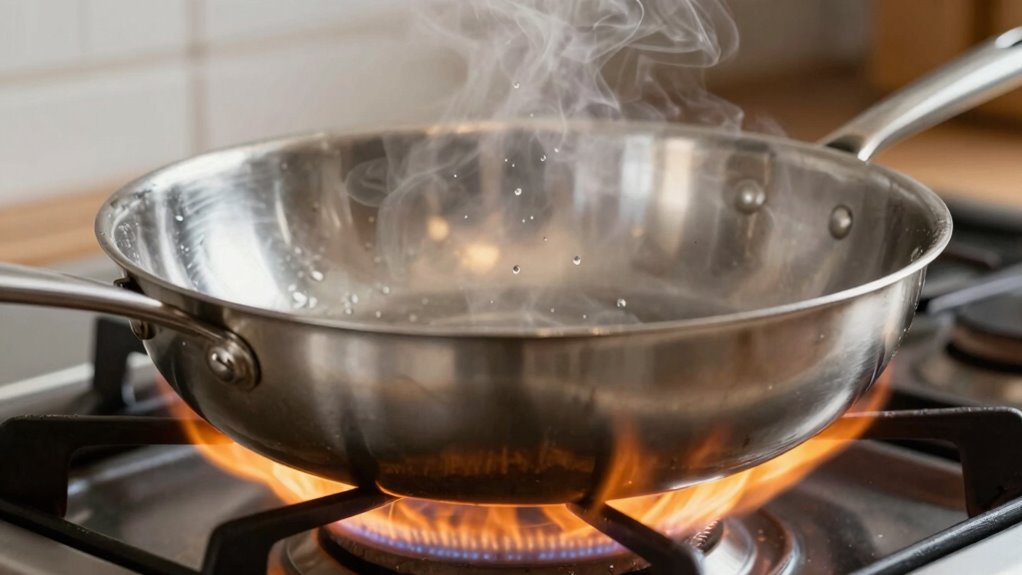
Temperature fluctuations cause pans to warp because materials expand and contract at different rates. When you heat or cool pans rapidly, uneven expansion stresses the material, leading to warping over time. Different pans respond uniquely:
- Material fatigue weakens the structure after repeated thermal stress, making warping more likely.
- Manufacturing defects like improper alloy mixing or uneven thickness create weak spots that warp easily under temperature changes.
- The type of material, such as aluminum or stainless steel, also influences how quickly it warps during rapid temperature shifts.
Understanding these factors helps you recognize how temperature swings damage pans differently, especially when combined with inherent flaws or prolonged use. This knowledge emphasizes why handling your cookware gently and avoiding sudden temperature changes is essential.
Recognizing the Signs Your Pan Is Warped and When to Replace It
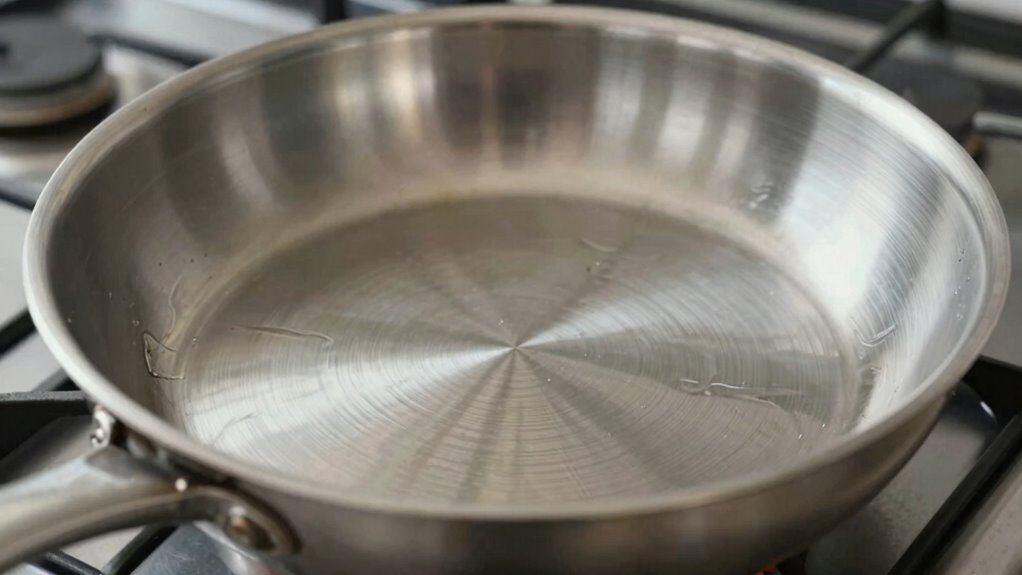
A warped pan can be subtle at first but often becomes obvious through your cooking experience. You might notice uneven heat distribution, causing food to cook inconsistently. Warping affects pan durability and shortens its cookware lifespan. To assess if your pan is warped, check for these signs:
| Sign | What to Look For |
|---|---|
| Uneven Cooking | Hot spots or cold spots on surface |
| Wobbly Pan | Pan rocks on flat surfaces |
| Visible Deformation | Bending or warping edges |
If these signs persist, it’s time to replace your pan. A warped pan compromises cooking quality and safety, reducing its cookware lifespan. Recognizing these indicators helps you maintain optimal performance and avoid unnecessary replacements.
How to Prevent Thermal Shock and Keep Your Pans Flat
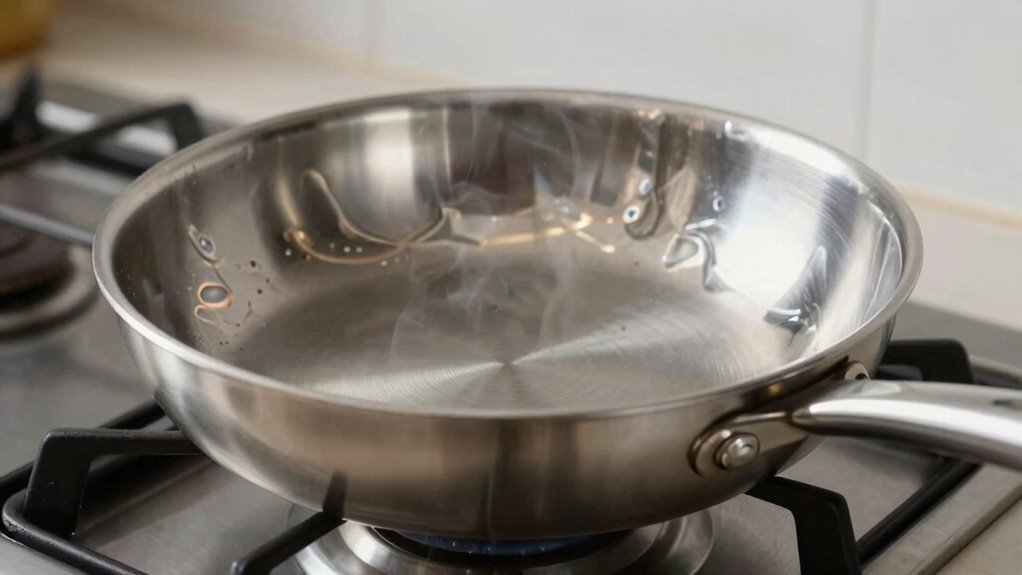
To prevent thermal shock from warping your pans, it’s essential to handle temperature changes carefully. Proper pan storage and cleaning practices help maintain your cookware’s shape.
Avoid thermal shock by handling temperature changes gently and storing your pans properly to maintain their shape.
Here are three tips to keep your pans flat:
- Store pans in a dry, stable environment to avoid unnecessary temperature fluctuations.
- Avoid sudden temperature changes by letting pans cool gradually before washing or storing.
- Use gentle cleaning practices—skip abrasive scrubbers and harsh detergents—that can weaken the material and increase warping risk.
Tips for Handling and Cooling Your Cookware Safely

Handling and cooling your cookware properly is essential to prevent warping and damage. Start with good pan material selection; choose materials like stainless steel or cast iron that withstand rapid temperature changes better. Always allow your pan to cool gradually before rinsing with cold water, especially if it’s hot. Avoid sudden temperature shifts by not placing hot pans directly into cold environments or on cold surfaces. Store your cookware at moderate temperatures to reduce stress from thermal expansion. When moving pans from stovetop to sink, do so gently and avoid overexposing them to extreme temperature differences. Proper handling and cooling help maintain your cookware’s shape and extend its lifespan. By paying attention to your pan’s material and storage temperature, you minimize the risk of warping over time.
Choosing Pans That Resist Warping

Choosing pans that resist warping starts with selecting the right materials. The pans material greatly influences cookware durability and how well it withstands thermal shock. To guarantee your pans stay flat and reliable, consider these options:
Select durable, high-quality pans made from cast iron, stainless steel, or aluminum with a stainless steel base to prevent warping.
- Cast Iron – Known for exceptional durability and even heat distribution, making warping unlikely.
- Stainless Steel – Resistant to warping if made with layered or reinforced construction.
- Aluminum with a stainless steel base – Combines excellent heat conductivity with added strength, reducing warping risk.
Avoid thin, lightweight pans, which tend to warp easily under sudden temperature changes. Prioritize quality and heavy-duty construction for long-lasting cookware that maintains its shape and performance over time.
Frequently Asked Questions
Can Thermal Shock Cause Permanent Damage to My Cookware?
Yes, thermal shock can cause permanent damage to your cookware. When you rapidly change heat transfer, the material’s expansion and contraction can create stress, leading to warping or cracking. Over time, repeated thermal shocks weaken the pan’s structure, making it less durable. To prevent this, avoid sudden temperature changes and allow your cookware to heat gradually, ensuring it maintains its integrity and lasts longer.
Are Some Materials More Prone to Warping Than Others?
Certain materials are more prone to warping due to their susceptibility to thermal expansion. For example, aluminum pans expand up to 50% more than cast iron when heated. This means materials with high thermal expansion rates, like thin aluminum or non-stick coatings, are more vulnerable to warping from rapid temperature changes. You should handle these carefully, avoiding sudden thermal shocks to keep your cookware flat and durable.
How Long Does It Take for a Pan to Warp From Thermal Shock?
A pan can warp in just seconds if exposed to sudden temperature changes, especially if it has poor material properties and low heat conductivity. When you pour hot water into a cold pan or place it on a high heat source, rapid expansion causes warping. To avoid this, always heat your pan gradually, and choose materials like cast iron or stainless steel with better heat conductivity to minimize thermal shock.
Is It Safe to Use a Warped Pan for Cooking?
Using a warped pan isn’t safe for cooking because cookware safety is compromised, and warped pan risks include uneven heat distribution and potential spills. While it might seem harmless, warped surfaces can cause food to cook unevenly or even cause the pan to slip. For your safety, it’s best to replace warped cookware. Don’t risk burns or kitchen accidents—choose flat, stable pans for safe, effective cooking.
Can I Repair a Warped Pan or Should I Replace It?
You should replace a warped pan, as repair isn’t dependable. Pan denting and handle looseness often indicate structural damage that can’t be fixed effectively. Using a warped pan risks uneven cooking and potential safety issues. Instead, invest in a new one to ensure safe, even heat distribution. Trying to repair may lead to further damage or accidents, so replacement is your best option for peace of mind.
Conclusion
Did you know that over 60% of home cooks experience warped pans within a year? Thermal shock happens quickly, but you can prevent it by handling your cookware carefully and avoiding sudden temperature changes. Keep your pans flat and safe to use longer, saving you money and frustration. By understanding how thermal shock works, you’ll be better equipped to protect your investment and enjoy perfect cooking results every time.