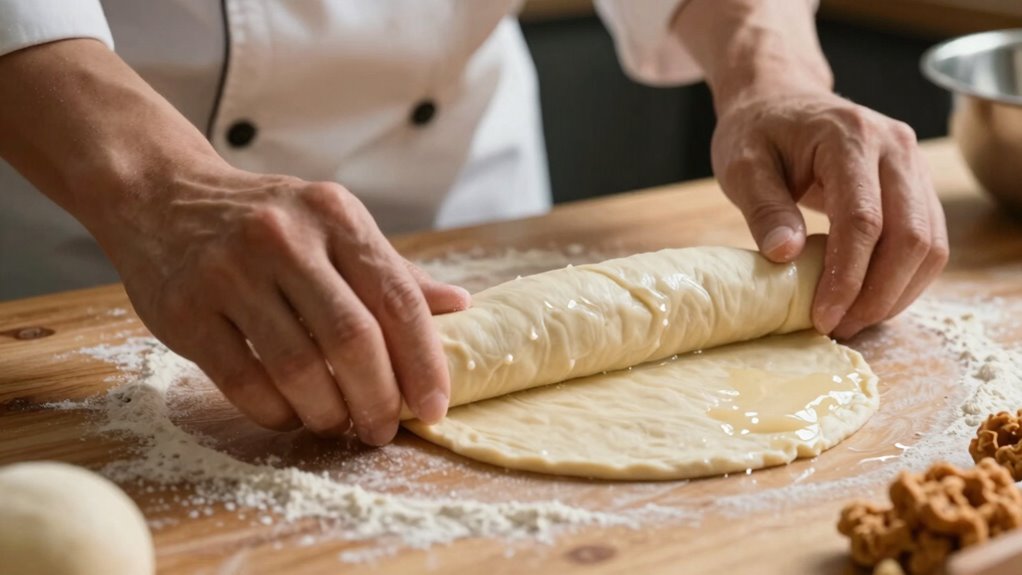

If your rotis are turning hard, it’s probably due to overworking the dough or incorrect hydration levels. Using too little water makes the dough dry and tough, while adding too much makes it sticky and hard to roll out. Over-kneading also squeezes out moisture, resulting in stiff rotis. Achieving the right water-flour balance and handling the dough gently can keep your rotis soft. Keep going, and you’ll discover key tips to perfect your technique.
Key Takeaways
- Using too little water makes the dough dry, resulting in tough, hard rotis after cooking.
- Overworking the dough reduces moisture, leading to dense, less soft rotis.
- Insufficient hydration hampers gluten development, causing rotis to turn hard.
- Proper water-flour ratio ensures a smooth, pliable dough that yields soft rotis.
- Gradual water addition helps achieve optimal hydration for tender, fluffy rotis.
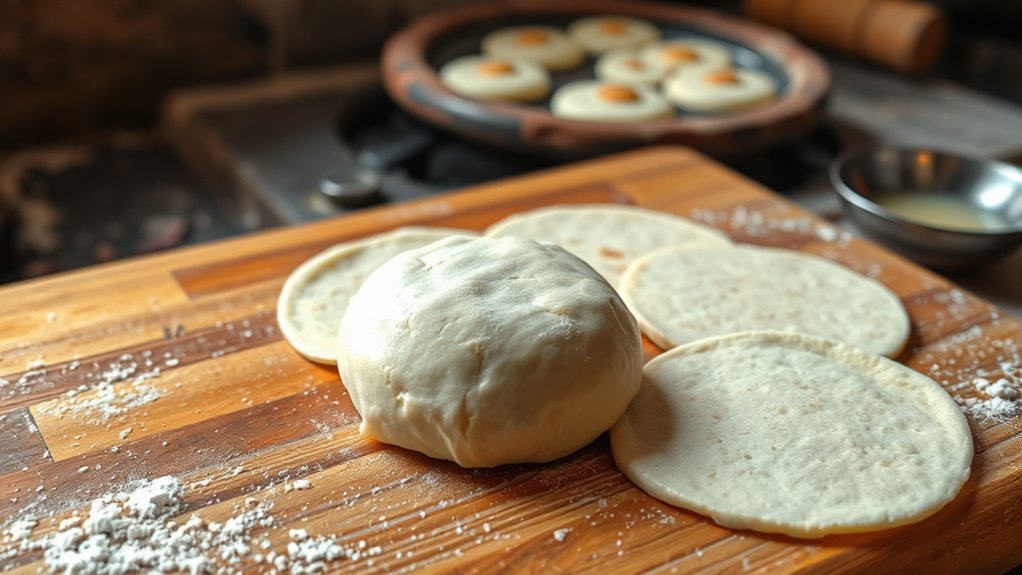
If your rotis are turning hard and tough to chew, it’s usually due to overworking the dough or improper cooking techniques. One of the most common reasons for this issue is the dough consistency. When you prepare the dough, it’s vital to get the right balance of water and flour. If the dough is too dry, it won’t soften properly during cooking, leading to tough and hard rotis. Conversely, if it’s too wet, it can become sticky and difficult to roll out evenly. Aim for a smooth, pliable dough that feels soft but isn’t sticky to the touch. Proper dough hydration helps create a tender texture, as it allows the gluten to develop just enough to give elasticity without making the rotis tough. Remember, adding water gradually and kneading well ensures the dough reaches this ideal consistency. Using the correct dough hydration is crucial for achieving soft rotis.
Another critical factor influencing the softness of your rotis is the cooking temperature. If the heat is too high, the rotis cook too quickly on the outside while remaining undercooked inside, which can cause them to turn hard once cooled. On the other hand, cooking at too low a temperature might result in rotis that are dense and chewy because they don’t cook evenly. Maintaining a moderate, consistent heat is key. When you heat the tawa or skillet properly—until it’s hot but not smoking—your rotis will cook evenly, puff up nicely, and retain softness. Adjust the flame as needed to prevent burning or undercooking. A hot surface ensures the moisture inside the dough turns to steam rapidly, creating a light, soft texture.
Additionally, avoid pressing down too hard with the spatula or rolling pin, as excessive pressure can squeeze out moisture and make the rotis tough. After cooking, letting the rotis rest for a brief moment under a cloth helps trap residual steam, keeping them soft and fresh. If you notice your rotis consistently turning hard, revisit your dough preparation process and cooking method. Use the right dough consistency with proper hydration, and keep the cooking temperature steady and moderate. These adjustments can greatly enhance the texture, making your rotis soft, tender, and enjoyable. With practice, you’ll find the perfect balance that prevents your rotis from turning hard and ensures a delightful eating experience every time.
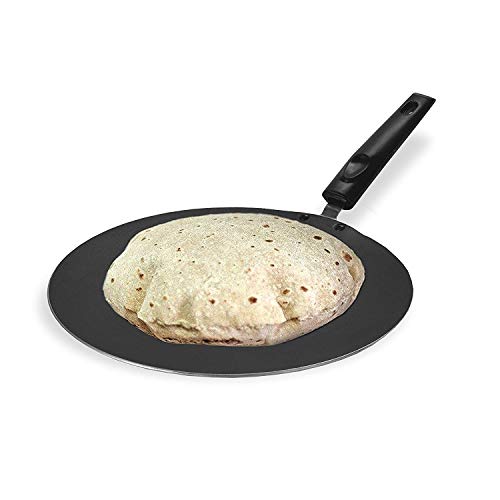
DBY Nonstick Roti Pan 275mm | 2.6mm Thick Flat Tawa for Chapati, Roti, and Paratha Gas Stove Compatible Non-Stick Griddle Pan with Cool Touch Handle Skillet Crepe Pan Dosa Tava
2.6 mm thick body with spiral bottom (Gas Stovetop Compatible) Perfect for Gifting Purposes
As an affiliate, we earn on qualifying purchases.
As an affiliate, we earn on qualifying purchases.
Frequently Asked Questions
Can Using Different Flours Affect Roti Softness?
Yes, using different flours can affect roti softness because each flour has varying gluten development and flour protein content. Higher protein flours, like whole wheat, develop more gluten, making rotis chewier and less soft if not handled properly. Softer flours, like millet or chickpea, have less gluten, resulting in softer rotis. Adjust your water and kneading accordingly to guarantee ideal dough hydration and achieve the desired softness.
Does Resting the Dough Impact Rotis’ Texture?
Resting the dough truly transforms your roti’s texture. During this pause, you allow the dough to develop gluten, increasing elasticity and creating a softer, more supple surface. This gluten development makes rolling easier and results in tender rotis. So, don’t skip this step — patience promotes pliability, producing perfectly soft rotis. Resting truly refines the dough, turning a tough task into tasty, tender treats.
How Does Altitude Influence Dough Hydration?
Altitude effects your dough hydration because lower air pressure causes water to evaporate faster, so you need to add more water to your flour. High altitudes make the dough dry out quickly, resulting in harder rotis. You should adjust water quantity accordingly and keep the dough covered to prevent excessive evaporation. This way, you maintain proper hydration, ensuring soft, pliable rotis even at higher elevations.
Is There a Preferred Water Temperature for Dough Mixing?
You should use lukewarm water for dough mixing, as it helps with temperature control and ensures proper gluten development. Avoid hot water, which can kill yeast or proteins, and cold water, which slows hydration. Always opt for clean, quality water to prevent impurities that might affect dough texture. Maintaining the right water temperature, around 30-40°C, promotes softer rotis and even hydration, leading to better dough consistency.
Can Storing Dough Overnight Change Its Hydration Level?
Yes, storing dough overnight can change its hydration level. During dough fermentation, moisture redistributes, often making the dough softer or sometimes drier, depending on storage conditions. Use a good storage container with a tight seal to prevent moisture loss or excess absorption. Proper storage choices help maintain ideal hydration, ensuring your rotis stay soft and pliable. Check the dough before rolling, adding a little water if needed to adjust hydration.
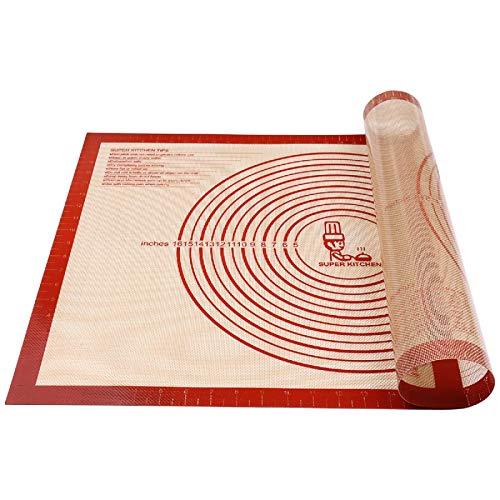
Non-slip Silicone Pastry Mat Extra Large with Measurements 28''By 20'' for Silicone Baking Mat, Counter, Dough Rolling, Oven Liner,Fondant/Pie Crust By Folksy Super Kitchen Red
Premium Safe Silicone:We attach great importance to the health of our customers.So we offer the premium food grade…
As an affiliate, we earn on qualifying purchases.
As an affiliate, we earn on qualifying purchases.
Conclusion
So, next time your rotis turn hard, remember it’s all about the dough’s hydration. Think of the perfect dough as a gentle, moist pillow, soft and supple, ready to transform into fluffy, tender rotis. Keep it just moist enough, like a fresh breeze on a warm day, and watch your rotis stay soft and inviting. With the right hydration, every bite feels like a warm hug, comforting and perfectly cooked.

Wooden Rolling Pin 17.6 Inch with Rotating Ergonomic Handles – Classic Beech Wood Dough Roller for Baking Pizza, Pastry, Bread, and Cookies
PREMIUM BEECH WOOD CRAFTSMANSHIP – Expertly made from solid, moisture-resistant beech wood, this wooden rolling pin is durable,…
As an affiliate, we earn on qualifying purchases.
As an affiliate, we earn on qualifying purchases.

Lodge Cast Iron Baker’s Skillet
10.25 INCH BAKER’S SKILLET: Inspired by the classic Lodge cast iron skillet, reinvented for bakers.
As an affiliate, we earn on qualifying purchases.
As an affiliate, we earn on qualifying purchases.