Understanding the difference between smoke point and burn point is key to safe, flavorful cooking. The smoke point is when your oil begins to produce visible smoke and starts to break down, while the burn point is when it thickens smoke, smells acrid, and risks safety. Knowing these limits helps you avoid unpleasant flavors and health hazards. Stay with us to learn how to choose the right oils and prevent overheating in your kitchen.
Key Takeaways
- Smoke point marks the temperature where oil begins to smoke, indicating initial degradation, while burn point is when smoke becomes thick and oil breaks down extensively.
- Proper oil selection depends on understanding these points to prevent harmful smoke, flavor loss, and safety hazards during cooking.
- Overheating past the smoke point releases toxic compounds and diminishes nutritional value; reaching the burn point can cause dangerous flames and flavor degradation.
- Factors like refinement, filtration, and storage influence the oil’s smoke point, but labels can be misleading, so monitoring temperature is essential.
- Using appropriate oils for specific cooking methods and controlling heat prevents reaching the burn point, ensuring safety and optimal flavor.

Algae Cooking Club Chef-Grade 100% Algae Cooking Oil – Avocado Oil Alternative – 535°F High Smoke Point – Omega-9 Rich, Neutral Buttery Flavor – Seed Oil-Free – For Searing, Baking, Frying (16 fl oz)
Light Buttery Flavor That Elevates Every Meal: Algae Cooking Club Chef-Grade Algae Oil enhances every dish with subtle…
As an affiliate, we earn on qualifying purchases.
As an affiliate, we earn on qualifying purchases.
What Are Smoke Point and Burn Point of Cooking Oils?
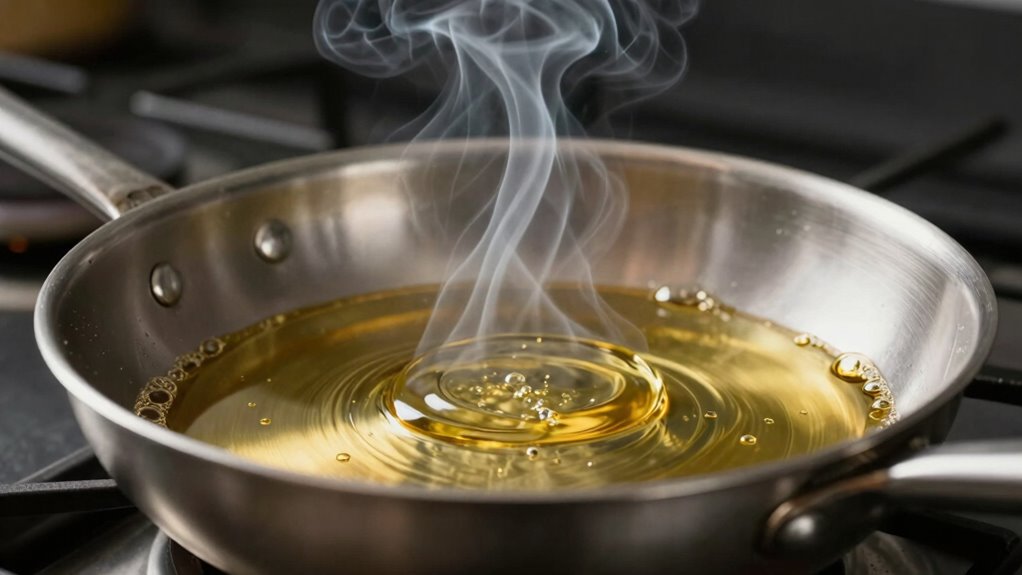
The smoke point and burn point are essential for understanding how cooking oils perform at high temperatures. The smoke point is the temperature at which an oil begins to produce visible smoke, indicating the breakdown of its nutritional content. When oil reaches this point, it can release harmful compounds and diminish its health benefits. Recognizing these points helps you prevent the degradation of nutrients and avoid unsafe cooking conditions. By choosing oils with appropriate smoke points, you preserve nutritional content and ensure safe, high-quality cooking. Knowing these key temperature thresholds keeps your dishes flavorful and healthy, and selecting the right oil depends heavily on understanding its smoke and burn points. Being aware of these specific temperature thresholds can also help extend the lifespan of your cooking oils and improve overall kitchen safety. Additionally, understanding the oil composition can aid in selecting the best oil for different cooking methods and temperatures, especially when considering factors like oxidation resistance, which influences how well an oil withstands high heat without breaking down. Properly managing these factors ensures both culinary success and health-conscious choices in your kitchen.

Amazon Grocery, Vegetable Oil, 128 Fl Oz
One gallon bottle of Vegetable Oil
As an affiliate, we earn on qualifying purchases.
As an affiliate, we earn on qualifying purchases.
Why Knowing the Difference Matters in Your Cooking
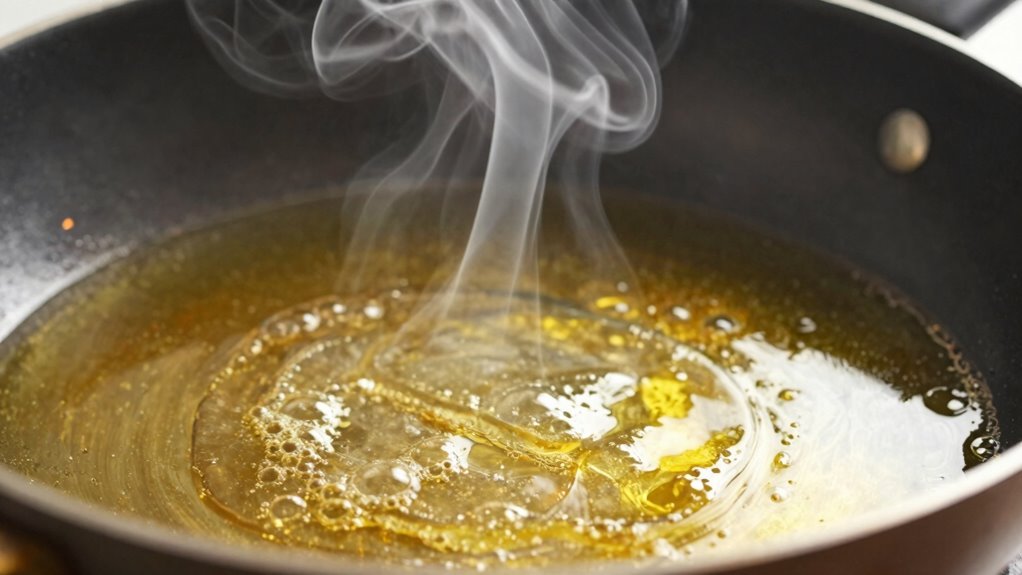
Knowing the difference between the smoke point and burn point can considerably impact your cooking results and safety. When you understand these temperatures, you can select oils that maintain their flavor and nutritional qualities during cooking. Proper oil refinement influences both smoke and burn points, affecting how well an oil preserves flavor retention and resists burning. Using the right oil prevents undesirable smoke, which can produce harmful compounds, and avoids burning that ruins taste and texture. Additionally, understanding these concepts can inspire a more mindful and curious approach to choosing ingredients, enhancing your overall culinary experience. Recognizing the safety implications of oil stability can also help you select options that balance durability and safety under various heat conditions. Being aware of oil stability under different cooking methods enables you to optimize both flavor and health benefits. Developing this knowledge can also lead to more mindful cooking practices that prioritize health and safety.

CRAFT911 Candy Thermometer with Pot Clip – Deep Fry Oil Thermometer for Frying and Candle Making
ACCURATE FAST READINGS (No More Burned Candy) — Our candy deep fry thermometer provides instant and accurate temperature…
As an affiliate, we earn on qualifying purchases.
As an affiliate, we earn on qualifying purchases.
How Smoke Point Affects Flavor and Kitchen Safety
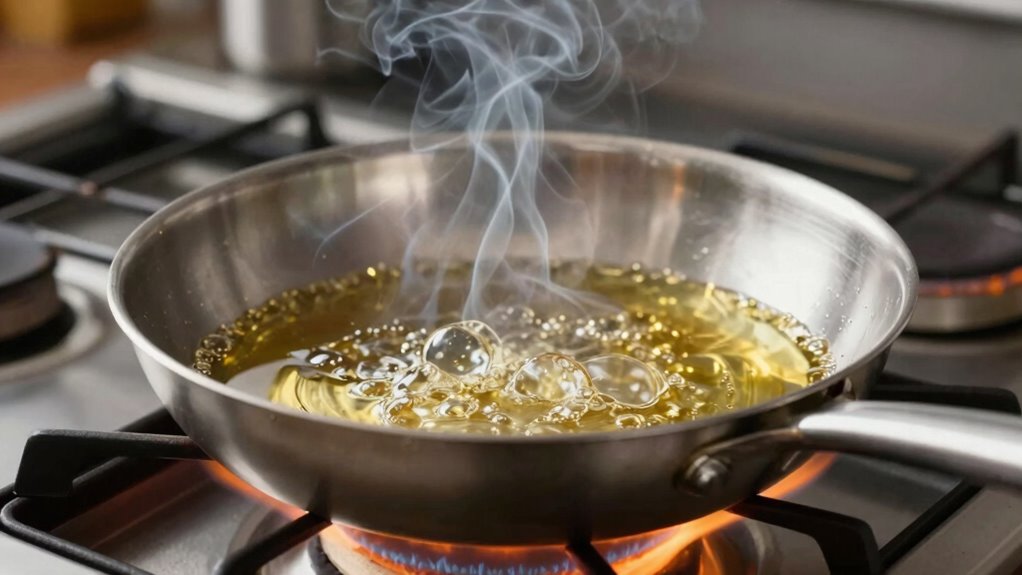
When oil reaches its smoke point, it begins to break down, releasing smoke and potentially harmful compounds that can negatively impact both flavor and safety. This flavor degradation results in a burnt, bitter taste that can ruin your dish’s overall quality. In addition, inhaling smoke from overheated oil can pose health risks and irritate your respiratory system. From a kitchen safety perspective, reaching the smoke point increases the risk of accidental fires, especially if the smoke isn’t noticed promptly. To maintain good flavor and guarantee safety, it’s vital to use oils appropriate for your cooking method and monitor the heat carefully. Proper temperature control is essential to prevent overheating and potential hazards. Understanding the smoke point of different oils helps in selecting the right one for each cooking technique, ensuring both safety and flavor are preserved. Keeping your oil below its smoke point helps preserve the original flavor and keeps your kitchen a safer environment. Additionally, choosing oils with higher smoke points can provide more flexibility for various cooking styles. Knowing the oil composition can also help you select oils that are more stable at higher temperatures, further enhancing safety and flavor. Being aware of thermal stability can guide you in choosing oils that maintain their integrity at high temperatures.

Oil Smoke Point Chart Kitchen Safety Guide Poster (5) Canvas Painting Posters And Prints Wall Art for Living Room Bedroom Decor 12x18inch(30x45cm) Unframe-style
In the color options, you can choose a framed style and unframe style. Order according to your needs.
As an affiliate, we earn on qualifying purchases.
As an affiliate, we earn on qualifying purchases.
What Are the Risks and Signs When Oil Reaches Its Burn Point?
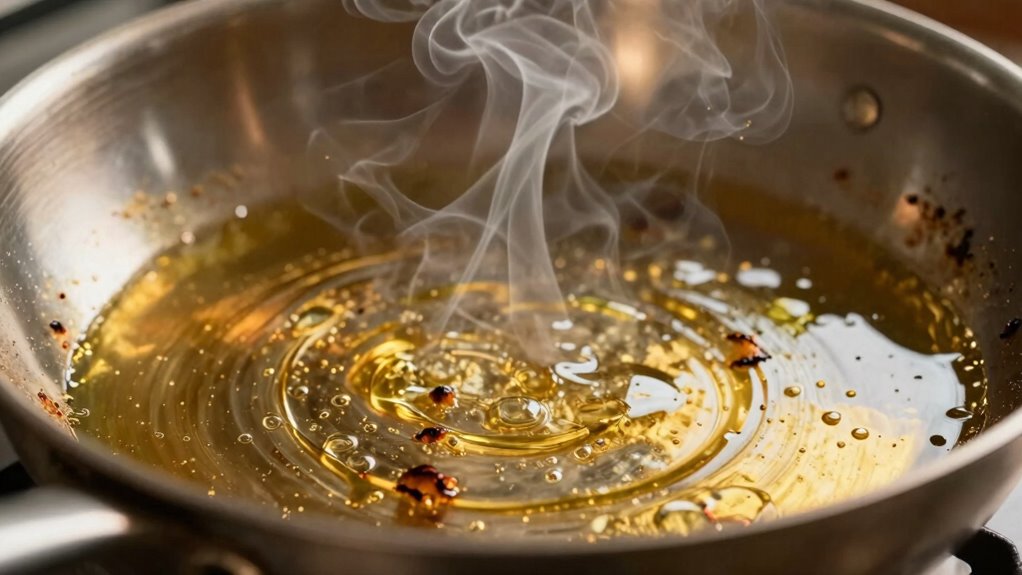
As oil approaches its burn point, it can emit thick smoke and develop an acrid smell, signaling that it’s overheating beyond safe limits. When this happens, you risk oil oxidation, which produces harmful compounds and compromises safety. Additionally, flavor degradation occurs, ruining your dish’s taste and aroma. Recognizing these signs early helps prevent health hazards and wasted ingredients. Monitoring oil temperature is essential to avoid reaching the burn point and ensure safe cooking practices. Proper temperature control reduces the risk of harmful chemical formation during cooking. Implementing the use of appropriate oils with higher smoke points can also help extend cooking times without reaching dangerous temperatures. Maintaining awareness of oil quality and replacing oils as needed further contributes to safer cooking. Being mindful of oil stability can help you choose the best oils for different cooking methods and durations.
How to Choose the Right Oil Based on Its Smoke Point
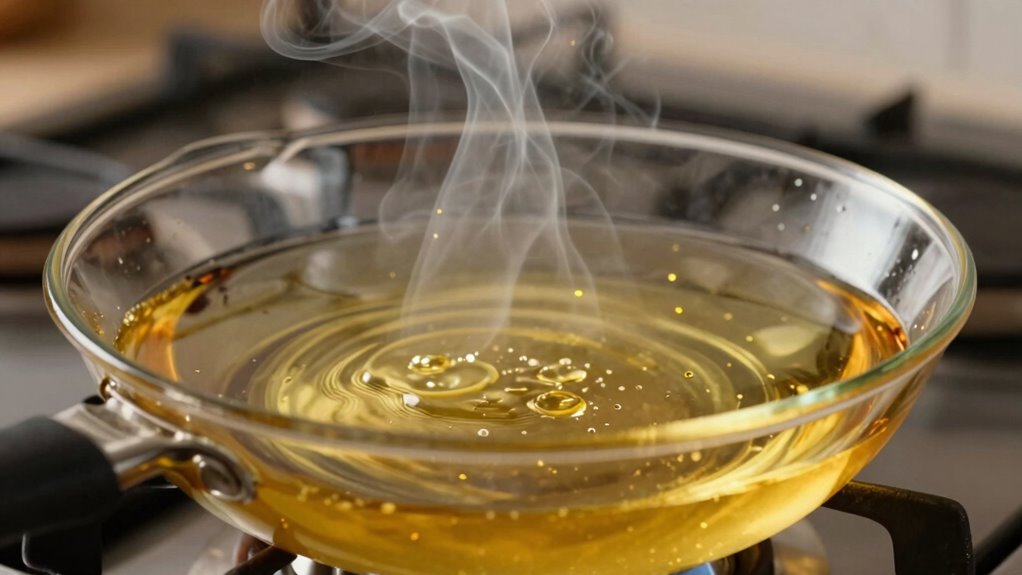
To select the best cooking oil, you need to match it to your heat level and cooking method. Understanding an oil’s smoke threshold helps prevent burning, while considering how you’ll cook guarantees ideal flavor and safety. Making informed choices keeps your dishes tasty and minimizes smoke-related risks. Incorporating knowledge about smoke point vs burn point can further refine your selection process for optimal results. Additionally, being aware of proper oil storage ensures the oil maintains its quality and smoke point over time. If you plan to lease a vehicle for your cooking adventures, understanding the different lease types can help you choose the best option for your needs. Being familiar with thermal stability of oils can also help you better predict how they will behave at various temperatures.
Match Oil To Heat
Choosing the right cooking oil depends on the heat you’ll be applying, and understanding its smoke point is key. When matching oil to heat, consider how high you plan to cook. Using an oil with a suitable smoke point ensures flavor infusion without breaking down, maintaining oil stability throughout cooking. For high-heat methods like searing or frying, opt for oils with higher smoke points, such as avocado or refined peanut oil. For gentle sautéing, lower smoke point oils like extra virgin olive oil work well. Keep these factors in mind:
- Flame intensity and cooking duration
- Desired flavor profile
- Oil’s smoke point and stability
- Type of dish and cooking technique
- Potential for flavor infusion without degradation
This approach helps you prevent unwanted smoke, preserve oil quality, and achieve excellent results.
Understand Smoke Thresholds
Understanding smoke thresholds is essential for selecting the right cooking oil because exceeding an oil’s smoke point causes it to break down, release harmful compounds, and produce undesirable smoke. When choosing your oil, remember that oil filtration can impact its stability; cleaner oils typically have clearer smoke points. Many smoke point myths circulate, leading people to believe all oils with high smoke points are suitable for high-heat cooking, but other factors like refinement also matter. Knowing your oil’s smoke limit helps you prevent burning, smoking, and potential health risks. By paying attention to this threshold, you ensure safe, effective cooking, and better flavor retention. Avoid assumptions based solely on smoke point labels—understanding the thresholds allows you to select oils that perform well at your intended cooking temperature.
Consider Cooking Method
Selecting the right cooking oil depends heavily on the method you plan to use, as different techniques require different temperature ranges. For high-heat methods like frying or searing, choose oils with a high smoke point to prevent burning and preserve flavor. Conversely, for low-heat processes such as dressings or gentle sautéing, oils with lower smoke points are suitable and enhance ingredient compatibility. Consider the following when choosing your oil:
- Cooking method and temperature requirements
- Ingredient compatibility and flavor profiles
- Smoke point to avoid unwanted burning
- Stability during prolonged heating
- Nutritional qualities suited to the dish
Matching the oil’s smoke point to your chosen cooking method ensures ideal results, maintains ingredient integrity, and prevents kitchen mishaps.
Best Oils for Different Cooking Techniques
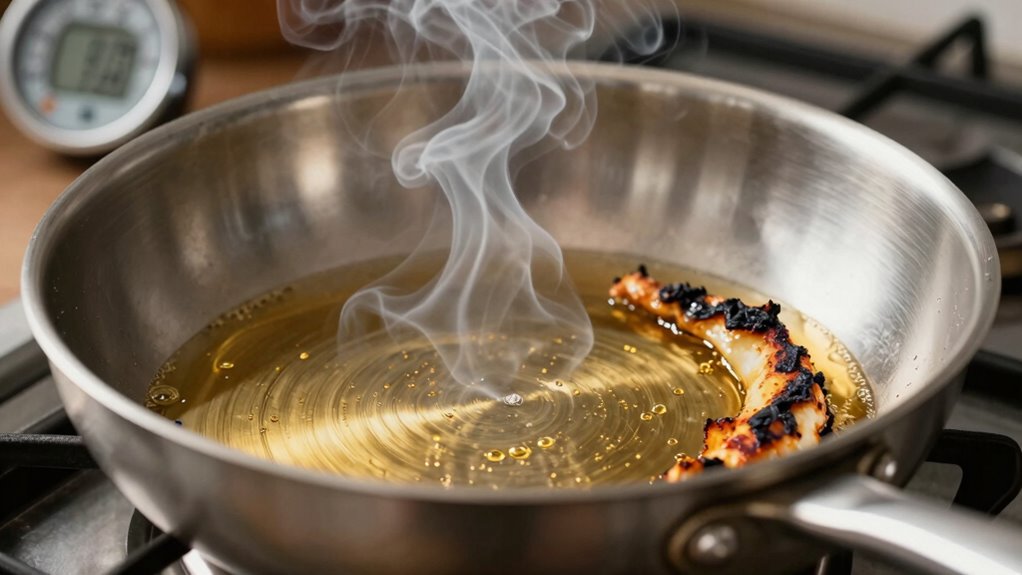
Different cooking techniques require specific oils to achieve the best results without smoke or burning. For sautéing or stir-frying, choose oils with a high smoke point like avocado or peanut oil, which can handle higher heat without losing their oil flavor or health benefits. When making dressings or drizzling over dishes, opt for oils like extra virgin olive oil, prized for its rich oil flavor and antioxidants, even though it has a lower smoke point. Baking often calls for neutral oils like canola or sunflower, which offer minimal flavor interference and good health benefits. Understanding these distinctions helps you select the right oil for each method, ensuring your food maintains its flavor, retains nutrients, and stays safe from smoke or burn hazards.
Tips to Extend Oil Life and Prevent Overheating
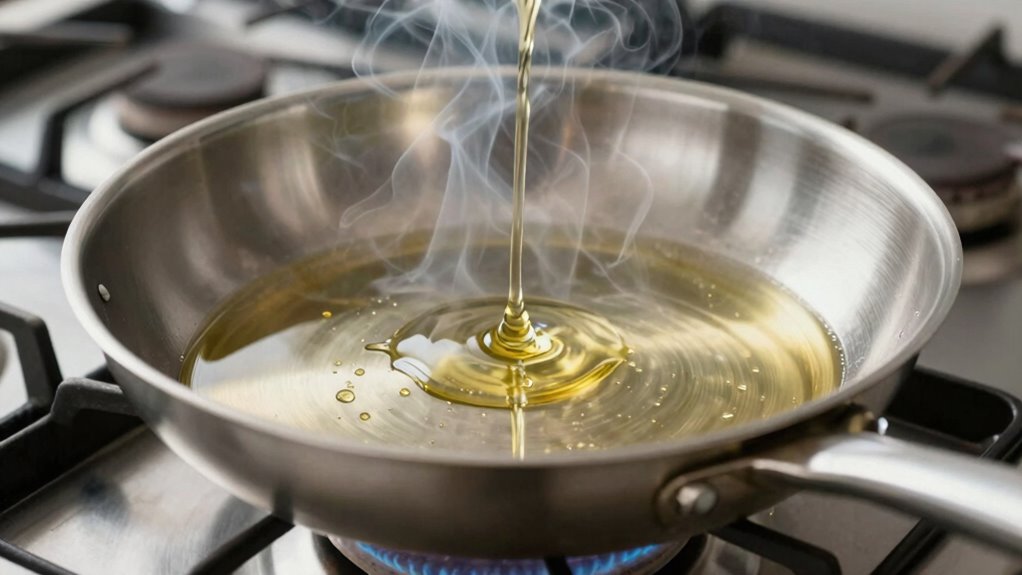
To keep your oil fresh and safe, watch its temperature closely while cooking. Proper storage in a cool, dark place also helps prevent spoilage before use. By following these steps, you can extend the oil’s lifespan and avoid accidents caused by overheating.
Monitor Oil Temperature
How can you prevent your cooking oil from overheating and losing its quality? The key lies in vigilant temperature control. Monitoring oil temperature helps maintain oil freshness and prevents reaching smoke or burn points prematurely. To do this effectively:
- Use a reliable kitchen thermometer for precise readings
- Keep the heat at moderate levels to avoid sudden temperature spikes
- Avoid overcrowding the pan, which can lower temperature control
- Stir occasionally to distribute heat evenly
- Watch for visual cues like bubbling and smoke to gauge oil condition
Proper Storage Practices
Proper storage practices are essential for extending the shelf life of your cooking oil and preventing it from overheating during use. Store your oil in a cool, dark place away from direct sunlight and heat sources to reduce oxidation and spoilage. Use containers made from suitable materials like dark glass or stainless steel, which protect the oil from light and air exposure. Avoid plastic or transparent bottles that let in light, accelerating rancidity. Ensure the container has a tight-fitting lid to prevent air from entering, which can degrade the oil over time. Keep the storage area clean and dry to avoid contamination. Regularly check the oil’s smell and appearance before use; discard if it smells off or shows signs of rancidity. Proper storage maintains oil quality and safety.
Quick Guide: Smoke and Burn Points for Popular Cooking Oils

Understanding the smoke and burn points of popular cooking oils helps you prevent kitchen mishaps and achieve perfect results. Different oils have varying thresholds based on their oil extraction and refining processes. For example, refined oils generally have higher smoke points than unrefined ones, making them suitable for high-heat cooking. Here’s a quick guide:
Knowing the smoke points of oils helps you cook safely and perfectly every time.
- Avocado oil: Smoke point around 520°F (refined)
- Olive oil: Extra virgin (~375°F), refined (~465°F)
- Coconut oil: Virgin (~350°F), refined (~450°F)
- Canola oil: Around 400°F
- Sesame oil: Unrefined (~350°F), refined (~410°F)
Knowing these points helps you choose the right oil for your cooking method and avoids burning or smoke.
Frequently Asked Questions
How Can I Tell if My Oil Has Exceeded Its Smoke Point?
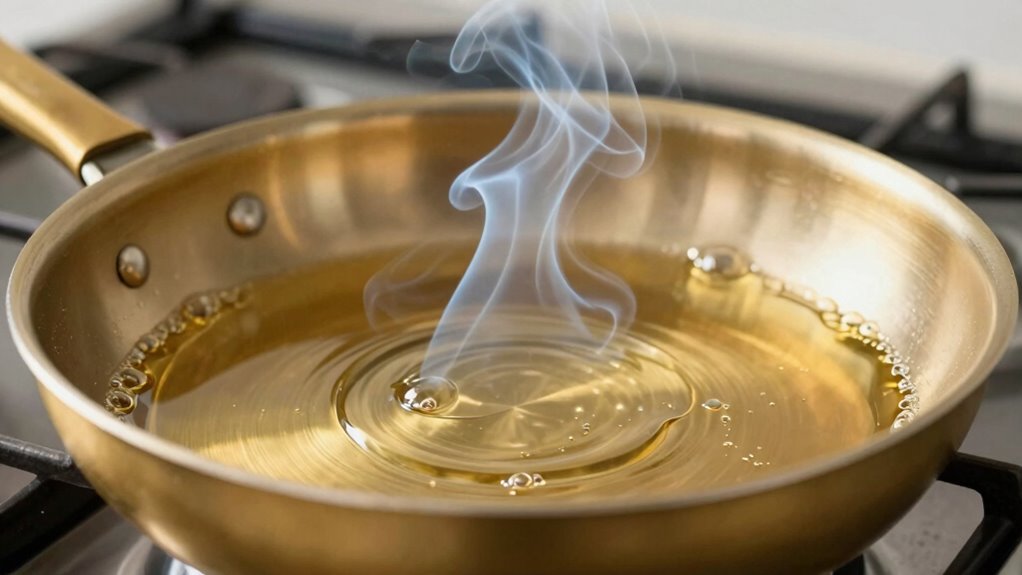
You can tell if your oil has exceeded its smoke point by looking for smoke indicators and visual cues. When the oil starts to produce a steady bluish smoke or a burnt smell, it’s a clear sign you’ve gone past the smoke point. You might also notice the oil appears darker or develops a film on the surface. To prevent this, watch closely and remove the oil from heat as soon as you see these visual cues.
Do Different Brands of the Same Oil Have Different Smoke Points?
Yes, different brands of the same oil can have varying smoke points due to brand variations and oil purity. Higher purity oils often have higher smoke points because they contain fewer impurities, which can lower the smoke point. Always check the label or manufacturer details, as some brands process their oils differently, affecting their heat tolerance. This helps you choose the right oil for high-temperature cooking without risking smoke or burning.
Does Heating Oil Beyond Its Burn Point Produce Harmful Compounds?
Imagine your oil shimmering with heat, but push it past the burn point, and it starts to crackle and darken. Yes, heating oil beyond its burn point produces harmful compounds, increasing oxidation hazards and flavor degradation. These compounds can pose health risks, so maintaining proper temperature is vital. You should avoid overheating to preserve both your dish’s flavor and your health, ensuring safe and delicious cooking every time.
Can I Reuse Oil That Has Reached Its Smoke Point Safely?
You shouldn’t reuse oil that has reached its smoke point because it’s already degraded, risking harmful compounds and flavor loss. Heating oil past this point accelerates oil degradation, diminishing its quality and potentially producing unhealthy substances. Reusing it can affect your food’s taste and safety. It’s best to discard oil once it starts to smoke, ensuring you cook with fresh oil for peak flavor and health benefits.
Are There Oils Suitable for High-Temperature Cooking With Higher Smoke and Burn Points?
Sure, some oils are practically fearless at high temperatures thanks to their high smoke point ratings. You can confidently choose oils like avocado, refined safflower, or peanut oil for your high-temperature cooking. They’re designed to handle the heat without smoking or burning, making them perfect for frying or searing. So, next time you see those high temperature oils, know they’re your best bet against smoke and burn points.
Conclusion
Think of your cooking oil as a delicate dance partner—when you respect its smoke and burn points, you keep the rhythm smooth and safe. Ignoring these cues is like pushing a candle too close to the flame, risking flickers of flavor and safety. By choosing the right oil and monitoring its heat, you’re guiding a steady, vibrant flame—illuminating your kitchen with confident, delicious creations that shine without risking a blaze.