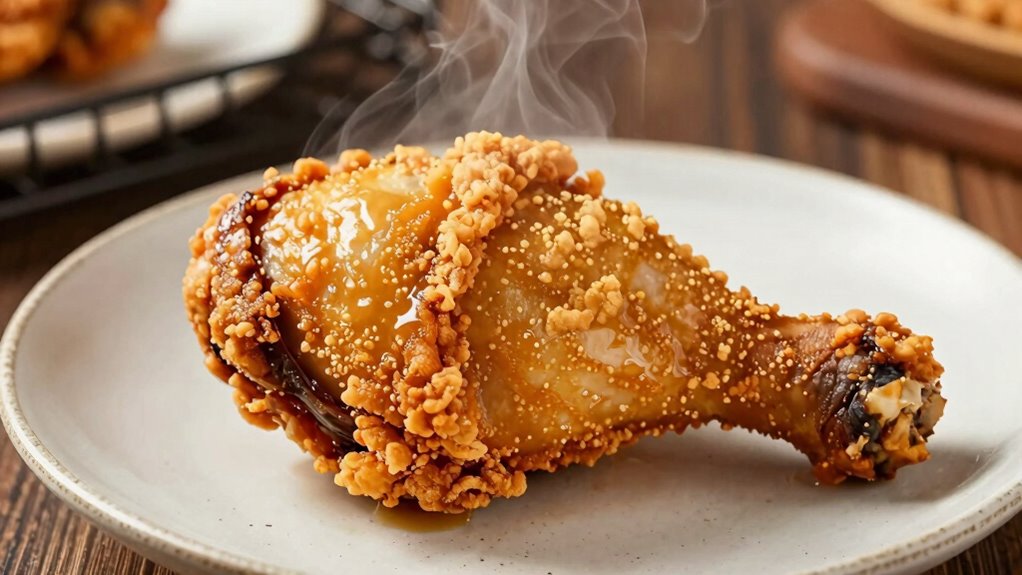
Fried foods stay soggy mainly because moisture from the food or environment seeps into the crispy coating, softening it and making it greasy. To prevent this, you should fry at the correct temperature, avoid overcrowding, and use a thick batter or coating. Proper draining and storing on a wire rack help maintain crispness. Keep exploring to discover more tips and tricks for perfectly crispy fried foods every time.
Key Takeaways
- Moisture from food or the environment seeps into the coating, softening the crispy texture.
- Using oil at incorrect temperatures causes uneven cooking, leading to sogginess.
- Overcrowding the pan lowers oil temperature, resulting in moisture retention and less crispness.
- Improper storage methods trap moisture, making fried foods soggy during reheating.
- Reheating without proper techniques, like microwaving, can cause fried foods to lose their crispness.
Why Do Fried Foods Turn Soggy? The Science of Moisture and Crunch
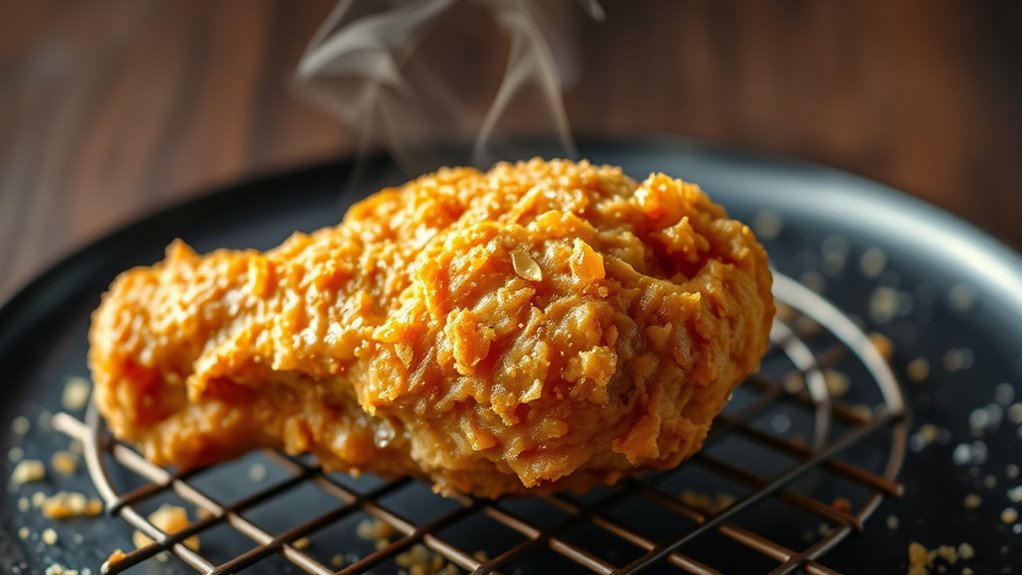
Fried foods turn soggy mainly because moisture from the food or the environment seeps into the crispy coating, softening its texture. This process starts with oil absorption, where excess oil infiltrates the crust, making it greasy and less crisp. Meanwhile, moisture migration occurs when water from the food’s interior moves outward, disrupting the crispy layer. As moisture escapes or is drawn into the coating, it causes the crust to lose its crunch. The more oil your food absorbs, the more vulnerable it becomes to sogginess. Additionally, high humidity or improper resting times can accelerate moisture migration, further softening the fried exterior. Properly draining and serving fried foods immediately can help maintain their crispness, but understanding how oil absorption and moisture migration work helps you grasp why fried foods tend to lose their crunch over time. Confectionery techniques such as using innovative packaging like cake pops can also influence how snack textures are preserved during storage. Furthermore, selecting appropriate frying oils with higher smoke points can reduce oil absorption, helping to keep fried foods crispy for longer. An understanding of moisture control is crucial in preventing sogginess during storage and serving. Employing proper cooling methods can also help reduce moisture buildup and preserve crispness. Additionally, using crisping agents can help extend the crunchiness of fried foods during storage and reheating.
Common Mistakes That Cause Fried Foods to Lose Their Crisp
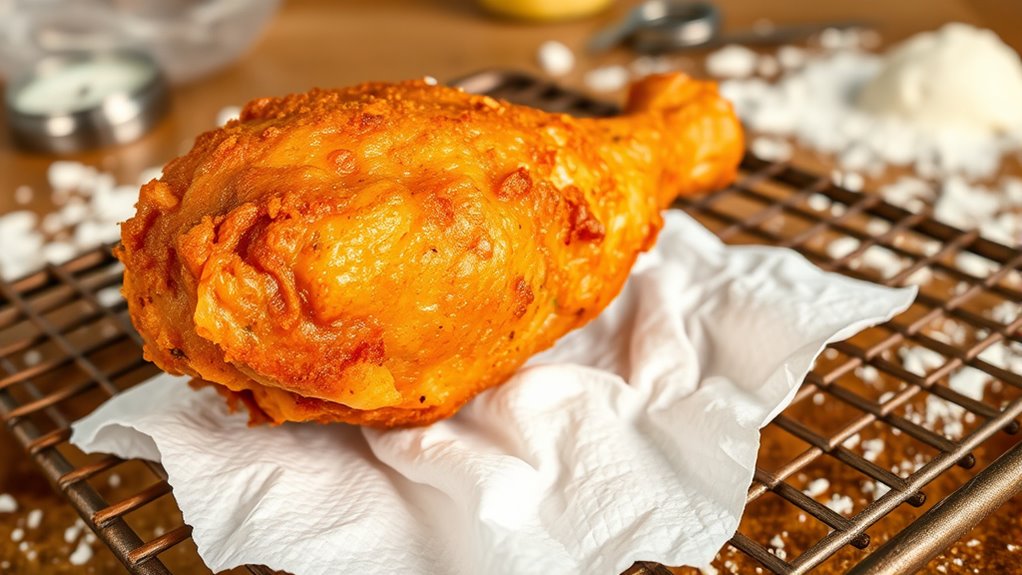
Many common mistakes can cause fried foods to lose their crispness quickly. One major error is improper oil temperature; if the oil isn’t hot enough, the batter absorbs more oil and becomes soggy. Conversely, if it’s too hot, the exterior burns before the inside cooks properly. Another mistake is using batter that’s too thick or too thin. A batter that’s too thick can trap moisture, resulting in a heavy, soggy coating, while a thin batter might not form a protective barrier, allowing moisture to seep in. Additionally, overcrowding the pan lowers the oil temperature, leading to uneven cooking and sogginess. Always monitor oil temperature with a thermometer and adjust your batter consistency to ensure a crispy, well-cooked exterior that stays crispy longer. Maintaining the correct oil temperature is crucial for achieving the ideal crispy texture. Proper ventilation can also help maintain consistent frying conditions and prevent excess moisture buildup that contributes to sogginess. Using high-quality frying oil with a high smoke point can also improve the final texture, as lower-quality oils may break down more quickly and affect crispness.
How to Fry Foods So They Stay Crispy Every Time

To guarantee your fried foods stay crispy every time, focus on controlling the cooking process from start to finish. First, ensure your oil temperature is steady, ideally between 350°F and 375°F, to prevent sogginess. Use a thermometer to monitor heat and adjust as needed. Next, pay attention to batter consistency; it should be thick enough to coat the food evenly without dripping off. A smooth, slightly sticky batter creates a protective layer that crisps up nicely. Avoid overcrowding the pan, which drops oil temperature and results in soggy textures. Also, fry in small batches to maintain consistent heat. When done, drain excess oil on a wire rack rather than paper towels to keep the crispy exterior intact. Incorporating smart kitchen technology like connected thermometers can help you maintain precise oil temperature for perfect results. Additionally, understanding filtration systems can help keep your oil clean, ensuring your fried foods stay crisp longer.
The Best Storage and Reheating Tips to Keep Fried Foods Crispy

While it’s tempting to dive right into enjoying leftovers, proper storage is key to preserving crispiness. To prevent oil absorption and maintain breading integrity, store fried foods in a paper-lined container rather than plastic. This allows excess moisture to escape and keeps the crust dry. When reheating, avoid the microwave, which causes sogginess; instead, reheat in an oven or air fryer at 375°F for 10-15 minutes. Placing the fried food on a wire rack inside a baking sheet ensures even heat circulation and prevents the bottom from becoming soggy. To optimize the reheating process, understanding thermal dynamics can help you achieve the best crispiness. Additionally, using proper storage materials minimizes moisture retention that could lead to sogginess. Proper moisture control is essential for maintaining the crunch and preventing sogginess during storage and reheating. Using reheat methods such as the oven or air fryer helps preserve the original texture and flavor. These steps help maintain the original crunch, reduce oil absorption, and keep the breading intact, so your fried foods stay crispy and delicious even after reheating.
Quick Tricks to Recrisp Soggy Fried Foods in Minutes

When you’re short on time but craving crispy fried foods, quick tricks can restore their crunch in just minutes. To do this, spread the soggy pieces on a wire rack or paper towel-lined baking sheet. Lightly spritz or brush them with a little oil to reduce oil absorption and help re-crisp the exterior. Preheat your oven or toaster oven to a high temperature, around 375°F (190°C). Place the fried items inside, ensuring they’re not crowded, and heat for 5-10 minutes. This method helps evaporate excess moisture and reactivates the crust’s crispness. Using a consistent temperature control device can further prevent uneven heating and sogginess. Keep a close eye to prevent burning, and remember, consistent temperature control is key to avoiding further sogginess or over-drying. This quick trick is your best bet for crispy results in minutes.
Frequently Asked Questions
Can Adding Salt Affect the Crispiness of Fried Foods?
Adding salt can influence the crispiness of fried foods because of seasoning effects and salt absorption. When you sprinkle salt on the surface, it draws out moisture, making the exterior less crispy over time. To keep your fried foods crunchy, add salt after frying or just before serving. This way, you avoid excess moisture absorption, preserving that delightful crispiness you want.
Does Type of Oil Impact the Sogginess of Fried Dishes?
Yes, the type of oil affects how soggy your fried foods become. Oils with a high smoke point, like peanut or avocado oil, help reduce oil absorption, keeping foods crispier. When you use oils with a lower smoke point, they break down faster, leading to more sogginess. Choosing the right oil guarantees your fried dishes stay crunchy and less greasy, giving you a better texture and flavor.
How Does Altitude Influence Frying and Crispiness?
Altitude effects can turn your crispy favorites into softer surprises, presenting you with crispiness challenges. As you fry at higher elevations, the lower boiling point of water means moisture escapes faster, and oil cooks differently. To combat this, increase frying temperature slightly and keep a close eye on cooking times. This way, you’ll maintain that satisfying crunch, even when the air’s playing tricks on your fried delights.
Are There Specific Coatings That Help Prevent Sogginess?
Yes, certain coating ingredients and batter techniques help prevent sogginess. Opt for cornstarch, rice flour, or panko breadcrumbs, as they create a crisp barrier. Use a light batter, avoiding excess liquid, and dip food quickly to prevent thick coatings that trap moisture. Applying a thin, even layer ensures better crispiness, keeping fried foods crunchier longer. Experiment with coating ingredients and batter techniques to attain the perfect crispy texture every time.
Can Frying at Lower Temperatures Reduce Sogginess?
Frying at lower temperatures can help reduce sogginess by allowing the coating to cook more evenly and prevent excess oil absorption. Use an accurate thermometer to monitor oil temperature, keeping it around 350°F. Employ proper frying techniques, like avoiding overcrowding the pan, to maintain consistent oil temperature. This way, your fried foods stay crispy and less soggy, thanks to better control over the frying process.
Conclusion
Now that you know why fried foods turn soggy—mainly due to moisture—that knowledge can help you keep them crispy. Did you know that reheated fried chicken can lose up to 50% of its crunch if not stored properly? But with simple tricks like using a wire rack or reheating in the oven, you can enjoy that perfect crunch every time. Keep these tips in mind, and your fried favorites will stay deliciously crispy longer!