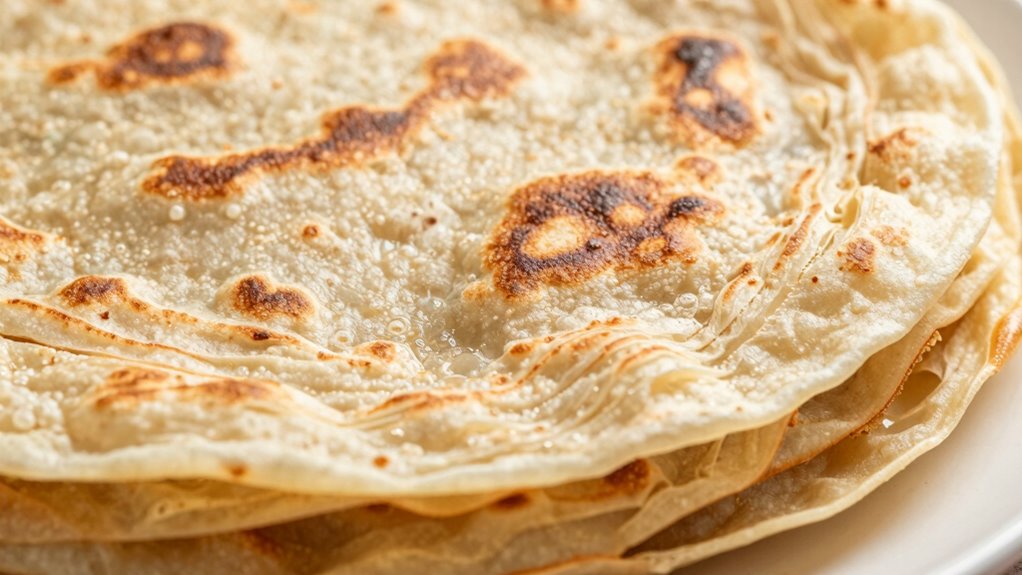

To get flaky layers in a paratha, you need to focus on proper dough preparation, resting, and layering techniques. Resting the dough for 20-30 minutes relaxes gluten and makes it easier to roll out thin, while folding and stacking the dough creates multiple layers separated by air and moisture. During cooking, steam pushes these layers apart, resulting in a crispy, flaky texture. Keep exploring to discover more tips for perfecting your paratha layers.
Key Takeaways
- Resting dough for 20-30 minutes relaxes gluten, making layers easier to fold and preventing tearing.
- Folding and stacking dough with ghee or oil creates multiple layers that trap air and moisture.
- Proper rolling technique maintains layer integrity and prevents merging or tearing during cooking.
- The layered structure traps steam during cooking, causing layers to puff and become flaky.
- Adequate resting and careful handling ensure distinct, crisp layers in the final paratha.
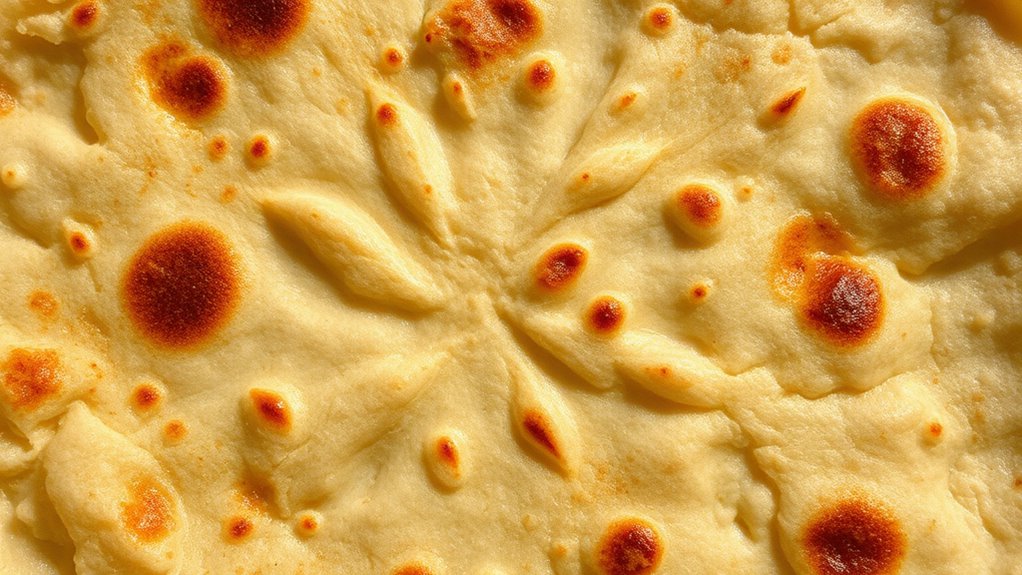
Paratha Layers
Have you ever wondered what makes a perfect paratha so flaky and layered? The secret lies in a combination of proper stacking techniques and dough resting. When you master these steps, you can achieve that crisp, airy texture that makes parathas so irresistible. It all begins with how you handle the dough. After kneading, allowing it to rest is essential. Resting the dough for at least 20 to 30 minutes relaxes the gluten strands, making the dough easier to roll out thinly and evenly. This step prevents the layers from tearing or sticking together unevenly, which could compromise the flakiness. Resting also helps develop the dough’s elasticity, which is crucial for achieving delicate layers.
Once your dough has rested, the next key is stacking techniques. After dividing the dough into small balls, you roll each one into a thin circle. Then, you brush a little ghee or oil on the surface before folding it over itself multiple times. This stacking creates layers, much like folding paper to form a multi-layered structure. When you roll out the stacked dough again, those layers are preserved. These multiple layers, when cooked, puff up and separate, giving that signature flakiness. The layering process is vital because it traps air and moisture between the folds, which expand during cooking and create those delightful flaky layers.
As you proceed, it’s important to handle the dough gently. Overworking it can develop too much gluten, resulting in a dense, chewy paratha rather than a light, flaky one. Keep the rolling light and even, and avoid pressing too hard. When placed on the hot skillet, the heat causes the moisture within the layers to turn to steam, which pushes the layers apart and makes them crisp. The combination of stacking techniques and dough resting guarantees these layers stay distinct during cooking, preventing the paratha from turning out doughy or flat.
In essence, the key to perfect layers in a paratha is patience and precision. Rest your dough properly to relax the gluten, then carefully stack and fold it to build layers. When you do this correctly, every bite will reveal a flaky, layered texture that’s light, crispy, and full of flavor. Achieving consistent layers also depends on maintaining proper knife skills during rolling and stacking, which helps ensure uniform thickness and folds. With practice, these techniques will become second nature, and you’ll be able to craft parathas that are truly restaurant-quality at home. Remember, the magic is in the details—dough resting and stacking techniques are what transform simple ingredients into a flaky, layered delight.
non-stick rolling pin for paratha
As an affiliate, we earn on qualifying purchases.
As an affiliate, we earn on qualifying purchases.
Frequently Asked Questions
Can Different Types of Flour Affect Paratha Flakiness?
Yes, different types of flour can affect paratha flakiness. Higher gluten development from bread flour creates stronger layers, leading to a flakier texture, while lower gluten content in plain flour results in softer parathas. Flour quality also matters; fresh, high-quality flour produces better gluten development, which enhances the layered structure. So, choose your flour wisely based on the flakiness you desire in your paratha.
How Does Humidity Impact Paratha Layering?
Humidity effects your paratha layering like a gentle breeze shaping clay. When moisture absorption increases, it softens the dough, making it sticky and harder to roll out into delicate layers. High humidity can cause the layers to stick together, reducing flakiness, while low humidity helps keep the dough firm and crisp. To master perfect layers, control moisture absorption by adjusting your dough’s consistency and working in a balanced environment.
Is There a Traditional Method to Achieve Maximum Flakiness?
Yes, there’s a traditional method to achieve maximum flakiness by using layering techniques. You should double-fold the dough, brush it with ghee or oil, and then roll it out carefully. Repeat this process multiple times to create thin layers. This technique, passed down through generations, ensures a crisp, flaky texture in your paratha. Practicing these traditional methods will help you master perfect, flaky layers every time.
How Does Resting Dough Influence the Layering Process?
Resting dough is like giving it a breather, allowing the gluten to relax and improve dough elasticity. When you let it rest, gluten development slows down, making the dough easier to roll out and layer. This step helps create those delicate, flaky layers by preventing the dough from tearing or shrinking. So, resting is essential to achieve the perfect balance of elasticity and flakiness in your paratha.
Can Adding Oil or Ghee Change the Flaky Texture?
Adding oil or ghee can definitely change the flaky texture of your paratha. Oil addition helps in creating layers by making the dough softer and easier to roll out, resulting in a crispier, flaky finish. Ghee impact is even more significant; it adds richness and promotes distinct, crispy layers as it melts during cooking. Both ingredients enhance flakiness, but ghee often gives a more authentic, layered crunch.
ghee brush for baking
As an affiliate, we earn on qualifying purchases.
As an affiliate, we earn on qualifying purchases.
Conclusion
Now that you know the secret behind paratha’s flaky layers, you can impress your friends with perfect, crispy layers every time. Remember, it’s all about the dough’s folds and the right amount of fat—think of it as your culinary Excalibur. So, grab your rolling pin and channel your inner medieval chef; your paratha will be the talk of the town, just like a legend from a bygone era. Happy baking!

Beeswax Bowl Covers for Bread Proofing, 2 Pack 10 Inch Reusable Cotton Covers with Elastic Edge, Fit 8''–11.5'' Mixing Bowls & Proofing Baskets for Sourdough, Dough Resting and Food Storage
Made for Bread Proofing and Sourdough Baking: These beeswax bowl covers are designed to cover dough during bread…
As an affiliate, we earn on qualifying purchases.
As an affiliate, we earn on qualifying purchases.
paratha layering technique tools
As an affiliate, we earn on qualifying purchases.
As an affiliate, we earn on qualifying purchases.