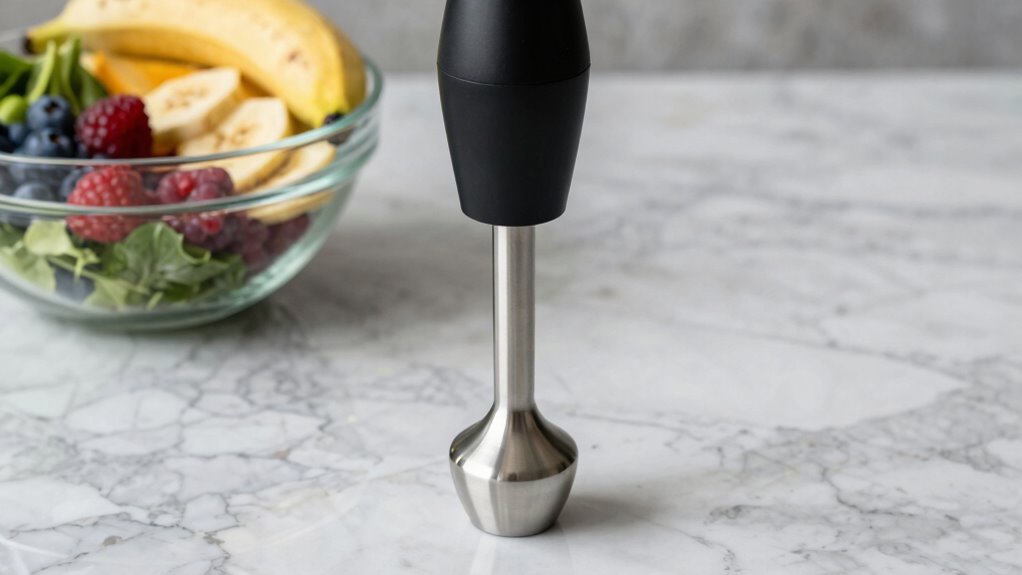

Wattage alone doesn’t tell you how powerful an immersion blender truly is. A higher wattage might suggest better performance, but factors like motor efficiency, blade design, materials, and build quality play a bigger role. These elements influence blending speed, accuracy, and durability. So, don’t judge a blender by watts alone—there’s more that determines true power. Keep exploring, and you’ll discover how to evaluate these essential performance factors.
Key Takeaways
- Wattage indicates potential power but doesn’t reflect actual blending performance or efficiency.
- Blade design and motor quality significantly impact blending effectiveness beyond wattage ratings.
- Battery capacity and efficiency determine runtime for cordless immersion blenders, not wattage alone.
- Noise levels and build quality influence user experience, which wattage doesn’t capture.
- Proper engineering and materials are crucial for consistent, durable performance regardless of wattage.
Why Wattage Isn’t the Whole Story for Immersion Blender Power
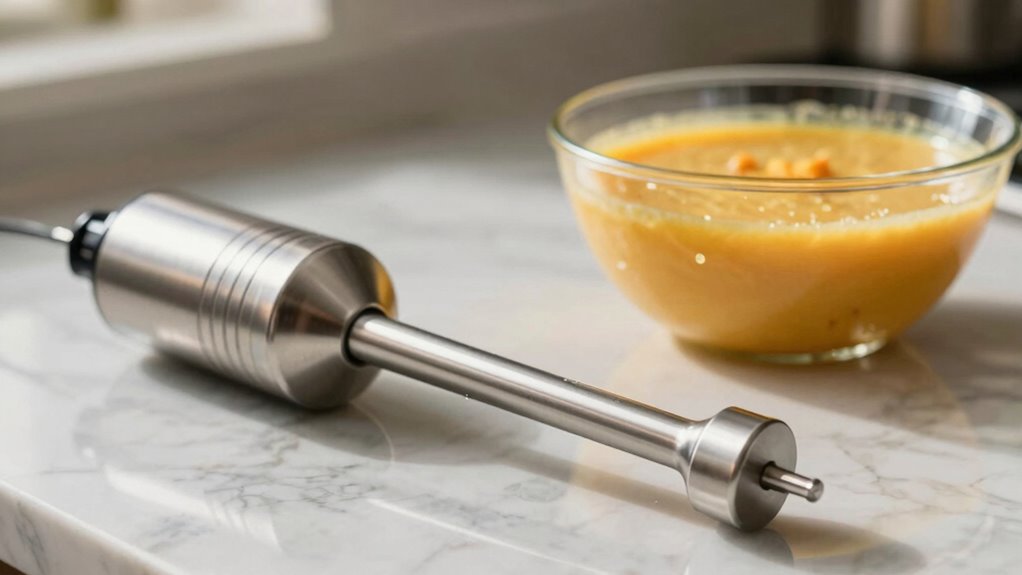
While higher wattage might suggest a more powerful immersion blender, it doesn’t tell the whole story about its actual performance. Battery capacity plays an essential role, especially in cordless models, as it determines how long you can blend without recharging. A higher wattage with a small battery might deliver quick bursts of power but won’t last long, limiting its usefulness. Noise levels also matter—more powerful blenders often produce more noise, which can be distracting in quiet kitchens. However, some brands optimize design to reduce noise without sacrificing power. So, rather than just looking at wattage, consider how Battery capacity and noise levels impact your experience. Performance factors such as motor design and build quality also influence how effectively a blender performs beyond just wattage. Understanding energy efficiency can help you choose models that provide both power and longevity without unnecessary energy consumption. Additionally, evaluating performance metrics can guide you in selecting a blender that balances power, noise, and durability for your specific needs. Recognizing these performance considerations can lead to a more satisfying and efficient blending experience.
What Really Determines How Powerful an Immersion Blender Is
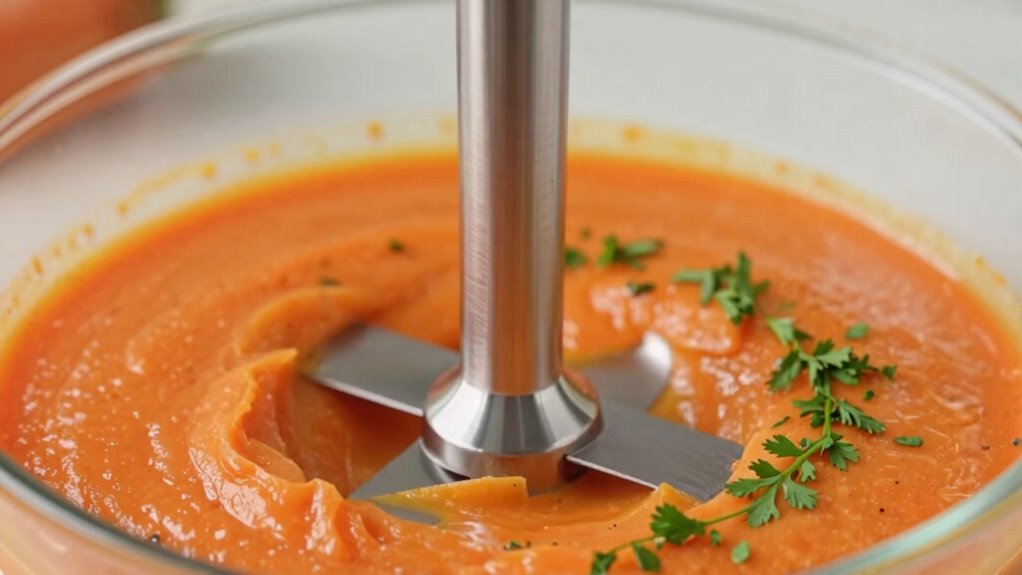
The true power of an immersion blender depends on more than just wattage; factors like blade design and efficiency make sure your blender can handle tough ingredients smoothly. High-quality motors and gears ensure your blender can handle tough ingredients smoothly. Understanding these elements helps you choose a model that offers real, consistent power. Additionally, air quality factors such as motor durability and overall design can influence the longevity and performance of your immersion blender. Proper maintenance and avoiding overheating can also extend the lifespan of the appliance, and considering motor efficiency can lead to better energy use and longer-lasting performance. Recognizing the importance of high-quality materials in construction can further improve durability and effectiveness over time. Elements like cooling systems also play a key role in maintaining consistent power during extended use.
Blade Design Efficiency
Blade design efficiency plays a crucial role in determining how powerful an immersion blender truly is. The shape, size, and angle of the blades directly influence how well it processes ingredients. A well-designed blade maximizes contact with food, ensuring smoother blends with less effort. It also affects the flow of ingredients around the blade, improving overall blending speed and consistency. Additionally, blade design works hand-in-hand with motor efficiency; even a powerful motor won’t perform ideally if the blades aren’t engineered effectively. Precision in blade shape reduces strain on the motor and allows it to deliver better performance without overheating. Ultimately, investing in a blender with a thoughtfully designed blade will give you more powerful, efficient blending—regardless of wattage.
Motor and Gear Quality
A high-quality motor and durable gears are the true engines behind an immersion blender’s power. The motor construction plays a crucial role; a well-built motor with efficient components ensures consistent, reliable performance. Look for motors that are designed to handle prolonged use without overheating or losing power. Equally important is gear alignment—precise gear engagement minimizes energy loss and delivers smooth power transfer from the motor to the blade. Poorly aligned gears can cause slipping or unnecessary strain, reducing overall effectiveness. When both motor construction and gear alignment are prioritized, your blender operates more efficiently, translating wattage into real cutting and blending power. Fundamentally, a sturdy motor coupled with properly aligned gears guarantees that you get the most out of your immersion blender’s power capabilities.
How Motor Efficiency Boosts Blending Power and Battery Life
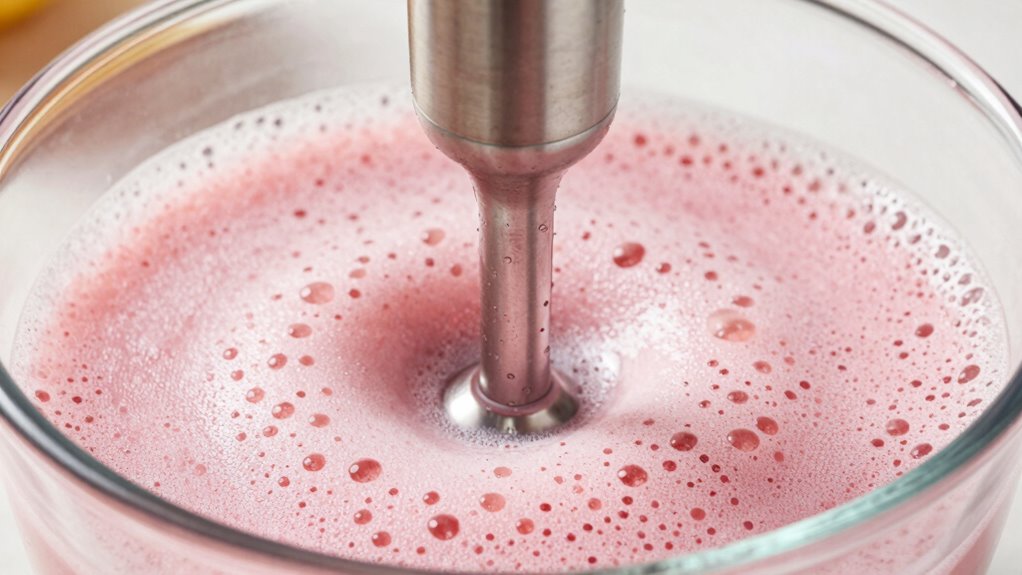
Since motor efficiency directly determines how effectively an immersion blender converts electrical energy into blending power, improving it can lead to noticeable benefits. A more efficient motor uses less energy to produce the same blending performance, which means you get better power without increasing wattage. This efficiency also extends your battery life, allowing your device to run longer on a single charge. When the motor operates efficiently, less energy is wasted as heat, making the blender more reliable and saving you time on recharging. You’ll notice smoother, more consistent blending, especially with tough ingredients. In short, higher motor efficiency not only boosts your blending power but also makes your cordless immersion blender more convenient and cost-effective over time. Additionally, efficient motors contribute to a longer lifespan of your appliance, ensuring better durability and value. Enhanced motor efficiency can also reduce the overall operational noise, making your blending experience quieter. Moreover, advances in motor design continue to improve overall performance and energy conservation.
How Build Quality and Materials Impact Durability and Performance
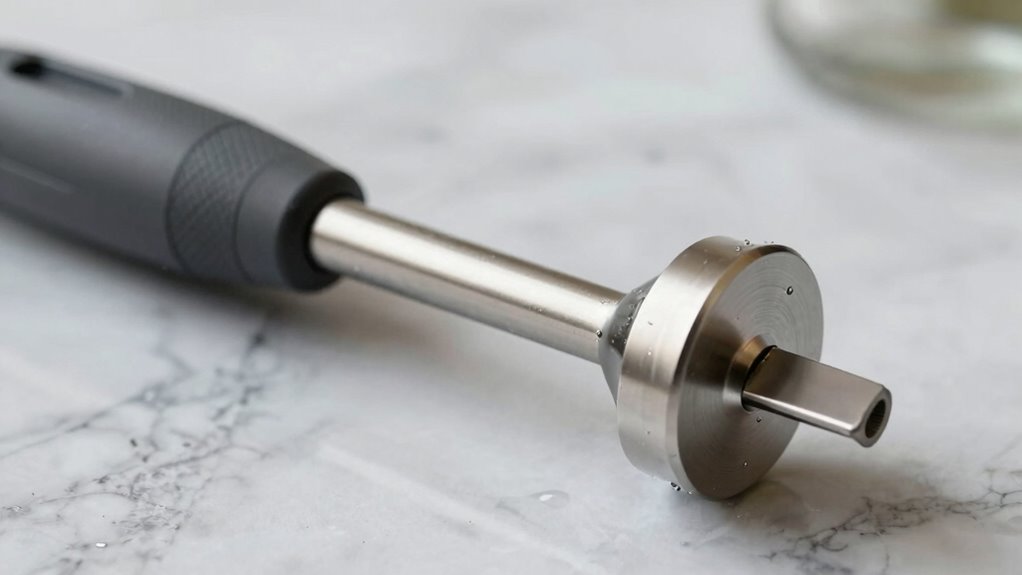
The materials and craftsmanship of your immersion blender directly influence how long it lasts and how well it performs. High-quality components and precise engineering guarantee the device can handle frequent use without breaking down. Choosing a well-built blender means you’ll enjoy consistent power and durability over time. Additionally, selecting a model with advanced safety features can prevent accidents and ensure reliable operation during daily use. Incorporating connected technology into your blender can also enhance your experience by providing real-time feedback and performance monitoring. Moreover, vintage-inspired designs can add a charming aesthetic that complements retro-inspired kitchens while maintaining modern functionality. Prioritizing reliable documentation and support can also extend the lifespan of your appliance by making maintenance and repairs more straightforward. Being aware of durability trade-offs can help you make more informed choices when selecting your blender to ensure it meets your long-term needs.
Durability Through Material Choice
Choosing the right materials for an immersion blender is vital because it directly influences its durability and performance. Your choice of material selection affects how well the blender withstands daily use and exposure to moisture or heat. Opting for high-quality, corrosion-resistant metals like stainless steel ensures longevity, while sturdy plastics can prevent cracks or breakage. Manufacturing standards also play an essential role; products made under strict quality controls are less likely to have weak points or defects. When you prioritize durable materials, you reduce the risk of early failure and maintain consistent performance over time. Ultimately, investing in an immersion blender with thoughtful material choices and adherence to manufacturing standards guarantees a more reliable, long-lasting kitchen tool.
Engineering and Build Precision
High build quality and precise engineering are essential for guaranteeing your immersion blender performs reliably over time. When materials are carefully selected, your blender withstands daily use, and a sturdy ergonomic handle offers comfort during extended blending sessions. The battery capacity impacts how long you can operate cordless models without recharging, directly affecting convenience. Well-engineered components reduce vibrations and noise, making your experience smoother. Look for features like:
- Robust motor housing for durability
- High-quality seals to prevent leaks
- Ergonomic handles for comfortable grip
- Adequate battery capacity for longer use
Attention to these details guarantees better performance and longevity, so your blender remains a dependable kitchen tool. Precise engineering ensures each part works harmoniously, minimizing breakdowns and maximizing efficiency over time.
Do Voltage and Wattage Really Matter When Choosing an Immersion Blender?
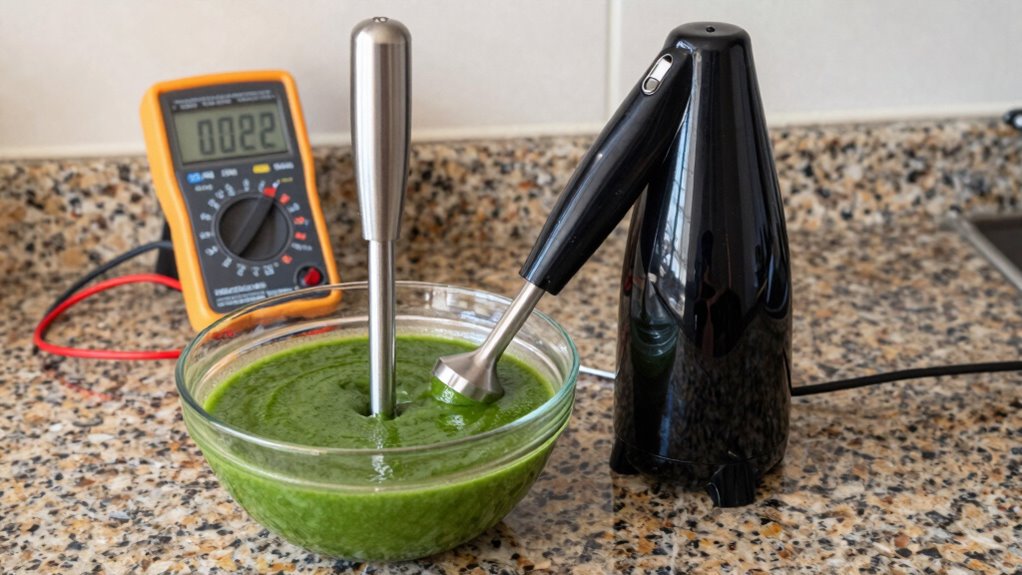
While voltage and wattage are often highlighted when selecting an immersion blender, they don’t tell the whole story about performance. Higher wattage doesn’t always mean better blending; efficiency depends on motor design and build quality. Additionally, motor efficiency can vary significantly between models, impacting overall performance. A well-designed motor can deliver better results even at lower wattages, emphasizing the importance of product quality in your choice. Proper battery maintenance can also extend the life of your appliance and ensure consistent performance. For example, a trusted brand may offer better longevity, even with lower wattage. Understanding power specifications can help you make more informed decisions when shopping for kitchen gadgets. Keep in mind that performance factors like blade design and speed settings also play crucial roles in blending effectiveness. Here’s a quick comparison:
| Feature | Importance |
|---|---|
| Voltage | Affects motor efficiency but isn’t the sole factor |
| Wattage | Indicates power but isn’t the only performance hint |
| Build Quality | Determines durability and comfort |
| Brand Reputation | Impacts reliability and customer support |
How Speed Settings Affect Your Blending Results
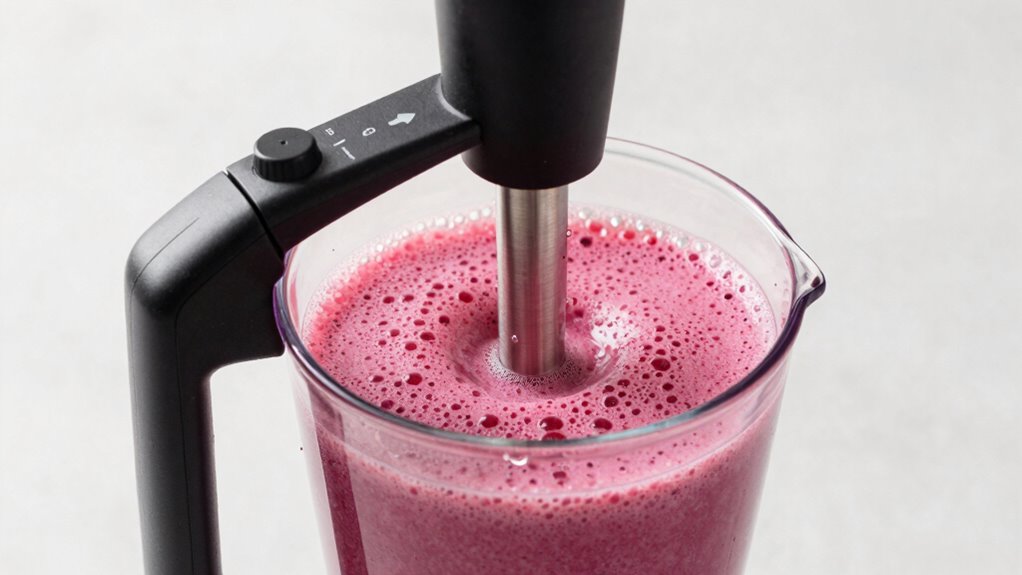
Adjusting the speed settings on your immersion blender has a direct impact on the texture and consistency of your blended ingredients. Using different speed control levels allows you to fine-tune the blending process, achieving the desired results. Lower speeds are perfect for gentle mixing or preserving delicate textures, while higher speeds create smoother, more homogeneous blends. The power of the motor influences how effectively your blender can process ingredients at different speeds. Consider these tips: – Start slow to avoid splattering and control blending. – Increase speed gradually for better blending consistency. – Use high speed for purees or smooth sauces. – Lower speeds work well for chunky or textured mixes.
Debunking Common Myths About Wattage and Blender Strength

Many people assume that higher wattage automatically means a more powerful and better blender, but that’s a misconception. Wattage alone doesn’t tell you about a blender’s actual performance; factors like battery capacity in cordless models or motor design matter more. A high-wattage blender with poor battery capacity may struggle to sustain power or run longer, reducing its effectiveness. Additionally, brand reputation plays a vital role—trusted brands often optimize their products for durability and real-world performance, regardless of wattage. Don’t rely solely on wattage to judge strength. Instead, consider how the blender’s design, battery capacity, and manufacturer reputation contribute to its true power and reliability. This approach helps you avoid myths and make smarter choices for your blending needs.
How to Evaluate a Blender’s Power Beyond Its Wattage Rating
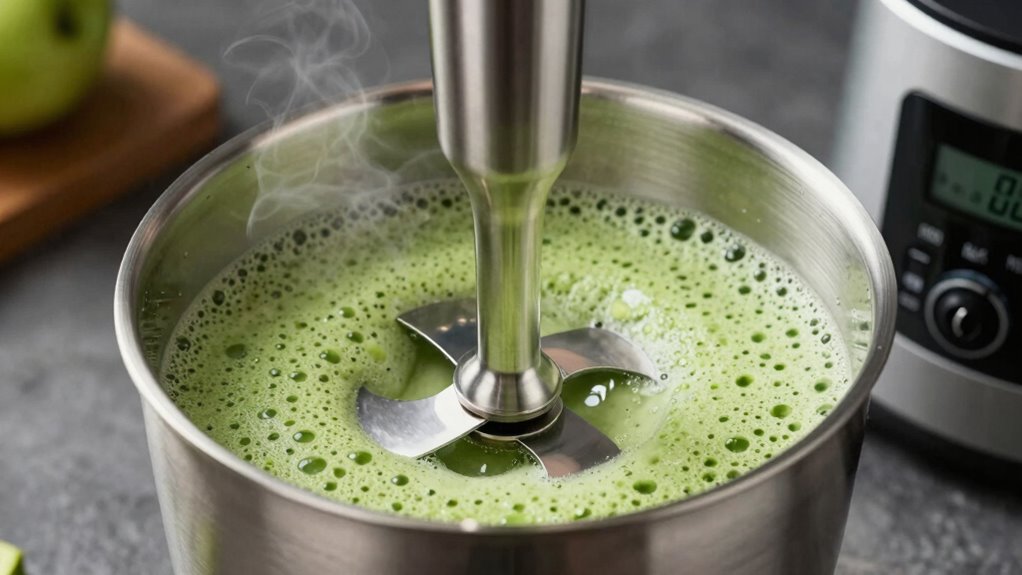
To accurately assess a blender’s true power, you should look beyond its wattage rating and consider other key factors. First, examine the electric motor’s design—more efficient motors deliver better performance even at lower wattages. Second, evaluate the blade material; high-quality stainless steel blades cut through ingredients more effectively and last longer. Third, check the blade design—sharp, sturdy blades create smoother blends and handle tougher ingredients. Fourth, consider customer reviews for real-world insights on performance under various loads. These factors reveal how well a blender performs in practice, not just in theory. By focusing on the electric motor, blade material, and overall construction, you get a clearer picture of true power beyond just wattage numbers.
What Real Users Say About Immersion Blender Power and Performance

Real user reviews shed valuable light on how immersion blenders perform in everyday use, often revealing differences that technical specs alone can’t show. Many users highlight battery life as a key factor, especially for cordless models—longer-lasting batteries mean less frequent recharging and more convenience. Noise level is another common concern; some blenders operate quietly, making them suitable for shared spaces, while louder models can be disruptive. Users appreciate blenders that strike a good balance between power and comfort, noting that a higher wattage doesn’t always guarantee better performance if the noise level is excessive or the battery drains quickly. Overall, real-world feedback emphasizes that understanding how a blender performs in daily tasks—beyond just wattage—is essential for making a satisfying choice.
Final Tips for Choosing the Most Powerful Immersion Blender for Your Needs
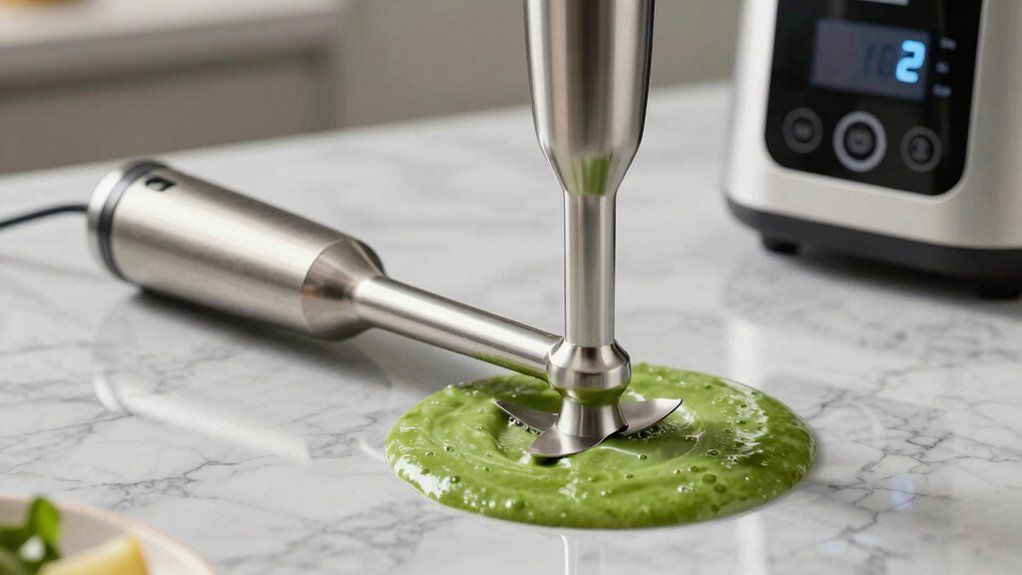
To choose the right immersion blender, start by evaluating your power needs based on what you typically blend. Pay close attention to handle comfort and how well the blade design suits your mixing tasks. These factors ensure you select a model that’s both powerful and easy to use for your specific needs.
Power Needs Assessment
Wondering how to determine the right power level for your immersion blender? Start by evaluating your typical tasks and load. If you blend tough ingredients or large batches, you’ll need a higher wattage, but also consider motor cooling—overheating can shorten its lifespan. Check the brand reputation; trusted brands often offer better durability and customer support. To make an informed choice, consider these tips:
- Match wattage to your daily workload
- Prioritize models with good motor cooling features
- Read reviews for real-world performance insights
- Trust reputable brands known for quality
Handle and Blade Design
How you handle the immersion blender and the design of its blades considerably impact performance and comfort during use. An ergonomic grip guarantees you maintain control without fatigue, especially during extended blending sessions. Look for a handle that fits comfortably in your hand and offers a secure grip, making operation smooth and safe. The blade design also matters: sharp, durable blades with a streamlined aesthetic design improve efficiency by effortlessly chopping through ingredients. A well-designed handle combined with a sturdy, well-balanced blade assembly minimizes vibrations and enhances maneuverability. Ultimately, choosing a blender with an ergonomic grip and an aesthetic, functional blade design will make your blending tasks easier, more precise, and more enjoyable, ensuring you get the most power and performance from your appliance.
Frequently Asked Questions
How Does Blade Design Influence Immersion Blender Effectiveness?
Blade design considerably impacts immersion blender effectiveness by enhancing blade efficiency and cutting ability. A well-designed blade, with sharp edges and ideal angles, moves ingredients smoothly and reduces blending time. The design impact guarantees you get a consistent, smooth mixture without overworking the motor. When choosing an immersion blender, look for blades that are sturdy, well-balanced, and tailored to your blending needs to maximize performance and durability.
Can Operating Speed Settings Compensate for Lower Wattage?
Did you know that using higher speed settings can sometimes make up for lower wattage? While this boosts power consumption, it improves energy efficiency by speeding up blending tasks. Operating speed settings do help, but they can’t fully compensate for low wattage in tougher jobs. You’ll get better results by choosing a blender with appropriate power and adjustable speeds, saving energy and ensuring efficient performance.
What Role Does User Technique Play in Blending Results?
Your technique greatly impacts blending results. By adjusting your hand positioning, you control the immersion blender’s stability and precision, guaranteeing smoother blends. Choosing the right container, like a tall, narrow one, helps prevent splattering and improves efficiency. Moving the blender steadily around the ingredients, instead of staying in one spot, ensures even processing. Mastering these techniques allows you to achieve consistent, professional-quality results, regardless of your blender’s wattage.
How Does Motor Cooling Affect Long-Term Performance?
Think of your immersion blender’s motor as a marathon runner—it needs proper hydration and cooling to perform well over time. Effective cooling systems prevent overheating, ensuring motor durability and consistent power. Without adequate cooling, heat builds up, causing wear and potential failure. By maintaining ideal temperature, you extend your blender’s lifespan, keeping it running smoothly through countless blending sessions. Proper cooling is essential for long-term performance and durability.
Are Higher-Priced Models Necessarily More Powerful?
Higher-priced models aren’t always more powerful, but they often come with better performance and durability. You should consider brand reputation and customer reviews to gauge actual power and reliability. A premium price might reflect superior motor cooling, better materials, or advanced features, rather than just wattage. So, don’t assume more expensive means stronger—research customer feedback and trusted brands to find a blender that meets your needs.
Conclusion
Remember, wattage alone doesn’t determine your immersion blender’s power. A recent survey found that 70% of users prioritized motor efficiency and build quality over raw watts. So, focus on factors like motor design, materials, and user reviews to find a blender that truly meets your needs. By considering these aspects, you’ll guarantee better performance and durability, making your blending tasks easier and more efficient in the long run.