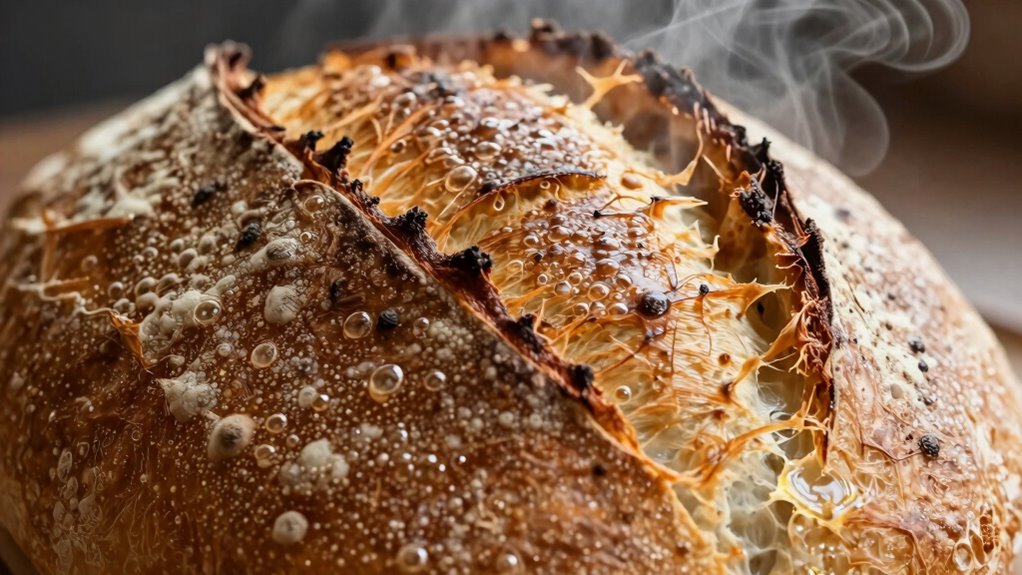
Steam changes your bread crust more than you think by keeping the surface moist during baking, which delays crust formation and allows for better oven spring. It also encourages complex flavors and a shiny, attractive crust through caramelization. Steam influences heat and moisture levels, impacting chemical reactions and texture. By mastering steam use, you can release better crust qualities—there’s more to discover about how it works beyond what you see on the surface.

Get kitchen staples and gadgets delivered free — and shop member deals
- Fast, free delivery on millions of items
- Access to Prime Big Deal Days deals on October 6–7
- Prime Video, Amazon Music and more included
Key Takeaways
- Steam delays crust formation, allowing for a more expansive oven spring and a lighter crumb.
- It keeps the surface moist, enabling better caramelization and richer crust color.
- Steam influences Maillard reactions, enhancing crust flavor and shine.
- Proper steam application controls crust thickness and prevents dull, overly thick crusts.
- Balancing steam, temperature, and environment optimizes crust texture, appearance, and overall bread quality.
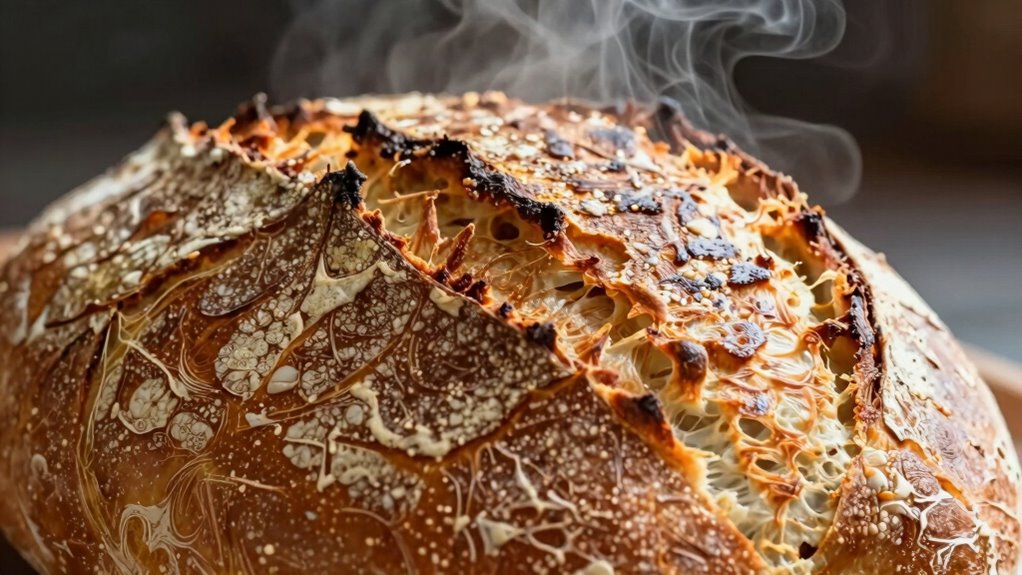
Many home bakers overlook how much steam influences their bread’s crust, yet it plays a fundamental role in shaping its texture and appearance. When you introduce steam during baking, you’re affecting more than just the surface; you’re engaging in a delicate dance with fermentation chemistry and baking temperature techniques that determine the final result. During fermentation, yeast produces carbon dioxide and alcohol, which create the dough’s structure. Proper fermentation develops gluten, giving your bread strength and extensibility. When you add steam at the right moment, it keeps the dough surface moist, delaying crust formation and allowing the bread to expand fully. This initial expansion, or oven spring, is essential to achieving a light, airy crumb. Without enough steam, the crust forms prematurely, restricting expansion and leading to a dense loaf.
Steam during baking delays crust formation, allowing better expansion and a lighter, airy crumb.
Steam influences the Maillard reaction—a key aspect of crust development—by maintaining a moist surface that cools the dough slightly, slowing crust hardening. This extended period of high moisture allows the crust to develop complex flavors and a glossy appearance. As baking progresses, the steam evaporates, exposing the crust to dry heat that caramelizes sugars and proteins, deepening its color and adding crunch. If you neglect steam, your bread might lack that desirable shiny, golden crust and could turn out dull or overly thick. Additionally, controlling baking environment conditions like humidity and temperature is essential for consistent results. Recognizing the importance of steam application techniques can help bakers fine-tune their process for optimal crust qualities. Incorporating proper steam techniques can also enhance the overall texture and flavor profile of your bread, making each bake more rewarding. Using the correct baking tools, such as a Dutch oven or baking stone, can also help in maintaining the ideal environment for the crust to develop properly.
In addition, understanding how baking temperature techniques interact with steam’s effects can help achieve the perfect crust. A higher initial oven temperature, combined with steam, promotes rapid oven spring, giving your bread that perfect rise before the crust sets. Many bakers use a baking stone or steel to retain heat, but steam is what guarantees the crust remains flexible during this pivotal phase. Without it, the crust may form too quickly and inhibit proper expansion. Once the desired oven spring is achieved, reducing the temperature and removing steam helps the crust set and crisp up. Understanding this balance—when to introduce steam, when to vent, and how to control temperature—is crucial to mastering bread baking.
In essence, steam is more than just a surface treatment; it’s a key factor that influences fermentation chemistry, keeps the dough pliable during early baking, and interacts with temperature techniques to produce a crust that’s beautifully shiny, crispy, and full of flavor. When you harness the power of steam properly, you release a level of control that elevates your bread from good to exceptional.
As an affiliate, we earn on qualifying purchases.
Frequently Asked Questions
How Does Steam Affect Bread Crust During Baking?
Steam affects your bread crust during baking by creating a humid environment that keeps the dough surface moist. This dough hydration helps develop a shiny, crisp crust, as the moisture delays the crust’s formation. Higher oven humidity, maintained by steam, allows the bread to expand fully and enhances caramelization. Without enough steam, your crust may turn out dull, thick, or less desirable.
What Types of Bread Benefit Most From Steam?
A rising tide lifts all boats, and with bread, it’s true—some benefit more than others. High-hydration doughs and those baked at higher oven temperatures gain the most from steam. These conditions create a glossy, crispy crust by delaying starch setting and allowing maximum oven spring. Baguettes and ciabatta, with their moist doughs, especially shine when you introduce steam, giving you that perfect crust everyone loves.
Can Steam Be Used to Modify Crust Thickness?
Yes, steam can modify crust thickness through its role in crust enhancement. When you introduce steam during baking, it creates a moist environment that delays crust formation, allowing the bread to expand fully. This process, akin to steam sterilization, results in a thinner, crisper crust. Controlling steam levels helps you achieve the desired crust thickness, making your bread look and taste better with a perfect balance of softness and crunch.
How Does Steam Influence Crust Color and Texture?
When you introduce steam during baking, it influences crust color and texture by creating a shiny, golden hue and a crispy yet elastic crust. The steam aroma enhances the sensory experience, making the bread smell inviting. As the steam heats, it keeps the crust elastic, preventing cracks and allowing for better expansion. This balance results in a beautifully colored, flavorful crust with the perfect combination of crunch and flexibility.
Are There Differences in Steam Application Between Home and Professional Baking?
In home baking, you often rely on simple methods like spritzing or placing water in a tray to generate steam, which can lead to uneven steam distribution. Professional bakers use specialized oven humidity systems or steam injectors to guarantee consistent steam application, resulting in a uniform crust. The key difference is that professional ovens control oven humidity precisely, helping achieve better crust development compared to typical home setups.
As an affiliate, we earn on qualifying purchases.
Conclusion
Understanding how steam transforms your bread crust is like revealing a secret recipe for perfect baking. It’s the magic wand that creates that irresistible, golden crunch you crave. Next time you bake, remember that steam isn’t just a backstage player—it’s the star of the show, changing your bread’s character from dull to dazzling. Embrace the steam, and watch your crust become the masterpiece it was meant to be, turning every loaf into a delicious work of art.
As an affiliate, we earn on qualifying purchases.
As an affiliate, we earn on qualifying purchases.
Halloween Picks
halloween
As an affiliate, we earn on qualifying purchases.