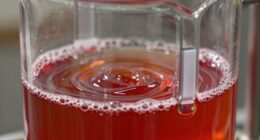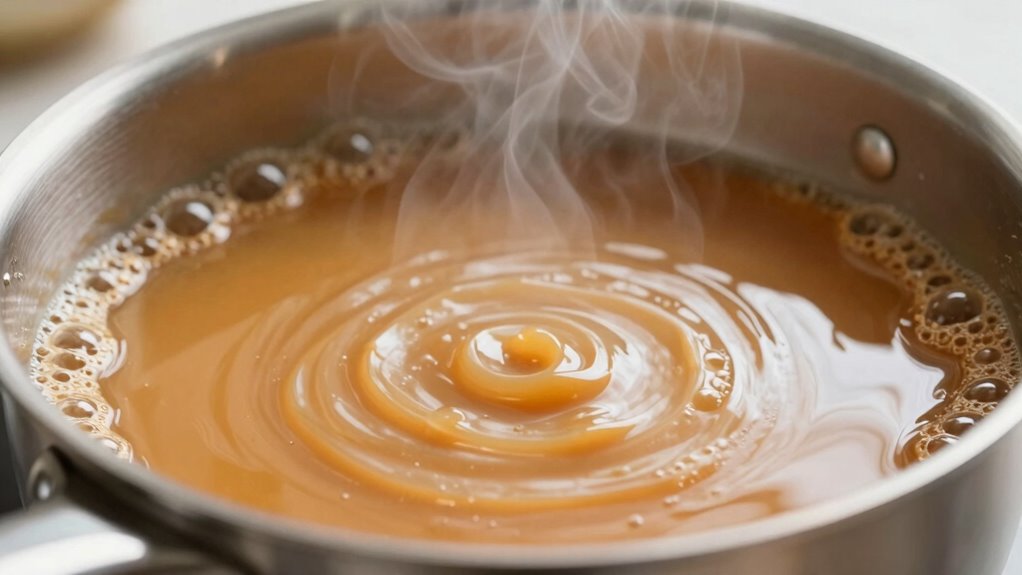
The one heat principle behind good caramelization is controlling your temperature carefully to guarantee even, consistent chemical reactions without burning the sugar. You need to keep the heat below about 350°F, where sugar melts and caramelizes smoothly. Too high, and you’ll risk rapid darkening or burning; too low, and the process will take too long or won’t develop proper flavor. Mastering this balance leads to perfect caramel every time—stay tuned to learn the exact techniques to achieve it.

Get kitchen staples and gadgets delivered free — and shop member deals
- Fast, free delivery on millions of items
- Access to Prime Big Deal Days deals on October 6–7
- Prime Video, Amazon Music and more included
Key Takeaways
- Maintaining a consistent, moderate heat around 320°F to 350°F ensures even caramelization without burning.
- Precise temperature control prevents rapid darkening and promotes uniform chemical reactions.
- Gentle, steady heat transfer avoids hot spots and uneven caramel color development.
- Monitoring temperature closely allows for timely adjustments, ensuring optimal flavor and color.
- Patience in heating allows sugar to melt and caramelize gradually, preventing scorch and preserving quality.
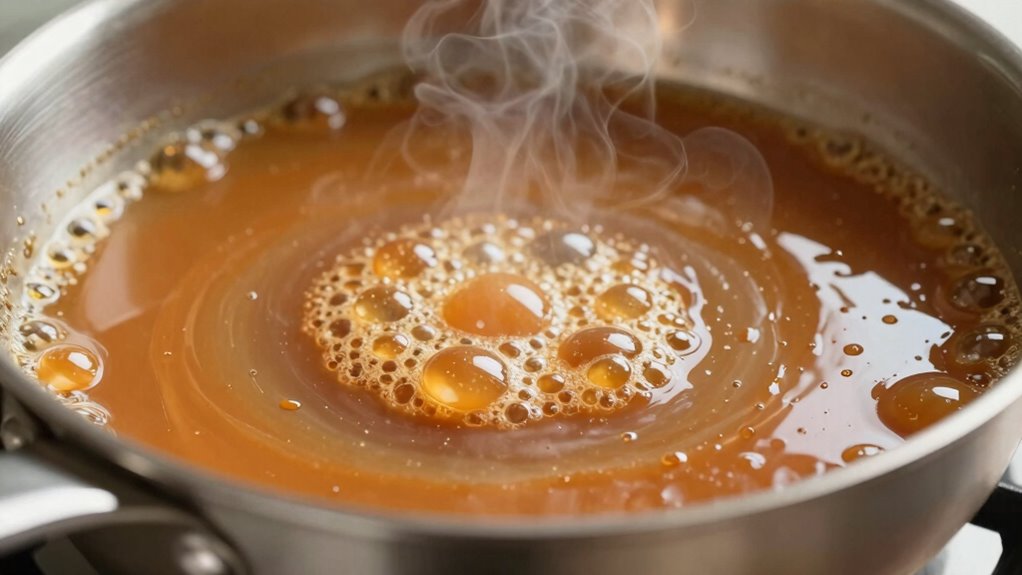
Caramelization occurs when you apply heat to sugars, causing them to undergo complex chemical reactions that transform their structure and flavor. To achieve perfect caramel, you need to understand how heat influences sugar melting and, more importantly, how temperature control plays an essential role in the process. When you heat sugar, it first melts at around 320°F (160°C), turning into a clear, syrupy liquid. This is the stage where sugar begins to break down, and its molecules start to rearrange. If you’re not attentive to temperature, you risk burning the sugar, which results in a bitter taste and an undesirable color.
Caramelization begins around 320°F, transforming sugar through chemical reactions that develop flavor and color.
The key to good caramelization lies in carefully controlling the temperature. Once the sugar melts, increasing the heat causes it to undergo a series of chemical reactions, resulting in the development of complex flavors and a rich amber hue. If you keep the heat too high or let the sugar heat unevenly, you might see it darken too quickly or burn, which compromises both taste and appearance. That’s why managing temperature is fundamental—you want it hot enough to promote the right reactions but not so hot that it scorches.
As you heat the sugar, it begins to change color from clear to golden, then to amber, and finally to a deep brown. This color change indicates the progression of caramelization. During this stage, sugar molecules break apart and recombine, creating new compounds that give caramel its distinctive aroma and flavor. If you’re vigilant with your temperature control, you’ll notice the sugar melting smoothly and evenly, which is indispensable for a consistent, high-quality caramel. Maintaining a precise temperature ensures the sugar’s chemical reactions occur uniformly, leading to better flavor and texture. Additionally, understanding the melting point of sugar helps you better anticipate the stages of caramelization and avoid pitfalls. Being aware of the thermal decomposition point of sugar is crucial to prevent unintended burning.
Using precise heat helps you monitor the sugar’s progress closely. A good rule of thumb is to keep the temperature below the point where the sugar starts to smoke—around 350°F (177°C)—to prevent burning. Stirring gently and consistently ensures even heat distribution, preventing hot spots that could cause uneven caramelization. Employing a reliable thermometer can make all the difference in achieving perfect results. Furthermore, knowing how heat transfer impacts the caramelization process enables more consistent outcomes. Remember, patience is key; rushing the process by increasing heat too quickly often leads to scorched sugar and ruined caramel.
digital candy thermometer for caramel
As an affiliate, we earn on qualifying purchases.
As an affiliate, we earn on qualifying purchases.
Frequently Asked Questions
How Does Humidity Affect Caramelization?
Humidity impact notably affects caramelization by introducing moisture effects that slow down the process. When humidity is high, excess moisture in the air prevents sugars from reaching the necessary temperature for proper caramelization, resulting in a less rich, uneven color. You’ll find that in humid conditions, you need to cook longer or use lower heat to compensate for moisture effects, ensuring your caramel develops that perfect, deep flavor and color.
Can You Caramelize Sugar Without Heating?
You can’t caramelize sugar without heat, as it’s essential to trigger the chemical changes that develop caramel flavor. Without heating, sugar crystallization occurs instead, leading to gritty textures rather than smooth caramel. Applying heat dissolves the sugar and transforms its molecules, producing that rich, golden hue and complex flavor we associate with caramel. So, to achieve perfect caramelization, you must heat sugar properly; otherwise, you’ll only get crystallization.
What Is the Ideal Temperature Range for Perfect Caramelization?
You should aim for a temperature between 320°F (160°C) and 350°F (175°C) for perfect caramelization. Staying within this range prevents sugar crystallization, which can cause graininess, and promotes rich flavor development. As you heat, watch for a deep amber color, indicating the right stage. Maintaining consistent heat guarantees even caramelization, revealing complex flavors without burning. Use a candy thermometer for precise control and delicious results.
How Does Stirring Influence Caramelization?
Stirring influences caramelization by ensuring consistent heat distribution and maintaining a uniform stirring consistency. When you stir constantly, you prevent hot spots that can cause uneven caramelization or burning. This even heat transfer allows the sugar to caramelize smoothly, resulting in a rich flavor and glossy appearance. So, keep stirring steadily to achieve perfectly caramelized sugar, avoiding burnt patches and ensuring a beautiful, flavorful finish.
Why Does Caramel Sometimes Turn Bitter or Burn?
Caramel turns bitter or burns when you expose it to too much heat or cook it too long, disrupting flavor development and risking a burnt taste. High heat causes rapid sugar breakdown, leading to undesirable flavors and uneven texture consistency. To avoid this, monitor your heat carefully, stir gently to promote even caramelization, and remove it promptly once the desired color and flavor are achieved.
As an affiliate, we earn on qualifying purchases.
Conclusion
Imagine you’re baking cookies and suddenly notice their rich, golden hue— that’s caramelization in action. Just like turning raw ingredients into something irresistible, understanding the heat principle behind caramelization helps you master perfect flavors. Think of it as tuning a guitar; too little heat, and it’s flat; too much, and it’s burnt. When you control the heat just right, you create that beautiful, complex sweetness that keeps everyone coming back for more.
sugar caramelization thermometer
As an affiliate, we earn on qualifying purchases.
As an affiliate, we earn on qualifying purchases.
induction cooktop with temperature control
As an affiliate, we earn on qualifying purchases.
As an affiliate, we earn on qualifying purchases.
Fall Picks
fall essentials
As an affiliate, we earn on qualifying purchases.