
Freezer burn happens when air comes into contact with your frozen food, causing dehydration and oxidation that damage texture, flavor, and nutrients. As moisture escapes and forms ice crystals, food becomes dry, tough, and discolored. Proper packaging, like airtight containers or vacuum sealing, helps block air and keeps your food fresh longer. If you want to learn how to prevent freezer burn and maintain quality, there’s more to discover below.
Key Takeaways
- Freezer burn occurs when food is exposed to air, causing dehydration and oxidation that damage texture, flavor, and nutrients.
- Air contact pulls moisture from food, forming ice crystals and leading to dry, tough, and discolored surfaces.
- Oxygen reacts with fats and proteins, accelerating spoilage and creating off-flavors and discoloration.
- Proper sealing with airtight containers or vacuum bags minimizes air exposure, preventing freezer burn.
- Indicators include dull appearance, dry patches, and off odors; prevention involves effective packaging and temperature control.
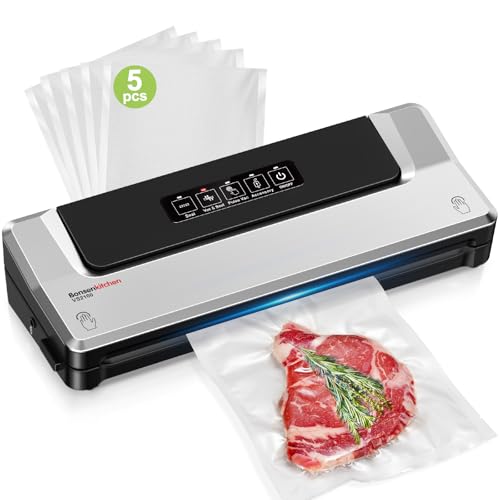
Bonsenkitchen Vacuum Sealer Machine | Compact Food Sealer for Kitchen Storage & Meal Prep | Multiple Modes | External Vacuum System | 5 Bags, Silver
4 Modes : 'Vac & Seal' – one-touch automatic vacuum and seal, perfect for food that does not…
As an affiliate, we earn on qualifying purchases.
As an affiliate, we earn on qualifying purchases.
What Is Freezer Burn and How Does It Damage Food?
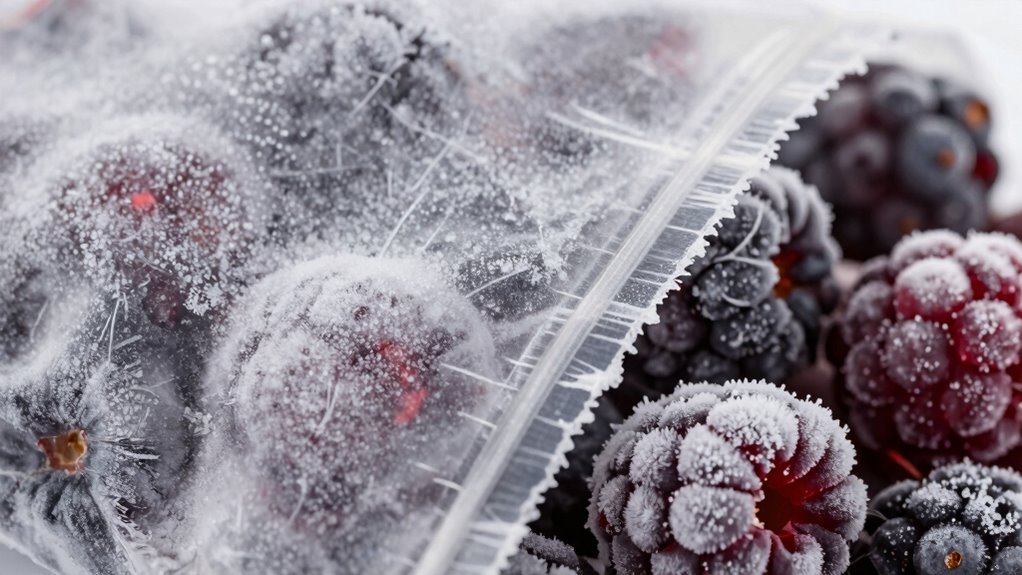
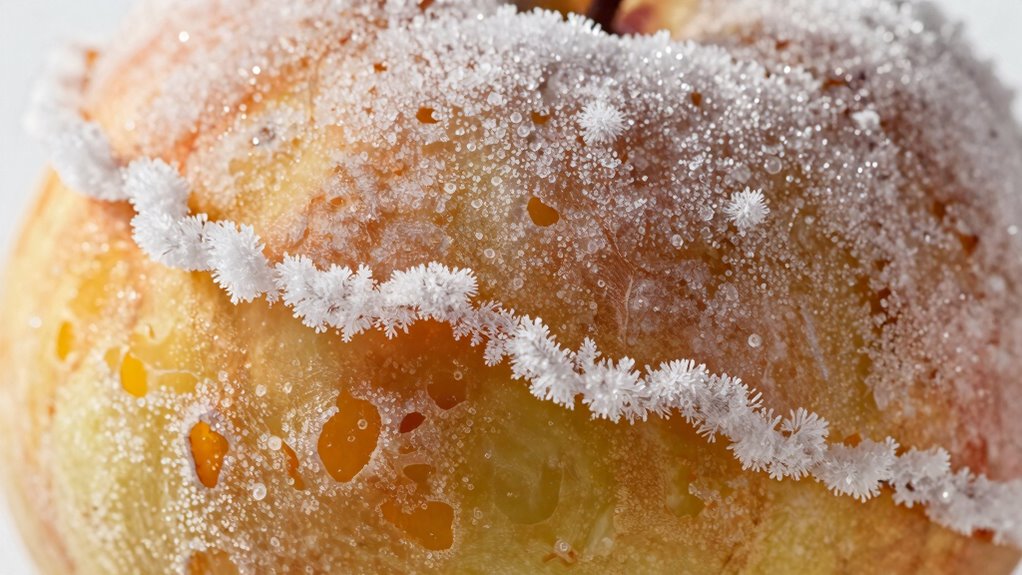
Freezer burn occurs when food is exposed to air in the freezer, causing dehydration and oxidation. When this happens, ice crystal formation on the surface draws moisture away from the food, leading to dry, tough textures. The exposed surface also undergoes oxidation, which breaks down fats and proteins, resulting in off-flavors and discoloration. Over time, this damage accelerates spoilage, making the food less appealing and reducing its nutritional value. The dehydration caused by ice crystal formation creates a leathery or frosted appearance, while oxidation further dulls the food’s natural color. Proper food packaging helps prevent freezer burn by creating a barrier against air exposure. Using airtight containers or sealing foods tightly can significantly reduce the risk of freezer burn. Additionally, understanding freezer temperature and maintaining it properly can help slow down the process of damage caused by air exposure. Although freezer burn doesn’t make food unsafe to eat, it notably compromises quality, taste, and texture. Preventing exposure to air helps maintain the food’s freshness and extend its shelf life.

Airtight Food Storage Containers with Lids, Vtopmart 24 pcs Plastic Kitchen and Pantry Organization Canisters for Cereal, Dry Food, Flour and Sugar, BPA Free, Includes 24 Labels,Black
Help Organize Your Kitchen and Pantry— Imagine every time walking to your kitchen or pantry, found everything is…
As an affiliate, we earn on qualifying purchases.
As an affiliate, we earn on qualifying purchases.
How Air Causes Freezer Burn (The Science Explained)
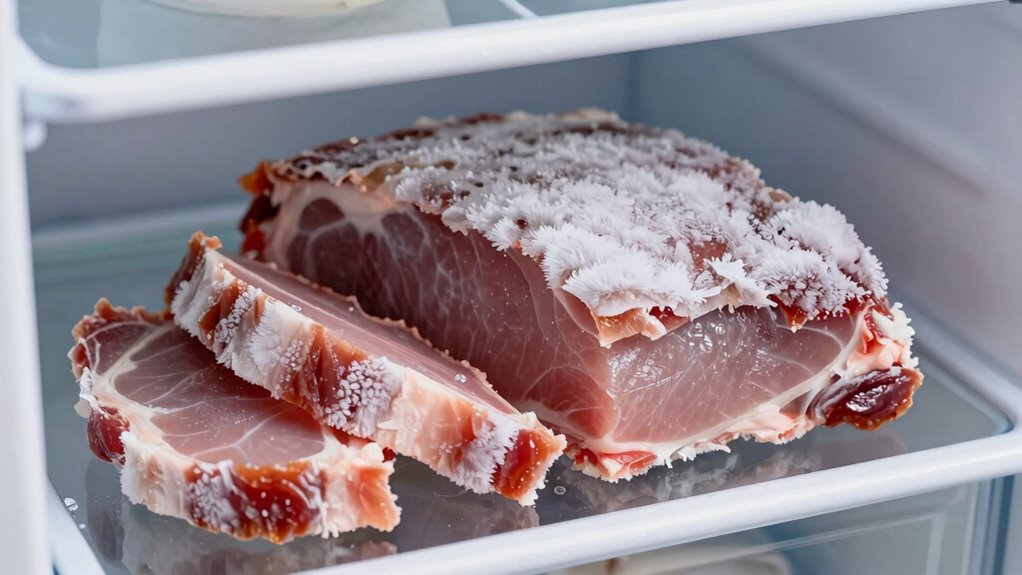
When air touches your frozen food, it pulls moisture away, causing dehydration and dryness. This moisture loss leads to the formation of ice crystals, which damage cell structure and texture. Additionally, oxygen in the air can accelerate oxidation, increasing spoilage and freezer burn severity. The presence of air also introduces contaminants that can further compromise food quality in Gold IRA markets, contributing to spoilage over time. Proper packaging techniques, such as airtight containers or vacuum sealing, can significantly reduce exposure to air and help preserve food quality during storage. Using proper sealing methods can greatly diminish the exposure to air and extend the freshness of frozen foods. Moreover, understanding the role of contrast ratio in image quality can be paralleled to how effective sealing enhances food preservation by maintaining optimal conditions.
Moisture Loss Mechanism
Moisture loss in the freezer occurs when air interacts with frozen food, causing dehydration and surface dehydration spots. This process involves moisture migration from the food’s surface to the surrounding air, which is often dry and free of humidity. Air exposure accelerates this dehydration, as moisture moves outward and evaporates into the environment. To better understand, consider these points:
- When air touches the surface, it pulls moisture away, leading to dry patches.
- The drier the air, the faster moisture migrates from your food.
- Surface dehydration worsens over time without proper packaging.
- Moisture loss affects texture, taste, and overall quality.
- Sealing food limits air exposure, slowing moisture migration and preserving freshness.
- Using Free Floating storage methods can help minimize air contact and reduce freezer burn.
- Proper packaging not only prevents moisture loss but also helps maintain the food’s nutritional value, ensuring your meals stay healthy and flavorful.
- Additionally, air circulation within the freezer can influence the rate of dehydration, making it important to organize stored items properly.
- Ensuring good airflow within your freezer can help prevent hot spots and uneven dehydration.
Ice Crystal Formation
Air plays an essential role in ice crystal formation within your freezer. When moisture escapes from food, it doesn’t disappear; instead, it forms tiny ice crystals on the surface or inside the packaging. These crystals grow larger over time, damaging the food’s texture and flavor. Proper freezer organization helps reduce air exposure, minimizing crystal growth. Maintaining stable temperatures is crucial, since fluctuations can accelerate ice crystal development. Avoid overcrowding, which can cause temperature fluctuations and promote ice formation. Thawing techniques also matter: rapid thawing limits crystal growth, while slow thawing allows crystals to melt and refreeze, worsening freezer burn. By controlling air circulation and maintaining consistent temperatures, you prevent excessive ice crystal formation, preserving your food’s quality. Keeping your freezer well-organized and mindful of thawing methods is key to avoiding freezer burn caused by ice crystals. Effective freezer management is essential to maintaining optimal food quality and preventing freezer burn. Additionally, using airtight packaging can significantly reduce air contact and help protect your food from freezer burn.
Oxidation and Spoilage
Oxidation is a key process that leads to freezer burn, even when food is stored properly. It causes oxidation effects that degrade quality and accelerate spoilage processes. Air exposure introduces oxygen, which reacts with fats and proteins, resulting in off-flavors and discoloration. To understand how this impacts your food, consider:
- Breakdown of fats into rancid compounds
- Loss of natural color and texture
- Development of unpleasant odors
- Accelerated nutrient loss
- Increased susceptibility to microbial spoilage
Additionally, monitoring crypto market trends can help you stay informed about external factors that influence food storage and preservation practices. These oxidation effects not only diminish taste and appearance but also compromise food safety. While freezing slows spoilage, it doesn’t stop oxidation entirely. Proper packaging techniques help minimize air exposure and preserve freshness, preventing freezer burn caused by these spoilage processes. Using airtight containers further reduces oxygen contact and extends the quality of frozen foods. Incorporating oxygen barriers into packaging materials can significantly enhance preservation by blocking out air more effectively. Employing vacuum sealing is another effective method to eliminate air and further prevent oxidation-related damage.

Wevac Vacuum Sealer Bags – 50 Count (8″×12″), Heavy-Duty BPA-Free Food Storage Bags, Puncture-Resistant, Freezer & Sous Vide Safe, Compatible with All Vacuum Sealers
Keep Your Food Fresh Longer – Thick, BPA-free bags protect your favorite meals from spills, freezer burn, and…
As an affiliate, we earn on qualifying purchases.
As an affiliate, we earn on qualifying purchases.
Signs That Indicate Freezer Burn
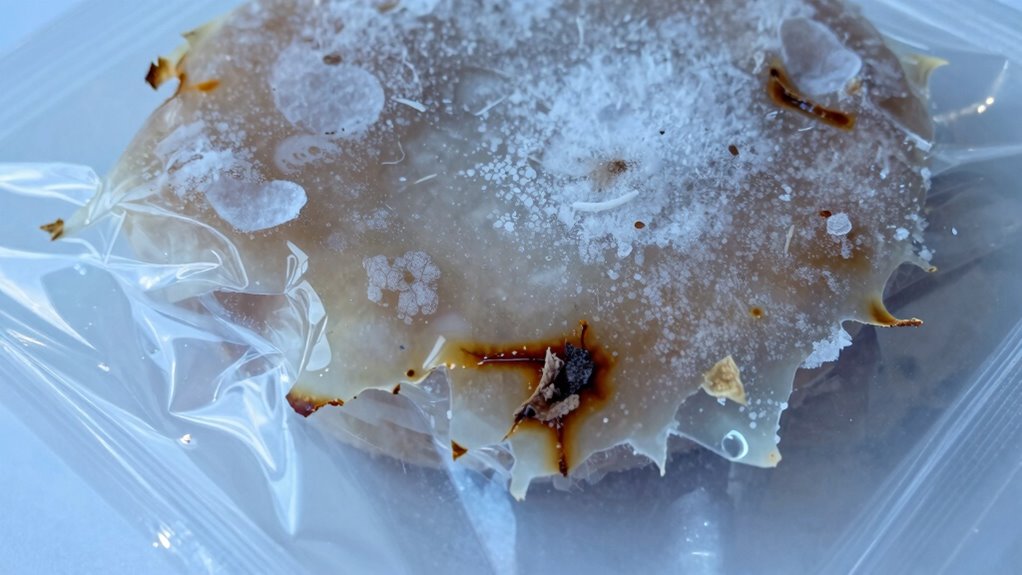
You can spot freezer burn by looking for discoloration or rough, dry patches on your food. Texture changes, like tough or leathery surfaces, also signal freezer burn damage. Additionally, a lingering or strange odor in your freezer might indicate that spoilage or dehydration has occurred. Proper storage methods can help prevent freezer burn and keep your food fresher longer. Ensuring correct airtight packaging reduces exposure to air, which is the primary cause of freezer burn. air circulation within the freezer also helps maintain consistent temperatures and prevents cold spots that can contribute to dehydration. Proper airflow management is essential for freezer efficiency and maintaining food quality over time.
Discoloration and Texture Changes
Discoloration and texture changes are clear signs that freezer burn has affected your food. You’ll notice a distinct color change, often turning grayish or dull, signaling moisture loss. Texture deterioration becomes evident as foods may become dry, tough, or rubbery, making them less appealing. These visual and tactile clues help you identify freezer burn quickly.
- Surface looks dull or cloudy
- Pale or grayish patches appear
- Meat feels dry or leathery
- Fruits become shriveled and less vibrant
- Vegetables lose firmness and become limp
Recognizing these signs means your food has been exposed to air, causing moisture loss and damaging its appearance and texture. While it might still be safe to eat, the quality has definitely declined.
Freezer Odor Presence
When freezer burn occurs, a telltale sign is the presence of a persistent, off-putting odor lingering in your freezer. Poor air circulation allows odors from spoiled or improperly stored food to settle and spread, making the smell more noticeable. If your freezer’s temperature isn’t set low enough, it can promote moisture buildup and odor development. You might notice a strange smell even when the food appears unaffected. This odor often indicates that the freezer’s environment isn’t optimized, allowing air to carry odors around. To prevent this, keep your freezer at the proper temperature and ensure good air circulation, which helps control moisture and keeps odors at bay. Recognizing this smell early can save your food and reduce the need for extensive cleaning.
General Tools MMD4E Digital Moisture Meter, Water Leak Detector, Moisture Tester, Pin Type, Backlit LCD Display With Audible and Visual High-Medium-Low Moisture Content Alerts, Grays
HUMIDITY SENSOR: Our handy meter tool can quickly determine what level of remediation is needed to keep your…
As an affiliate, we earn on qualifying purchases.
As an affiliate, we earn on qualifying purchases.
How Proper Packaging Prevents Freezer Burn
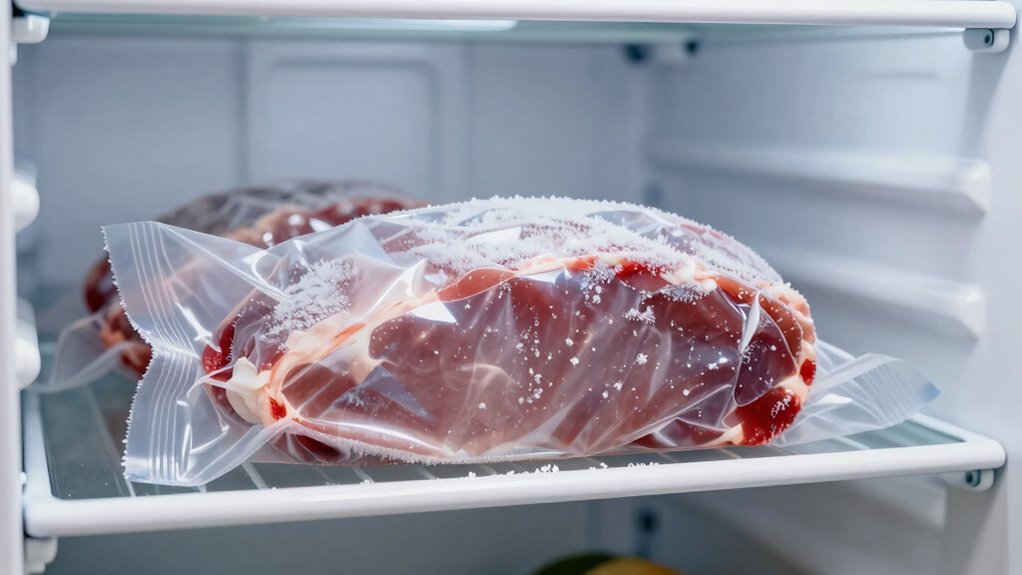
Proper packaging is essential in preventing freezer burn because it creates a barrier that limits exposure to air and moisture, which are primary causes of the damage. Using techniques like vacuum sealing removes air from packaging, markedly reducing oxidation and moisture loss. Moisture barriers, such as heavy-duty foil or specialized freezer bags, help keep moisture inside and prevent dehydration. To maximize protection, consider these tips:
- Use vacuum sealers for airtight, moisture-free packaging
- Opt for thick, freezer-safe bags or wraps
- Remove as much air as possible before sealing
- Label packages with dates to monitor storage time
- Avoid overfilling containers, allowing room for expansion
Using Airtight Containers and Wraps to Protect Your Food

Using airtight containers and wraps builds on proper packaging techniques by providing an additional layer of protection against freezer burn. These tools enhance airtight storage, ensuring that air doesn’t come into contact with your food. When you seal items tightly with plastic wraps, aluminum foil, or specialized freezer bags, you prevent moisture loss and minimize exposure to oxygen, which are key factors in freezer burn development. Proper food preservation depends on removing as much air as possible before sealing, and using containers designed for freezer use helps maintain quality. Airtight packaging keeps your food fresh longer, locks in flavor, and reduces waste. By consistently employing airtight containers and wraps, you optimize your freezer’s environment and extend the shelf life of your food.
Freezing and Thawing Tips to Keep Food Fresh
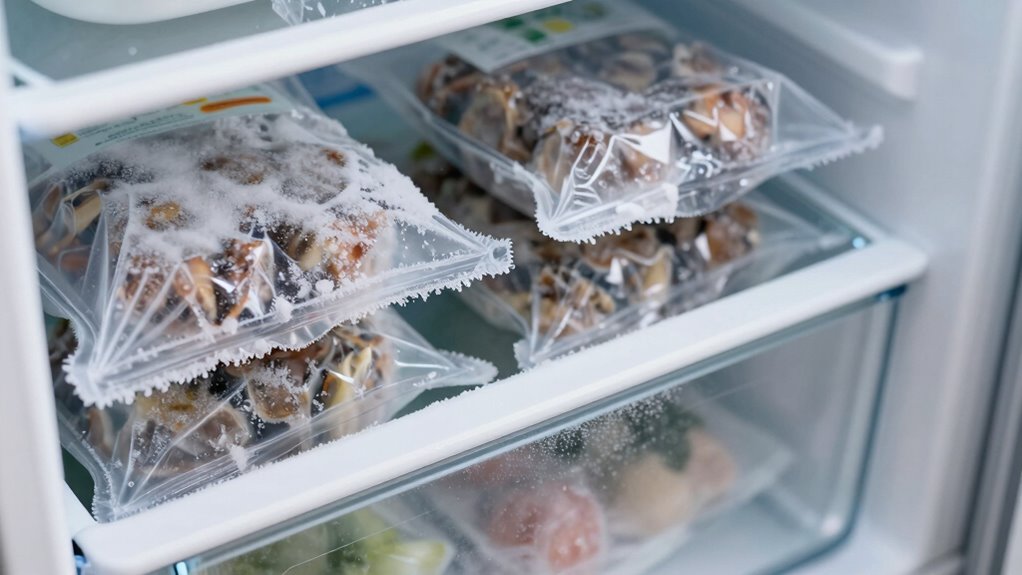
To keep your food fresh through freezing and thawing, it’s essential to follow best practices that minimize moisture loss and prevent texture changes. Proper food storage and maintaining the right freezer temperature are key. Set your freezer to 0°F (-18°C) to slow down deterioration. When freezing, use airtight containers or wraps to protect against air exposure. Thaw foods safely by transferring them to the refrigerator, avoiding countertop thawing that can cause uneven temperatures.
- Label packages with date and contents
- Freeze foods in small, portion-sized amounts
- Use quick-thaw methods for better texture
- Keep freezer door closed to maintain consistent temperature
- Avoid refreezing thawed items to prevent quality loss
Common Freezer Burn Mistakes and How to Avoid Them
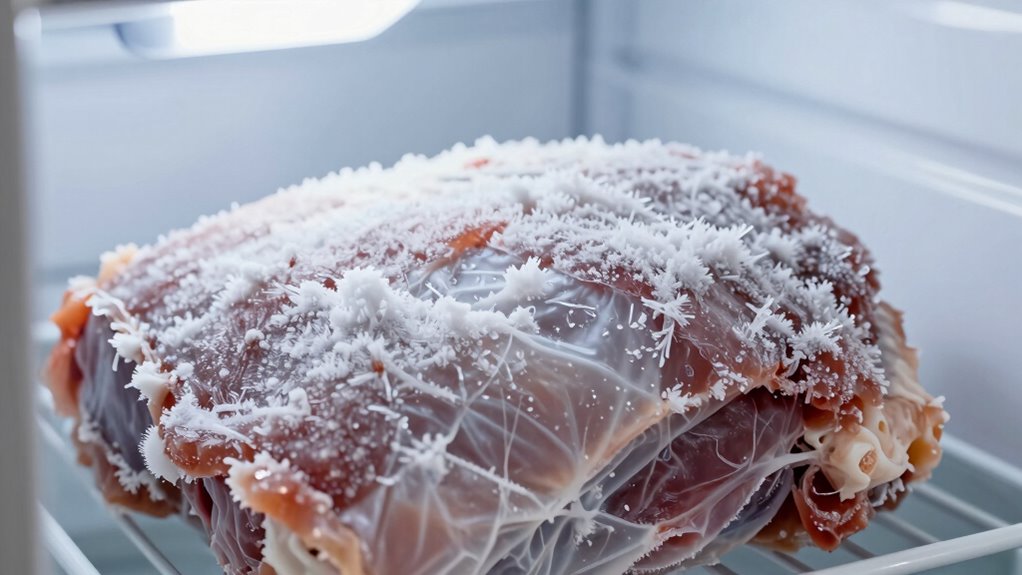
Are you accidentally creating freezer burn by making simple mistakes? One common error is using defective packaging that doesn’t protect your food properly. When packaging is torn, punctured, or damaged, it allows air to reach the food’s surface, leading to freezer burn. Improper sealing is another frequent mistake; if containers or bags aren’t sealed tightly, moisture escapes and air enters, causing dehydration and ice crystal formation. Always check your packaging for holes or weak spots before freezing. Use airtight containers or high-quality freezer bags, and press out excess air before sealing. Avoid rushing the process—proper sealing and reliable packaging are vital to preventing freezer burn caused by exposure to air, keeping your food fresh and flavorful longer.
Easy Ways to Extend Freezer Life and Keep Food Tasty
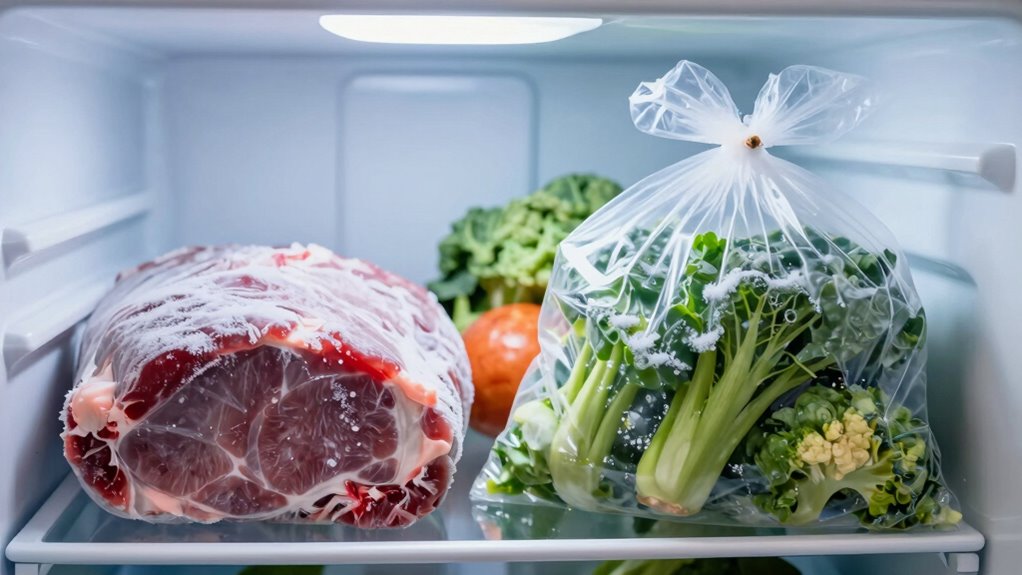
Keeping your food tasting fresh and extending its freezer life is easier when you follow a few simple tips. Proper packaging techniques and awareness of storage durations are key. Use airtight containers or heavy-duty freezer bags to prevent air exposure, which causes freezer burn. Label items with dates to track how long they’ve been stored; most foods stay good for specific periods. Remove excess air from packaging before sealing to minimize ice crystals. Divide large portions into smaller containers for quicker freezing and better portion control. Avoid overfilling your freezer, which hampers proper air circulation. By sticking to these strategies, you’ll maximize freshness and minimize waste, ensuring your frozen foods stay delicious longer.
Frequently Asked Questions
Can Freezer Burn Make Food Unsafe to Eat?
Freezer burn doesn’t make food unsafe to eat, but it can affect food safety by increasing spoilage risks and degrading quality. You might notice dry spots or texture changes, but the food remains safe if kept frozen at the right temperature. To minimize risks, use freezer-safe packaging and consume items promptly. While not dangerous, freezer burn affects flavor and texture, so it’s best to cut away affected areas before eating.
Does the Type of Food Affect Freezer Burn Susceptibility?
Like a dial-up connection, your food’s composition influences freezer burn risk. Foods with high moisture content, such as fruits and meats, are more prone to freezer burn because they lose more moisture when exposed to air. Conversely, drier items like bread or certain cheeses resist it better. Understanding your food’s moisture and structure helps you pack wisely, preventing freezer burn and keeping your meals fresher longer.
How Long Can Food Stay in the Freezer Before Freezer Burn Occurs?
You can usually store food in the freezer for 3 to 12 months before freezer burn risks increase, depending on the type of food. Proper storage duration and maintaining ideal freezer conditions—like consistent freezing temperature and airtight packaging—are key. If you keep your freezer at 0°F and use airtight containers or wrapping, you can extend the quality of your food and prevent freezer burn during storage.
Are There Any Health Risks Associated With Consuming Freezer-Burned Food?
You’re safe eating freezer-burned food, as it doesn’t pose health risks or affect food safety. However, freezer burn can reduce the nutritional impact and alter taste and texture. While it might be less appealing, it’s still safe to consume, so you don’t need to discard it. Just be aware that the quality might suffer, but your health remains unaffected by freezer burn itself.
Can You Reverse Freezer Burn or Improve Affected Food?
Did you know that only about 10% of freezer-burned foods can be considerably improved? You can’t fully reverse freezer burn, but you can try moisture restoration and flavor enhancement techniques, like soaking meat in broth or marinating it. These steps may improve texture and taste, but won’t completely eliminate the effects. For best results, cut away the affected areas and use the rest promptly.
Conclusion
Remember, prevention is key to avoiding freezer burn. Always store your food properly, sealing out air like a fortress guarding its treasure. Use airtight containers, wrap tightly, and follow best freezing practices. Think of it as locking your food in a safe—air is the thief you want to keep out. When you take these steps, you’ll enjoy fresh-tasting meals longer. After all, an ounce of prevention is worth a pound of cure.