
To thaw food safely, keep it in the refrigerator overnight on a plate or tray at temperatures below 40°F, ensuring slow and consistent thawing. If you’re short on time, use the cold water method by sealing the food tightly and changing the water every 30 minutes, or thaw it in the microwave on low power, cooking immediately afterward. Avoid room temperature thawing to prevent bacteria growth. Continue exploring for detailed tips to keep your food safe.
Key Takeaways
- Thaw seafood in the refrigerator overnight on a tray to ensure safety and prevent cross-contamination.
- Use cold water and waterproof bags, changing the water every 30 minutes for quick, safe thawing.
- Microwave on defrost setting, then cook immediately to prevent bacterial growth.
- Avoid thawing at room temperature, which promotes bacterial multiplication.
- Maintain proper temperature control and proper packaging throughout the thawing process to ensure food safety.
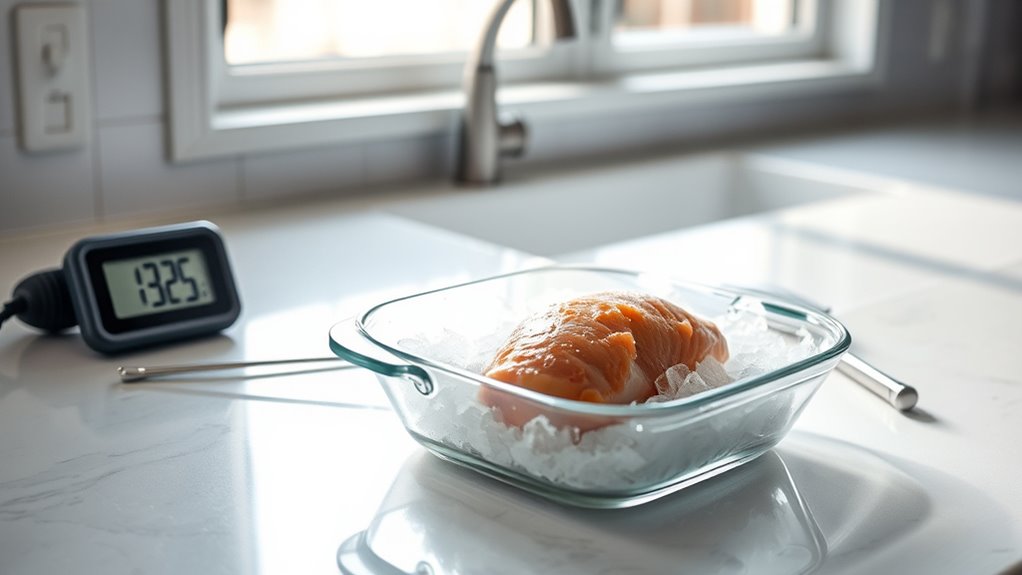
Defrosting your food safely is essential to prevent bacterial growth and guarantee freshness. When it comes to frozen seafood, proper thawing methods are vital because the temperature at which it’s thawed can influence the growth of thawing bacteria. If you leave seafood out at room temperature, bacteria can multiply rapidly, increasing the risk of foodborne illness. The key is to control the thawing process so that the seafood stays at safe temperatures and bacteria don’t have a chance to thrive.
One of the safest ways to defrost frozen seafood is in the refrigerator. This method requires planning ahead because it takes time—usually several hours or overnight—depending on the size of the seafood. By placing the seafood in a leak-proof container or sealed bag and storing it on a plate or tray, you prevent any drips from contaminating other foods. The cold, consistent temperature of your fridge (below 40°F or 4°C) keeps the seafood at a safe temperature, slowing bacterial growth. This slow thawing process preserves the quality of the seafood and minimizes the risk of thawing bacteria multiplying to dangerous levels. Using the refrigerator for thawing also aligns with recommended food safety practices to ensure the integrity of your food. Additionally, maintaining proper food handling techniques during this process further reduces the risk of cross-contamination. Incorporating proper storage techniques can help prevent spoilage and maintain freshness during the thawing process. Being aware of temperature control principles is crucial to preventing unsafe bacterial proliferation.
Thaw seafood in the fridge overnight in a leak-proof container to keep it safe and preserve quality.
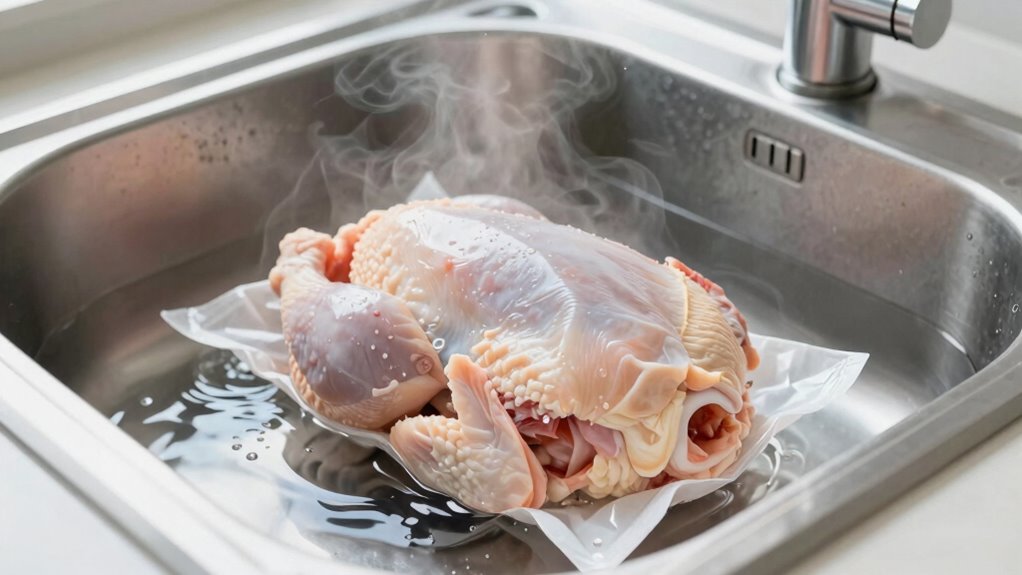
If you’re short on time, using cold water is a quick yet safe alternative. Seal the seafood tightly in a waterproof bag to avoid water contact and submerge it in cold tap water. Change the water every 30 minutes to keep it cold and ensure even thawing. This method typically takes an hour or less, depending on the size of the seafood. It’s effective because cold water conducts heat better than air, speeding up the process while still maintaining a safe temperature. Just remember, never thaw seafood at room temperature—bacteria can flourish rapidly at room temp, leading to unsafe conditions.
Another safe method is thawing seafood in the microwave. Use the defrost setting or low power, and follow your microwave’s instructions for defrosting. Be attentive because microwave thawing can begin to cook parts of the seafood if not monitored carefully. If you use this method, cook the seafood immediately afterward to guarantee any thawing bacteria are destroyed. It’s a fast way to thaw seafood when you’re in a hurry but still requires careful attention to avoid partial cooking or uneven thawing.
In all these methods, the primary goal is to keep the seafood at safe temperatures during thawing to prevent the growth of thawing bacteria. Additionally, incorporating proper handling techniques, such as avoiding cross-contamination, further ensures food safety. Avoid leaving seafood out on the counter for extended periods, as this creates an ideal environment for bacteria to multiply. By following these safe thawing techniques, you’ll preserve the quality of your seafood and minimize health risks, guaranteeing that your meals are both delicious and safe to eat.
Frequently Asked Questions
Can I Refreeze Food After Defrosting?
Yes, you can refreeze food after defrosting if you follow refreezing guidelines and thawing safety. Make sure the food was thawed in the refrigerator, kept at safe temperatures, and hasn’t been left out too long. If it was thawed using other methods like microwave or cold water, cook it first before refreezing. Always prioritize safety to prevent bacteria growth and maintain food quality.
How Long Can Thawed Food Stay in the Fridge?
You can keep thawed food in your fridge for up to 1 to 2 days, according to food safety experts. Did you know that improper temperature control can lead to bacteria growth within just a few hours? To guarantee safety, always monitor storage duration and keep your fridge at 40°F (4°C). This helps prevent spoilage and keeps your food safe to eat during its recommended timeframe.
Is It Safe to Defrost at Room Temperature?
No, it’s not safe to defrost food at room temperature because bacteria can grow rapidly during this time. When you leave food out on the counter, the outer layers can reach a temperature that promotes bacterial growth, even if the inside remains frozen. To keep food safe, always defrost in the refrigerator, in cold water, or in the microwave, where temperature control minimizes bacterial risk.
What Are the Signs of Spoiled Thawed Food?
You’ll know spoiled thawed food by its visual spoilage—discoloration, sliminess, or mold that paints an uninviting picture. Odor detection is your second eye; if it smells sour, rancid, or off, trust that nose. These signs tell you the food’s time is up, and it’s better to toss it than risk illness. Keep your senses sharp; they’re your best defense against eating unsafe leftovers.
Can Microwave Thawing Affect Food Quality?
Yes, microwave thawing can influence food quality if you’re not careful. It might cause uneven thawing, leading to partially cooked spots that impact texture and flavor. To avoid this, follow proper thawing techniques and guarantee microwave safety by using appropriate containers and settings. Always cook the food immediately after microwave thawing to prevent bacterial growth. Properly managing microwave thawing maintains food quality and safety.
Conclusion
Now that you know the safest ways to defrost food, you’re practically a food safety superhero! By following these methods, you’ll avoid any foodborne villains trying to ruin your meal. Remember, rushing the thaw can turn your kitchen into a battleground for bacteria, so patience is key. Stick to these safe practices and keep your food safe and delicious—because nothing’s more important than protecting your family’s health from the monstrous dangers lurking in unsafe thawing.