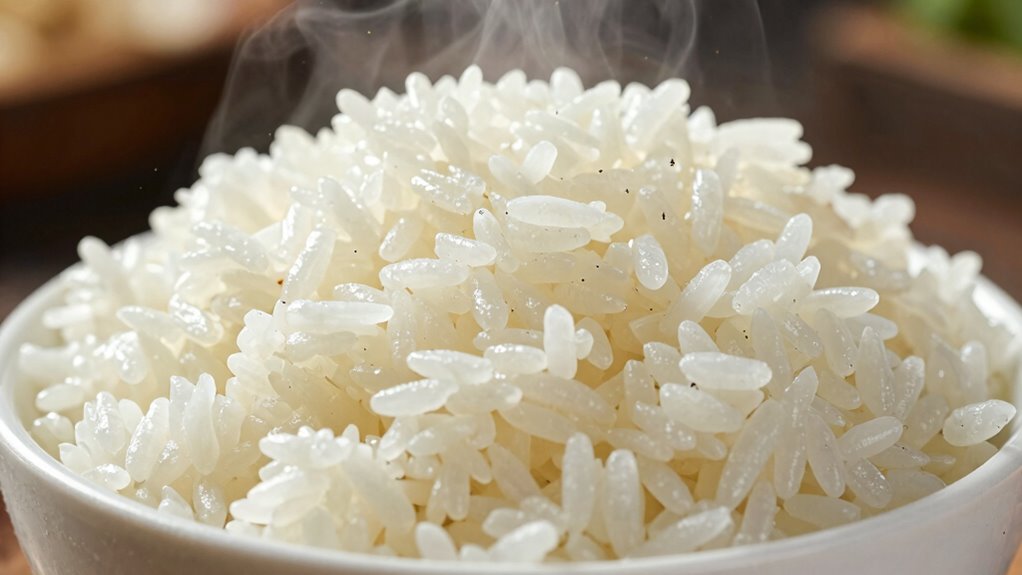

Rice can become risky if you leave it out at room temperature for too long. Bacteria like Bacillus cereus thrive in warm, moist conditions and can produce heat-resistant toxins. These toxins stay active even after reheating, making you sick. To keep rice safe, cool it quickly, store it in shallow containers, and reheat thoroughly. Want to know how to handle rice safely? Keep going to discover more tips to protect yourself.

Get kitchen staples and gadgets delivered free with Prime
- Fast, free delivery on millions of items
- Prime Video, Amazon Music and more included
- Member-only deals all year
Key Takeaways
- Bacillus cereus bacteria can survive cooking and produce heat-resistant toxins if rice is mishandled.
- Leaving cooked rice at room temperature allows bacteria to multiply rapidly.
- Improper cooling and storage promote bacterial growth and toxin formation.
- Reheating rice does not destroy heat-resistant toxins, posing health risks.
- Proper handling, quick cooling, and timely refrigeration prevent bacterial proliferation.
Have you ever wondered about the hidden risks behind your daily bowl of rice? It’s easy to overlook how something so simple can pose health concerns, especially if you’re not mindful of how you prepare and store it. The danger often lies in the way rice is cooked and kept afterward. When you cook rice using certain methods, you might inadvertently foster conditions that allow bacteria to thrive. For instance, leaving cooked rice at room temperature for too long creates an ideal environment for Bacillus cereus, a bacteria that can cause food poisoning. This bacteria produces toxins that aren’t destroyed even after reheating, so it’s essential to handle rice properly from the start. Proper food safety practices are crucial to prevent bacterial growth and ensure your rice remains safe to eat.
Your cooking methods play a significant role in minimizing these risks. Always rinse rice thoroughly before cooking to remove excess surface starch, which can contribute to bacterial growth. When cooking, guarantee the rice is heated evenly and reaches a temperature high enough to kill bacteria. Once cooked, don’t leave rice sitting out for more than an hour. Instead, transfer leftovers into shallow containers to cool quickly, then refrigerate promptly. The quicker you get rice into the fridge, the less chance bacteria will multiply. Reheating is another important step—make sure to heat rice evenly and to a temperature of at least 165°F (74°C) to destroy any bacteria that might be present. Proper cooling and storage are essential to prevent bacterial proliferation and keep your food safe. Additionally, understanding how temperature control affects bacterial growth can help you better manage leftovers and reduce health risks. Proper storage techniques also include labeling stored rice with the date to ensure it’s consumed within the recommended timeframe, reducing the risk of spoilage or foodborne illness.
food safety rice storage containers
As an affiliate, we earn on qualifying purchases.
As an affiliate, we earn on qualifying purchases.
Frequently Asked Questions
How Does Rice Become Contaminated During Harvesting?
During harvesting, rice can become contaminated through harvest contamination, where dirt, debris, or pests transfer bacteria or fungi onto the grains. Additionally, pesticide residue from spraying crops can stick to rice, especially if not properly managed. Handling equipment or storage facilities might also introduce contaminants. To reduce risks, guarantee proper harvesting practices, clean equipment thoroughly, and monitor pesticide use, safeguarding your rice’s safety and quality.
Are Organic Rice Options Safer Than Conventional Rice?
Are organic rice options safer? Well, not necessarily. Organic certification means fewer pesticide residues, so you might avoid some chemical risks, but it doesn’t guarantee perfection. Trace amounts of pesticides can still sneak in, and contamination during harvesting or processing isn’t exclusive to conventional rice. So, while organic rice often reduces chemical exposure, it’s wise to stay vigilant and wash your rice thoroughly regardless of its label.
Can Cooking Methods Eliminate All Rice Toxins?
Cooking techniques can substantially reduce rice toxins, but they might not eliminate all risks. To improve toxin removal, rinse rice thoroughly before cooking and use plenty of water. Boiling rice in excess water and draining it afterward helps lower arsenic levels. However, some toxins can still remain, so it’s best to vary your grains and stay informed about rice sources. Proper cooking methods are helpful but not foolproof for toxin elimination.
What Are the Signs of Spoiled or Unsafe Rice?
You’ll notice spoiled rice by a sour smell, slimy texture, or discoloration, signaling it’s unsafe. Proper rice storage and good kitchen hygiene prevent spoilage, but if rice smells off or feels sticky beyond usual, toss it. Leftover rice should be stored in airtight containers and eaten within a few days. Ignoring these signs can lead to food poisoning, so always check your rice before cooking or consuming it.
How Long Does Rice Stay Safe to Eat?
You should consume cooked rice within 3 to 4 days when stored properly in the refrigerator. Proper rice storage is essential to prevent microbial contamination, which can cause food poisoning. Always cool rice quickly after cooking, store it in airtight containers, and keep it at or below 40°F. If rice smells off or shows signs of spoilage, discard it, regardless of how long it’s been stored.
As an affiliate, we earn on qualifying purchases.
Conclusion
So, next time you scoop up a bowl of rice, remember it’s more than just a simple grain—it’s a ticking time bomb if left unchecked. Like a hidden serpent in the grass, bacteria can quietly lurk and multiply, turning your meal into a health hazard. Stay vigilant, store rice properly, and don’t let this sneaky danger catch you off guard. Your health’s worth more than a fleeting bite—so handle rice with care, and keep those risks at bay.
As an affiliate, we earn on qualifying purchases.
As an affiliate, we earn on qualifying purchases.
Halloween Picks
halloween
As an affiliate, we earn on qualifying purchases.