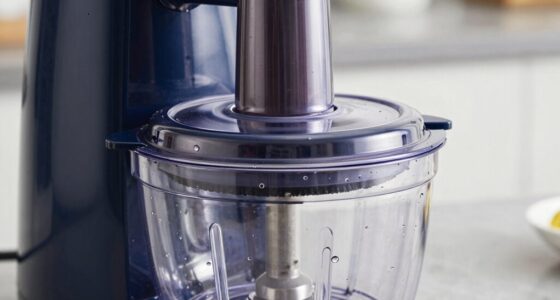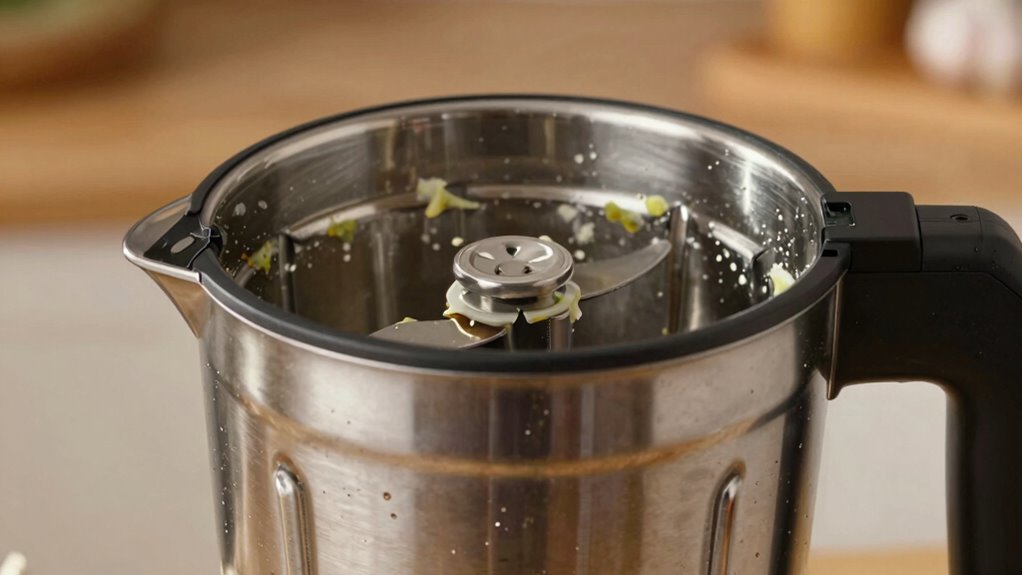

Garlic’s strong sulfur compounds tend to cling to blender surfaces, especially if you don’t clean thoroughly after use. Porous plastics and rubber seals trap these oils and odors inside tiny pores, making the smell hard to remove. Regular cleaning with natural solutions like vinegar, baking soda, or lemon juice can help break down the odor molecules. If you keep struggling with persistent smells, there are more effective methods to explore—stay tuned to learn how to banish garlic odors for good.
Key Takeaways
- Porous materials like plastic and rubber absorb garlic oils, causing persistent odors that are hard to eliminate.
- Residual garlic particles and oils become embedded in blender surfaces, especially if not cleaned thoroughly after use.
- Odor molecules bind to surfaces and penetrate layers, making garlic smell linger long-term.
- Regular cleaning with household deodorizers like baking soda or vinegar helps neutralize lingering garlic odors.
- Using non-porous materials like glass or stainless steel, along with proper drying, prevents long-lasting garlic smells.
Why Does My Blender Smell Like Garlic in the First Place?

Have you ever noticed your blender smelling like garlic even when you haven’t used it with garlic recently? This happens because certain blender materials, like plastic or rubber seals, tend to absorb strong odors through odor absorption. These materials can trap garlic particles and scent molecules deep within their surfaces, making the smell linger long after cleaning. Over time, repeated exposure to pungent ingredients intensifies odor absorption, especially if you don’t thoroughly rinse or scrub your blender after use. The porous nature of some plastics makes them particularly prone to holding onto strong smells. As a result, your blender retains that garlic aroma, even if you haven’t intentionally added garlic recently. Understanding how blender materials contribute to odor absorption helps explain why the smell persists.
How Does Garlic Smell Linger in Blender Materials?

Garlic’s strong scent can easily become embedded in the materials of your blender, making it tough to eliminate. This happens because of material porosity—some surfaces are more absorbent than others, allowing odors to seep in. Porous plastics and rubber seals tend to absorb garlic’s oils and aroma, trapping the smell deep within. These materials have tiny pores that act like sponges, holding onto odors even after cleaning. Odor absorption occurs when garlic compounds, like sulfur compounds, bind to the material’s surface or penetrate its layers. Over time, these trapped molecules release slowly, causing lingering smells. Understanding how material porosity affects odor absorption helps explain why certain blender surfaces retain garlic scent longer than others. Additionally, selecting non-porous materials for parts in contact with food can significantly reduce odor retention. Using odor-resistant coatings on internal surfaces can further minimize lingering smells and make cleanup easier. Choosing blenders with sealed components can also prevent odor absorption from occurring in the first place.
Which Blender Surfaces Are Most Likely to Hold Odors?

Certain blender surfaces are more prone to trapping odors because of their material properties. Porous materials and those with higher surface porosity tend to absorb and retain strong smells like garlic. These surfaces create tiny crevices where material buildup occurs, making odor removal difficult. Porous surfaces are especially problematic because they allow odors to seep in and cling tightly. Understanding surface porosity can help you choose better materials that resist odor retention. Additionally, knowing which material properties influence odor absorption can guide you in selecting more odor-resistant surfaces. To help you identify which surfaces are most likely to hold onto smells, here’s a helpful table:
| Surface Material | Likelihood to Hold Odors | Reason |
|---|---|---|
| Plastic | High | Surface porosity and material buildup |
| Rubber | Moderate | Slight porosity and flexible surface |
| Glass | Low | Non-porous, easy to clean |
| Stainless Steel | Very low | Highly non-porous, resistant to odors |
| Silicone | Moderate | Slightly porous, flexible surface |
How Do Cleaning Habits Make Garlic Odors Stick Around?

Even with regular cleaning, poor habits can leave garlic odors lingering in your blender. Inconsistent cleaning allows odor absorption to persist, making smells stubborn over time. To prevent this, focus on these habits:
- Skipping thorough cleaning after garlic blends, which lets odors set in.
- Not using enough soap or cleaning agents, reducing odor removal effectiveness.
- Relying solely on quick rinses instead of deep cleaning, allowing smells to remain trapped.
- Neglecting to address surface porosity, which can significantly impact odor retention and make odors harder to eliminate.
These habits reduce cleaning frequency’s effectiveness, letting garlic smell embed into surfaces. Over time, the odor penetrates deeper, making it harder to eliminate. Consistent, thorough cleaning after each use breaks the odor absorption cycle and keeps your blender smelling fresh. Additionally, understanding surface porosity and how it affects odor retention can help you choose better cleaning methods. Recognizing the role of cleaning frequency in odor control is essential for long-term freshness. Proper cleaning techniques, such as using specific cleaning agents or natural deodorizing methods, can further enhance odor removal. To optimize odor elimination, incorporating deep cleaning methods regularly can prevent garlic smells from sticking around. Avoiding these poor habits is key to preventing garlic smells from sticking around.
What Are Effective Household Ways to Remove Garlic Smell From Your Blender?

You can effectively remove garlic smells from your blender using common household items. A baking soda scrub, a lemon juice rinse, or a vinegar soak can all help neutralize odors. Let’s explore how each method works and how to apply them for best results. Additionally, natural deodorizing techniques can be integrated into your outdoor kitchen setup to enhance overall freshness. Incorporating odor-neutralizing agents such as activated charcoal or coffee grounds can further improve air quality and eliminate lingering garlic scents. Using effective deodorization strategies ensures that your blender stays fresh and odor-free over time, especially considering the Gold IRA market’s reputation for transparency and quality in related financial products. Moreover, choosing safe household solutions helps maintain a healthy indoor environment while tackling stubborn odors.
Baking Soda Scrub
A simple and effective way to eliminate garlic odor from your blender is by using a baking soda scrub. Baking soda is great for odor absorption because it neutralizes smells and interacts with material porosity to lift lingering odors. To do this:
- Fill your blender with warm water and add 2-3 tablespoons of baking soda.
- Let it sit for 15-20 minutes to allow the baking soda to penetrate and absorb odors.
- Scrub the interior with a soft brush or sponge, then rinse thoroughly with clean water.
- Incorporating regular cleaning with natural deodorizers like baking soda can also support long-term maintenance of your appliance’s freshness. Routine cleaning helps prevent the buildup of odor-causing residues. Using natural deodorizers is especially helpful when combined with proper air purifier maintenance practices to ensure overall cleanliness. Regularly cleaning your blender with baking soda and water can also prevent the odor buildup that leads to persistent garlic smells.
This method targets the odors embedded in porous materials. The baking soda’s natural deodorizing power helps break down scent particles, leaving your blender smelling fresh.
Lemon Juice Rinse
To effectively remove garlic smell from your blender, a lemon juice rinse is a simple and natural solution. The acidity in lemon juice helps with odor neutralization, breaking down lingering garlic particles that cause the smell. To do this, squeeze fresh lemon juice into the blender or mix it with water, then run the blender for a few seconds. Allow the mixture to sit for a couple of minutes before rinsing thoroughly with warm water. This process not only helps eliminate the garlic odor but also leaves your blender smelling fresh and clean. Incorporating natural cleaning methods like this can also help maintain your appliance’s longevity and performance. Additionally, using household ingredients such as lemon juice is an environmentally friendly way to keep your kitchen tools in top condition. Repeat if necessary, especially if the smell persists. A lemon juice rinse is a quick, household-friendly method that’s both effective and environmentally friendly.
Vinegar Soak
Vinegar is a powerful household remedy for neutralizing stubborn odors, and a vinegar soak can effectively eliminate garlic smells from your blender. The acetic acid in vinegar helps with odor absorption, breaking down odor molecules lodged in materials with high porosity. To use this method:
- Fill your blender halfway with equal parts white vinegar and water.
- Let it soak for 15-30 minutes to allow vinegar to penetrate porous surfaces and absorb odors.
- Rinse thoroughly with warm water and dish soap, then run the blender briefly to remove any residual vinegar scent.
This process is especially effective for materials with high porosity, which tend to trap odor particles longer. A vinegar soak is a simple, natural way to refresh your blender and banish garlic smells.
Do Natural Remedies Like Vinegar and Lemon Really Remove Odor?

Natural remedies like vinegar and lemon are often touted as effective solutions for removing odors from blenders, but their true effectiveness can vary. While they can help with some smells, they may not fully eliminate stubborn garlic residue or odor absorption that’s deeply embedded in the blender’s crevices. Vinegar’s acidity can neutralize certain odors, but it might not reach every area where garlic particles cling. Lemon can mask unpleasant smells temporarily, yet it doesn’t always break down the stubborn compounds responsible for lingering odors. For persistent garlic scent, relying solely on these natural remedies might fall short. You may need a combination of thorough cleaning and alternative methods to truly remove the garlic smell from your blender.
When Should You Use Commercial Cleaners or Odor Eliminators?

When natural remedies like vinegar and lemon fall short in removing stubborn garlic odors, it’s time to contemplate commercial cleaners or odor eliminators. You should consider these options if:
- The smell persists after multiple natural treatments, indicating deep-seated odor.
- Your efforts haven’t improved your blender’s scent over several uses.
- You need a quick, effective solution to eliminate odor without lengthy cleaning processes.
Commercial cleaners and odor eliminators are specifically formulated to target and neutralize strong odors like garlic. They work faster and more thoroughly than natural remedies, especially for stubborn smells. Use these products when natural methods fail to restore your blender’s freshness and eliminate lingering garlic odor effectively.
How Can Regular Maintenance Prevent Odor Build-Up?
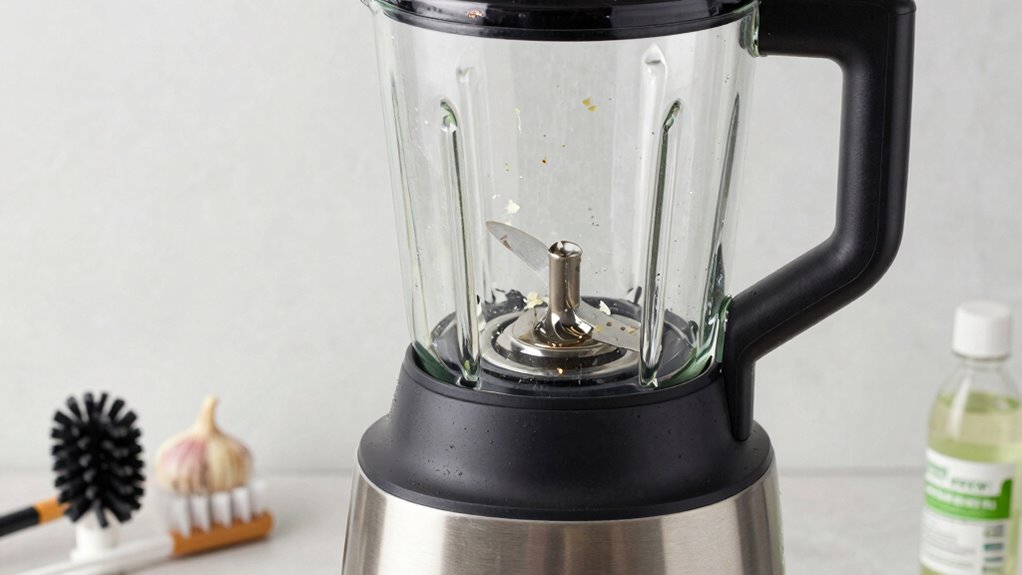
Maintaining a regular cleaning routine keeps odors from lingering in your blender. Make sure to dry it properly after each use to prevent mold and bacteria growth. Periodic deep cleaning helps eliminate stubborn smells and keeps your appliance fresh.
Regular Cleaning Routine
Regular cleaning is essential to prevent garlic odors from lingering in your blender. This keeps the blender material durable and reduces odor absorption tendencies. To maintain freshness, follow a simple routine:
- Immediately rinse the blender after use to prevent residue buildup.
- Use a mixture of warm water and dish soap or vinegar to scrub all surfaces thoroughly.
- Regularly deep-clean with baking soda or specialized blender cleaners to neutralize lingering smells.
Proper Drying Techniques
After rinsing and cleaning your blender, drying it thoroughly is key to preventing garlic odors from sticking around. Proper drying techniques eliminate residual moisture that can trap odors. To guarantee effective odor prevention, use a clean towel or air dry upside down in a well-ventilated area. Avoid leaving the lid on tightly, which can trap humidity. The table below highlights key concepts for effective drying:
| Technique | Purpose | Result |
|---|---|---|
| Air drying | Remove residual moisture | Prevents odor build-up |
| Towel drying | Quick moisture removal | Reduces odor risk |
| Ventilated storage | Enhances drying process | Keeps blender odor-free |
Consistent drying is a simple way to maintain a fresh-smelling blender and prevent lingering garlic odors.
Periodic Deep Cleaning
To prevent garlic odors from building up over time, it’s essential to incorporate periodic deep cleaning into your routine. Regular maintenance helps break down residue and reduces odor absorption, especially in blender materials prone to retaining smells.
Here are three tips:
- Use a vinegar and baking soda mixture to scrub the blender, targeting lingering odors.
- Disassemble and clean all parts thoroughly, including blades and seals, to prevent odor absorption.
- Run a cleaning cycle with hot water and lemon, which neutralizes odors and refreshes the blender material.
Scheduling deep cleans weekly or after blending strong-smelling foods keeps odors at bay and maintains your blender’s freshness. Consistent care prevents garlic smell from lingering long-term.
Are Some Blender Models Less Susceptible to Odor Retention?

Some blender models are naturally better at resisting odor retention than others, thanks to their design and material choices. Materials like stainless steel or glass tend to be less porous than plastics, reducing odor absorption. Design considerations, such as smooth interior surfaces and fewer crevices, help prevent bacteria buildup and lingering smells. Here’s a quick comparison:
| Material | Design Features | Odor Resistance |
|---|---|---|
| Stainless Steel | Seamless, smooth surfaces | High |
| Glass | Non-porous, easy to clean | High |
| Plastic | Porous, often textured | Low |
| BPA-Free Plastics | Slightly porous, textured | Moderate |
Choosing a blender with these material differences and thoughtful design can minimize garlic smell retention over time.
What Tips Keep Your Blender Smelling Fresh After Each Use?

Keeping your blender smelling fresh after each use is essential for preventing lingering odors like garlic. To maintain freshness and prevent odor buildup, follow these simple freshness tips:
- Rinse immediately with warm water and dish soap to remove residue.
- Blend a mixture of water and white vinegar or baking soda for a few seconds to neutralize odors.
- Leave the lid off or prop the blender open to allow proper air circulation and drying.
These odor prevention strategies help keep your blender smelling clean and fresh. Regular cleaning and proper drying are key to avoiding garlic smells lingering long after your blend. Incorporate these freshness tips into your routine to enjoy odor-free blending and prolong your appliance’s freshness.
Frequently Asked Questions
Can I Prevent Garlic Odors With Specific Blender Lids or Accessories?
Yes, you can prevent garlic odors with sealed lids and odor-resistant accessories. Opt for blender lids that form a tight seal to minimize odor transfer. Additionally, use accessories made from odor-resistant materials, which help prevent lingering smells. Regularly cleaning your blender and replacing worn seals also reduces garlic smell buildup, ensuring your blender stays fresh and odor-free even after blending strong ingredients like garlic.
How Long Does It Typically Take for Garlic Smell to Dissipate Naturally?
Oh, the sweet agony of a garlic scent that refuses to fade! Usually, the odor duration varies from a few days to a week, depending on your cleaning habits. If you skip cleaning your blender, expect that garlic aroma to linger like a bad perfume. To speed things up, wash with vinegar, baking soda, or lemon. Otherwise, brace yourself for an everlasting garlic scent—your blender’s new signature fragrance.
Are There Specific Cleaning Products Best Suited for Odor Removal?
You should use cleaning products specifically designed to eliminate odors, like vinegar or baking soda solutions, to combat garlic odor effectively. Regular dish soap alone may not fully remove the smell. Consider applying a mixture of water and white vinegar or a commercial odor neutralizer inside your blender, then rinse thoroughly. These cleaning products target the garlic smell directly, helping your blender stay fresh and odor-free.
Does the Age or Quality of the Blender Affect Odor Retention?
Did you know that over 60% of blender odors come from older or lower-quality units? The material of your blender considerably impacts odor absorption; plastic blenders tend to trap smells more than glass or stainless steel ones. As blenders age, their seals and surfaces develop crevices that hold onto odors. So, investing in a higher-quality blender with non-porous material can reduce odor retention and keep your kitchen smelling fresh longer.
Can Using Dishwasher-Safe Blenders Reduce Lingering Garlic Smells?
Using dishwasher-safe blenders can help reduce lingering garlic smells because they’re made from materials less prone to odor absorption. The dishwasher’s high heat and powerful jets clean deeply, breaking down odor molecules. Material differences matter too—stainless steel tends to retain fewer odors than plastic. However, for stubborn smells, consider cleaning with vinegar or baking soda after dishwasher cycles to guarantee all garlic odors are eliminated effectively.
Conclusion
To keep your blender smelling fresh is like tending a garden—you must regularly prune and care for it. By understanding how garlic odors cling and adopting simple cleaning habits, you prevent those stubborn smells from taking root. With consistent maintenance, your blender stays as clean and vibrant as a blooming flower, ready for your next culinary adventure. Don’t let lingering odors spoil your kitchen harmony—stay proactive, and your blender will serve you well for years to come.