“Medium” heat on your stove usually ranges between 300°F and 375°F, which provides a balanced temperature to cook safely without damaging your nonstick pan. To keep your coating intact, avoid overheating, especially on high settings, and watch for signs like discoloration, odors, or sticking. Using a thermometer can help you monitor proper temperature levels. Stay tuned to learn how to maintain safe cooking practices and extend your cookware’s lifespan.
Key Takeaways
- ‘Medium’ heat typically ranges from 300°F to 375°F (150°C to 190°C), suitable for even cooking without damaging nonstick coatings.
- Proper temperature control prevents coating degradation, peeling, and fumes, extending the lifespan of nonstick pans.
- Overheating, especially beyond 375°F, can cause discoloration, warping, and release of harmful fumes.
- Use infrared thermometers or visual cues like slight smoke to monitor and maintain safe medium heat levels.
- Consistently staying within the medium range helps ensure safe, effective cooking and preserves nonstick surface integrity.

Etekcity Infrared Thermometer Laser Temperature Gun 774, Meat Food Candy Oven Thermometer for Griddle Accessories, Heat Gun for Cooking Refrigerator Tools, Adjustable Emissivity & Max Measure, Yellow
𝐕𝐞𝐫𝐬𝐚𝐭𝐢𝐥𝐞 𝐓𝐨𝐨𝐥𝐬: Infrared technology allows you to measure various objects at home and outdoors; Use it for 𝒎𝒆𝒂𝒕,…
As an affiliate, we earn on qualifying purchases.
As an affiliate, we earn on qualifying purchases.
What Does ‘Medium’ Heat Actually Mean on Your Stove?
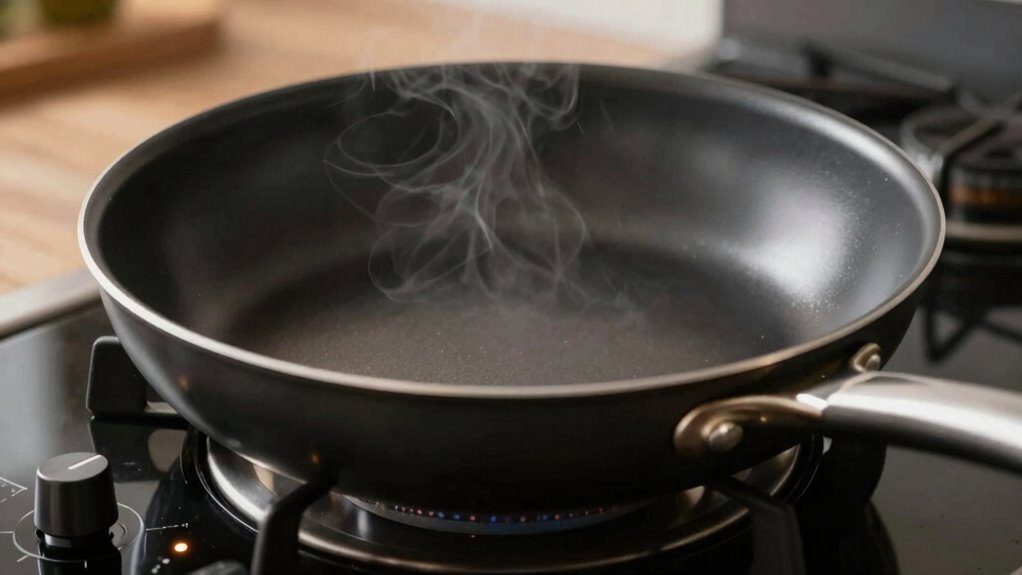
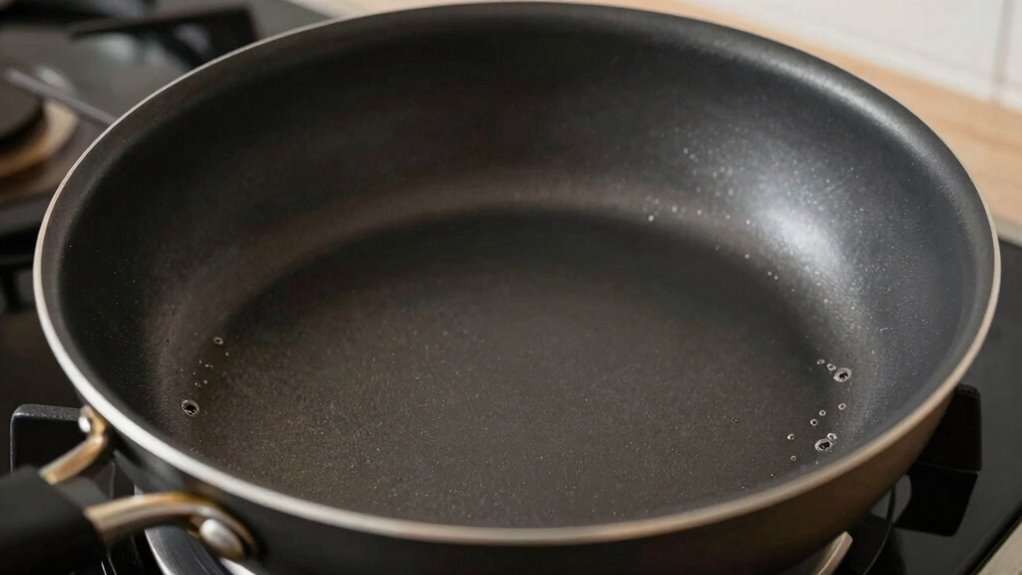
Ever wonder what “medium” heat really signifies on your stove? It’s all about temperature control and heat distribution. When you turn your burner to medium, you’re aiming for a moderate temperature that’s not too high or low. This setting helps guarantee your food cooks evenly, thanks to balanced heat distribution across the pan’s surface. But keep in mind, “medium” doesn’t mean the same on every stove. Some appliances run hotter or cooler at the same setting, so it’s essential to comprehend how your specific stove responds. Proper heat management ensures consistent cooking results and prevents accidents. Using this setting correctly allows you to avoid burning or undercooking your dishes. It’s a versatile middle ground that provides the right amount of heat for many cooking techniques.

Non Stick Frying Pan, 10-inch Omelette Pan with Heat Dot Temperature Indicator, Healthy Non Toxic Egg Skillet with Heat-Resistant Handle, PFOA-Free, Dishwasher Safe, Compatible with All Cooktops
Thermo dot Heat Indicator:Features a high-sensitivity Heat Dot that changes colors for precision cooking. It turns from pale…
As an affiliate, we earn on qualifying purchases.
As an affiliate, we earn on qualifying purchases.
How Hot Is ‘Medium’ When You Turn the Burner to It?

When you set your stove to medium, the temperature typically ranges between 300°F and 375°F (150°C to 190°C). This range is essential for understanding temperature thresholds, especially for nonstick pans. Since stove heat calibration varies, your burner might not match these numbers exactly, making it tricky to gauge the actual temperature. To better control heat:
- Use an infrared thermometer for accurate readings
- Recognize that “medium” can mean different things on different stoves
- Adjust based on how your pan responds to heat
- Keep in mind that consistent heat helps prevent damage to nonstick coatings
- Understanding thermal thresholds can help you avoid overheating and extend the lifespan of your cookware while cooking efficiently.
- For safety and optimal performance, consulting your pan’s manufacturers’ guidelines is also recommended to prevent accidental damage.

0.5 Sec Instant Read Meat Thermometer Digital with ±0.5℉ Precision, Food Thermometer for Cooking Kitchen Gadgets, Oven Grill Candy BBQ Essentials Accessories, Gifts for Him Dad Men Birthday, Red
【8X Faster + 4X More Precise】: Upgraded with an industrial-leading professional thermocouple sensor, Themomonster meat thermometer digital with…
As an affiliate, we earn on qualifying purchases.
As an affiliate, we earn on qualifying purchases.
How Do Nonstick Coatings Respond to Different Heat Levels?
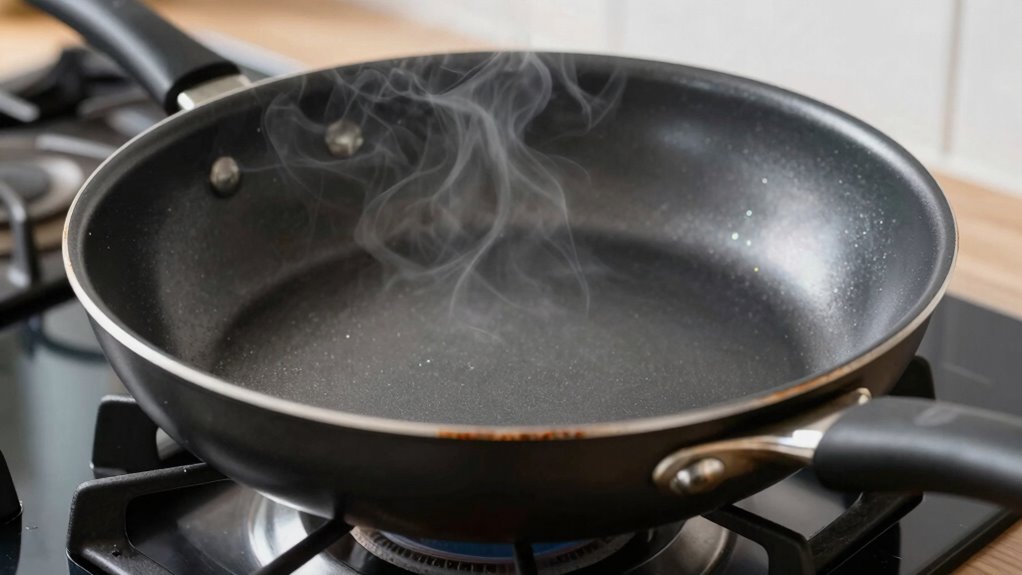
When you cook with nonstick pans, applying too much heat can damage the coating and reduce its effectiveness. Higher temperatures accelerate coating breakdown and increase the risk of harmful fumes. Understanding how heat affects your pan’s performance helps you cook safely and extend its lifespan. Additionally, using proper heat levels can optimize the pan’s longevity and safety. Being aware of the heat limit for nonstick surfaces ensures you avoid unintended damage and maintain a safe cooking environment. Recognizing the temperature thresholds that your cookware can safely handle is essential for preventing coating deterioration and potential health hazards. Moreover, being mindful of cooking temperature guidelines based on cookware materials can help you select the best heat setting for your needs, safeguarding both your health and your cookware’s durability. Recognizing the impact of heat on nonstick coatings allows you to better preserve their protective qualities over time.
Coating Degradation Risks
Nonstick coatings are sensitive to high heat, and exceeding recommended temperatures can cause them to break down. When the heat limits are surpassed, coating degradation accelerates, leading to peeling or flaking. This not only shortens the lifespan of your pan but can also release harmful fumes. To avoid damage, stay within the recommended heat range. Additionally, understanding the Gold IRA markets can help you make informed decisions about your investments, similar to how knowing your pan’s heat limits helps maintain its quality. You might notice these signs of coating degradation:
- Peeling or chipping of the coating
- Discoloration or blisters
- A sticky or uneven surface
- Fumes or a burnt smell during cooking
Being aware of the Free Floating nature of nonstick coatings can help you better care for your cookware and prevent accidental damage. Understanding the heat limits of your pan helps prevent coating degradation and maintains its nonstick properties. Proper temperature management, including monitoring cooking temperatures, is essential to preserve the integrity of nonstick coatings and ensure safe cooking experiences. For optimal care, always refer to the manufacturer’s guidelines and avoid sudden temperature changes, which can also compromise the coating’s adhesion and durability.
Heat and Nonstick Performance
Understanding how nonstick coatings respond to different heat levels is essential for maintaining their effectiveness. When you cook at too high a temperature, the nonstick durability can decrease quickly, leading to peeling or flaking. Conversely, moderate heat preserves the coating and ensures consistent heat transfer efficiency, helping your food cook evenly. Nonstick coatings are designed to perform best within a specific temperature range; exceeding that range can cause damage or reduce their lifespan. Using the right heat levels helps prevent warping and maintains the nonstick surface’s ability to release food smoothly. By controlling your heat, you ensure the coating stays intact longer, maximizing both performance and longevity of your pan. Proper heat management ultimately keeps your cooking efficient and your nonstick surface in top condition. Understanding the ideal temperature range is key to preserving your pan’s effectiveness over time.

Kikcoin 16Pcs Pots and Pans Set Nonstick Ceramic Cookware Sets Induction Kitchen Cooking Set Non toxic Healthy Non Stick w/Grill Pan,Saute Pan, Ceramic White
【16-PIECE POTS AND PANS SET】Included 7"(2QT)Saucepan, 9.5"Casserole Pot, 11" Frying Pan, 11" Saute Pan, 9.5" Grill Pan, 3pcs…
As an affiliate, we earn on qualifying purchases.
As an affiliate, we earn on qualifying purchases.
How Can You Recognize When Your Nonstick Pan Is Overheated or Damaged?

If your nonstick pan begins to emit a strange, persistent odor or the surface looks discolored or warped, it’s a clear sign that it’s overheated or damaged. Overheating can degrade the pan material, causing the coating to break down. You might notice the surface sticking or uneven cooking, which indicates the pan isn’t performing well. Damaged pans can also emit fumes, especially if the coating is compromised. To avoid this, pay attention to these signs and adjust your cooking techniques accordingly. Additionally, proper seasoning and maintenance can help extend the life of your nonstick cookware. Being aware of the heat limits for nonstick surfaces can help prevent damage and ensure safe, effective cooking. Understanding proper temperature control is essential to avoid overheating your pans and preserving their longevity. For added safety, always refer to the manufacturer’s care instructions to ensure you’re following recommended guidelines.
What Are the Best Practices for Cooking Safely on Nonstick Pans at Medium Heat?
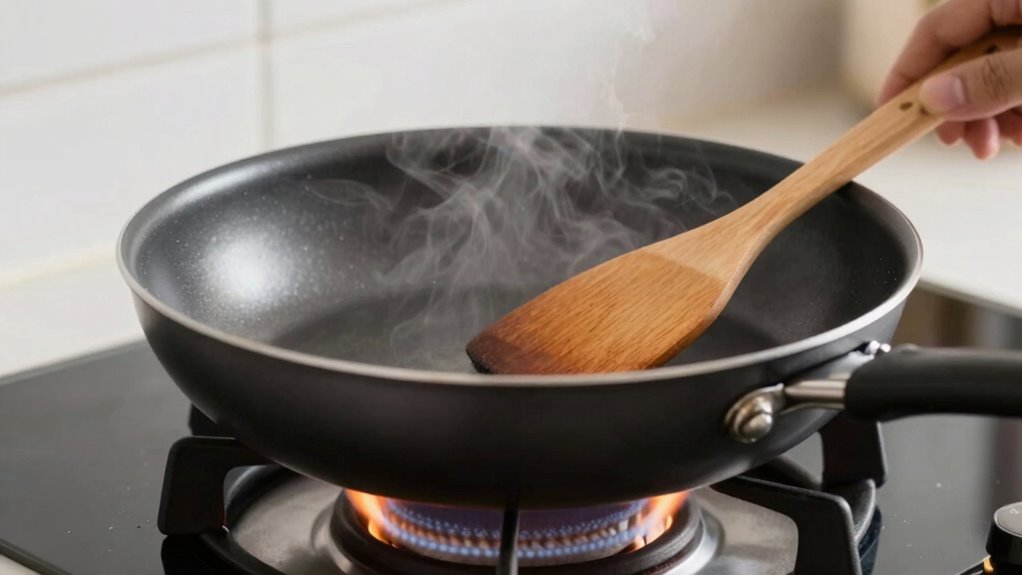
To cook safely on nonstick pans at medium heat, you should monitor the temperature closely and avoid letting the pan get too hot. This helps guarantee chemical safety by preventing the breakdown of nonstick coatings, which can release fumes or degrade over time. Opt for eco friendly coatings when choosing your pan, as these are often more durable and less likely to emit harmful substances if heated improperly. Use a reliable thermometer or simply keep the heat at a steady, moderate level to prevent overheating. Avoid using high heat settings, even briefly, to protect both your health and the longevity of the nonstick surface. Following these practices minimizes risk and keeps your cooking environment safe and eco-conscious. Additionally, being aware of Glycolic Acid Benefits can help you choose skincare products that complement your health-conscious lifestyle. Incorporating nonstick coating technology advancements can also enhance durability and safety during cooking. Staying informed about safe cooking temperatures ensures you maintain optimal conditions for both safety and performance.
How Can You Test and Maintain the Right Temperature for Your Nonstick Pan?
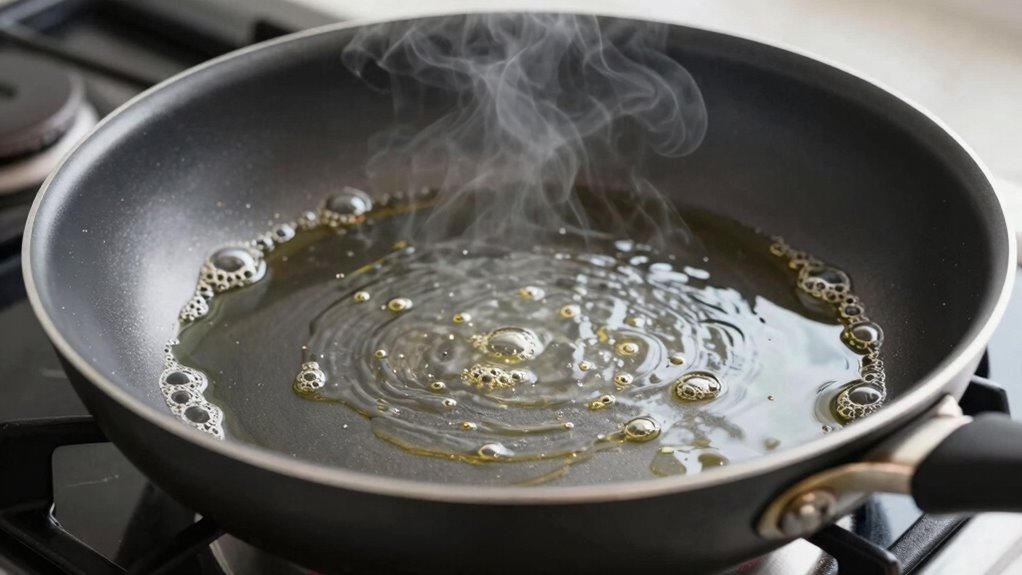
Testing and maintaining the right temperature for your nonstick pan is essential for safe and effective cooking. Proper temperature control helps prevent damage to the coating and extends your cookware’s longevity. To keep things in check:
- Use an infrared thermometer to get an accurate temperature reading.
- Preheat the pan on medium heat for a few minutes before adding ingredients.
- Watch for visual cues like slight smoke or sizzling, but avoid overheating.
- Adjust heat promptly if you notice signs of overheating to protect your nonstick surface.
- Understanding cookware safety can help you make better decisions about temperature and maintenance.
- Being aware of temperature limits can prevent accidental damage and ensure your pan performs well over time.
- Recognizing passive voice can improve the clarity and professionalism of your cooking instructions.
What Common Mistakes Damage Nonstick Coatings?
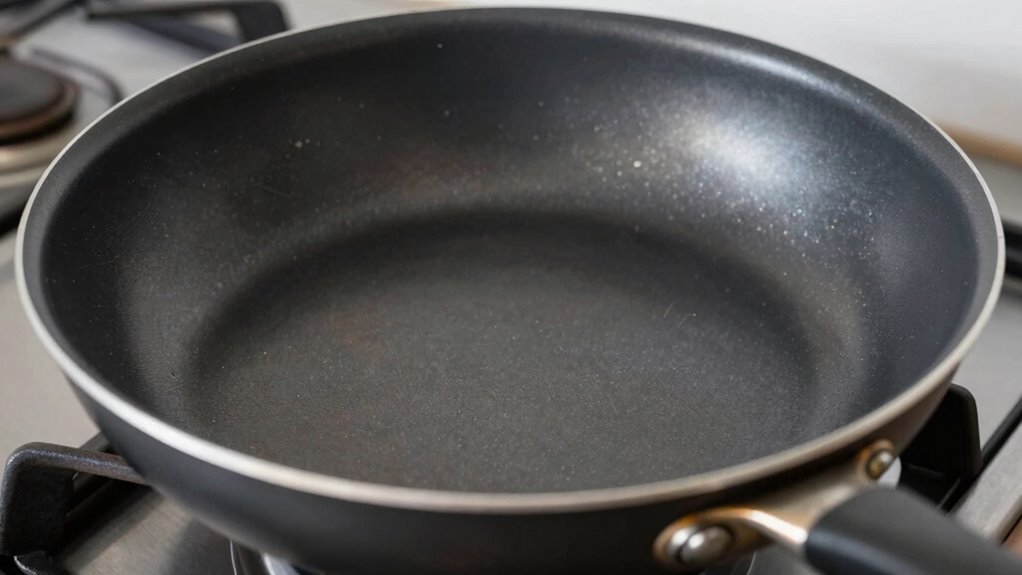
Many common mistakes can quickly damage your nonstick coating. Overheating the pan, using metal utensils, or scrubbing with abrasive cleaners can all harm the surface. Knowing these pitfalls helps you protect your cookware and extend its lifespan.
Overheating Nonstick Pans
Overheating your nonstick pan is one of the quickest ways to damage its coating. When you crank up the heat too high, it ruins the nonstick durability and disrupts heat distribution, leading to uneven cooking and coating deterioration. You might think a hot pan is necessary, but excess heat breaks down the coating faster.
To avoid this, keep these in mind:
- Never leave your pan on high heat for too long
- Use medium heat to preserve the coating’s integrity
- Preheat gradually instead of cranking the burner instantly
- Avoid heating an empty pan, as it heats unevenly
Using Metal Utensils
Using metal utensils can considerably damage your nonstick coating if you’re not careful. When you use metal utensils on nonstick cookware, they can scratch or gouge the surface, breaking down the coating over time. These scratches create weak spots that lead to peeling and reduce the cookware’s effectiveness. Even if the nonstick surface seems durable, metal utensils can accelerate wear and tear, shortening the lifespan of your pots and pans. To preserve the nonstick coating, opt for silicone, wood, or plastic utensils. Avoid the temptation to use metal tools, especially when cooking at higher heat levels, as this increases the risk of damage. Protect your investment by choosing utensils that won’t compromise the integrity of your nonstick cookware.
Abrasive Cleaning Techniques
Scrubbing nonstick pans with abrasive scrubbers or harsh cleaning powders can quickly damage their delicate coating. This type of abrasive cleaning wears down the nonstick surface, reducing its scratch resistance and lifespan. Using steel wool, scouring pads, or abrasive powders might seem effective but can cause permanent scratches that compromise nonstick performance. Avoid these common mistakes to keep your pan in top shape:
- Using steel wool or metal scrubbers
- Applying abrasive powders like baking soda or powdered cleansers excessively
- Scrubbing aggressively instead of gently cleaning
- Relying on harsh chemical cleaners that can degrade the coating
For best nonstick scratch resistance, stick to soft sponges or cloths and gentle cleaning methods. Proper care will extend your pan’s life and maintain its nonstick qualities longer.
How Can You Extend the Lifespan of Your Nonstick Pan?
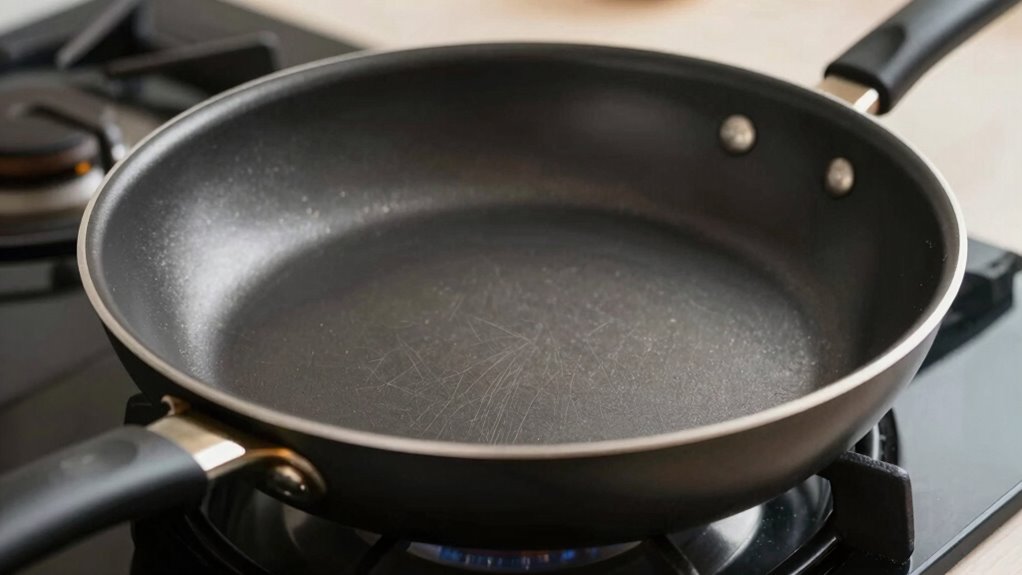
To extend the lifespan of your nonstick pan, you should handle it with care and follow proper cooking practices. Start by choosing a pan made from high-quality materials, as better pan material often means more durable nonstick coatings. Manufacturing quality is essential; well-made pans tend to resist peeling and scratching longer. Always use utensils made of wood, silicone, or plastic to avoid damaging the coating. Avoid overheating your pan, since high temperatures can degrade the nonstick surface faster. Cleaning gently with soft sponges and avoiding abrasive scrubbers will preserve the coating’s integrity. Additionally, avoid stacking heavy items on top of your pan. Proper storage and mindful use can greatly prolong the life of your nonstick cookware, helping you get the most out of your investment.
When Is It Time to Replace Your Nonstick Pan for Safety?
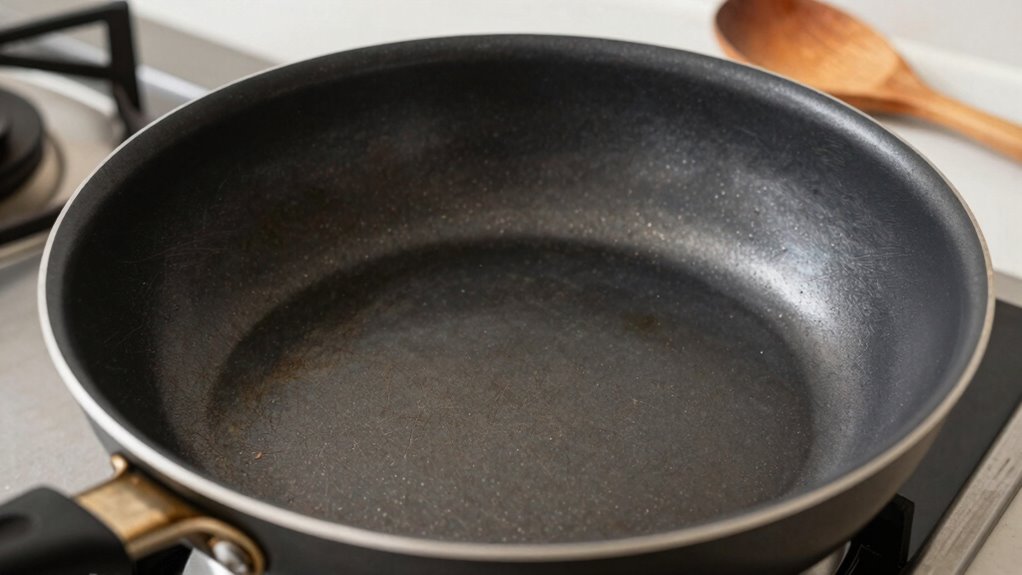
You should consider replacing your nonstick pan when its surface shows significant damage, such as deep scratches, peeling, or flaking, because these issues can lead to the ingestion of coating particles. The pan material—whether Teflon, ceramic, or hard-anodized—affects how quickly damage occurs and safety guidelines for use. Once the coating deteriorates, it’s no longer safe, and continued use can pose health risks.
- Deep scratches or peeling from regular use
- Persistent flaking despite careful cleaning
- Warping or discoloration that affects cooking
- Damage that exposes the pan’s base material
Following safety guidelines ensures you’re not risking ingestion of harmful particles. When in doubt, replacing your pan is the safest choice to protect your health.
Frequently Asked Questions
What Specific Temperature Range Does “Medium” Heat Represent on Various Stoves?
When you set your stove to “medium,” you’re typically aiming for a temperature range of 300°F to 375°F, though it varies by burner calibration and stove type. You’ll notice consistent temperature control, but it’s best to utilize a thermometer for accuracy. This guarantees your nonstick pans don’t overheat and helps you maintain precise cooking, especially since burner calibration can affect the actual heat your stove produces at “medium.”
How Does Cookware Material Affect Heat Distribution at Medium Settings?
Your cookware material substantially impacts heat distribution at medium settings. Copper, with its high conductivity, spreads heat evenly, preventing hot spots and ensuring consistent cooking. Ceramic-insulated pans, on the other hand, offer better heat retention but can have uneven distribution, especially if the ceramic isn’t well-made. So, choosing copper helps you achieve more uniform cooking at medium heat, while ceramic insulation provides excellent heat retention but may require attention to distribution.
Can Certain Foods or Ingredients Influence Safe Cooking Temperatures?
You might think your cooking is safe, but certain foods and ingredients can secretly raise risks. When you use cooking oil or cook foods with high moisture, they can cause temperature spikes beyond safe limits. This unexpected boost can damage your nonstick pan or release harmful fumes. Always monitor your heat, especially when adding ingredients that release moisture or contain oils, to keep your cooking safe and your pan in top shape.
Are There Visual Cues Indicating Optimal Heat Levels for Nonstick Pans?
You can spot visual cues and heat indicators to gauge the right temperature for your nonstick pan. When the pan heats up, you’ll see slight ripples or shimmering on the surface, signaling it’s ready. If the oil starts to shimmer or smoke, it’s a sign the heat is high. Use these visual cues to prevent overheating, ensuring your nonstick pan stays in good condition and your food cooks evenly.
How Does Altitude or Cookware Size Impact Heat Perception on the Stove?
Altitude effects can cause water to boil at lower temperatures, making heat feel different on your stove. Larger cookware dimensions distribute heat more evenly, but can also take longer to heat up, affecting your perception of temperature. When cooking at high altitudes, you might need to turn up the heat slightly, while smaller pans heat faster and may require more attentive temperature adjustments. Always observe your pan’s response to guarantee safe, effective cooking.
Conclusion
Remember, knowing what “medium” truly means helps you cook safely and extend your pan’s life. Keep an eye on heat levels, avoid overheating, and handle your nonstick pans with care. As the saying goes, “A stitch in time saves nine.” By maintaining proper temperatures and practicing good habits, you’ll enjoy better results and safer cooking experiences every time. Stay attentive, and your nonstick pans will serve you well for years to come.