
Even in kitchens that look spotless, cross-contamination can still happen because bacteria hide in microscopic cracks, beneath surfaces, or in hard-to-reach spots. You might clean visibly dirty areas but overlook hidden germs or storage mishaps, like raw meats above ready-to-eat foods. Using the same utensils or not washing your hands properly also spreads bacteria. If you want to find out how to keep your kitchen truly safe, keep exploring these common pitfalls.

Get kitchen staples and gadgets delivered free with Prime
- Fast, free delivery on millions of items
- Prime Video, Amazon Music and more included
- Member-only deals all year
Key Takeaways
- Bacteria can reside in microscopic crevices or beneath surfaces, undetectable during cleaning.
- Improper storage, such as raw meats above ready-to-eat foods, can cause drip contamination.
- Using the same utensils or cutting boards for different foods without proper cleaning spreads bacteria.
- Hands and surfaces can quickly transfer bacteria if hygiene practices are neglected.
- Small oversights or overlooked areas can harbor bacteria despite a visibly clean environment.
Have you ever wondered how even the cleanest kitchens can pose a risk of cross-contamination? It might seem counterintuitive, especially when you follow strict cleaning routines. Yet, cross-contamination can still happen in environments that appear spotless. That’s because food safety isn’t just about visible cleanliness; it’s about preventing the transfer of harmful bacteria from one surface or food item to another. Kitchen sanitation plays a crucial role, but it’s not foolproof on its own. Small oversights, like improper handling or overlooked areas, can introduce hazards, even in a well-maintained space.
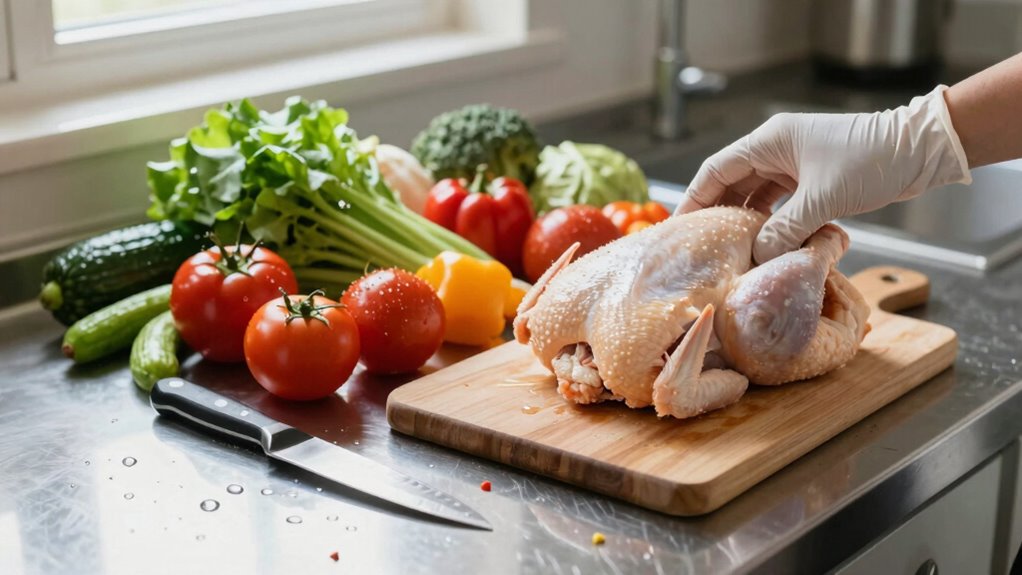
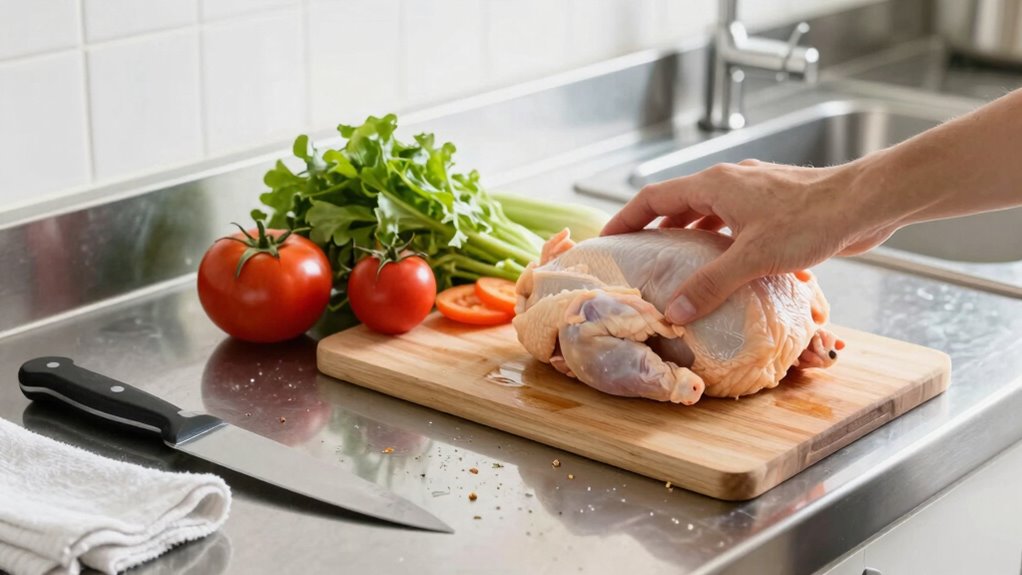
One common reason cross-contamination occurs in clean kitchens is due to improper storage. You might clean your countertops thoroughly, but if raw meats are stored above ready-to-eat foods, juices or drippings can drip down and contaminate other items. This kind of mistake is easy to overlook, especially if you’re rushing or forgetful. It emphasizes that food safety involves more than just cleaning—it requires thoughtful organization and proper storage practices. Hygiene practices during food prep are equally important. For example, using the same cutting board for raw chicken and vegetables without washing it in between can transfer bacteria. Even if your kitchen looks spotless, bacteria can hide in microscopic crevices or under the surface.
Another reason cross-contamination happens is through improper utensil use. You might wash your knives and utensils after each use, but if you don’t dry or store them properly, bacteria can survive or transfer. Using the same cloth to wipe multiple surfaces also spreads germs rather than removing them. These small, often unnoticed habits undermine kitchen sanitation efforts and can lead to foodborne illnesses, despite a clean environment. Implementing proper utensil sanitation routines is crucial for maintaining a fully hygienic kitchen. Additionally, effective cleaning techniques can help eliminate bacteria hiding in hard-to-reach areas, further reducing contamination risks. Regularly monitoring cleaning schedules ensures that no spots are overlooked and bacteria have no chance to multiply.
Additionally, people sometimes underestimate the importance of hand hygiene. Even in a clean kitchen, if you don’t wash your hands properly after handling raw ingredients or touching contaminated surfaces, you risk spreading bacteria. It’s easy to forget, especially in busy kitchens, that hands are a primary vehicle for cross-contamination. Proper handwashing, along with regular disinfection of frequently touched areas like doorknobs and switches, helps reduce this risk. Recognizing the significance of hygiene practices is essential for comprehensive food safety.
In the end, preventing cross-contamination requires constant vigilance. It’s about understanding that food safety isn’t only about visible cleanliness but also about managing every step of food handling, storage, and sanitation. Even in the cleanest kitchens, small mistakes can undermine your efforts. Staying mindful and adhering to best practices ensures that your kitchen remains a safe space for preparing healthy, contamination-free meals.
As an affiliate, we earn on qualifying purchases.
Frequently Asked Questions
Can Cross-Contamination Occur With Only Cooked Foods Present?
Yes, cross-contamination can occur even with only cooked foods present. If cooking surfaces aren’t properly cleaned, bacteria from raw ingredients or contaminated utensils can transfer to cooked foods. Maintaining kitchen cleanliness is essential; always wash cutting boards and utensils between uses. Even in a clean kitchen, neglecting proper cleaning routines can lead to bacteria transfer, making it possible for cross-contamination to happen despite only cooked foods being on display.
How Quickly Can Bacteria Transfer Between Surfaces?
Bacterial transfer between surfaces can happen almost instantly, often within seconds of surface contact. When you touch one contaminated surface and then another, bacteria can transfer quickly, especially if the surfaces are moist or porous. You need to be mindful of surface contact, regularly sanitize high-touch areas, and avoid cross-contact, even in clean kitchens. Quick bacterial transfer underscores the importance of good hygiene practices to prevent cross-contamination.
Are Certain Kitchen Tools More Prone to Spreading Bacteria?
Imagine you’re in a 1920s speakeasy, but your kitchen’s just as risky! Certain kitchen tools, like cutting boards, knives, and sponges, are more prone to spreading bacteria because they directly contact food. To maintain excellent kitchen hygiene, always prioritize tool sterilization. These items can harbor bacteria even after cleaning, so regularly sterilize them to prevent cross-contamination and keep your kitchen safe.
Does Using the Same Cutting Board for Different Foods Increase Risk?
Yes, using the same cutting board for different foods increases the risk of cross-contamination. It’s essential to maintain good utensil hygiene and practice knife safety by thoroughly cleaning and sanitizing your cutting boards between uses. This prevents bacteria from raw meats or other foods from transferring to ready-to-eat items, protecting your health. Always designate separate boards for different food types, especially raw meats and produce, to minimize contamination chances.
Can Cross-Contamination Happen During Food Storage?
Think of your kitchen as a battleground where cross-contamination can stealthily strike. Yes, it can happen during food storage if you’re not careful. Food packaging and storage containers can harbor bacteria, which transfer from raw to cooked foods if left unchecked. To prevent this, always store raw meats separately, use airtight containers, and keep packages sealed tightly. Proper storage keeps your kitchen safe and your meals healthy.
food storage organization containers
As an affiliate, we earn on qualifying purchases.
As an affiliate, we earn on qualifying purchases.
Conclusion
Even in spotless kitchens, cross-contamination can secretly occur, reminding you that no space is completely risk-free. It’s easy to believe that cleanliness alone guarantees safety, but bacteria don’t always follow visible rules. Think about how a tiny slip—like a forgotten cutting board or unwashed hands—can cause illness. Staying vigilant and mindful isn’t just about cleanliness; it’s about protecting yourself and loved ones from unseen dangers lurking even in the cleanest kitchens.
cutting board set with color coding
As an affiliate, we earn on qualifying purchases.
As an affiliate, we earn on qualifying purchases.
As an affiliate, we earn on qualifying purchases.
Halloween Picks
halloween
As an affiliate, we earn on qualifying purchases.