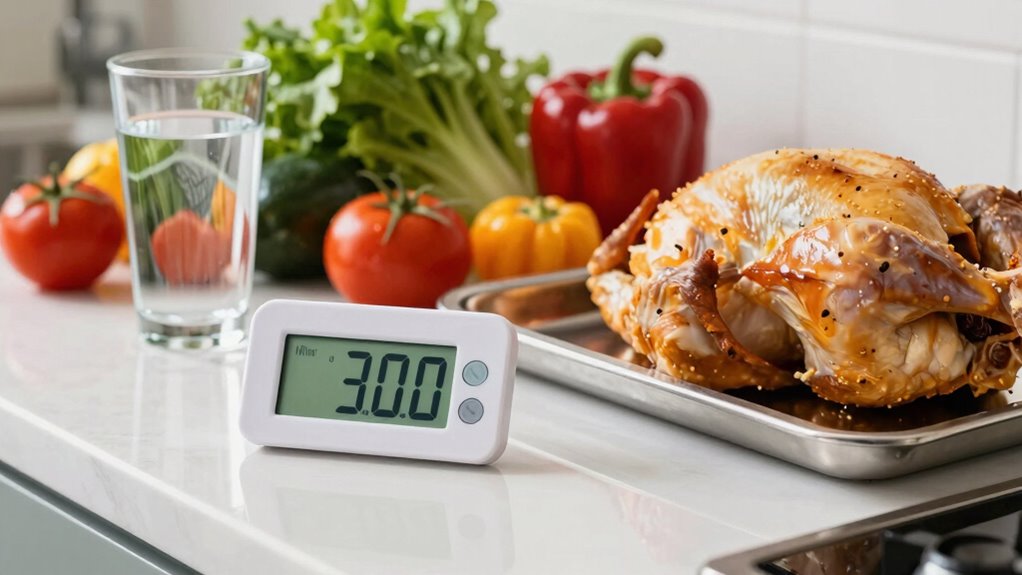
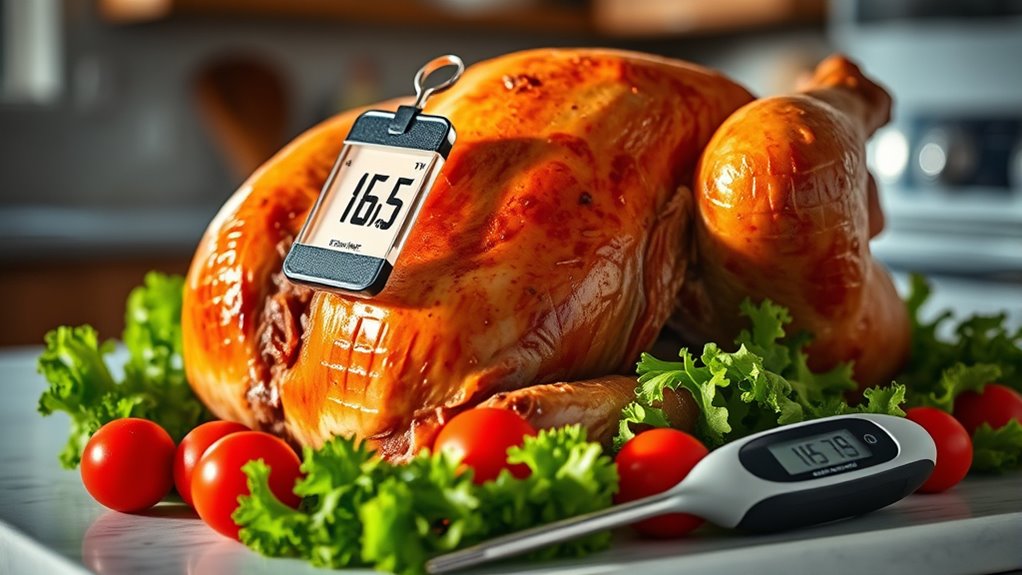
To prevent food poisoning, keep your raw meats at 40°F or below to slow bacteria growth, and guarantee cooked foods reach the right internal temperatures—usually 165°F for poultry or 145°F for beef—to kill germs. Always use a food thermometer, store foods properly, and avoid cross contamination by washing hands and surfaces often. Following these temperature rules helps keep your food safe; more tips are just ahead to help you stay protected.
Key Takeaways
- Keep refrigerators at or below 40°F (4°C) to slow bacterial growth in stored foods.
- Thaw frozen foods safely in the refrigerator, not at room temperature.
- Cook meats to the recommended internal temperatures to kill harmful bacteria.
- Use a food thermometer to verify that cooked foods reach safe temperatures.
- Regularly monitor and maintain proper storage temperatures to prevent bacterial proliferation.
Have you ever wondered how to prevent food poisoning? One of the most effective ways is by understanding and controlling cross contamination risks. Cross contamination happens when harmful bacteria or viruses transfer from one surface or food to another, often through unclean utensils, cutting boards, or hands. To reduce these risks, always separate raw meats from ready-to-eat foods, and use different cutting boards for different ingredients. Make sure to clean and sanitize all surfaces, tools, and containers thoroughly after handling raw meat, poultry, or seafood. This not only reduces bacteria transfer but also enhances food safety by minimizing contamination opportunities. Proper storage is also vital—keep raw meats in sealed containers on the bottom shelf of your fridge to prevent juices from dripping onto other foods. Keeping your kitchen organized helps minimize accidental contact between different food types, further lowering cross contamination risks.
Proper hand hygiene is another cornerstone of food poisoning prevention. You should wash your hands thoroughly with soap and warm water before and after handling any food, especially raw meat, poultry, or seafood. Hands are a common vehicle for bacteria transfer, so neglecting hand hygiene can easily lead to cross contamination. When you’re preparing food, wash your hands frequently, particularly after touching raw ingredients, handling garbage, or using the bathroom. Dry your hands with a clean towel or paper towel to make certain bacteria aren’t transferred through dampness. If you’re cooking for others, don’t forget to remind everyone about the importance of proper hand hygiene. Using gloves can help, but they aren’t a substitute for proper handwashing—gloves can still harbor bacteria if not changed regularly.
In addition, understanding proper food storage techniques can significantly reduce the risk of bacterial growth and cross contamination. For example, maintaining consistent refrigeration temperatures is crucial; the fridge should be kept at or below 40°F (4°C) to inhibit bacterial proliferation. Besides washing hands, pay attention to maintaining clean fingernails and avoiding touching your face or hair during food prep. Germs can hitch a ride on your skin and be transferred to food or surfaces. When handling food, be diligent about cleaning your workspace regularly. Use hot, soapy water to scrub cutting boards, utensils, and countertops, especially after preparing raw foods. It’s also beneficial to maintain proper refrigeration temperatures to inhibit bacterial proliferation and keep food safe longer. Avoid touching cooked or ready-to-eat foods with unwashed hands or contaminated utensils, as this can quickly spread bacteria. Staying informed about food safety guidelines and best practices helps you create a safer kitchen environment for everyone.
digital food thermometer for cooking
As an affiliate, we earn on qualifying purchases.
As an affiliate, we earn on qualifying purchases.
Frequently Asked Questions
How Can I Tell if Food Has Been Stored at Unsafe Temperatures?
You can tell if food has been stored at unsafe temperatures by checking food storage conditions and using temperature indicators. If food feels excessively warm or cold, or if it’s past its expiration date, it’s a sign. Use a food thermometer to guarantee perishable items stay within safe temperature ranges—below 40°F for cold storage and above 140°F for hot storage. Always trust your senses and temperature indicators to keep food safe.
What Are the Best Ways to Reheat Leftovers Safely?
To reheat leftovers safely, follow microwave safety tips by using a microwave-safe container and covering the food to prevent splatters. Use reheating guidelines to make sure the food reaches an internal temperature of 165°F (74°C). Stir or rotate food during reheating for even heat distribution. Always check the temperature with a food thermometer before eating, and avoid reheating multiple times, as this increases the risk of bacteria growth.
How Do Temperature Rules Vary for Different Types of Food?
Think of food safety as a dance with temperature rules guiding your steps. For different foods, you’ll keep raw meats below 40°F and hot dishes above 140°F, avoiding the dangerous zone where bacteria thrive. Follow food storage guidelines and stay out of the temperature danger zones to keep your meals safe. Each type of food has a rhythm—know it, and you’ll stay in perfect harmony with food safety.
Can Cold Temperatures Kill Bacteria in Food?
Cold temperatures can’t kill bacteria in food, but cold storage slows bacterial growth considerably. When you keep food at or below 40°F (4°C), you stop bacteria from multiplying rapidly, helping prevent food poisoning. However, if bacteria are already present, cold temperatures only inhibit their growth, they don’t eliminate them. Consequently, always refrigerate perishable foods promptly to keep bacteria from multiplying and reduce your risk of illness.
What Are Common Mistakes People Make With Food Temperature Control?
You often make mistakes like improper thawing, which can let bacteria grow, or ignoring thermometer readings, leading to unsafe temperatures. You might leave food out too long or not check if your refrigerator is cold enough. Always use a thermometer to verify proper temperatures and thaw food safely in the fridge. These small steps help prevent food poisoning and keep your meals safe to enjoy.
refrigerator thermometer for food safety
As an affiliate, we earn on qualifying purchases.
As an affiliate, we earn on qualifying purchases.
Conclusion
Remember, regulating the right temperatures is your most mighty method to minimize malady. Maintain, monitor, and master your meals’ minimum and maximum limits to prevent poisoning and promote proper preparation. By balancing bacteria’s banishment with bold boundaries, you’ll banish the bothersome bugs that cause foodborne illnesses. So stay sharp, stay steady, and stick to these temperature tricks—your health hinges on your helpful habits. Keep kitchen safety simple, sensible, and superbly secure!
meat internal temperature probe
As an affiliate, we earn on qualifying purchases.
As an affiliate, we earn on qualifying purchases.
food storage containers with temperature control
As an affiliate, we earn on qualifying purchases.
As an affiliate, we earn on qualifying purchases.