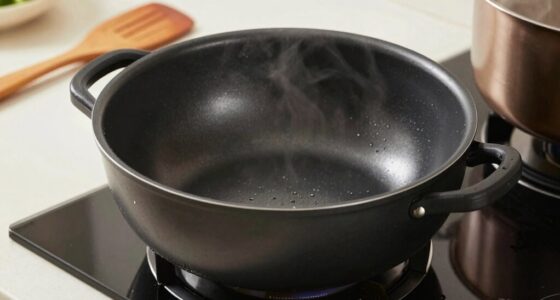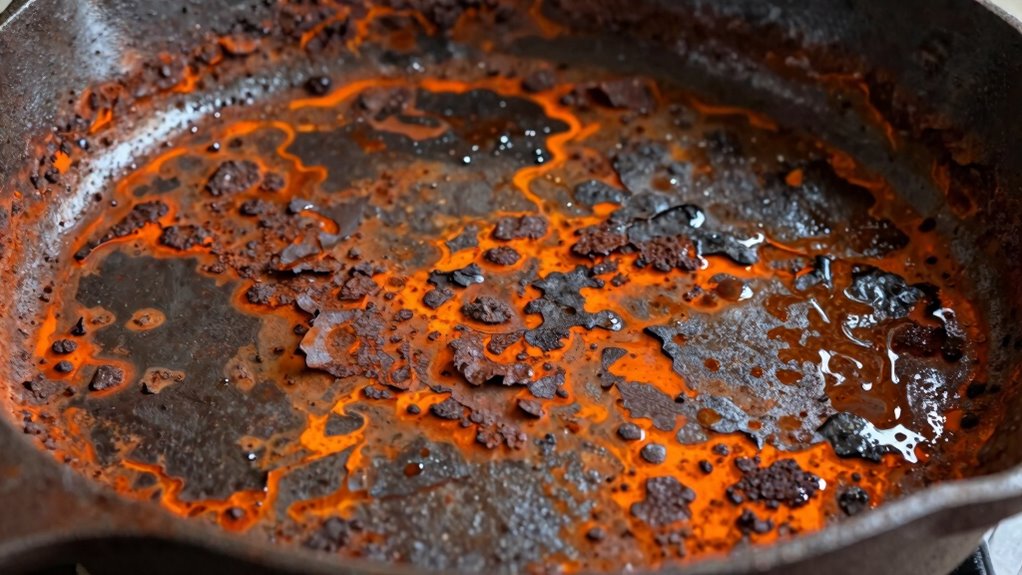

Cast iron rusts mainly when moisture reacts with its surface, causing oxidation that weakens the metal. Water contact from spills, soaking, or humid environments speeds up this process, especially if the surface isn’t properly dried or seasoned. To fix rust quickly, scrub the affected area with steel wool or a wire brush, dry thoroughly, then re-season to protect against future damage. Keep going for proven tips to keep your cast iron in top shape.
Key Takeaways
- Rust forms when cast iron reacts with moisture and oxygen, causing oxidation and metal deterioration.
- Water contact from spills, soaking, or poor drying accelerates rust development.
- Lack of proper seasoning and maintenance leaves the surface unprotected against moisture.
- Damaged or flaky surfaces indicate rust and surface degradation, reducing non-stick quality.
- Fast fix involves scrubbing with steel wool or rust removers, drying thoroughly, and re-seasoning the pan.

Rust Eraser, Premium Rust Remover for Cast Iron Pans, Knives & Tools, Hard Anodized Cookware and Other Pots, Remove Rust from Any Metallic Surface – 1 Pack
Non-Toxic and Safe: Our rust eraser is made of rubber and silicon carbide, and do not contain harmful…
As an affiliate, we earn on qualifying purchases.
As an affiliate, we earn on qualifying purchases.
What Causes Rust on Cast Iron? The Chemistry Made Simple
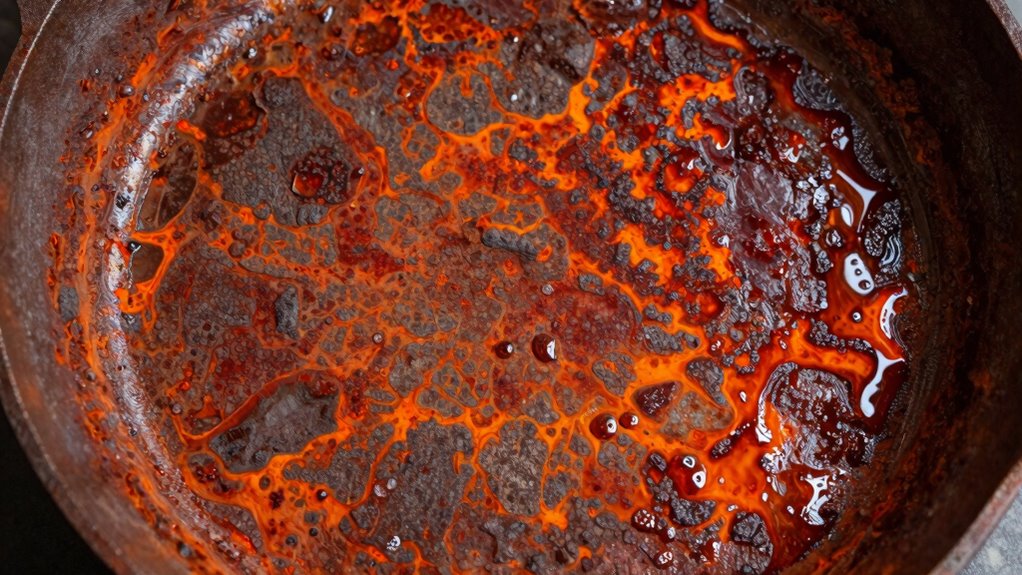
Rust forms on cast iron when its surface reacts with moisture and oxygen in the environment. This process involves chemical reactions where iron atoms undergo oxidation, meaning they lose electrons. During the oxidation process, iron combines with water and oxygen, creating iron oxides—commonly known as rust. The presence of moisture accelerates these chemical reactions, especially in humid conditions. When water penetrates the porous surface of cast iron, it facilitates the transfer of electrons from iron to oxygen, leading to rust formation. This corrosion weakens the metal over time. Understanding this simple chemistry helps you realize that controlling moisture and oxygen exposure can considerably slow down rust development on your cast iron cookware or tools.

La Tourangelle, Expeller-Pressed Grapeseed Oil, High Heat Neutral Cooking Oil, Cast Iron Seasoning, Also Great for Skin, Hair, and DIY Beauty Recipes, 16.9 fl oz
Mild and Easy: Grapeseed Oil is at its best in stir-fries and sautés; it doesn't overwhelm other ingredients…
As an affiliate, we earn on qualifying purchases.
As an affiliate, we earn on qualifying purchases.
Signs Your Cast Iron Is Rusted and When to Act
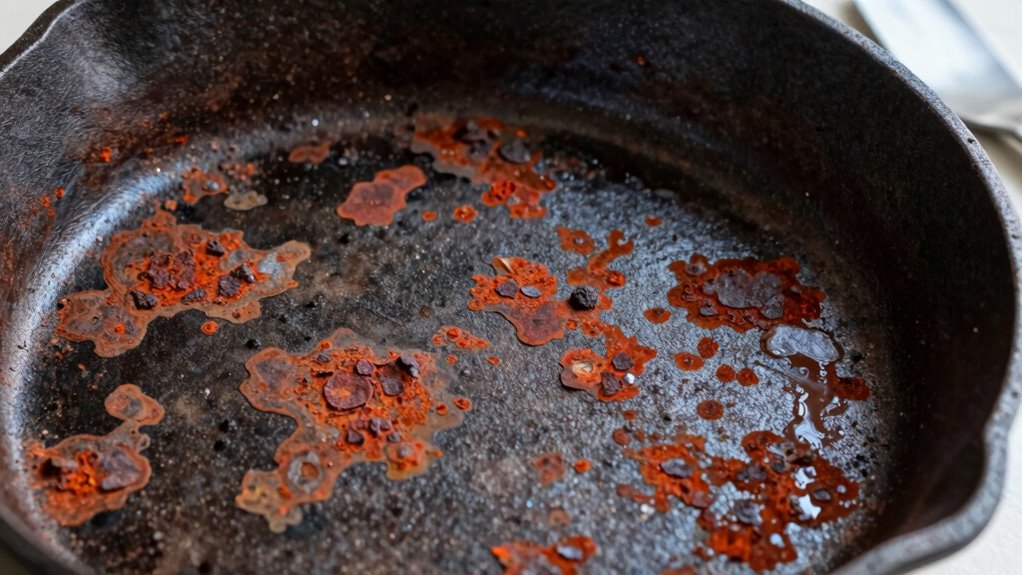
You’ll notice rust as visible spots or a discolored, flaky surface on your cast iron. These signs mean it’s time to act before the rust worsens. If your cookware loses its non-stick quality, it’s a clear indication that rust has compromised its surface. Regular maintenance, such as proper seasoning, can help prevent rust and preserve the cookware’s performance. Additionally, understanding cast iron care can extend the lifespan of your cookware and keep it in optimal condition. Incorporating filter maintenance techniques in your cleaning routine can also help maintain your cast iron’s integrity and prevent moisture buildup that leads to rust.
Visible Rust Spots
When you notice reddish-brown spots on your cast iron cookware, it’s a clear sign that rust has started to form. These visible rust spots indicate your surface protection has weakened, allowing moisture to cause corrosion. Acting quickly is essential to prevent further damage. To stop rust from spreading, focus on rust prevention by cleaning the spots thoroughly and drying your skillet completely. Applying a light coat of oil can help protect the surface and create a barrier against moisture. Regular maintenance keeps your cast iron in top shape and prevents rust from reappearing. Understanding metal oxidation is key to preventing rust, so keeping your cookware dry and well-seasoned is crucial. Keep an eye out for these spots, and don’t wait too long—addressing rust early is the fastest way to preserve your cookware’s longevity.
Discolored or Flaky Surface
Discolored or flaky surfaces are clear signs that your cast iron has started to rust. These issues happen when moisture stays on the surface, causing oxidation. To prevent discoloration, keep your pan dry and seasoned properly. Flaky surface causes include improper cleaning, using harsh abrasives, or neglecting seasoning layers. Imagine:
- A dull, uneven sheen replacing the shiny black finish.
- Tiny, peeling flakes coming off when you scrub or wipe.
- Areas of rust-colored patches spreading across the surface.
Addressing these signs early helps prevent further rusting and maintains your cast iron’s non-stick qualities. Focus on proper discoloration prevention by cleaning thoroughly after use and avoiding moisture buildup. If flakes appear, re-season promptly to restore a smooth, protective surface and stop rust from advancing. European cloud innovation emphasizes the importance of sustainable, secure solutions to ensure your cookware remains protected against environmental factors. Regular maintenance routines can also help prevent rust formation and extend the lifespan of your cast iron. Incorporating proper cleaning techniques can further reduce the risk of rust developing over time. Additionally, understanding the importance of seasoning layers can greatly enhance your cast iron’s resistance to rust and corrosion.
Loss of Non-Stick Quality
Have you noticed your cast iron food sticking more than usual or struggling to release easily? This loss of non-stick quality often signals seasoning mistakes or cleaning errors. When you over-clean or use harsh soaps, you strip away the seasoning layer, making the surface rough and prone to sticking. Similarly, seasoning mistakes, like applying too thin or uneven layers, can cause food to cling. Rust can also develop beneath the seasoning, further reducing its non-stick properties. To fix this, strip the rust and reseason properly, ensuring you build a durable, smooth coating. Regularly maintaining your cast iron with proper cleaning techniques and seasoning will restore its non-stick performance and prevent future rust-related issues. Proper ventilation considerations can also help prevent moisture buildup that leads to rust formation.

5Pcs Steel Wool Scrubber with Replacement Wire Sponge Pads Set, Stainless Steel Scrubber with Handle for Scouring Stubborn Messes from Cast Iron, Pots, Pans, Grill, Stoves, Sink(1 Scrubber+4 Pads)
[ You Will Receied ] 1pcs steel wool scrubber and 4pcs steel cleaning pads for replacement, which are…
As an affiliate, we earn on qualifying purchases.
As an affiliate, we earn on qualifying purchases.
How to Remove Rust Quickly From Your Cast Iron Pan

Rust can develop quickly on a cast iron pan if it’s left unseasoned or exposed to moisture, but removing it doesn’t have to be a long process. To get rid of rust fast, follow these simple steps:
- Scrub the rust with a steel wool pad or gritty brush to reveal clean metal underneath.
- Rinse thoroughly with water and dry immediately to prevent new rust.
- Apply a thin layer of vegetable oil and heat the pan to restore its seasoning.
- Regularly maintaining your cookware by cleaning and drying it properly can help prevent future rust formation. Additionally, understanding how rust forms can guide you in taking preventative measures to keep your cast iron in good condition. Using proper storage techniques, such as keeping the pan in a dry environment, is also essential for rust prevention. Developing a routine of proper cast iron care is one of the best ways to extend the lifespan and performance of your cookware. Being aware of the impact of moisture on cast iron can help you take targeted steps to avoid rust and preserve its quality.
These cooking tips help preserve your pan’s versatility, ensuring it stays non-stick and ready for any recipe. Quick rust removal keeps your cast iron in top shape for everything from searing steaks to baking cornbread. Maintaining rust-free cookware is key to enjoying all the benefits of cast iron’s durability.

Lodge Care Scrub Brush, 10 Inch, Off White
One Lodge Care Scrub Brush, 10 Inch
As an affiliate, we earn on qualifying purchases.
As an affiliate, we earn on qualifying purchases.
Re-Seasoning Your Cast Iron After Rust Removal
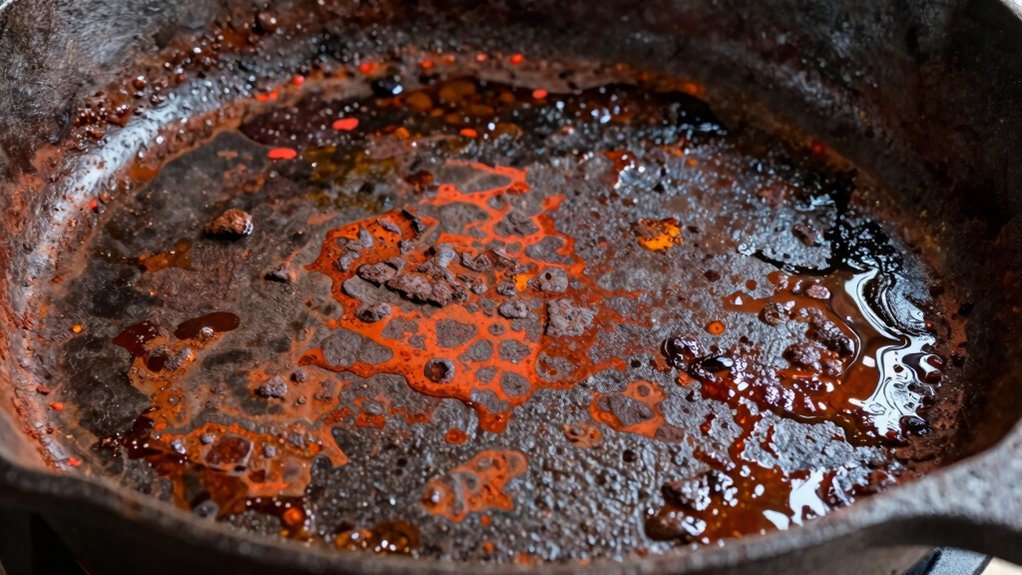
After removing rust from your cast iron pan, re-season it promptly to restore its non-stick surface and protect against future corrosion. Proper seasoning maintenance is essential to keep your pan rust-free and functioning well. Start by applying a thin layer of vegetable oil or shortening all over the surface. Use a paper towel to spread it evenly, ensuring no excess remains. Then, heat your oven to 450°F and bake the pan upside down for about an hour, placing aluminum foil underneath to catch drips. This process creates a durable, protective layer that prevents moisture from causing rust. Regular re-seasoning not only maintains your pan’s non-stick qualities but also prevent surface oxidation and enhances rust prevention, extending its lifespan and ensuring great cooking results every time. Consistent care significantly contributes to the longevity of your cast iron cookware and helps prevent rust from reappearing. Additionally, understanding how metal composition influences rust formation can guide better maintenance practices. Proper cleaning techniques and avoiding soaking the pan in water are also crucial in preventing rust build-up, further safeguarding your cookware.
Best Tools and Products for Rust Removal
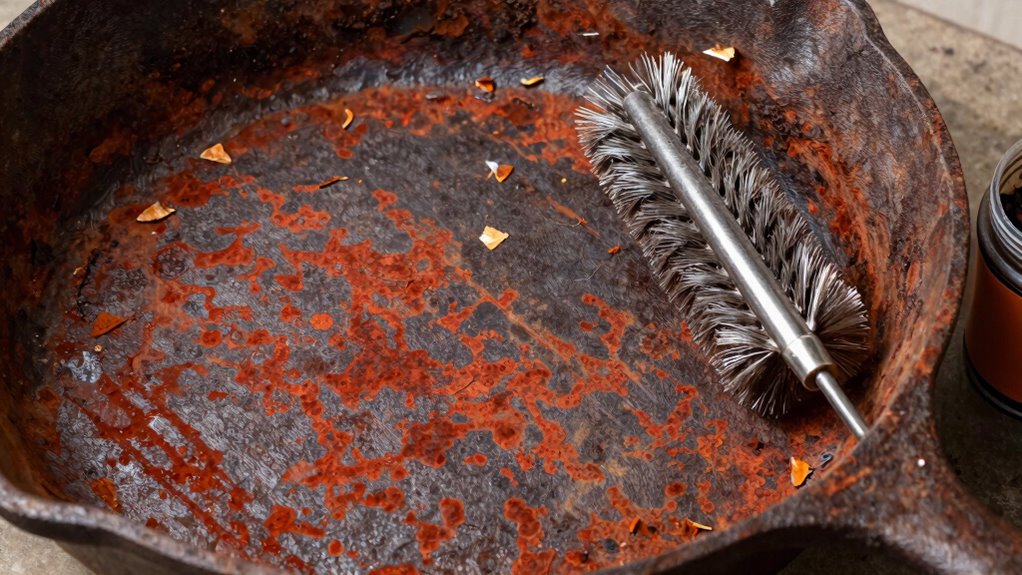
Removing rust effectively requires the right tools and products, ensuring you can restore your cast iron pan without damaging its surface. For cast iron restoration, invest in quality rust removal tools that suit your needs. Consider these options:
- Steel wool or abrasive pads – perfect for scrubbing away stubborn rust spots.
- Chemical rust removers – fast-acting solutions that dissolve rust without scratching.
- Wire brushes – ideal for reaching into crevices and prepping the surface for seasoning.
Using the right rust prevention tools is equally important to keep rust at bay after cleaning. Choose products that provide a protective barrier, helping your cast iron stay rust-free longer. Proper seasoning techniques help maintain the pan’s surface and prevent future rusting. Implementing preventive measures can significantly extend the lifespan of your cast iron cookware. Additionally, understanding the importance of coaching and mentoring can enhance your learning process for proper maintenance and care. Incorporating visual and auditory cues into your routine can make learning and remembering maintenance steps easier, leading to better long-term results. With proper tools and products, you’ll simplify rust removal and prolong your pan’s lifespan.
How Proper Seasoning Prevents Rust: And What Goes Wrong When It Fails
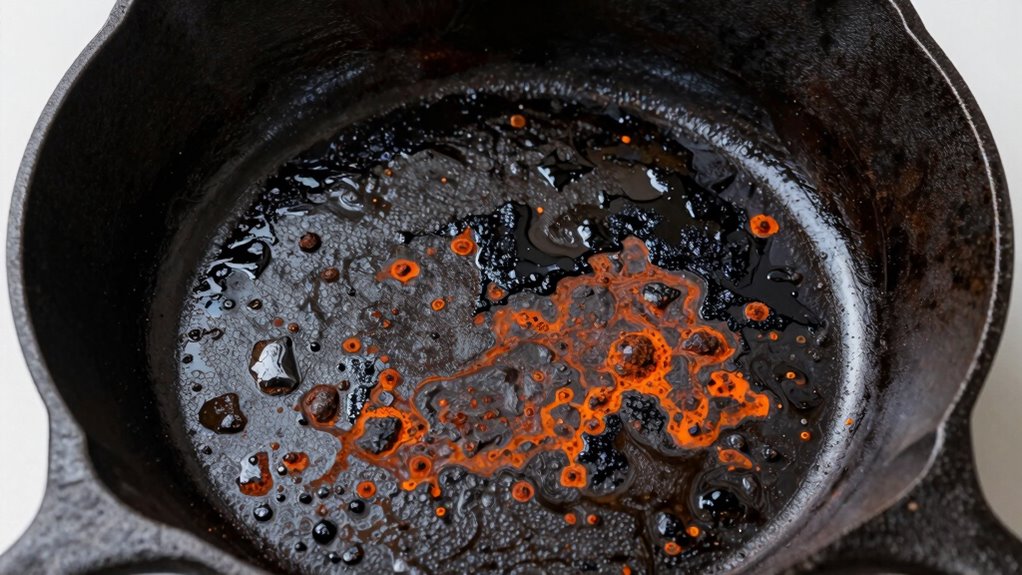
Proper seasoning creates a natural, protective layer on your cast iron, preventing moisture from reaching the metal and causing rust. When you season correctly, these seasoning layers form a durable barrier that guards against humidity and water exposure. This barrier is vital for rust prevention because it stops water from penetrating the iron’s surface. However, if your seasoning is thin, uneven, or damaged, it won’t effectively shield your pan. Over time, poor seasoning can lead to exposed spots, allowing rust to form easily. That’s why maintaining a strong, well-built seasoning layer is essential for rust prevention. When your seasoning fails or wears down, your cast iron becomes vulnerable, making rust more likely. Proper seasoning is your first line of defense against corrosion.
Tips to Keep Rust Away and Maintain Your Cast Iron for the Long Run
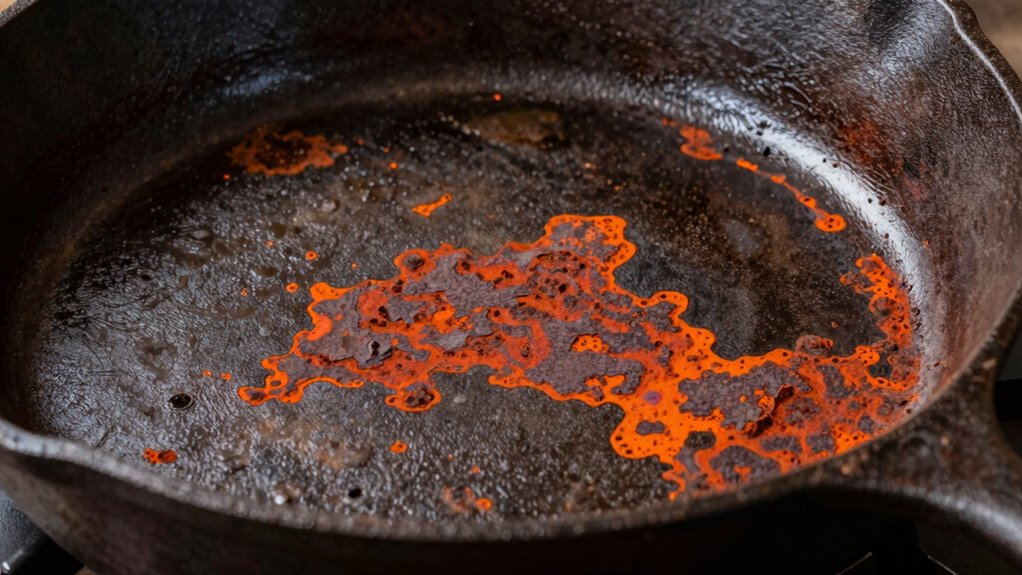
To keep rust at bay and guarantee your cast iron lasts for years, regular maintenance is key. First, avoid seasoning mistakes like using too much oil or not heating evenly, which can cause uneven protection. Second, always dry your skillet thoroughly after cleaning to prevent moisture from lingering. Third, follow proper storage tips: store in a dry place, keep the lid slightly ajar to allow airflow, and avoid stacking heavy objects on top. Fourth, understanding home energy management can help you control climate and humidity levels in your storage area, reducing rust risk. These simple steps help maintain a smooth, seasoned surface that resists rust. Consistent care ensures your cast iron stays rust-free, functional, and ready for use. By paying attention to seasoning and storage, you’ll extend its lifespan and enjoy flawless performance for years to come.
Common Mistakes That Lead to Rust and How to Avoid Them
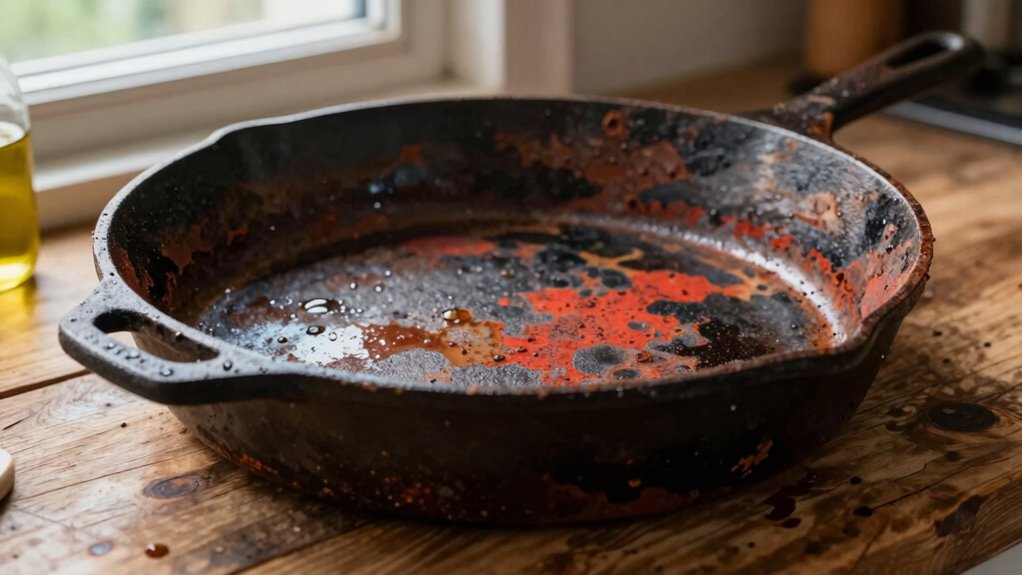
One common mistake is neglecting proper seasoning, which leaves your cast iron vulnerable to moisture. Exposure to water or humidity without adequate care quickly leads to rust. Additionally, poor cleaning habits or skipping thorough drying can invite corrosion—so make sure you’re drying and maintaining your skillet correctly.
Ignoring Proper Seasoning
Ignoring proper seasoning is a common mistake that can quickly lead to rust forming on your cast iron. Without a solid seasoning process, your skillet lacks a protective barrier, making it vulnerable to moisture and oxidation. To prevent this, you need to build up a durable layer of polymerized oil, which acts as a shield. Imagine:
- A glossy, black surface that repels water
- An even coating filling every pore and crevice
- A barrier that keeps rust at bay during cooking and storage
Neglecting seasoning compromises rust prevention, leaving your pan exposed. Proper seasoning isn’t just about aesthetics; it’s essential for long-term rust resistance. Skipping this step can turn a trusty cast iron into a rusty mess, so invest time in developing a strong, well-maintained seasoning layer.
Moisture Exposure Risks
Moisture is the main culprit behind rust formation on cast iron, especially when it’s left exposed for too long. Water intrusion from rain, spills, or high humidity levels can quickly cause rust to develop. Even small amounts of moisture on the surface can lead to corrosion if not dried promptly. Humidity fluctuations, like moving from a humid environment to a dry one, can cause condensation and create a continuous moisture cycle that accelerates rusting. To prevent this, always dry your cast iron thoroughly after cleaning or exposure to water. Store it in a dry, low-humidity space, and consider using a moisture absorber if necessary. Managing water intrusion and humidity levels is key to keeping your cast iron rust-free and in good condition.
Inadequate Cleaning Habits
Failing to clean cast iron properly can leave residue, dirt, and moisture on the surface, which accelerates rust formation. Common cleaning oversights include neglecting to dry the pan thoroughly, skipping proper seasoning maintenance, and using harsh soaps that strip protective layers. These mistakes can cause seasoning failures, exposing raw iron to moisture and air. Visualize these errors:
- Leaving dampness behind after washing, creating a breeding ground for rust.
- Forgetting to re-season after cleaning, leaving the surface unprotected.
- Using abrasive scrubbers that damage the seasoning, exposing raw metal to moisture.
Avoid these pitfalls by drying your skillet completely, maintaining a solid seasoning layer, and cleaning with gentle tools. Proper cleaning habits help preserve your cast iron’s integrity and prevent rust from taking hold.
Behavioral Search Tips: What to Do After Removing Rust?

Once you’ve successfully removed the rust from your cast iron, the next step is to protect it from future corrosion. Focus on rust prevention by applying proper seasoning techniques. Start by cleaning the pan thoroughly, then apply a thin layer of vegetable oil or shortening all over its surface. Use a paper towel or cloth to evenly spread the oil, ensuring no excess remains. Bake the skillet in the oven at around 375°F for an hour, then let it cool. This process creates a natural, protective non-stick coating that shields the metal from moisture. Regular seasoning helps maintain this barrier, reducing the likelihood of rust returning. Keep up with these rust prevention habits, and your cast iron will stay in great shape for years.
Long-Term Care: How to Keep Your Cast Iron Rust-Free
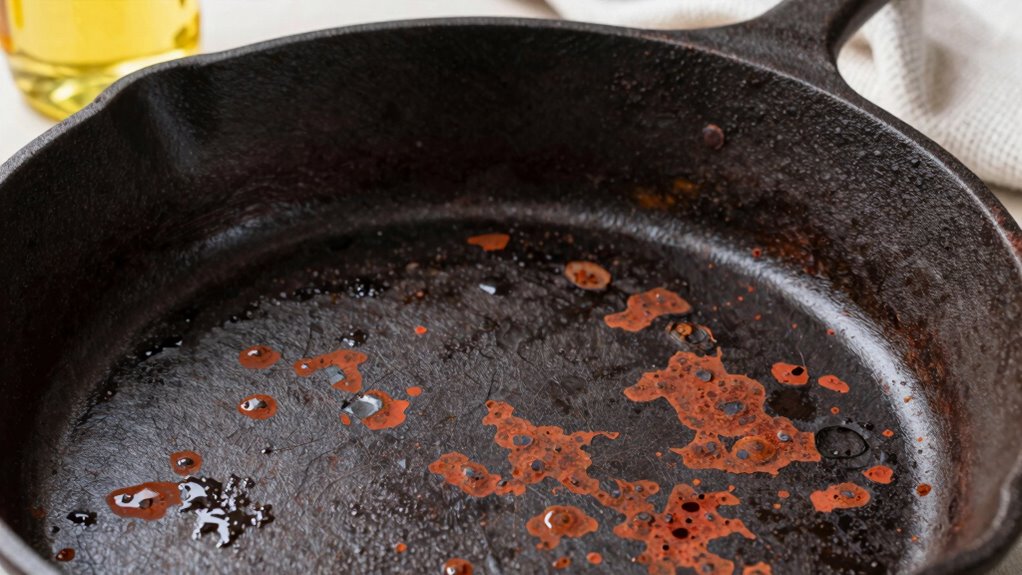
To keep your cast iron rust-free over time, you need to use proper cleaning techniques that remove residue without damaging the surface. Regular seasoning maintenance is essential to create a protective layer that wards off moisture. Staying consistent with these practices guarantees your skillet remains in top shape for years to come.
Proper Cleaning Techniques
Proper cleaning is essential to prevent rust and keep your cast iron in top condition. Regularly cleaning your skillet helps remove food residue and moisture that can lead to rust. To do this effectively, picture yourself:
- Using a stiff brush or chainmail scrubber to loosen stuck-on bits without stripping seasoning.
- Rinsing with warm water, avoiding soap unless necessary, then drying thoroughly with a towel.
- Applying a light layer of seasoning oil immediately after cleaning to seal the surface.
Keep in mind, cleaning frequency depends on your use—more frequent cleaning ensures the seasoning remains intact and rust stays at bay. By maintaining proper cleaning techniques, you’ll extend your cast iron’s lifespan and keep it rust-free for years to come.
Regular Seasoning Maintenance
Maintaining your cast iron’s seasoning is key to preventing rust and ensuring it stays in great shape over time. Regular seasoning maintenance helps extend the seasoning’s longevity and creates a protective barrier against moisture. After each use, clean your skillet thoroughly without harsh soaps, then dry it completely. Apply a light layer of oil and heat it briefly to bond the seasoning layer. Repeating this process periodically keeps the seasoning intact, preventing rust from forming. Avoid neglecting your skillet, as thin or worn seasoning can expose the metal to moisture, accelerating rust development. Consistent maintenance not only preserves the surface but also enhances non-stick qualities. By staying on top of seasoning upkeep, you ensure your cast iron remains rust-free and performs beautifully for years.
Frequently Asked Questions
Can I Use Rusted Cast Iron for Cooking Safely?
Yes, you can use rusted cast iron for cooking after proper rust removal. First, scrub off the rust thoroughly using a steel wool or vinegar soak. Then, rinse and dry it completely. To guarantee safety and performance, re-season your pan to maintain its non-stick surface and protect against future rust. Regular seasoning maintenance keeps your cast iron in top shape and safe for cooking.
How Often Should I Re-Season My Cast Iron to Prevent Rust?
You should re-season your cast iron every 3 to 6 months to prevent rust and maintain its non-stick surface. Regular seasoning builds a protective layer that keeps moisture out, reducing rust risk. If you notice dullness or rust spots, re-season sooner. Clean your pan thoroughly, dry it completely, then apply a thin layer of oil before baking. Consistent seasoning frequency guarantees your cast iron stays rust-free and in great condition.
Is It Safe to Use Harsh Chemicals on Cast Iron?
Using harsh chemicals on your cast iron is like giving a lion a bath with bleach—sure, it might seem effective, but it’s dangerous and unnecessary. Chemical cleaning can strip away your seasoning, damage the metal, and hinder proper metal restoration. Instead, opt for gentle scrubbing and seasoning. Keep your cast iron happy, safe, and rust-free without risking damage from aggressive chemicals.
Can Storing Cast Iron in a Humid Environment Cause Rust?
Yes, storing cast iron in a humid environment can cause rust. Humidity effects include moisture buildup on the surface, which promotes rust formation. To prevent this, follow storage tips like keeping your cast iron in a dry, well-ventilated area, and lightly oiling the surface before storage. Avoid leaving it in damp conditions, and consider using silica gel packs or a paper towel to absorb excess moisture.
How Long Does It Take for Cast Iron to Rust Without Proper Care?
Without proper care, cast iron can start rusting within days due to the oxidation process caused by moisture exposure. When you leave it damp or neglect drying and seasoning, moisture reacts with the iron, forming rust quickly. If you don’t regularly clean and apply a protective coating, rust can develop in as little as a few days to a week. Proper maintenance is key to preventing this rapid oxidation.
Conclusion
To keep your cast iron rust-free, stay vigilant and treat it like a treasured relic from your great-grandmother’s kitchen. Regular cleaning, proper drying, and re-seasoning are your best defenses against rust. Remember, neglecting these steps is like leaving your armor exposed to the elements during a medieval siege. With a little care and attention, your pan will serve you faithfully for generations, just like a trusty sword in a knight’s armory.