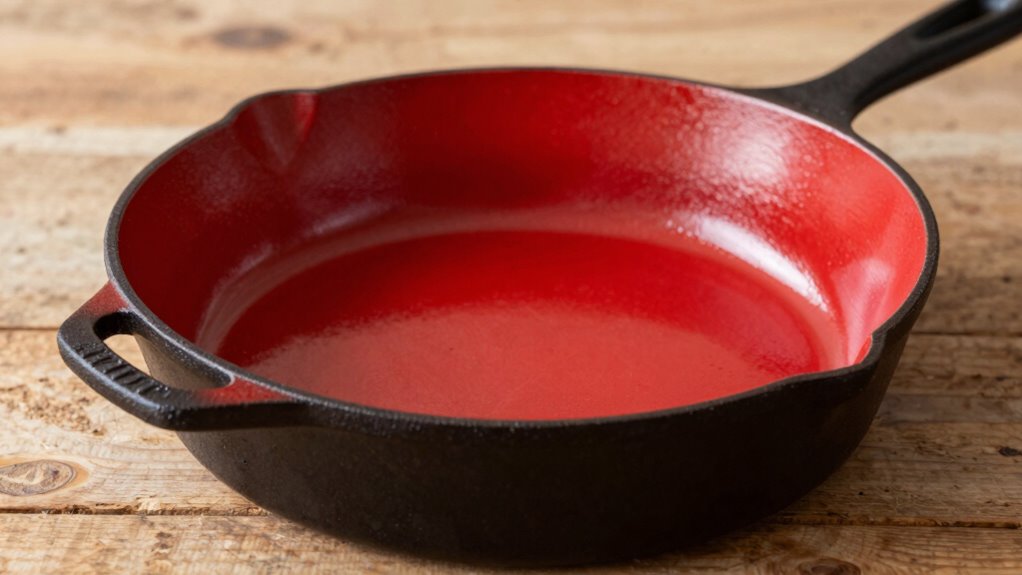

To avoid chips and stains on your enameled cast iron, handle it gently, avoid metal utensils, and don’t expose it to sudden temperature changes. Use soft sponges for cleaning and avoid abrasive scrubbers or harsh chemicals. Store it carefully to prevent impact, and be mindful during cooking, especially avoiding dropping or knocking it. Staying aware of these tips helps protect your cookware’s surface, and further guidance will show you how to keep it looking its best.
Key Takeaways
- Handle with care, avoiding impacts and using gentle tools like silicone or wooden utensils.
- Preheat gradually and avoid sudden temperature changes to prevent thermal shock.
- Clean with warm water and a soft sponge, avoiding abrasive scrubbers and harsh chemicals.
- Store with soft padding and keep dry to prevent chips and stains.
- Address chips or stains promptly by contacting professionals, and avoid DIY repairs to protect enamel integrity.

Lodge Enameled Cast Iron & Ceramic Stoneware Cleaner Care Kit – Set Includes 11oz Cleaner, Black Pan Scraper, Scrub Brush, Package of Pot Protectors, and Use & Care Booklet – 5 Piece Set
YOUR NEW GO-TO ENAMELED CAST IRON CARE KIT: The Lodge 5 Piece Care Kit has all the essentials…
As an affiliate, we earn on qualifying purchases.
As an affiliate, we earn on qualifying purchases.
What Causes Chips and Stains on Enameled Cast Iron?
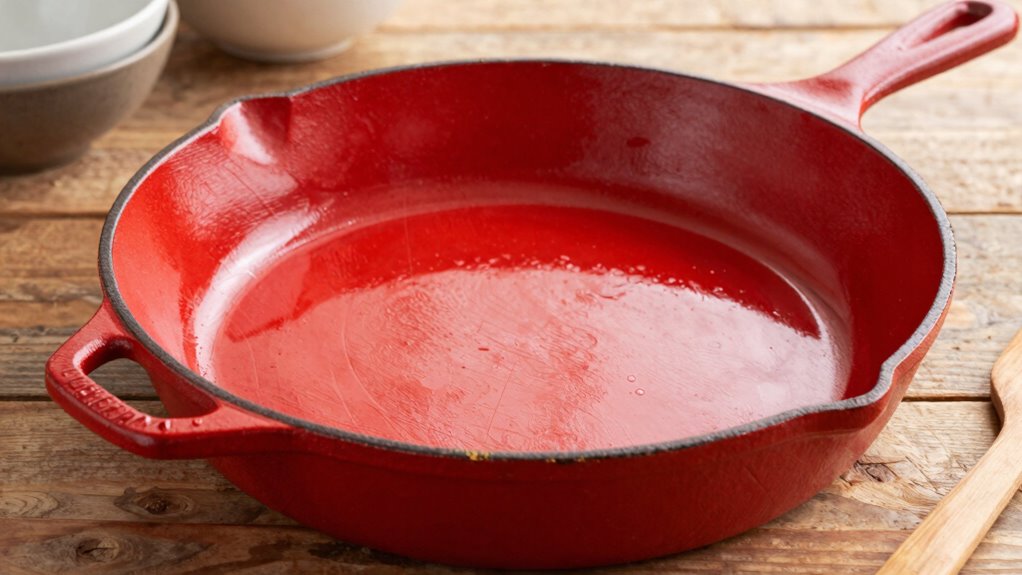
Chips and stains on enameled cast iron often occur because the enamel surface is delicate and can be damaged by sudden impacts or abrasive cleaning. Baking mishaps, like dropping or knocking the cookware, can cause chips, especially if you’re not careful during handling. Incorrect seasoning techniques may also contribute; using metal utensils or applying too much heat can scratch or weaken the enamel. Stains can develop from food residues or acidic ingredients, which seep into tiny cracks or imperfections. Over time, these issues weaken the enamel’s integrity, making it more prone to chipping. Proper care and maintenance are essential to keep your cookware in good condition. Additionally, understanding the enamel’s composition helps in choosing the right cleaning and handling practices. To prevent this, handle your cookware gently, avoid harsh cleaning tools, and follow proper seasoning techniques. Doing so helps preserve your enameled cast iron’s surface and keeps it looking pristine longer. Regular inspections and gentle cleaning can further help in identifying early signs of damage before they worsen.
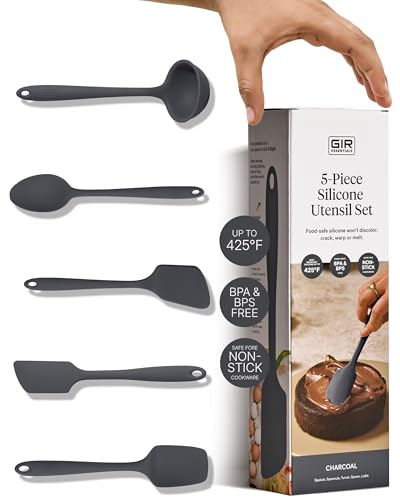
GIR: Get It Right 5 Piece Silicone Essentials Kitchen Utensils Set – Ladle, Spatula, Flip, Spoon & Spoonula – Non-Toxic Cooking Utensils for Nonstick Cookware, Cooking and Baking – Charcoal
Essential Kitchen Utensils: This versatile kitchen utensils set includes a spatula, turner, spoon, ladle, and spoonula, providing everything…
As an affiliate, we earn on qualifying purchases.
As an affiliate, we earn on qualifying purchases.
How to Clean Enameled Cast Iron Without Damaging It
Cleaning enameled cast iron properly helps maintain its appearance and prevents damage. To keep your cookware in top shape, use gentle cleaning methods and avoid harsh abrasives. Here are three key tips for effective stain removal and cleaning:
Keep enameled cast iron pristine with gentle cleaning—avoid abrasives and harsh chemicals.
- Use warm water and a soft sponge or cloth to wipe away residue without scratching the surface. This approach helps preserve the integrity of the enamel and prevents chips. Ensuring proper airflow around the cookware during cleaning can also help prevent moisture buildup that might affect the enamel.
- For stubborn stains, mix baking soda with water to create a paste, then gently scrub with a non-abrasive pad. Understanding the contrast ratio can help you appreciate how lighting conditions affect the visibility of stains and residue on your cookware.
- Avoid metal scouring pads or harsh chemicals, which can chip the enamel or cause discoloration. Additionally, being aware of common enamel care tips can further extend the life of your cast iron cookware.

Lodge Enameled Cast Iron & Ceramic Stoneware Cleaner – 100% Biodegradeable Enamel Cleaner – Dye and Bleach-Free – 12 Fl Oz
YOUR NEW GO-TO ENAMELED CAST IRON CLEANER: The Lodge Enameled Cast Iron Cleaner will keep your enamel cast…
As an affiliate, we earn on qualifying purchases.
As an affiliate, we earn on qualifying purchases.
Tips for Handling and Using Your Enameled Cookware Safely
To guarantee safe and effective use of your enameled cast iron cookware, it’s crucial to handle it with care and follow proper procedures. Use gentle cooking techniques, avoiding metal utensils that can scratch the surface. Always preheat gradually to prevent thermal shock. When storing, ensure it’s clean and dry to prevent moisture buildup, and stack carefully with padding to avoid chips. Avoid sudden temperature changes, such as placing a hot pot directly into cold water. Use oven mitts to handle the cookware safely, and don’t overheat it beyond recommended temperatures. Proper storage tips include stacking with soft cloths or separators to protect the enamel. Additionally, understanding the thermal properties of enameled cast iron helps prevent damage caused by thermal shock, ensuring your cookware stays in great condition and performs well for years to come.

BOYAN Pot and Pan Protectors for Stacking, Set of 6 & 3 Sizes, Felt Pan Separators Dividers Pads for Space Saving, Pot Protectors for Stacking and Protecting Your Cookware
THREE SIZES FOR FLEXIBLE USE: Includes 6 felt pan separators for stacking, 3 sizes:10.3/14/15 inch, each size 2…
As an affiliate, we earn on qualifying purchases.
As an affiliate, we earn on qualifying purchases.
Common Mistakes That Lead to Chips and How to Avoid Them
One common mistake is using metal utensils, which can scratch and chip the enamel. Avoid sudden temperature changes, like adding cold water to a hot pan, to prevent cracking. Paying attention to these details helps keep your cookware in great shape. Additionally, using proper cleaning techniques ensures the enamel remains intact and free from damage. Be cautious of thermal shock, which can cause the enamel to crack if hot cookware is exposed to cold liquids suddenly.
Avoid Metal Utensils
Have you ever wondered how metal utensils can damage your enameled cast iron? Using metal spatulas or abrasive scrubbers can easily cause chips and scratches. To protect your cookware, avoid these common mistakes:
- Relying on metal spatulas for flipping or stirring, which can scrape the enamel.
- Using abrasive scrubbers that wear down the surface over time.
- Ignoring the damage from repeated contact with harsh utensils, leading to cracks.
Choosing silicone or wooden tools preserves the enamel’s integrity. Be gentle when cleaning, and opt for soft sponges. Maintaining your enameled cast iron prevents chips and keeps it looking new longer. Remember, avoiding metal utensils isn’t just about avoiding scratches—it’s about extending the life of your beloved cookware.
Prevent Sudden Temperature Changes
Metal utensils and abrasive scrubbers can harm your enameled cast iron, but another common mistake that leads to chips is subjecting the cookware to sudden temperature changes. Thermal shock occurs when you expose hot cookware to cold water or place it directly from the stovetop into the fridge. These rapid temperature fluctuations cause the enamel to expand or contract quickly, increasing the risk of cracking or chipping. To prevent this, always let your cookware cool gradually before cleaning or transferring it between different temperatures. Avoid pouring cold liquids into hot enameled cast iron, and never run hot cookware under cold water. By controlling temperature fluctuation, you preserve the integrity of your cookware and avoid costly chips.
How to Keep Your Enameled Cast Iron Looking New Over Time
To keep your enameled cast iron looking new over time, proper maintenance and careful handling are essential. Regularly use a gentle care product designed for enameled surfaces to prevent stains and preserve its shine. Always follow storage tips by stacking with a soft cloth or paper towel to avoid scratches. Here are three ways to maintain its beauty:
- Clean promptly after use with mild soap and avoid abrasive scrubbers.
- Store in a dry, cool place, ensuring it’s completely dry before putting it away.
- Use the right care product to protect the enamel’s surface, especially if minor stains appear.
What to Do When Your Enameled Cookware Gets Chips or Stains

What should you do if your enameled cookware develops chips or stubborn stains? For enameled scratches, avoid using metal utensils, which can worsen damage. If chips occur, don’t attempt to fix them yourself; contact the manufacturer or a professional repair service. For stains that won’t budge, try stain removal techniques like soaking in baking soda and water or using a gentle scrub with a non-abrasive pad. Always clean your cookware thoroughly before stain removal to prevent spreading grime. If stains persist, avoid harsh chemicals that could damage the enamel further. Regular maintenance and gentle cleaning help prevent future issues. Remember, treating chips early and using proper cleaning methods can prolong your cookware’s life and keep it looking good. Additionally, understanding enamel durability can help you choose the right care practices to protect your cookware over time.
Frequently Asked Questions
Can Enameled Cast Iron Be Used on Induction Cooktops?
Yes, enameled cast iron is induction compatible. You can confidently use it on induction cooktops because its flat, magnetic base ensures good induction compatibility. Plus, enameled cast iron provides excellent heat distribution, so your cooking remains even and consistent. Just make sure the bottom is smooth and flat for maximum contact. With proper care, your enameled cast iron will work well on induction and deliver reliable, even heating.
Are There Specific Cleaning Products to Avoid With Enameled Cookware?
Think of cleaning your enameled cookware like tending a delicate garden—you want gentle care. Avoid abrasive cleaners and bleach use, as they can scratch and damage the enamel’s surface, much like harsh tools harm tender leaves. Stick to mild dish soap and non-abrasive sponges to keep it looking vibrant. This way, you preserve its beauty and longevity, letting your cookware flourish over time.
How Do I Repair Minor Chips or Scratches Myself?
If you notice minor chips or scratches, you can try a DIY repair by using a scratch touch-up kit designed for enameled cookware. Clean the area thoroughly, then apply the touch-up product carefully with a fine brush or applicator. Allow it to dry completely before using the pan again. While this won’t fix deep damage, it helps improve appearance and prevents further deterioration. Just follow the product instructions closely for best results.
Is It Safe to Cook Acidic Foods in Chipped Enameled Cast Iron?
Cooking acidic foods in chipped enameled cast iron isn’t recommended because it can jeopardize food safety and damage your cookware. The exposed metal may leach into your food, posing health risks and affecting taste. To maintain cookware longevity, avoid cooking highly acidic dishes in chipped areas, and repair minor chips promptly. Proper cookware maintenance ensures safe, delicious meals and extends the life of your enameled cast iron.
How Often Should I Reseason or Recoat My Enameled Cookware?
While enameled cast iron doesn’t require traditional seasoning, your seasoning schedule depends on how often you use it. If you notice dullness or stains, you should recoat your cookware every few months or when needed. Regular use can wear down the protective layer, so keep an eye on its appearance. Recoating helps maintain its non-stick surface and prevents chips, ensuring your cookware lasts longer and performs better.
Conclusion
So, now that you know how to dodge chips and stains, go ahead and treat your enameled cast iron like royalty—gently, carefully, and maybe with a little love. After all, who needs chips ruining the aesthetic or stains stealing the shine? With these tips, your cookware will stay gorgeous longer than that plant you swear you’ll water regularly. Happy cooking without the drama of chipped perfection—your pots will thank you!