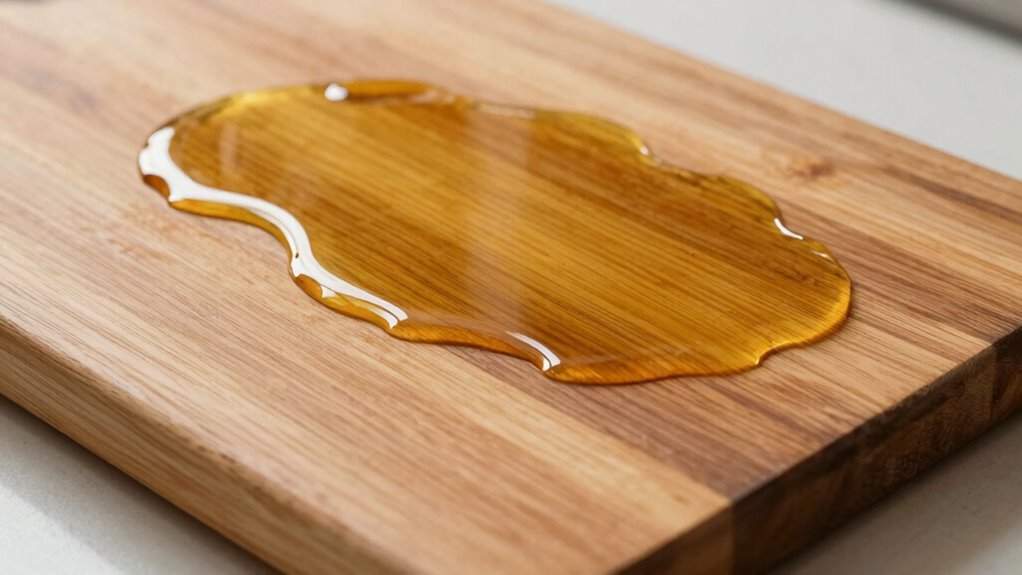

Cutting board oil is designed to protect and preserve your wooden surfaces by creating a barrier that repels water, prevents cracking, and keeps the wood looking fresh. Use food-grade mineral or plant oils, avoiding trash oils like vegetable, olive, or petroleum-based options, which can go rancid or damage the wood. Proper application and maintenance are essential to extend your board’s lifespan. If you want to learn how to do it right, keep going.
Key Takeaways
- Cutting board oil protects wood by creating a water-resistant barrier, preventing cracking, warping, and extending the board’s lifespan.
- It penetrates deeply into wood fibers to maintain the surface’s durability and natural appearance.
- Properly formulated oils, like food-grade mineral or plant oils, are safe, effective, and support wood health.
- Avoid using cooking oils, petroleum-based, or synthetic oils, as they can go rancid, cause residues, or damage the wood.
- Regular re-application and proper cleaning are essential for maintaining the oil’s protective benefits and preventing deterioration.

Thirteen Chefs Mineral Oil – 8 oz Food Grade Conditioner for Wood Cutting Board, Countertop & Butcher Block, Lubricant for Knife or Meat Grinder – Safe USP Finish on Marble, Soapstone
FOOD GRADE – This butcher block conditioner is lab tested to ensure that it meets food safety standards,…
As an affiliate, we earn on qualifying purchases.
As an affiliate, we earn on qualifying purchases.
What Is Cutting Board Oil and Why Is It Important

Understanding what cutting board oil is and why it matters is essential for maintaining your wooden cutting boards. Cutting board oil is specially formulated to protect and preserve wood, helping it withstand daily use. Its primary role is to enhance wood preservation by creating a barrier that repels water and prevents cracking or warping. When you apply the oil, it penetrates deeply into the wood fibers, ensuring thorough oil penetration that maintains the board’s integrity. This process not only prolongs the lifespan of your cutting surface but also keeps it looking fresh and new. Without proper oiling, wood can absorb moisture, leading to damage over time. Using the right cutting board oil is a simple yet crucial step in caring for your wooden kitchen tools. Additionally, choosing a high-quality finish can improve the overall performance and appearance of your cutting board. Regular application of proper maintenance techniques can further extend the durability of your wood surfaces.
Thirteen Chefs Mineral Oil – 8 oz Food Grade Conditioner for Wood Cutting Board, Countertop & Butcher Block, Lubricant for Knife or Meat Grinder – Safe USP Finish on Marble, Soapstone
FOOD GRADE – This butcher block conditioner is lab tested to ensure that it meets food safety standards,…
As an affiliate, we earn on qualifying purchases.
As an affiliate, we earn on qualifying purchases.
How Does Cutting Board Oil Protect and Maintain Wood Surfaces
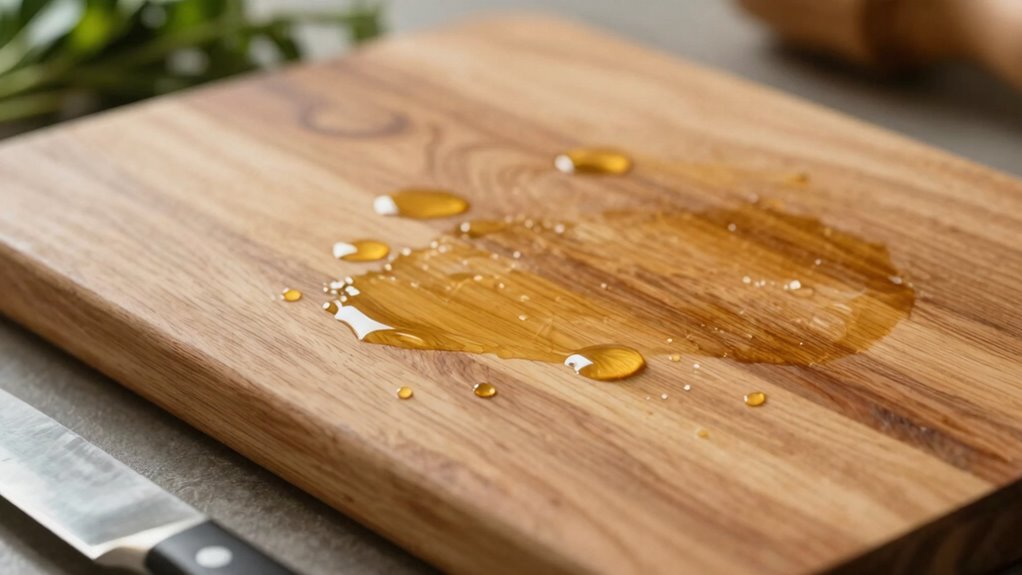
Cutting board oil actively shields and sustains wood surfaces by creating a protective barrier that repels moisture and prevents damage. It soaks into the wood’s surface, filling pores and reducing surface porosity, which helps guard against bacteria and stains. Understanding grain orientation is key; oil penetrates along the grain, enhancing coverage and ensuring even protection. When the oil penetrates the wood, it keeps the fibers hydrated, preventing cracks and warping over time. Additionally, proper application can help maintain the wood’s natural durability by ensuring the surface remains resilient against daily wear and tear. The type of adhesive products used in application can influence how well the oil adheres and performs, making the choice of products important. By sealing the surface, it minimizes the impact of moisture and food acids, extending your cutting board’s life. Regular application maintains the wood’s natural beauty and smoothness, making it easier to clean and less prone to damage. Proper application and maintenance are essential for ensuring the longevity of your cutting board, especially when considering factors like ventilation considerations that can influence how well the oil performs. Additionally, using the right type of protective finish can further enhance the durability of your cutting board. Properly maintaining your cutting board with appropriate care can significantly improve its resistance to environmental factors. Overall, oil helps preserve your cutting board’s integrity and appearance with proper, ongoing care.
![Non-Toxic Wood Wax - Natural Wood Conditioner for Butcher Blocks, Wooden Utensils & Bowls – No Mineral Oil, No Petroleum - Pure Beeswax, Lemon & Flaxseed Oil [7 oz] by Ziruma](https://m.media-amazon.com/images/I/41JFjc0pNGL._SL500_.jpg)
Non-Toxic Wood Wax – Natural Wood Conditioner for Butcher Blocks, Wooden Utensils & Bowls – No Mineral Oil, No Petroleum – Pure Beeswax, Lemon & Flaxseed Oil [7 oz] by Ziruma
✅ 𝗡𝗮𝘁𝘂𝗿𝗮𝗹 𝗮𝗻𝗱 𝗙𝗼𝗼𝗱-𝗦𝗮𝗳𝗲: Beeswax, Flaxseed oil, and lemon oil are natural ingredients, safe for food contact. When…
As an affiliate, we earn on qualifying purchases.
As an affiliate, we earn on qualifying purchases.
Key Types of Oils Suitable for Cutting Boards
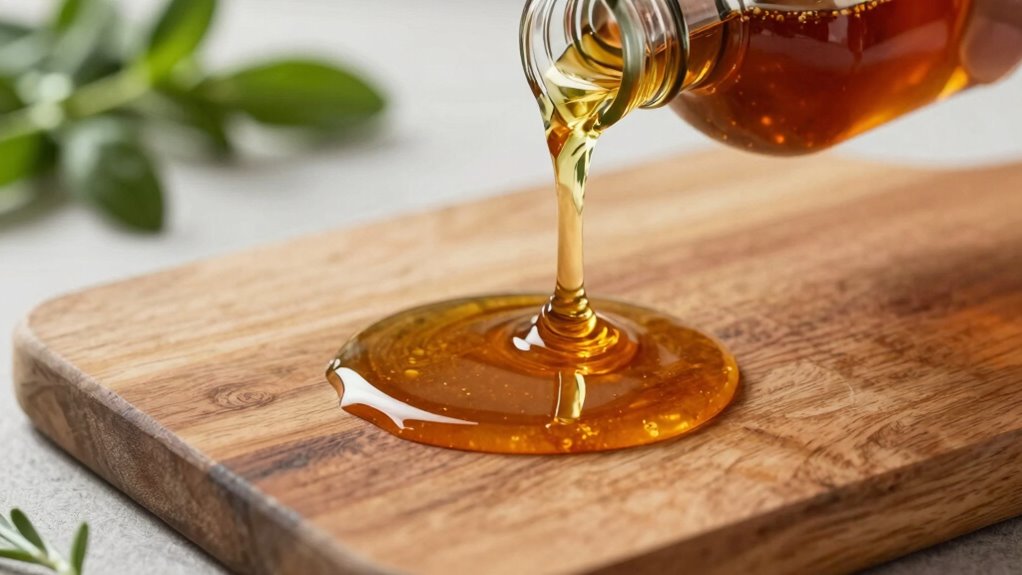
When choosing oils for your cutting board, make sure they have food-grade certification to guarantee safety. Mineral and plant oils are popular options because they penetrate and protect the wood well. Avoid using cooking oils, as they can go rancid and damage your board over time. Additionally, selecting eco-friendly options can help minimize environmental impact and promote sustainable practices. Opting for oils that are non-toxic and safe for food contact ensures that your cutting board remains a healthy surface for food preparation. Choosing properly processed oils can further ensure that harmful contaminants are removed, maintaining the safety and integrity of your board. Incorporating sound healing science principles, such as using specific frequencies or vibrations during application, may enhance the effectiveness of your treatment. Selecting processed and refined oils helps reduce the risk of introducing impurities that could compromise your food safety.
Food-Grade Certification Needed
Choosing the right oil for your cutting board requires verifying it’s food-grade certified. This certification guarantees the oil meets strict safety standards, preventing harmful chemicals from contaminating your food. Food safety should be your top priority to avoid health risks. Additionally, certified oils contribute to material durability by penetrating the wood or bamboo, helping resist moisture and prevent cracking. Proper oil selection is essential for maintaining a safe and long-lasting cutting board. Uncertified oils may contain additives or impurities that compromise safety or damage your board over time. Always look for labels confirming the oil is approved for culinary use. This ensures you’re selecting an appropriate product that supports both your health and your cutting board’s longevity. Prioritizing food-grade certification helps you maintain a safe, durable surface for years to come. Understanding electric dirt bike horsepower can help you choose a safer, more suitable model for your riding needs. Additionally, selecting oils that are compatible with wooden kitchen tools can further enhance the longevity and safety of your cutting board. Using oils with proper penetration properties ensures better absorption and protection for your cutting surfaces. Moreover, choosing oils with natural ingredients reduces the risk of allergic reactions and chemical exposure.
Mineral and Plant Oils
Mineral and plant oils are among the most popular choices for maintaining your cutting board’s condition. They’re valued for their food safety, as they don’t contain harmful chemicals or flavors that could transfer to your food. These oils also have good oil absorption, helping to penetrate the wood’s surface and prevent it from drying out or cracking. Mineral oil is a common, inexpensive option that’s easy to apply and tasteless, making it ideal for food preparation surfaces. Plant oils like beeswax or walnut oil are also popular, but you should guarantee they’re food-grade and suitable for kitchen use. Regular application of these oils keeps your cutting board smooth, sealed, and protected, ensuring it remains safe and durable over time. Utilizing essential oils like eucalyptus or tea tree oil can provide additional antimicrobial benefits, enhancing the safety and longevity of your cutting board. Additionally, choosing food-grade oils ensures that your maintenance routine remains safe and effective for culinary use. It is also advisable to avoid using cooking sprays or oils with artificial additives that could compromise the board’s safety or integrity.
Avoid Cooking Oils
Although many people instinctively reach for regular cooking oils like vegetable or olive oil to condition their cutting boards, these oils aren’t appropriate for this purpose. Cooking oil myths often lead people to believe they’re safe and effective, but they can turn rancid and create sticky residues. This can compromise your kitchen safety, attracting mold or bacteria. These oils don’t polymerize or harden like proper board oils, which form a protective, lasting barrier. Using unsuitable oils may cause your cutting board to develop a tacky surface or unpleasant odors over time. Stick to oils specifically designed for wood conditioning, like mineral or specialized cutting board oils, to ensure safety, durability, and a clean, well-maintained surface. Proper oil selection is crucial for maintaining the integrity and safety of your cutting board over time. Additionally, choosing oils with long-lasting protective properties can help extend the lifespan of your board and prevent the need for frequent reconditioning. Avoid risking your board’s longevity with everyday cooking oils. Choosing the right wood conditioning oils ensures your cutting board remains safe, functional, and attractive for years to come.
Thirteen Chefs Mineral Oil – 8 oz Food Grade Conditioner for Wood Cutting Board, Countertop & Butcher Block, Lubricant for Knife or Meat Grinder – Safe USP Finish on Marble, Soapstone
FOOD GRADE – This butcher block conditioner is lab tested to ensure that it meets food safety standards,…
As an affiliate, we earn on qualifying purchases.
As an affiliate, we earn on qualifying purchases.
Common Oils to Avoid and Why They Can Harm Your Board
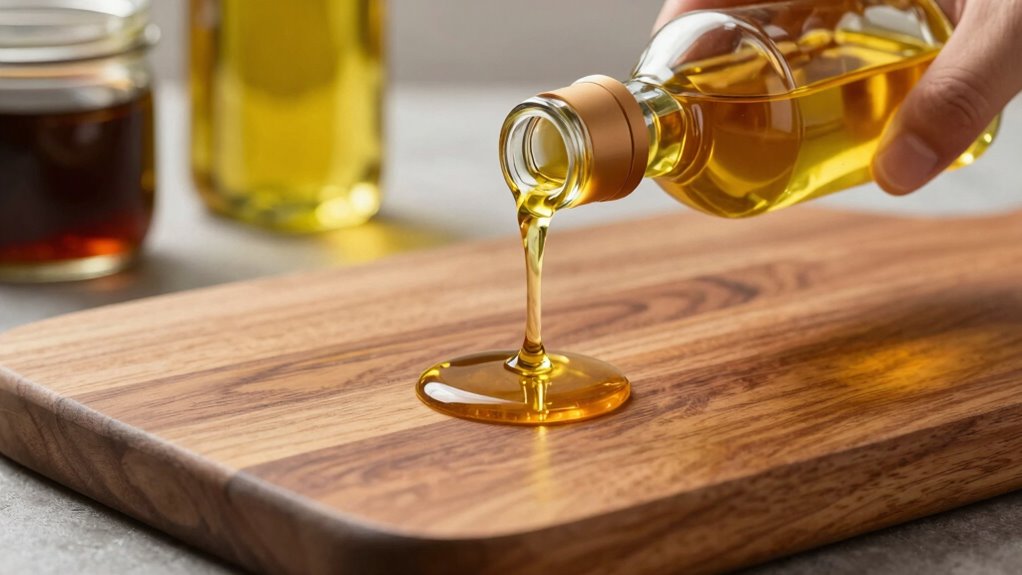
Some oils can do more harm than good when used on your cutting board. Mineral oil, for example, may contain impurities that could stain or damage the wood over time. Vegetable and petroleum-based oils can turn rancid or create a sticky surface, affecting your board’s safety and longevity. To ensure proper care, it’s important to choose reliable, safe oils specifically designed for wood preservation.
Mineral Oil Risks
While mineral oil is popular for treating cutting boards, not all types are safe. Some mineral oils contain additives or impurities that can damage your wood’s grain or interfere with oil absorption. Impure or low-quality mineral oils may leave residues that create a sticky surface, attracting dirt and bacteria. These residues can also cause uneven oil absorption, leading to blotchy spots or a dull appearance over time. Additionally, certain mineral oils aren’t food-grade, posing health risks if ingested. To protect your board’s wood grain and maintain proper oil absorption, always choose high-quality, food-grade mineral oil specifically designed for cutting boards. Avoid cheap or industrial-grade options that could compromise your board’s integrity or safety.
Vegetable Oils Drawbacks
Many common vegetable oils, such as olive, coconut, or soybean oil, are not ideal choices for your cutting board because they can go rancid over time, creating unpleasant odors and potentially harmful bacteria. These oils often have high oil absorption rates, which means they soak into the wood and can become sticky or moldy. Additionally, they tend to oxidize quickly, leading to rancidity. Instead of natural vegetable oils, consider synthetic alternatives designed for wood preservation, which don’t absorb as readily and won’t spoil. Here’s a comparison:
| Oil Type | Drawback |
|---|---|
| Olive/Coconut/soybean | Rancidity, bacteria risk |
| Synthetic options | Less oil absorption, longer shelf life |
| Canola, corn oils | Similar issues, quicker spoilage |
| Mineral oil | Stable, no oxidation |
| Beeswax blends | Natural, durable protection |
Using the right oil prevents damage and prolongs your board’s life.
Avoid Petroleum-Based Options
Petroleum-based oils, such as mineral oil or other synthetic derivatives, might seem like convenient options, but they can actually harm your cutting board over time. These oils can create a barrier that prevents proper oil absorption, which is essential for maintaining the wood’s integrity. The petroleum dangers include potential chemical leaching and buildup that can compromise food safety. Over time, petroleum products may also cause the wood to become sticky or discolored. Using these oils might temporarily seem harmless, but they don’t nourish the wood properly and can lead to cracks or warping. Instead, choose natural oils designed for cutting boards. Avoid petroleum-based options to keep your board safe, well-maintained, and in excellent condition for years to come.
- They hinder oil absorption, impairing wood health
- Chemical leaching poses food safety risks
- Can cause discoloration or sticky residue
How to Properly Apply Cutting Board Oil for Best Results
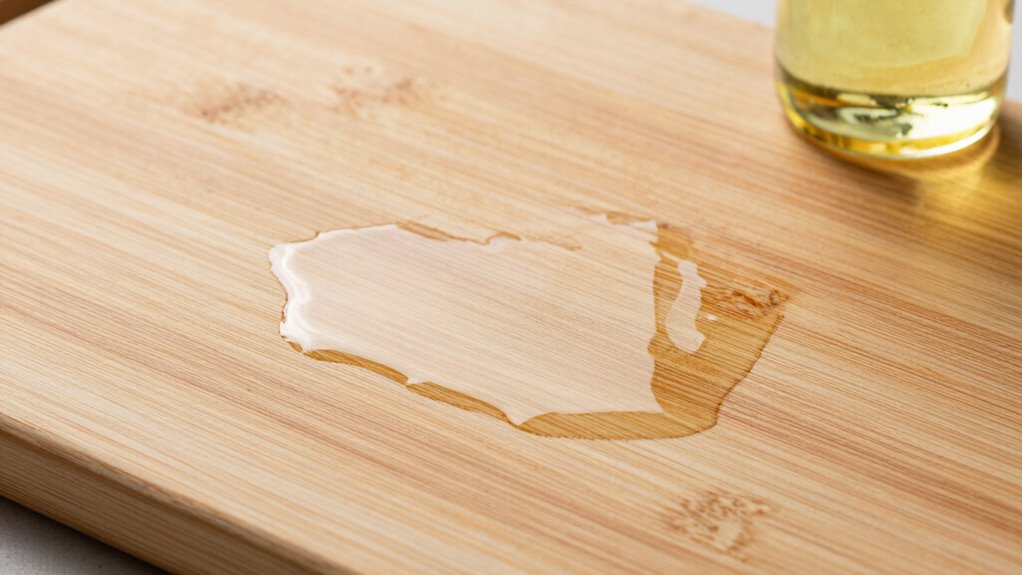
To achieve the best results when applying cutting board oil, you need to follow a proper technique. Begin by cleaning your board thoroughly and letting it dry completely. Apply a generous amount of oil using a clean cloth or paper towel, working it into all surfaces and edges. For maximum absorption, consider seasonal oiling routines, adjusting the frequency based on climate and usage. If you prefer, you can create diy oil blends tailored to your needs, combining food-grade oils like mineral oil, beeswax, or walnut oil. Let the oil sit for several hours or overnight, allowing it to penetrate deeply. Wipe off any excess before use. Regular application ensures your cutting board remains conditioned, durable, and resistant to stains and moisture.
Signs Your Cutting Board Needs Re-Oiling or Replacement
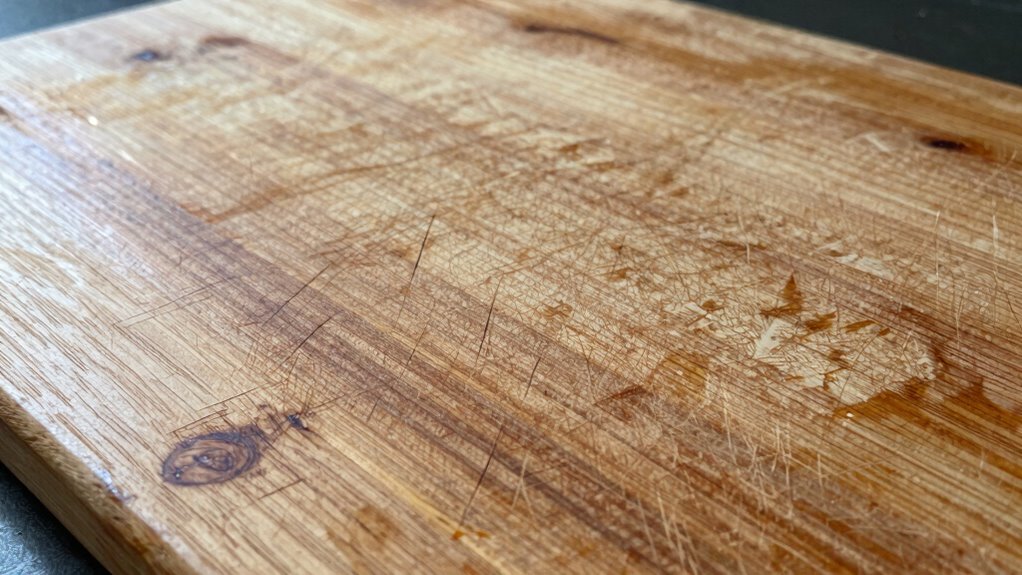
When your cutting board shows signs of wear, it’s time to contemplate re-oiling or replacing it. Poor board maintenance often leads to issues like excessive oil absorption, making the surface look dull or stained. If the wood feels dry or rough, it’s a clear sign that your board needs re-oiling. Deep cuts or grooves that trap bacteria also indicate it’s time for a refresh. If these signs persist despite re-oiling, replacement might be necessary for safety and hygiene. Regular maintenance helps prevent damage and keeps your board in top shape. Keep an eye out for:
- Excessive dryness or rough patches
- Visible deep cuts or grooves
- Loss of natural luster and stain absorption
Addressing these issues promptly ensures safe, effective use of your cutting board.
Natural vs. Commercial Cutting Board Oils: Which Is Better?
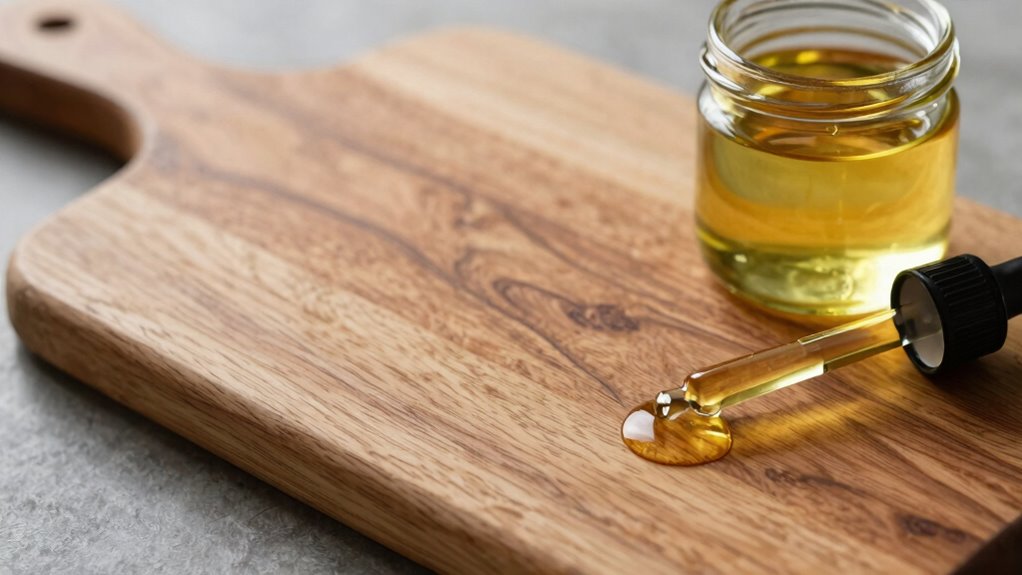
Are natural and commercial cutting board oils truly different in effectiveness? The main difference lies in how each interacts with your wood grain and oil absorption. Natural oils, like mineral or beeswax-based products, penetrate deeply without leaving residue, enhancing the wood’s natural look and feel. They tend to absorb evenly, helping to prevent cracking and drying. Commercial oils often contain additives or preservatives that may build up over time or alter the wood’s appearance. While natural oils are typically gentler and more eco-friendly, some commercial options are formulated for quick application and longer-lasting coverage. Your choice depends on your priorities: if you want a pure, safe finish that promotes healthy oil absorption, natural oils are better. For convenience and durability, commercial oils may suit your needs better.
Mistakes to Avoid When Oiling Your Cutting Board
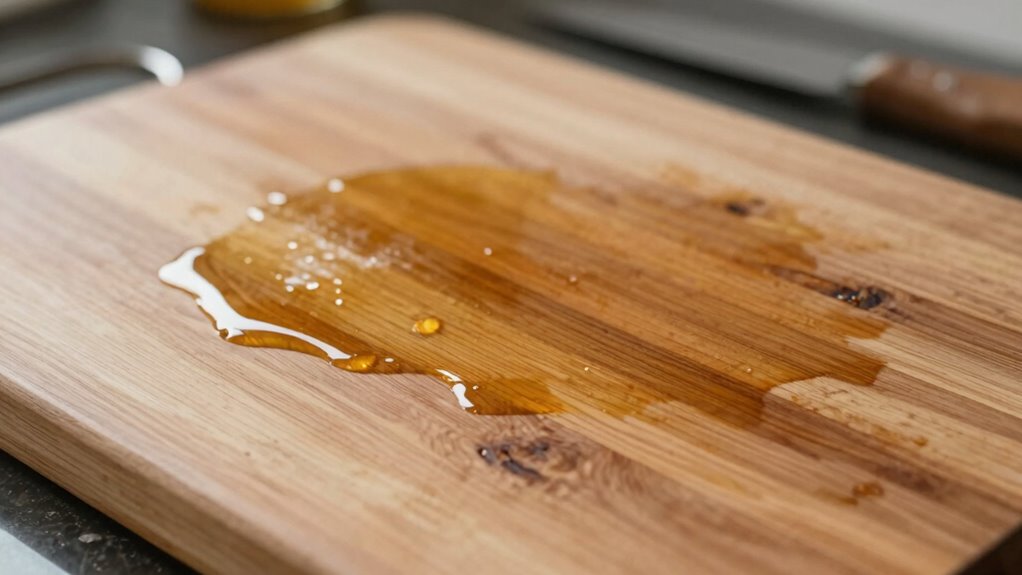
Oiling your cutting board incorrectly can lead to issues like uneven absorption, residue buildup, or even warping. To avoid these mistakes, pay attention to how you apply the oil. Don’t use too much at once, as excess oil can clog the wood grain and hinder proper absorption. Applying oil in a circular motion helps ensure even coverage and enhances aroma. Also, avoid using the wrong type of oil—stick to food-safe options designed for cutting boards. Failing to wipe off excess oil can leave a sticky surface, attracting dirt and bacteria. Proper application promotes aroma enhancement, making your board smell fresh and clean. Remember these common mistakes:
- Overapplying oil without wiping excess
- Using non-food-safe oils
- Neglecting to follow the wood grain direction
Tips for Cleaning and Maintaining an Oiled Cutting Board
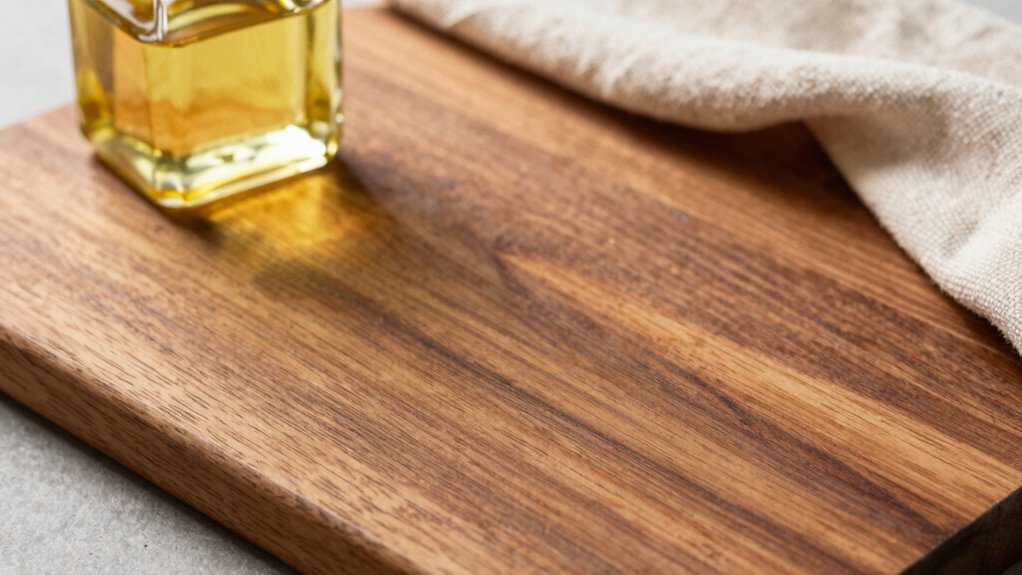
Regular cleaning and proper maintenance are essential to keep your oiled cutting board in top condition. To do this sustainably, opt for eco-friendly alternatives like natural soap and warm water, avoiding harsh chemicals that can strip the oil’s protective layer. After each use, scrub the surface gently with a soft brush or sponge, then rinse thoroughly. Dry the board immediately to prevent moisture damage and bacteria growth. Periodically, apply a fresh coat of oil to maintain its moisture barrier and enhance wood durability. Incorporate sustainability practices by choosing plant-based oils and avoiding synthetic products. Regular upkeep not only prolongs your cutting board’s life but also reduces environmental impact, ensuring your kitchen remains eco-conscious and your tools stay safe for food preparation.
FAQs About Cutting Board Oil: What You Need to Know
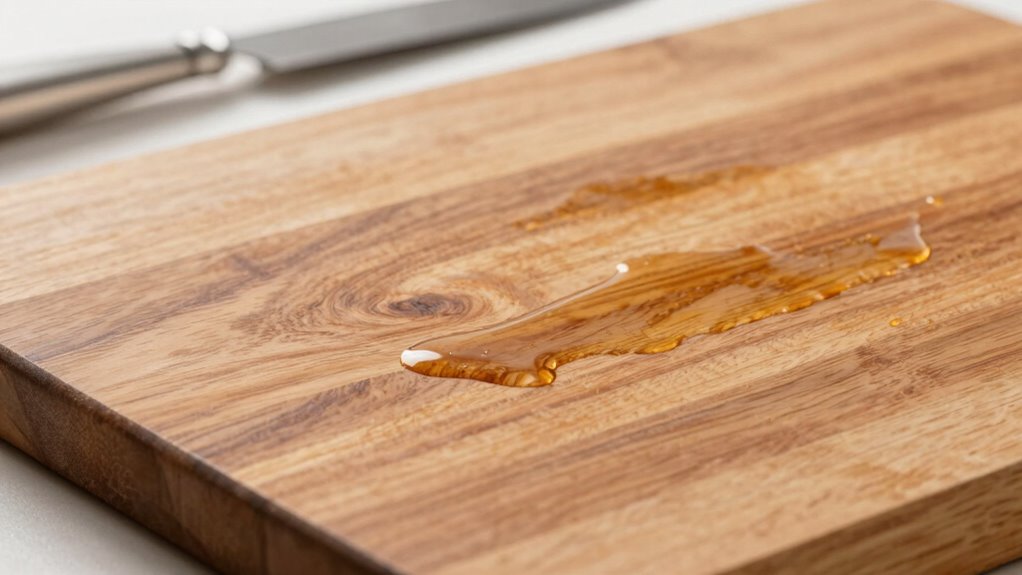
Many people have questions about cutting board oil, especially when it comes to choosing the right type and applying it safely. You want to ensure food safety and proper wood preservation, but not all oils are suitable. Natural options like mineral oil are popular because they’re food-safe and won’t go rancid. Always avoid using cooking oils like olive or vegetable oil, as they can spoil and promote bacteria growth. When applying, wait until the oil is fully absorbed before using the board again. Here are some common questions:
- Is mineral oil safe for food contact?
- How often should I oil my cutting board?
- Can I use homemade oils or DIY recipes?
Frequently Asked Questions
How Often Should I Reapply Cutting Board Oil?
You should reapply cutting board oil every 3 to 4 weeks as part of your maintenance schedule, especially if you notice signs of dryness like dullness or roughness. Regular oiling keeps the wood moisturized, prevents cracking, and maintains its appearance. If the surface absorbs oil quickly or feels dry to the touch, it’s time to reapply. Consistent maintenance guarantees your cutting board stays in great condition for years.
Can I Use Cooking Oils for My Cutting Board?
You can’t use cooking oils for your cutting board because they might go rancid and compromise food safety. For example, someone used vegetable oil, and it developed a foul smell within days, contaminating their food. Instead, choose specialized cutting board oils designed for food contact, as they won’t spoil or harm your health. Always prioritize food-safe options to keep your cutting board clean and safe for your kitchen prep.
Is Cutting Board Oil Safe for Food Contact?
Yes, cutting board oil is safe for food contact because it’s specifically formulated to guarantee food safety and minimize oil toxicity. You can confidently use it to condition your cutting board, knowing it’s designed for kitchen use. Unlike cooking oils, cutting board oils are non-toxic and help prevent bacteria buildup. Always choose high-quality, food-safe oils to keep your board in good condition and your food safe.
How Long Does Homemade Cutting Board Oil Last?
Imagine your cutting board’s surface as a garden that needs tending. Homemade cutting board oil typically lasts 1 to 3 months, depending on usage and care. To extend oil longevity, store your oil in a cool, dark place, and reseal it tightly after each use. Regular reapplication keeps your board nourished and protected, ensuring it stays in prime condition for slicing and dicing.
Are There Eco-Friendly Options for Cutting Board Oil?
Yes, you can choose eco-friendly options like plant-based alternatives and biodegradable options for your cutting board oil. These products are made from natural ingredients such as mineral oil, beeswax, or plant oils like coconut or jojoba, which are safe for the environment. By opting for these, you decrease chemical exposure and help protect the planet. Always check labels to confirm they’re truly biodegradable and free from synthetic additives.
Conclusion
Using cutting board oil protects your wood and keeps it beautiful, but choosing the wrong oil can cause lasting damage. It’s a simple step that can turn your board from dull and cracked to vibrant and resilient. Think of it as nurturing your kitchen’s heart—your tools. Don’t let neglect or harmful oils ruin what you’ve built. With proper care, your cutting board can last a lifetime, a silent witness to countless meals and memories.