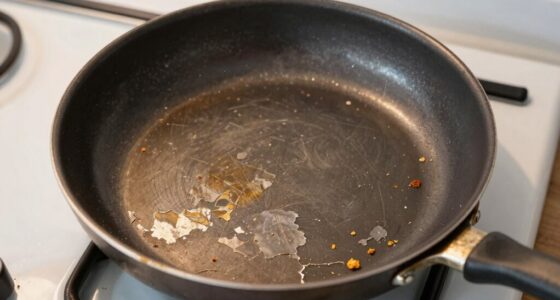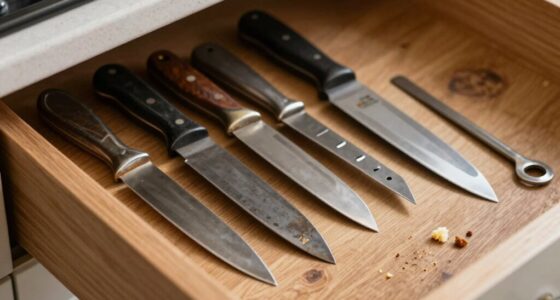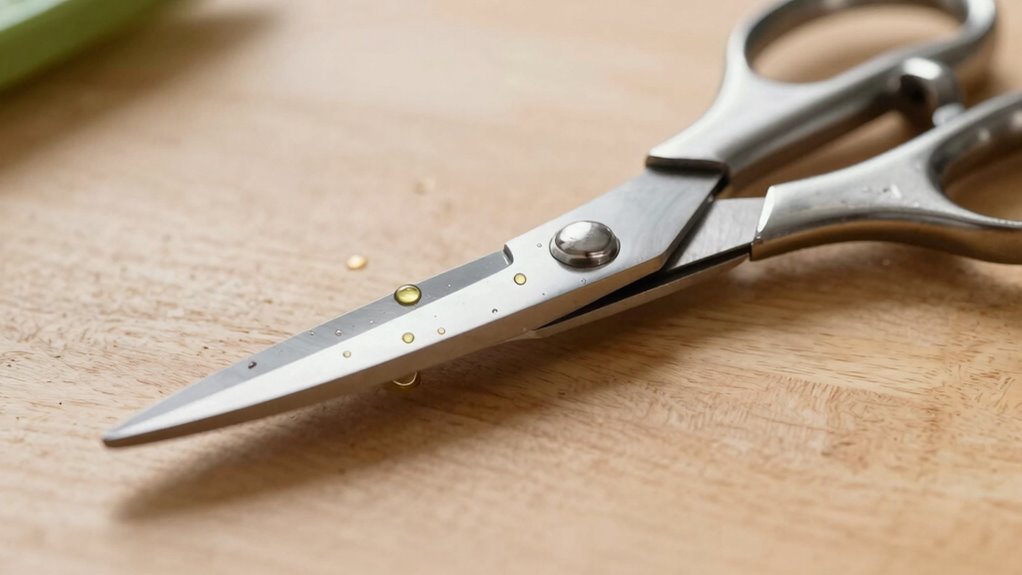

To keep your kitchen shears rust-free, start by cleaning them with warm water and dish soap, scrubbing thoroughly with a small brush to remove food residue. Dry them completely with a soft towel to prevent moisture. Apply a thin layer of food-safe oil, like mineral or vegetable oil, over the blades and pivot points to protect against rust. Store in a dry, protected spot. For more tips on maintaining sharpness and durability, keep exploring.
Key Takeaways
- Rinse shears with warm water and gently scrub blades with a soft brush to remove food residues and debris.
- Dry thoroughly with a clean cloth to prevent moisture from causing rust.
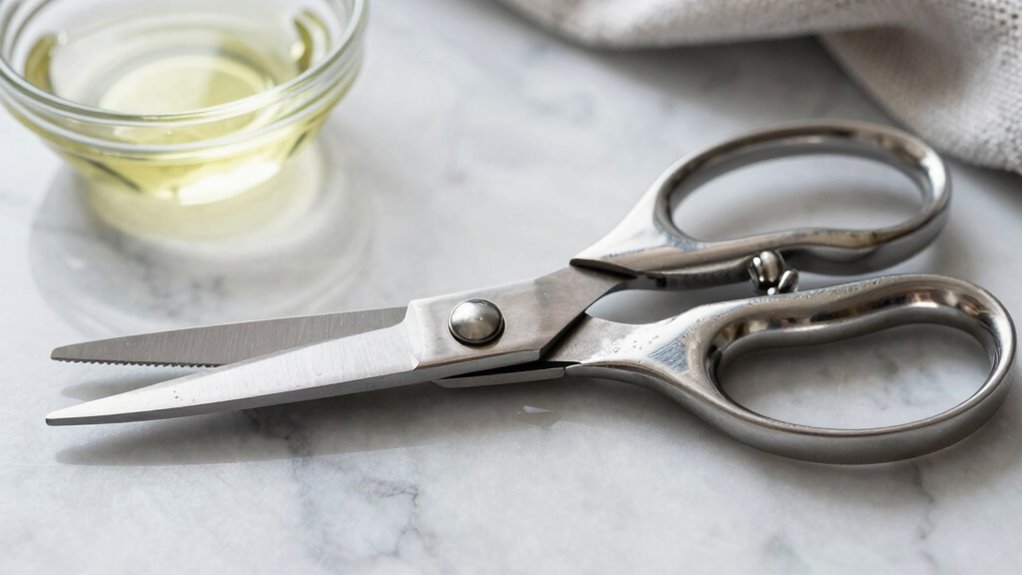
- Apply a thin layer of food-safe oil, like mineral or vegetable oil, on blades and pivot points after cleaning.
- Store in a dry, protected location using knife racks or cases to keep blades dry and rust-free.
- Regularly inspect and oil your shears every few weeks to maintain sharpness and prevent rust formation.

Yoshihiro 100% Pure Tsubaki Japanese Knife Maintenance Oil 3.4oz(100ml) with Complimentary Sabitori Rust Eraser and Microfiber Cloth
3.4oz(100ml) Pure Tsubaki knife Oil(Camellia Oil)
As an affiliate, we earn on qualifying purchases.
As an affiliate, we earn on qualifying purchases.
Why Rust and Dull Blades Happen: and How to Prevent Them
Rust and dull blades often develop because moisture and food residues aren’t properly cleaned and dried from your kitchen shears. When moisture sits on the metal, it causes metal corrosion, weakening the blades over time. Food residues can also trap moisture and promote rust formation, reducing blade durability. Dull blades happen when debris and rust build up, hindering smooth cutting. To prevent this, always dry your shears thoroughly after washing, avoiding prolonged exposure to water. Regularly inspect and clean them to remove any residues or rust spots. Proper maintenance keeps the metal in good condition, ensuring your shears stay sharp and durable longer. Additionally, applying a light coat of oil to the blades can create a protective barrier against moisture and rust. Using appropriate cleaning tools like small brushes can also help reach tight spots and remove debris effectively. Taking these simple steps preserves both the functionality and lifespan of your kitchen scissors, and using preventative measures can significantly reduce the chances of rust forming again. Regular maintenance is key to preventing metal corrosion, which directly impacts blade longevity.

Kate Naturals Mineral Oil for Wood Cutting Board, Butcher Block, and Knife. Food Grade Mineral Oil for Wooden Cutting Board & Utensils (8oz, Food Safe)
FOOD-GRADE MINERAL OIL FOR CUTTING BOARDS: Helps restore and protect dry cutting boards, butcher blocks, and wooden kitchen…
As an affiliate, we earn on qualifying purchases.
As an affiliate, we earn on qualifying purchases.
How to Clean Kitchen Shears: A Step-by-Step Guide
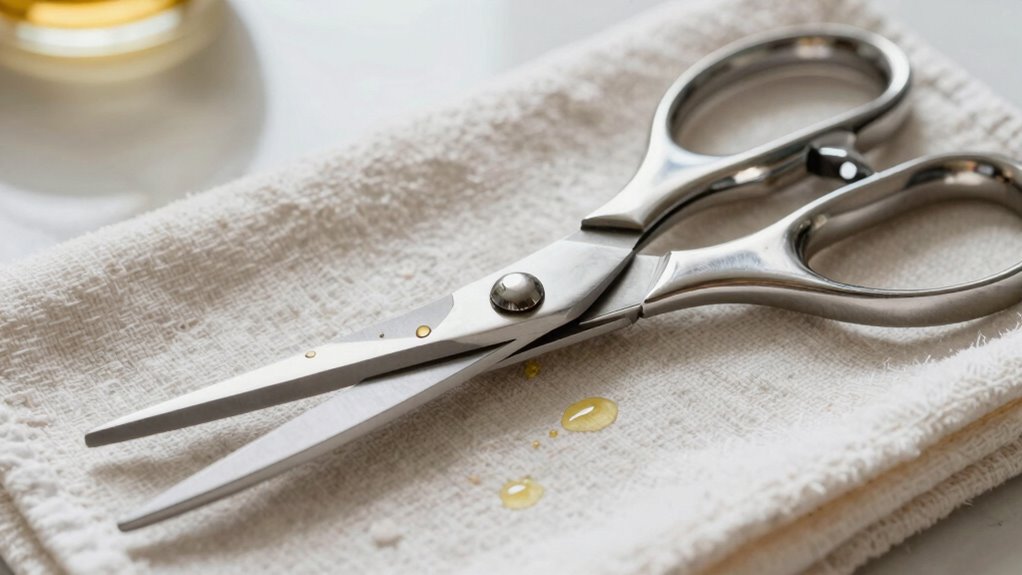
Cleaning your kitchen shears thoroughly is vital to keep them in top condition and prevent rust. Start by rinsing the shears with warm water to remove debris and residue. Use a small brush or an old toothbrush to scrub the blades, paying attention to the pivot point where grime can accumulate. For stubborn stains or sticky residue, soak the shears in a mixture of warm water and a few drops of dish soap for a few minutes. Rinse again and dry completely with a clean towel—moisture is a major factor in rust formation. Wiping the blades with a soft cloth ensures they’re dry and free of moisture, which is essential for rust prevention. Proper cleaning keeps your kitchen shears sharp and rust-free for years. Additionally, applying a light coat of oil designed for kitchen tools can help protect the blades from moisture and corrosion. Using the right storage methods can further help in preventing moisture buildup and corrosion. Maintaining a clean and dry environment is also crucial in preventing rust formation, which extends the lifespan of your scissors. Regular maintenance and careful storage also contribute to the longevity of your shears and can prevent rust formation, keeping them in optimal condition. Incorporating preventive measures like periodic oiling can significantly reduce the risk of rust developing over time.

KitchenAid All Purpose Kitchen Shears with Protective Sheath Durable Stainless Steel Scissors, Dishwasher Safe, Soft Grip Comfort Handle, 8.72 Inch, Black
PREMIUM STAINLESS STEEL BLADES: Built to resist rust and maintain sharpness, these stainless steel blades easily cut through…
As an affiliate, we earn on qualifying purchases.
As an affiliate, we earn on qualifying purchases.
How to Choose the Best Oil to Keep Your Shears Rust-Free

Choosing the right oil is key to preventing rust on your kitchen shears. You should look for protective oils that are food-safe and easy to apply, like mineral or vegetable oils. Proper application and storage methods will help keep your shears in top condition for longer.
Types of Protective Oils
Selecting the right protective oil is essential for preventing your kitchen shears from rusting and ensuring they stay sharp. When choosing oils, consider different types of cutting edges and how they interact with protective coating options. Mineral oil is a popular choice because it’s food-safe, affordable, and provides a reliable barrier against moisture. Some opt for specialized knife or shear oils designed specifically for cutting tools, which often offer better adhesion and longer-lasting protection. Avoid thick or sticky oils that can attract dirt or create buildup. Instead, look for lightweight, non-volatile oils that penetrate and form a thin, protective film. Your goal is to preserve the integrity of the blades without compromising their ability to cut smoothly. Additionally, understanding corrosion resistance and how different oils provide it can help you make an informed choice for long-term maintenance.
Application and Storage Tips
To effectively keep your kitchen shears rust-free, it’s important to apply the right amount of oil and store them properly. Use a clean cloth to spread a thin layer of the best oil for kitchen shears, ensuring all moving parts and blades are coated. This helps prevent moisture from causing rust. When choosing shear storage solutions, opt for knife racks, shears holders, or cases that keep your scissors dry and protected. Avoid leaving shears loose in drawers, where they can get scratched or exposed to humidity. Incorporate dedicated kitchen shears accessories, like shearing oil bottles with applicators, to make maintenance easier. Proper application and storage not only extend your shears’ lifespan but also keep them sharp and rust-free for everyday use.
KitchenAid All Purpose Kitchen Shears with Protective Sheath Durable Stainless Steel Scissors, Dishwasher Safe, Soft Grip Comfort Handle, 8.72 Inch, Black
PREMIUM STAINLESS STEEL BLADES: Built to resist rust and maintain sharpness, these stainless steel blades easily cut through…
As an affiliate, we earn on qualifying purchases.
As an affiliate, we earn on qualifying purchases.
How Often Should You Clean and Oil Your Kitchen Shears?
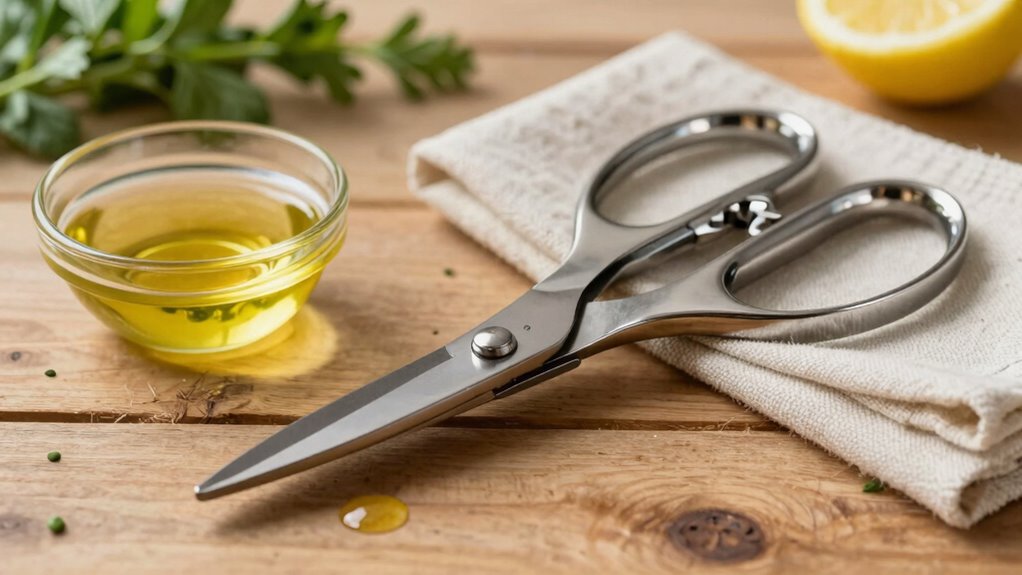
You should clean and oil your kitchen shears regularly to keep them in top shape. Look for signs like rust, sticky residue, or difficulty cutting, which indicate it’s time for maintenance. Following routine tips helps prevent damage and guarantees your shears stay sharp and functional.
Recommended Cleaning Frequency
Regularly cleaning and oiling your kitchen shears is essential for maintaining their performance and longevity. How often you do this depends on usage. For everyday tasks, clean and oil your shears once a month to prevent rust and keep them sharp. If you use them less frequently, bi-monthly maintenance is sufficient. Use cleaning hacks like wiping with a damp cloth and applying a light oil coat to prevent rust. Always inspect for debris or sticky residue, especially after cutting sticky foods. For heavy use or exposure to moisture, consider cleaning and oiling weekly. Consistent maintenance guarantees your shears stay rust-free and sharp, making your kitchen tasks easier and safer. Following a regular schedule helps preserve your investment in quality shears. Proper care for your tools is similar to mount, OTA, and camera comparisons in deep-sky imaging, where regular adjustments and maintenance ensure optimal performance over time.
Signs Shears Need Oiling
Ever notice your kitchen shears feeling sticky, stiff, or difficult to open? These are clear signs your shears need oiling. Proper shears maintenance includes paying attention to how smoothly they operate. If you see rust spots or feel resistance during cutting, it’s time for a quick oiling session. Oiling techniques help keep the blades lubricated and prevent corrosion. When you notice squeaking sounds or the handles feel loose, it’s another indicator that your shears require some attention. Regularly inspecting your shears and applying oil when these signs appear will extend their lifespan. Don’t wait until they’re difficult to use—timely shears maintenance keeps them sharp, functional, and rust-free. Using appropriate lubricants ensures that your shears are protected from moisture and corrosion. Incorporating preventative maintenance practices, such as oiling regularly, can significantly prolong the usability of your kitchen shears. Oiling is a simple step that saves you money and effort in the long run.
Routine Maintenance Tips
To keep your kitchen shears in ideal condition, it’s important to establish a routine for cleaning and oiling them. Regular maintenance ensures they stay sharp and rust-free. Using support breakfast ideas such as incorporating high-protein snacks can inspire creative ways to enjoy healthy meals alongside your maintenance routine. 1. Clean after every use using gentle cleaning techniques to prevent buildup and corrosion. 2. Oil the pivot and blades every few weeks to maintain smooth operation and prevent rust. 3. Sharpen blades as needed, typically every few months, to keep cutting efficiency optimal. 4. Inspect for signs of rust or dullness, and promptly address issues with proper blade sharpening or cleaning techniques. Following these steps regularly helps extend the lifespan of your shears, keeps them performing well, and avoids more intensive maintenance down the line. Consistency is key to their longevity.
Common Mistakes to Avoid When Caring for Your Kitchen Shears

Are you aware of the common mistakes that can damage your kitchen shears? One major error is improper storage; leaving them in a damp drawer or cluttered space can lead to rust and dull blades. Always store your shears in a dry, protected spot to prevent corrosion. Another mistake is using the wrong oil—some oils can attract dirt or cause buildup, which hampers performance. Stick to light, food-safe oils recommended for kitchen tools, and avoid heavy lubricants that aren’t intended for culinary equipment. Additionally, neglecting regular cleaning and oiling can accelerate wear and rust. By avoiding these mistakes, you’ll extend your shears’ lifespan and keep them functioning smoothly. Proper storage and appropriate oil use are key to maintaining your kitchen shears’ sharpness and durability.
Tips to Keep Your Kitchen Shears Sharp and Lasting Longer
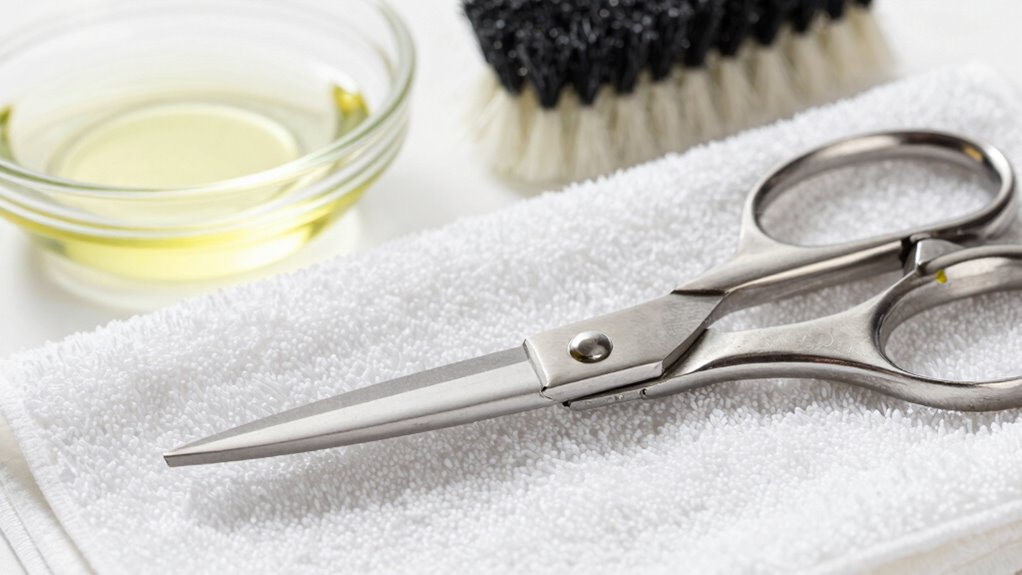
Keeping your kitchen shears sharp and durable requires consistent care. To extend their life, follow these tips:
- Regularly sharpen your shears using a sharpening stone or a specialized tool to maintain a clean, precise edge.
- Avoid cutting through bones or hard materials that can dull the blades quickly.
- Check the handles periodically; if they’re cracked or damaged, consider handle replacement to prevent further wear.
- Keep the shears clean and dry after each use to prevent rust and ensure smooth operation.
- Store your shears in a dry, protected environment to minimize exposure to moisture and reduce the risk of corrosion preventing rust.
- Additionally, applying a light oil coating to the blades after cleaning can help protect against moisture and maintain their sharpness over time.
Frequently Asked Questions
Can I Use Household Cleaning Products to Clean My Kitchen Shears?
You shouldn’t use household cleaners on your kitchen shears, as they often contain chemicals that pose risks to your health and can damage the blades. Instead, opt for warm, soapy water and a brush to clean them thoroughly. Afterward, dry and oil the shears to prevent rust. Using proper cleaning methods minimizes chemical risks and keeps your shears sharp and in good condition.
Is It Safe to Store Shears With Oil Applied on the Blades?
Storing shears with oil on the blades is like giving them a gentle armor—safe if you wipe off excess oil first. Proper storage safety means ensuring blades are dry and lightly oiled, preventing rust without attracting dirt or grime. Apply a thin layer of oil, then wipe away any excess before storing. This keeps your shears ready to cut through tasks smoothly, without risking corrosion or mess.
How Do I Remove Rust Stains From Heavily Corroded Shears?
To remove rust stains from heavily corroded shears, start with rust removal by soaking them in white vinegar for a few hours. Use a steel wool or a fine abrasive pad to scrub away the corrosion, applying gentle pressure. Rinse thoroughly and dry completely. To prevent future rust, treat the blades with a light oil coating. Regular maintenance ensures your shears stay sharp and corrosion-free over time.
Should I Sharpen My Shears Regularly or Only When Dull?
Think of your shears as a trusted friend; give them regular care. You should sharpen your shears regularly for peak shear maintenance, not just when they feel dull. Frequent sharpening keeps the blades in top shape, preventing rust and ensuring clean cuts. Don’t wait until they’re noticeably dull—maintain their edge proactively. This way, your shears stay sharp, smooth, and rust-free, making every cut effortless and efficient.
Can I Use Cooking Oil or Vegetable Oil for Lubricating My Shears?
Yes, you can use cooking oil or vegetable oil to lubricate your kitchen shears. Both oils help prevent rust and keep the blades moving smoothly. Just apply a small amount of oil to the pivot point and blades, then wipe off any excess with a cloth. Regular lubrication with these oils guarantees your shears stay sharp, rust-free, and easy to use over time.
Conclusion
With a little regular care, your kitchen shears can stay as bright and sharp as the day you got them. Think of cleaning and oiling as giving your shears a gentle whisper of love—keeping rust at bay and blades slicing smoothly. By avoiding common pitfalls and tending to them often, you’ll guarantee they remain your trusty kitchen companions for years to come. After all, a well-cared-for tool is always ready for any culinary adventure.