Reduction is your go-to sauce thickener that works across cuisines by simmering liquids until they naturally thicken and intensify in flavor. You control the texture and richness without added thickeners or artificial ingredients, simply by monitoring gentle simmering and evaporation. This versatile technique transforms broths, wines, and sauces into velvety, flavorful finishes. If you want to unveil deeper culinary secrets, there’s more to discover on how reduction can elevate your cooking.
Key Takeaways
- Reduction involves simmering liquids to concentrate flavors and thicken sauces naturally across various cuisines.
- It enhances sauce texture, transforming thin liquids into rich, velvety or hearty consistencies without additives.
- Gentle simmering and occasional stirring ensure even reduction and prevent burning, ensuring consistent results.
- This technique intensifies flavors, elevating dishes with a deep, complex taste without artificial thickeners.
- Reduction is a versatile, efficient method suitable for sauces, stocks, wines, and gravies in diverse culinary traditions.

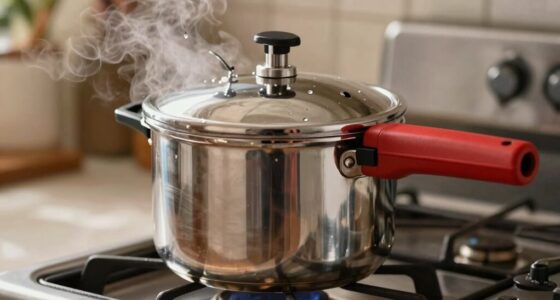
Have you ever wondered how simplifying complex problems can lead to better solutions? When it comes to making sauces that taste rich and have the perfect texture, reduction is your secret weapon. Reduction involves simmering a liquid—like stock, wine, or a sauce itself—until it thickens and intensifies in flavor. This process directly impacts sauce consistency and flavor concentration, making it a versatile technique across various cuisines. Instead of adding thickeners or artificial ingredients, you harness the natural power of evaporation to achieve the desired result. As you reduce, water and other volatile components evaporate, leaving behind a thicker, more concentrated liquid that clings beautifully to your dish.
You’ll find that mastering reduction allows you to control sauce consistency with precision. Whether you want a silky glaze or a hearty, velvety sauce, reducing liquids helps you fine-tune the texture without losing the essence of your ingredients. For example, a thin broth can be transformed into a luscious gravy, or a tangy wine sauce can be thickened into a rich, flavorful accompaniment. The key is to simmer gently, stirring occasionally, so that the sauce thickens evenly without burning or sticking to the pan. The longer you reduce, the thicker and more concentrated the sauce becomes, allowing you to customize it to match your dish’s needs perfectly. Additionally, understanding the thermal behavior of liquids during reduction helps prevent over-concentrating or burning, ensuring a smooth process. Temperature control is essential to prevent scorching and ensure even reduction.
Moreover, reduction amplifies flavor concentration, which is essential for creating memorable dishes. As water evaporates, the remaining liquid intensifies in taste, making every bite more flavorful. This is especially important in cuisines where depth of flavor is vital, like French or Italian cooking, where a well-reduced sauce can elevate a simple ingredient into a gourmet experience. You don’t need to rely on heavy creams or processed thickeners; reduction naturally enhances the richness of your sauce, making it more vibrant and complex. This technique also allows you to incorporate additional flavors—like herbs, spices, or a splash of acid—toward the end of the reduction process to achieve a balanced, layered taste.
In essence, reduction is a straightforward yet powerful tool that helps you achieve the perfect sauce consistency and flavor concentration. It’s adaptable across cuisines and dishes, giving you control over the final product. By understanding how to reduce properly, you make your cooking more efficient and your sauces more delicious. Instead of complicated techniques or additives, you use simple simmering to unlock maximum flavor and texture. Once you get the hang of it, reduction becomes an invaluable part of your culinary toolkit, helping you turn everyday ingredients into extraordinary dishes. Knowing how to manage thermal behavior and evaporation rates ensures consistent, high-quality results every time.
Frequently Asked Questions
Can Reduction Be Used to Thicken Both Sweet and Savory Sauces?
Yes, reduction can be used to thicken both sweet and savory sauces. You can create fruit-based reductions for desserts or tangy glazes, and dairy reductions like cream or milk to add richness to savory dishes. To achieve the right consistency, simmer the liquid until it reduces by half or more, stirring occasionally. This technique enhances flavors naturally and works beautifully across various cuisines, making your sauces more concentrated and flavorful.
How Long Does It Typically Take to Achieve Proper Reduction?
You’ll typically need about 15 to 30 minutes of simmering time to achieve proper reduction, depending on the sauce’s initial volume and desired thickness. Keep an eye on the cooking duration, stirring occasionally to prevent burning. The key is to simmer until the sauce thickens enough to coat the back of a spoon. Adjust the cooking duration as needed, ensuring you don’t rush the process for the best flavor concentration.
Is Reduction Suitable for Gluten-Free or Allergy-Sensitive Diets?
Did you know that 15% of people worldwide suffer from food allergies? Reduction is generally suitable for gluten-free options because it relies on simmering liquids to thicken, not gluten-containing ingredients. However, you should consider allergy considerations and guarantee no cross-contamination occurs if you’re cooking for sensitive individuals. Always verify ingredients used in the process to confirm that reduction remains a safe, allergy-friendly thickening method.
Can You Use Reduction to Thicken Cold Sauces or Dressings?
You can’t use reduction to thicken cold sauces or dressings effectively because it requires simmering to evaporate water and concentrate flavors. For cold sauce thickening or maintaining dressing consistency, it’s better to use ingredients like emulsifiers, cornstarch, or xanthan gum. These options help achieve the desired thickness without heat, ensuring your cold sauces stay smooth and appropriately textured without sacrificing freshness or flavor.
What Are Common Mistakes to Avoid When Reducing a Sauce?
You should avoid over reduction, which can make your sauce too thick or even burnt, ruining its flavor. Keep an eye on uneven simmering, as inconsistent heat can cause uneven thickening and uneven texture. Stir regularly to prevent sticking or burning at the bottom. Also, don’t rush the process; patience guarantees a balanced, flavorful reduction without over-thickening or losing the sauce’s delicate notes.
Conclusion
Next time you need to thicken a sauce, remember that reduction is your secret weapon. It’s versatile, simple, and adds depth to any dish. Did you know that reducing a sauce can concentrate flavors up to five times? That’s like turning a basic ingredient into a culinary masterpiece with just patience. So, don’t be afraid to embrace reduction—your taste buds will thank you for the richer, more flavorful results.