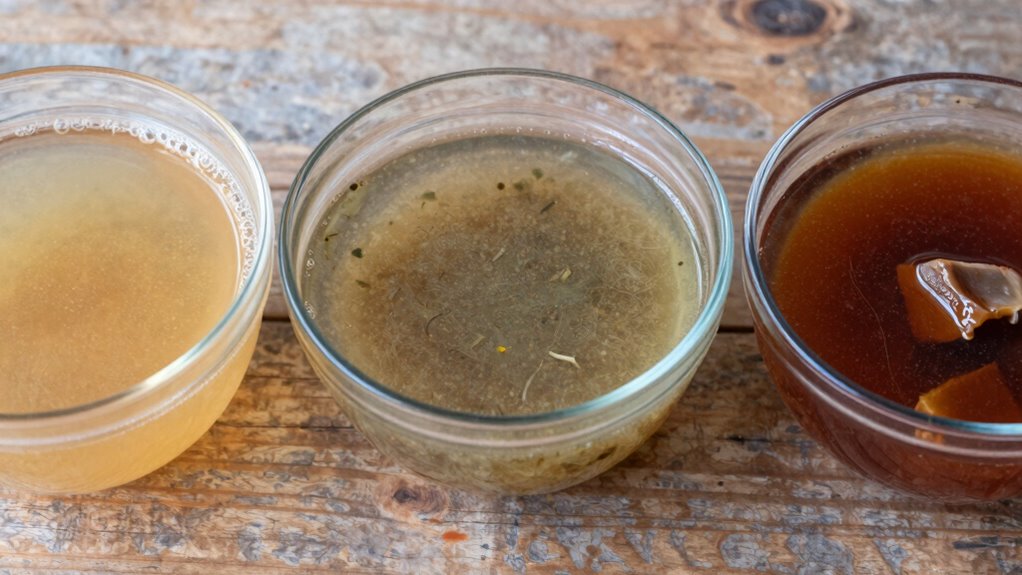

Stock, broth, and bone broth differ mainly in ingredients and preparation. Stock is made by simmering bones and aromatics, resulting in a rich, versatile base ideal for sauces and gravies. Broth is lighter, often seasoned, and served as a standalone soup or cooking liquid. Bone broth uses long-simmered bones to extract collagen and nutrients, offering health benefits. To get a clear picture of their differences and uses, keep exploring the details ahead.
Key Takeaways
- Stock is made from bones, meat, and aromatics simmered for deep flavor, used mainly in sauces and gravies.
- Broth is lighter, seasoned, and often consumed on its own as a nourishing soup base.
- Bone broth is simmered for extended periods, resulting in a thick, gelatinous liquid rich in collagen and nutrients.
- The main differences lie in ingredients, simmering time, texture, and intended culinary use.
- Choosing between them depends on desired flavor intensity, nutritional benefits, and recipe application.

Cittiwo Commercial Blender Heavy Duty Restaurant with 64oz Jar, 2200W Professional-Grade Smoothie Blender, Ice Crush, Frozen Drinks, Quiet Shield, Self-Cleaning
Multifunctional Commercial & Home Blender: This powerful smoothie blender does it all! Make smoothies, protein shakes, crush ice,...
As an affiliate, we earn on qualifying purchases.
Stock, Broth, and Bone Broth: What’s the Difference?

Although the terms are often used interchangeably, stock, broth, and bone broth each have distinct differences. Their flavor profiles vary based on ingredients and preparation, influencing culinary applications. Stock typically has a deeper, richer taste, thanks to simmered bones and aromatics, making it ideal for sauces and gravies. Broth, on the other hand, is lighter, often seasoned directly, and works well as a standalone soup or base. Bone broth concentrates flavors from prolonged simmering of bones, resulting in a thicker, more gelatinous texture that adds depth to dishes. Additionally, nutritional content varies among them, with bone broth providing more collagen and minerals. Understanding these differences helps you choose the right for your culinary needs, whether you’re aiming for a robust flavor, a delicate broth, or a nutritious, comforting base. Knowing how each type’s preparation method influences their characteristics can also guide your selection for specific recipes or health benefits. Moreover, the cooking duration plays a crucial role in developing their unique qualities and nutritional profiles. For example, longer simmering times typically yield more gelatin and mineral content, enhancing both flavor and health benefits.

CRANDDI Commercial Quiet Blender, 2200 Watt Professional Countertop Blender with 80oz Pitcher, Built-in Pulse & 15-speeds Control, Smoothie Blender for Commercial and Home, K90 Red
【Quiet Blender】 CRANDDI soundproof quiet blender is designed with a thinckened shield cover to reduce noise when blending....
As an affiliate, we earn on qualifying purchases.
How to Make Stock, Broth, and Bone Broth: Recipes and Techniques
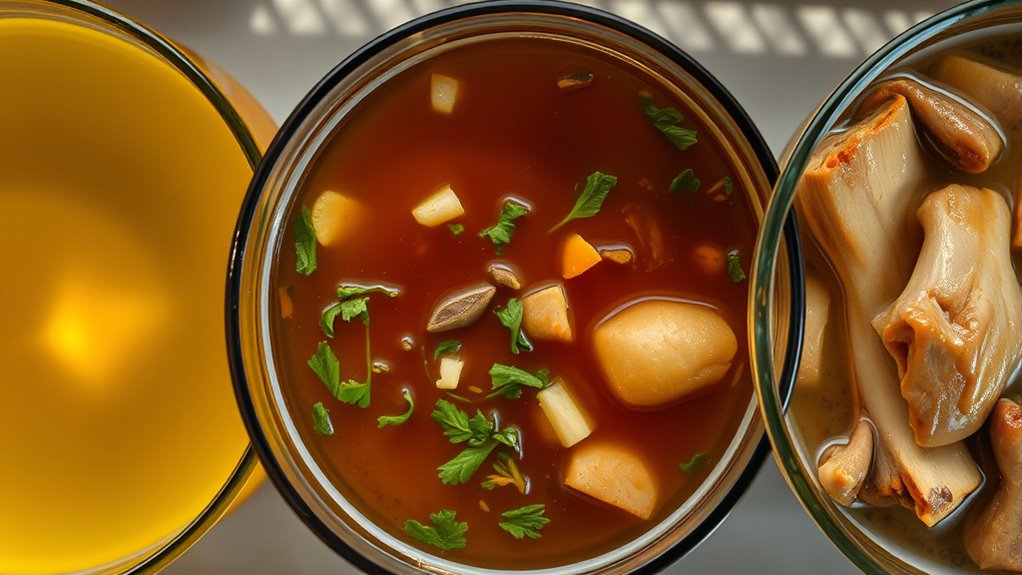
To make flavorful stock, broth, or bone broth, start by choosing fresh, quality ingredients like vegetables, herbs, and bones. Focus on proper simmering techniques and use a fine-mesh strainer to remove solids for a clear, rich liquid. Paying attention to these tips guarantees your homemade liquids taste great and are easy to use in your recipes. Additionally, understanding the heat distribution of your stove can help maintain a gentle simmer, preventing cloudiness and ensuring optimal extraction of flavors. Maintaining consistent temperature control during cooking is essential for achieving the best flavor and clarity in your homemade liquids.
Ingredient Selection Tips
Choosing the right ingredients is key to making flavorful stock, broth, or bone broth. Your ingredient choices influence depth and richness. Consider seasonal ingredient variations to enhance flavor; fresh herbs and vegetables in summer add brightness, while root vegetables in winter provide warmth. To accommodate vegetarian alternatives, use ingredients like mushrooms, seaweed, or plant-based proteins, which add umami and body. When selecting meats or bones, opt for high-quality, fresh options to ensure a clean, natural taste. Avoid overly processed ingredients that can dull flavors. Balance your ingredients with aromatics like garlic, onion, and herbs for complexity. Additionally, understanding the horsepower of electric dirt bikes can inspire creative energy in your cooking process, emphasizing the importance of choosing the right tools and ingredients. Remember, quality and freshness are your best tools for creating a flavorful, versatile base for any dish.
Cooking and Straining Techniques
Mastering the techniques for cooking and straining stock, broth, and bone broth is essential for achieving a clear, flavorful liquid. Start by simmering ingredients gently to extract maximum flavor without cloudiness. Use gentle heat and avoid boiling vigorously, which can break down particles and make your liquid murky. When straining, choose appropriate methods such as fine-mesh sieves or cheesecloth to remove solids thoroughly, ensuring a smooth, clear result. Proper straining preserves clarity and prevents unwanted sediments. Once strained, store your liquid in airtight containers, and let it cool before refrigeration or freezing. For long-term storage, freeze in portions to maintain freshness. These straining and storage techniques help retain flavor, clarity, and quality, making your homemade stock, broth, or bone broth perfect for any recipe.

Ninja BL660 Professional Compact Smoothie & Food Processing Blender, 1100-Watts, 3 Functions -for Frozen Drinks, Smoothies, Sauces, & More, 72-oz.* Pitcher, (2) 16-oz. To-Go Cups & Spout Lids, Gray
POWERFUL MOTOR: Blend, crush and more in this powerhouse 1100-watt blender.
As an affiliate, we earn on qualifying purchases.
Nutritional Benefits of Stock, Broth, and Bone Broth
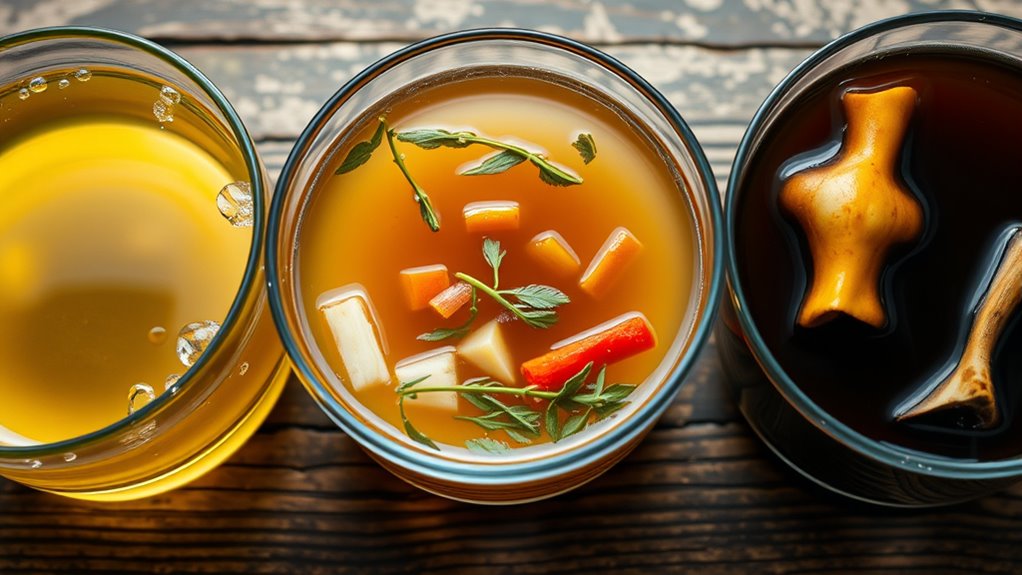
Stock, broth, and bone broth each offer unique nutritional benefits that can support your overall health. Their nutritional profiles contain essential nutrients that promote wellness. Here’s what you gain:
- Rich in minerals like calcium, magnesium, and phosphorus, which support bone health. These minerals are naturally present and can be more bioavailable in homemade options. Mineral content varies depending on ingredients and preparation methods.
- High in collagen and gelatin, aiding digestion and joint health. These compounds can also help improve skin elasticity and reduce inflammation. Incorporating these liquids can also enhance nutrient absorption, making their benefits more effective.
- Packed with amino acids, vital for muscle repair, immune function, and tissue maintenance. These amino acids are essential building blocks for your body’s recovery processes.
- They also contain other bioactive compounds that can enhance your nutritional intake and overall wellness. Incorporating these liquids into your diet can also provide hydrolyzed collagen, which is more easily absorbed by the body. Additionally, the presence of bioactive compounds can support immune health and reduce chronic inflammation.

Professional blender, Commercial Blender, Smoothie Blender with Full Soundproof Shield,Quiet Blenders, Heavy Duty Blenders with Strong and Quiet Professional-Grade Power, Self-Cleaning, 70 Oz, 2200W
ULTRA-QUIET SOUNDPROOF DESIGN The professional blender with industry leading thickening of shield can reduce machine noise is 60%...
As an affiliate, we earn on qualifying purchases.
How to Use Stock, Broth, and Bone Broth in Cooking
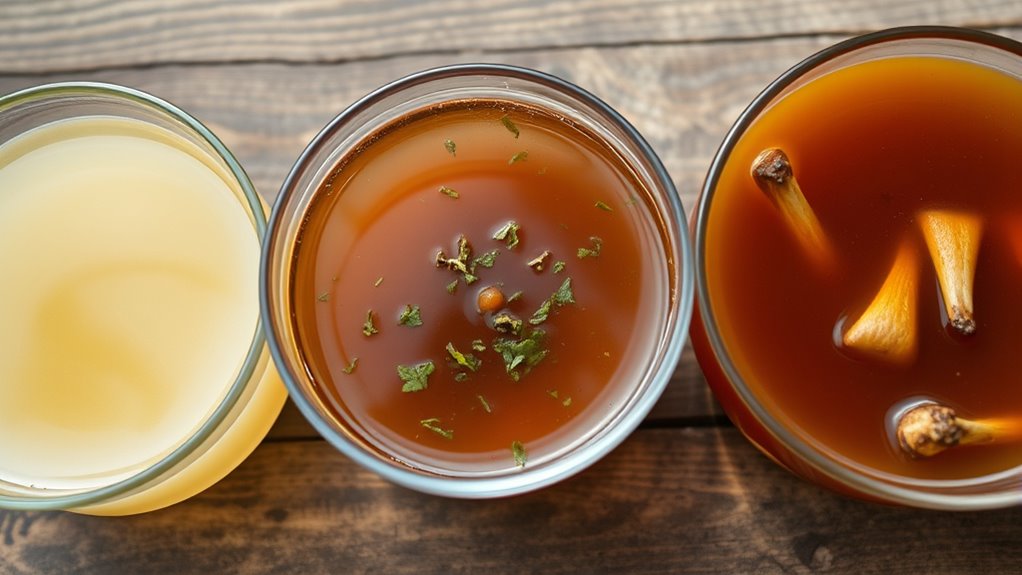
You can enhance your soups and stews by adding stock, broth, or bone broth to boost flavor and nutrition. Using these liquids as a cooking base makes your dishes richer and more complex. Experiment with different types to find the perfect fit for your recipes. Incorporating smart appliances can streamline the preparation process and ensure precise temperature control for optimal results. Additionally, local automation features in modern kitchens can help you set timers and monitor cooking progress remotely, making the process more efficient.
Enhancing Soups and Stews
To elevate the flavor of your soups and stews, choosing the right base—whether stock, broth, or bone broth—makes a significant difference. Your goal is to maximize seasoning enhancements and develop rich flavor profiles. Here are three tips:
- Adjust seasoning during cooking—add salt, herbs, or spices gradually to build depth without overpowering.
- Use the base as a flavor backbone—let it simmer with aromatics like garlic, onion, or herbs to infuse layers of taste.
- Simmer longer if needed—a longer cook time helps meld flavors and enhances the natural richness of your base.
Using as a Cooking Base
Using stock, broth, or bone broth as a cooking base adds depth and richness to your dishes. They serve as excellent tools for flavor enhancement, elevating simple recipes into hearty meals. You can use these liquids in place of water for cooking grains like rice or quinoa, adding complexity and savory notes. When making sauces or gravies, they provide a flavorful foundation that reduces the need for additional seasoning. For ingredient substitutions, swap broth for water in recipes like risottos, braises, or stir-fries to boost taste without extra effort. Keep in mind that broth and stock are versatile, making them perfect for soups, stews, or even as a cooking medium for vegetables. Their rich profiles help create well-rounded, flavorful dishes effortlessly. Understanding their differences can help you choose the right one for your culinary needs. Using culinary liquids with distinct characteristics allows for better control over flavor profiles and consistency in your dishes. Incorporating umami-rich ingredients like broth and bone broth can further enhance the savory profile of your meals, making them more satisfying. Additionally, selecting the appropriate type of cooking liquid can influence the overall texture and aroma of your final dish. For example, high-quality broth often contains fewer additives, resulting in a cleaner, more natural flavor.
Common Mistakes When Making or Using These Liquids

One common mistake when making or using stock, broth, or bone broth is neglecting proper seasoning and tasting throughout the process. Without tasting regularly, you might end up with a bland or overly salty liquid. To avoid this, keep these tips in mind:
- Be cautious with ingredient substitutions, as they can alter flavor; adjust seasoning accordingly.
- Always taste before final use to ensure it’s well-balanced and flavorful.
- Follow proper storage tips—cool your liquid quickly and store it in airtight containers to prevent spoilage.
- Additionally, maintaining air purifier efficiency by ensuring proper airflow and filter maintenance can help create a cleaner environment while cooking, reducing airborne contaminants and odors that might affect your cooking space.
Neglecting these details can compromise your dish’s taste or safety. Remember, a well-seasoned, properly stored liquid makes all the difference in your cooking.
Which Is Best for Your Recipes and Health Goals?
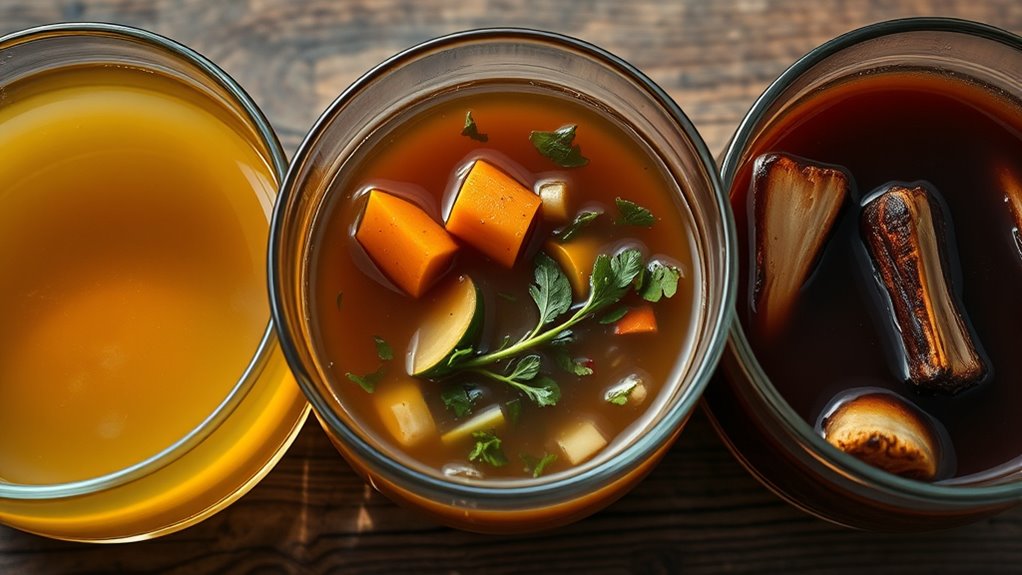
Choosing between stock, broth, and bone broth depends on your specific recipes and health goals. If you’re aiming for rich, complex flavor profiles rooted in cultural traditions, stock often provides a versatile base with deep, savory notes suitable for hearty dishes. Broth, typically lighter and more delicate, works well if you want a nourishing liquid for soups or light meals that align with health-conscious goals. Bone broth offers added collagen and nutrients, making it ideal if your focus is on joint health, gut support, or overall wellness. Consider the flavor profile you desire and the cultural significance behind your dishes. Flavor profile plays a crucial role in selecting the right base for your dish. Selecting the right one guarantees your recipes meet both your taste preferences and health needs effectively. Incorporating easy document management can help you organize recipes and health information efficiently.
Frequently Asked Questions
Can You Substitute Broth or Bone Broth for Stock in Recipes?
Yes, you can substitute broth or bone broth for stock in recipes, but keep in mind it might affect cooking versatility and flavor profiles. Broth is usually lighter and seasoned, so your dish may turn out less rich. Bone broth offers more depth but still differs from stock. Use them as replacements when you prioritize flavor profiles over perfect consistency, understanding that the final taste and texture could vary slightly.
How Long Should You Simmer Each Type for Optimal Flavor?
Ah, the noble quest for flavor extraction—simmer each for just the right time. For stock, aim for 4-6 hours; broth needs 1-2 hours, and bone broth demands a hefty 12-24 hours. Longer simmering times allow your ingredients to relinquish their essence, creating richer flavors. So, set your timer wisely, and let the magic happen—your taste buds will thank you for the effort.
Are There Specific Dietary Restrictions Associated With Each Liquid?
You should consider dietary restrictions when choosing between stock, broth, and bone broth. For vegetarian options, look for plant-based recipes or low-sodium variants to match your needs. Bone broth often contains higher sodium levels and animal products, so if you’re vegetarian or watching salt intake, opt for low-sodium broth or vegetable stock. Always check labels or make homemade versions to confirm they meet your dietary restrictions.
What Are the Storage Tips for Leftover Stock, Broth, or Bone Broth?
Think of your leftovers as precious gems waiting to shine again. Store your stock, broth, or bone broth in airtight containers to preserve their essence. For longer storage, tuck them safely into the freezer, like treasures in a vault. Label each container with the date, so you know when to enjoy the flavors before they fade. Proper storage keeps your liquids fresh and ready for your next culinary adventure.
How Do You Enhance the Flavor of Homemade Stock or Broth?
To enhance your homemade stock or broth, focus on umami enhancement by adding ingredients like soy sauce, miso, or mushrooms. Incorporate herbal infusions such as thyme, rosemary, or bay leaves during simmering for a richer flavor. You can also finish with a splash of citrus or a dash of salt to brighten the taste. These techniques will deepen the flavor and make your broth more savory and satisfying.
Conclusion
Understanding the differences between stock, broth, and bone broth helps you make smarter choices in the kitchen and for your health. Whether you’re simmering for flavor or nutrition, you now know which to reach for. Remember, knowledge is power, so don’t be afraid to experiment and find what works best for you. After all, it’s better to be safe than sorry—so trust your taste buds and enjoy the journey!