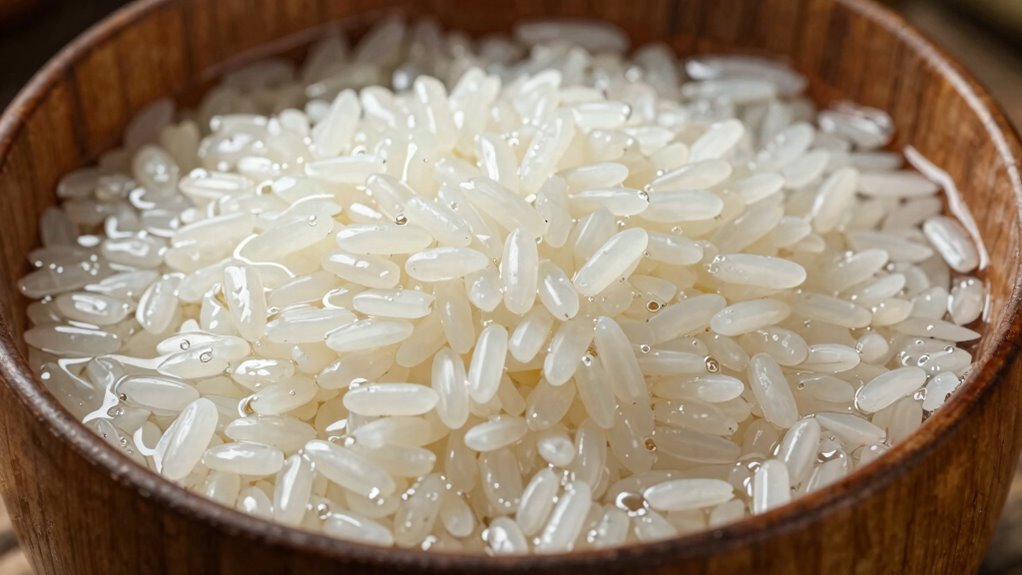

Soaking rice improves texture and reduces cooking time, especially for brown, medium-, and short-grain varieties. It helps grains expand evenly and prevents over-softening, resulting in fluffier rice. Soaking is most beneficial if you soak for 10-30 minutes for most rice types, or longer for brown rice. Proper rinsing and water temperature are key. To learn more about how specific types benefit and how to soak correctly, keep exploring further.
Key Takeaways
- Soaking improves rice texture by promoting even water absorption and grain expansion, resulting in softer, fluffier cooked rice.
- It reduces cooking time significantly, especially for brown and high-starch rice varieties like sushi or wild rice.
- Proper soaking (timing and water temperature) prevents over-softening and stickiness, enhancing overall rice quality.
- Soaking benefits are most notable with longer soaking durations for brown rice and shorter times for medium and short-grain types.
- While some nutrient loss occurs, soaking mainly enhances texture and digestibility without drastically reducing nutritional value.
Do I Need to Soak Rice Before Cooking?
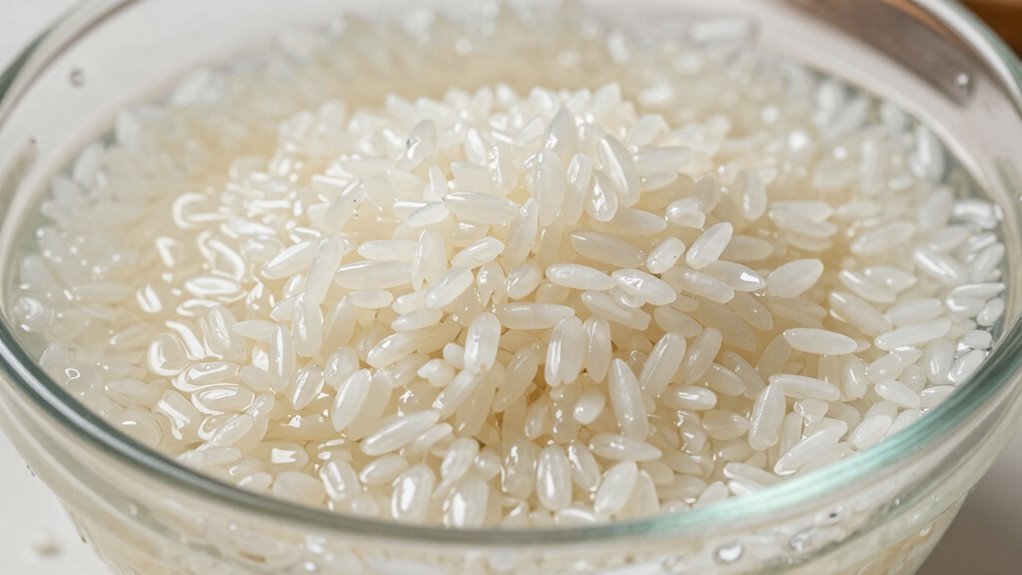
Whether you need to soak rice before cooking depends on the type and your desired outcome. Some cooking methods, like making sushi or pilaf, benefit from soaking to improve texture and reduce cooking time. Soaking can also help rice cook more evenly, especially with harder grains like brown or wild rice. If you store rice properly—keeping it in an airtight container in a cool, dry place—it stays fresh and can be prepared easily without soaking. Additionally, European cloud innovation offers sustainable and energy-efficient solutions that can support advanced cooking appliances or smart kitchen systems. Proper storage can also help maintain the rice’s freshness and quality, which influences whether soaking is necessary. However, for quick-cooking varieties like jasmine or basmati, soaking isn’t always necessary. Consider your rice storage habits and the dish you’re preparing. Soaking isn’t essential for every type of rice, but it can enhance results for specific cooking methods, making your rice more consistent and enjoyable.
Which Types of Rice Benefit Most From Soaking?

If you’re wondering which rice types gain the most from soaking, focus on those with diverse grain textures or high starch content. These varieties often benefit from soaking to improve cooking results and texture. Understanding these differences helps you choose the right approach for perfect rice every time. Additionally, proper soaking can reduce cooking time and help achieve desired texture, especially for varieties prone to uneven cooking or stickiness. For example, some rice varieties like jasmine and sushi rice are known to benefit from soaking to enhance their grain structure.
Diverse Grain Textures
Certain types of rice benefit considerably from soaking because their textures can improve with this simple step. Different grain varieties respond uniquely depending on their structure and moisture absorption. For example:
- Long-grain rice: Soaking for 20-30 minutes enhances fluffiness and reduces cooking time. Knowing the grain structure helps determine the optimal soaking duration for each type.
- Medium-grain rice: Benefits from a soaking duration of 15-20 minutes, leading to a creamier texture.
- Short-grain rice: Usually needs a shorter soaking period, around 10-15 minutes, to prevent over-softening.
- Brown rice: Requires longer soaking, about 1-2 hours, to soften the bran layer and improve overall texture. Additionally, understanding the moisture absorption process aids in achieving the best results for each variety.
Understanding your grain variety and adjusting soaking duration helps achieve ideal results tailored to each rice type’s unique texture.
High-Starch Varieties
High-starch rice varieties, such as sticky sushi rice and glutinous rice, benefit considerably from soaking because it helps reduce surface starches that cause excessive stickiness. Soaking promotes starch release from the grain, decreasing grain stickiness during cooking. This process results in a less clumpy texture and improved mouthfeel. Typically, high-starch types need longer soaking times to achieve ideal results. Here’s a quick comparison:
| Rice Type | Benefit of Soaking |
|---|---|
| Sticky sushi rice | Reduces surface starches, minimizes stickiness |
| Glutinous rice | Enhances texture, decreases grain stickiness |
| Medium-grain rice | Slightly benefits, but less critical |
How Soaking Affects Rice’s Texture and Cooking Time
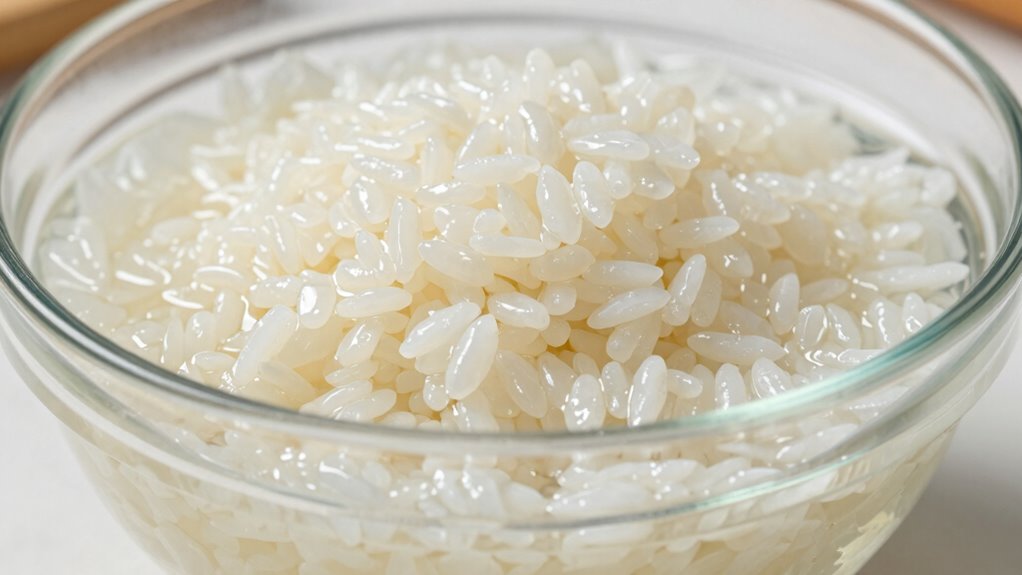
Soaking rice before cooking can significantly influence both its texture and the time it takes to cook. When you soak rice, it promotes grain expansion, making the grains absorb water evenly. This helps achieve better cooking consistency, ensuring each grain cooks uniformly. The main effects include:
Soaking rice improves texture, reduces cooking time, and promotes even, fluffy grains.
- Reduced cooking time, as soaked rice requires less heat to become tender.
- Softer texture, thanks to pre-hydrated grains that cook more evenly.
- Improved grain expansion, resulting in fluffier rice.
- Less likelihood of stickiness or clumping during cooking.
Tips for Properly Soaking Rice for Fluffy Results

To achieve the best fluffy rice results, proper soaking techniques are key. Start by rinsing your rice thoroughly to remove surface starch, which can affect texture. When soaking, use clean, cold water and aim for at least 30 minutes, or up to several hours for softer grains. Be mindful of rice packaging instructions, as some varieties benefit from longer soaking. If your rice has undergone grain polishing, it may absorb water faster, so adjust soaking time accordingly. Keep the rice submerged evenly to ensure uniform hydration. After soaking, drain excess water and proceed to cooking. Proper soaking not only improves fluffiness but also helps attain a more even texture, especially with rice that’s been processed or packaged for specific uses.
Common Mistakes When Soaking Rice and How to Avoid Them

Many people make the mistake of soaking rice for too long or using hot water, which can lead to overly soft grains or uneven texture. To avoid this, focus on the soaking process carefully. Here are common mistakes to watch out for:
- Over-soaking: Leaving rice submerged for more than 30 minutes can soften it too much, affecting rice hardness.
- Using hot water: Hot water speeds up soaking but compromises texture, making rice mushy.
- Ignoring rinsing: Skipping rinsing before soaking can trap excess surface starch, leading to sticky rice.
- Not adjusting soaking time: Different rice varieties require different soaking durations; follow guidelines for best results.
Does Soaking Change the Taste or Nutritional Value of Rice?

Soaking rice can sometimes change its flavor slightly, depending on how long you soak it and the type of rice. It may also affect the nutrient content, especially water-soluble vitamins and minerals. Additionally, soaking can make rice easier to digest, which might influence how your body absorbs nutrients.
Flavor Alteration Possibilities
When rice absorbs water during soaking, its flavor can subtly change, often becoming milder or slightly nuttier depending on the duration and method. Soaking can enhance flavor by promoting aroma development, which makes the rice smell richer. It can also influence taste, sometimes adding a subtle depth or mellowness. To understand this better:
- Short soaking preserves the rice’s natural flavor while enhancing aroma.
- Longer soaking may lead to a nuttier, more complex taste.
- Rinsing rice beforehand can remove surface starch, affecting flavor subtly.
- Soaking in flavored liquids can intentionally boost flavor enhancement and aroma development.
- Incorporating water absorption techniques in soaking or cooking can improve water uptake and texture, leading to a more uniform and desirable result in the final dish.
- Proper soaking methods can also help retain or even improve the rice’s nutritional value, making it a healthier choice.
Nutrient Content Changes
As rice absorbs water during soaking, it’s natural to wonder if this process affects its nutritional profile. Soaking can lead to nutrient leaching, where water-soluble vitamins and minerals, like B vitamins and iron, partially wash out of the rice. This may result in some mineral loss, slightly reducing the rice’s overall nutritional value. However, the extent of nutrient loss depends on soaking duration and water temperature. Shorter soaking times and cool water minimize nutrient leaching, preserving most of the rice’s nutrients. Keep in mind that these changes are usually modest and don’t considerably impact the rice’s nutritional benefits. Overall, soaking primarily influences texture and digestibility more than it diminishes the rice’s nutritional content.
Impact on Digestion
Because soaking rice alters its texture and moisture content, many people wonder if it also affects how easily your body digests it. Soaking can influence digestion by reducing certain compounds, making rice easier to process. Here’s what you should know:
- It can decrease oligosaccharides, which cause bloating and gas.
- It may break down anti-nutrients, improving nutrient absorption.
- Soaking can make rice softer, easing chewing and digestion.
- It might reduce the risk of dental health issues caused by harder, uncooked grains.
However, soaking doesn’t markedly impact allergy concerns, but it can help those sensitive to certain compounds. Overall, soaking rice can promote better digestion and comfort, especially for those with sensitive stomachs or dental health considerations.
Frequently Asked Questions
Can Soaking Rice Reduce Cooking Time Significantly?
Yes, soaking rice can considerably reduce cooking time. When you soak rice for about 30 minutes to a few hours, it softens the grains, allowing them to cook faster and more evenly. The soaking duration directly impacts rice texture, making it fluffier and less sticky. Keep in mind that longer soaking times might lead to over-softening, so adjust based on your preferred rice texture and recipe needs.
Is There a Risk of Fermentation or Spoilage When Soaking Rice?
Yes, there’s a fermentation risk and spoilage concerns if you soak rice for too long or leave it at room temperature. To avoid these issues, keep soaking times short—around 30 minutes to a few hours—and store the rice in the refrigerator if you plan to soak it longer. Always rinse thoroughly before cooking to reduce bacteria and minimize spoilage chances. Proper storage and timing are key to safe soaking.
How Long Can I Soak Rice Without Compromising Quality?
Think of soaking rice like watering a delicate plant. You should limit soaking duration to about 4-6 hours; beyond that, the rice becomes overly soft, risking mushy texture. If you soak longer, it’s like overwatering—your rice’s texture deteriorates. Keep an eye on the clock to maintain ideal firmness. Shorter soaks preserve the rice’s structure, ensuring you get the perfect bite every time.
Does Soaking Rice Remove Any Anti-Nutrients or Impurities?
Yes, soaking rice helps with anti-nutrient removal and impurity elimination. When you soak rice, you loosen and wash away compounds like phytic acid, which can interfere with mineral absorption. The process also removes dirt, dust, and other impurities, making the rice cleaner and safer to eat. To maximize benefits, soak rice for 30 minutes to a few hours, then rinse thoroughly before cooking.
Are There Specific Water Temperatures Recommended for Soaking Rice?
A stitch in time saves nine, so choosing the right water temperature for soaking rice matters. For ideal results, use lukewarm water around 86°F (30°C), which promotes even soaking without damaging the grains. Avoid hot water, as it can make rice mushy, and cold water, which slows down soaking. Keep the soaking duration between 30 minutes to 2 hours to improve texture without over-softening.
Conclusion
Soaking your rice can truly transform your cooking, saving time and boosting texture. By breezily balancing benefits and blunders, you’ll bring perfect, fluffy grains to every plate. Remember, proper prep prevents pathetic pitfalls, so soak smartly and savor the superior, sumptuous results. With a little care and consistency, you’ll conquer cooking challenges and create crave-worthy, crisp, and comforting rice every time.