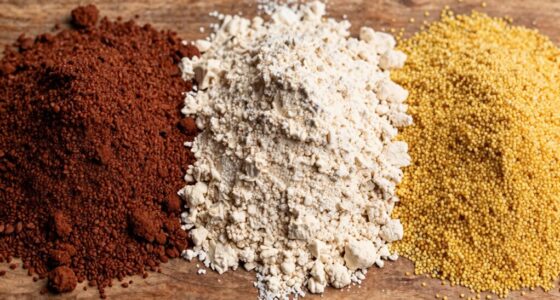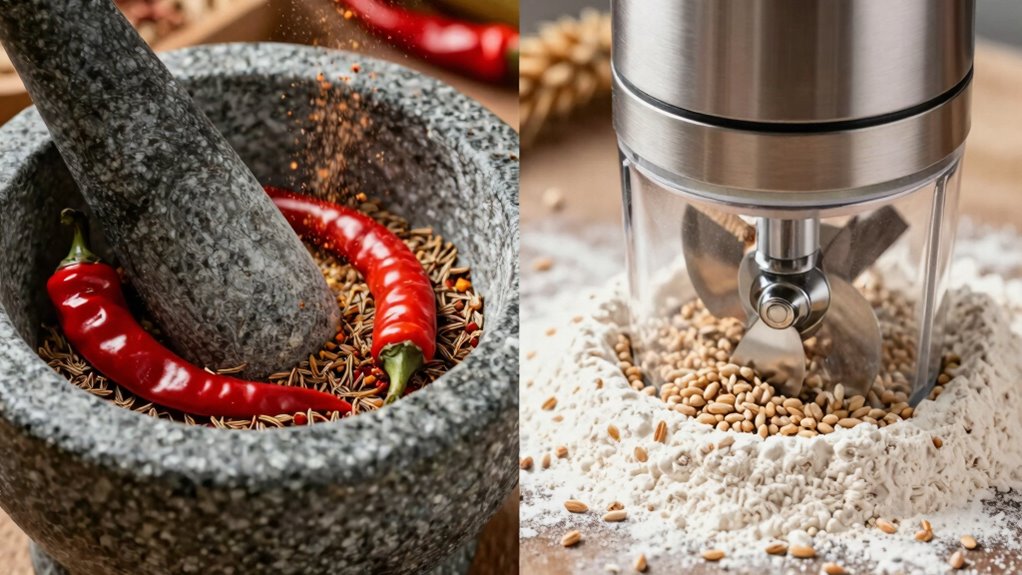

Grinding spices and grains requires different techniques because each has unique textures, moisture levels, and flavor profiles. Spices are dry and aromatic, so gentle grinding with a mortar and pestle helps preserve oils and freshness. Grains have higher moisture content and need more forceful, consistent grinding using electric or manual grinders for a coarse or fine texture. Mastering these differences guarantees ideal flavor and nutrition—if you want to know more, keep exploring these essential tips.
Key Takeaways
- Spices require gentle grinding to preserve essential oils and aroma, whereas grains need forceful grinding for texture.
- Over-grinding spices releases oils, diminishing flavor; grains demand a coarser grind to avoid nutrient loss.
- Different tools suit each: mortar and pestle for spices, electric grinders for grains, preventing flavor and texture issues.
- Moisture content varies: spices are dry, needing minimal force; grains may contain moisture, requiring robust, consistent grinding.
- The goal of grinding (aroma vs. texture) dictates the approach, making tailored techniques essential for optimal results.
Why Spices and Grains Need Different Grinding Techniques
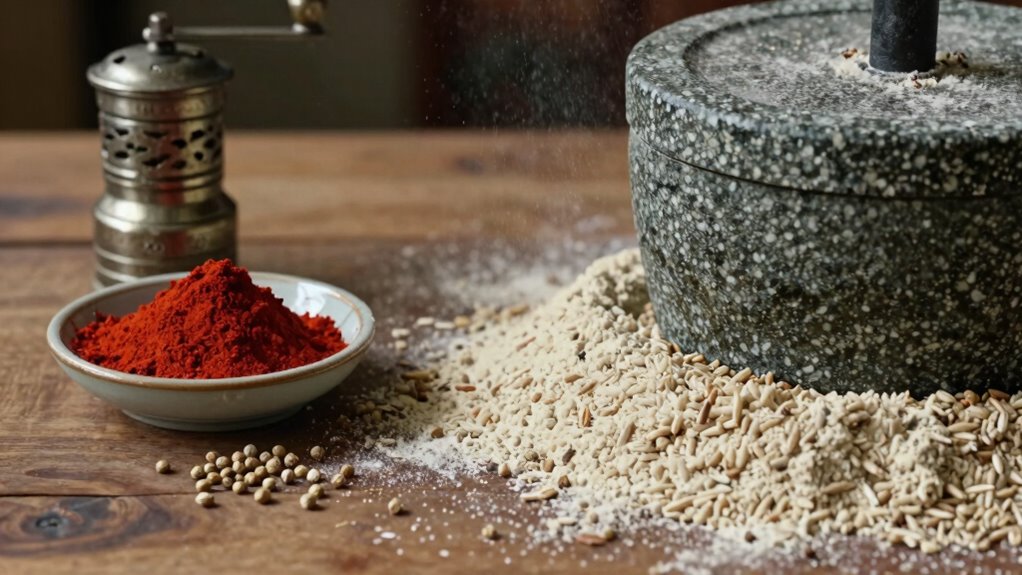
Because spices and grains have different textures and moisture levels, they require distinct grinding techniques to achieve ideal results. Spices tend to have a dry, aromatic quality that’s best maintained through gentle grinding, which helps lock in their spice aroma. Over-grinding spices can release too much oil and diminish their freshness, so a quick, light grind works best. Grains, on the other hand, have a coarse grain texture that calls for more forceful, consistent grinding to break them down evenly. Their moisture content is usually higher, making them tougher to grind. Using the right technique ensures you preserve the unique spice aroma while achieving the desired grain texture. Proper grinding techniques can also prevent the formation of clumps and uneven textures, ensuring a smoother final product. Employing appropriate grinding equipment can make a significant difference in achieving the optimal results for both spices and grains. Moreover, understanding the different textures and moisture levels helps in selecting the correct tools and methods for each type, ensuring efficiency and quality. Additionally, adjusting your approach based on the desired fineness can help tailor the final outcome to your specific culinary needs.
Choosing the Right Tools for Grinding Spices and Grains
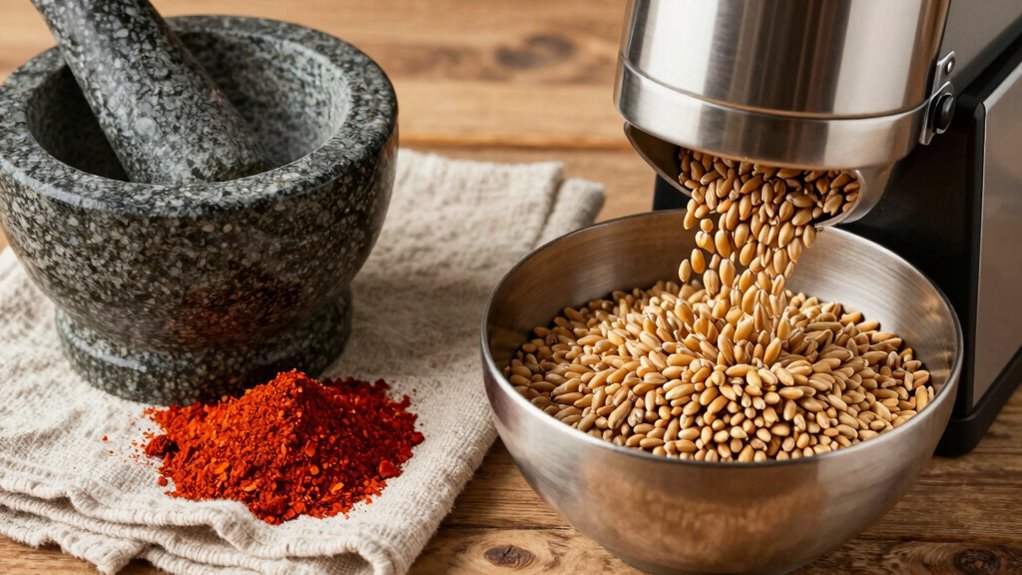
Choosing the right tools is essential for achieving the best results when grinding spices and grains. For spices, a mortar and pestle offers control and preserves flavor, allowing you to grind them gently and release essential oils. It’s ideal for small batches and adds a traditional touch. Using a mortar and pestle also allows for more precision in texture, which can be important for certain spice blends. Additionally, the tactile process of grinding with a mortar and pestle can enhance the aroma and flavor of your spices. On the other hand, blade grinders are perfect for grains, providing quick, consistent results with minimal effort. These electric appliances can handle larger quantities and create fine, uniform flour or meal. While blade grinders are convenient, avoid using them for spices, as they can generate heat that dulls flavors. Selecting the proper tool guarantees you get the best texture and flavor, whether you’re grinding aromatic spices or hearty grains. Proper kitchen tools are fundamental for maximizing flavor retention and achieving the desired grind consistency, ensuring optimal culinary results.
How Over-Grinding Can Reduce Flavor and Nutrients
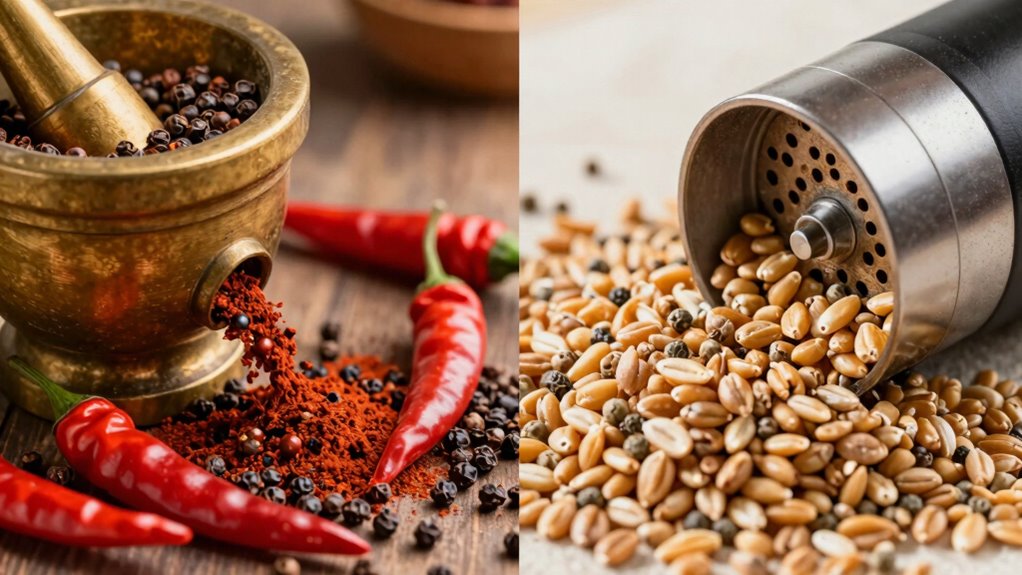
Over-grinding spices and grains can considerably diminish their flavor and nutritional value. When you grind too finely or for too long, you risk breaking down essential oils and delicate nutrients that give foods their vibrant taste and health benefits. This process hampers flavor preservation, making your spices dull and less aromatic. Similarly, over-grinding grains can lead to nutrient loss, especially of vitamins and minerals sensitive to heat and oxidation. By grinding excessively, you may also create a dust-like texture that loses the subtle flavors found in coarser particles. To maximize both flavor and nutrient retention, it’s vital to find the right grinding consistency and avoid over-processing. Proper grinding techniques can help preserve freshness and aroma, ensuring you enjoy the full sensory and health benefits of your spices and grains. Using the right equipment and techniques can also prevent nutrient degradation during the process. Paying attention to processing methods can further enhance the preservation of nutrients and flavor, making a significant difference in your culinary results. Additionally, understanding the appropriate grind size for different ingredients can help maintain their intended flavor profile and nutritional integrity.
Easy Methods to Preserve Freshness and Oil Content in Spices
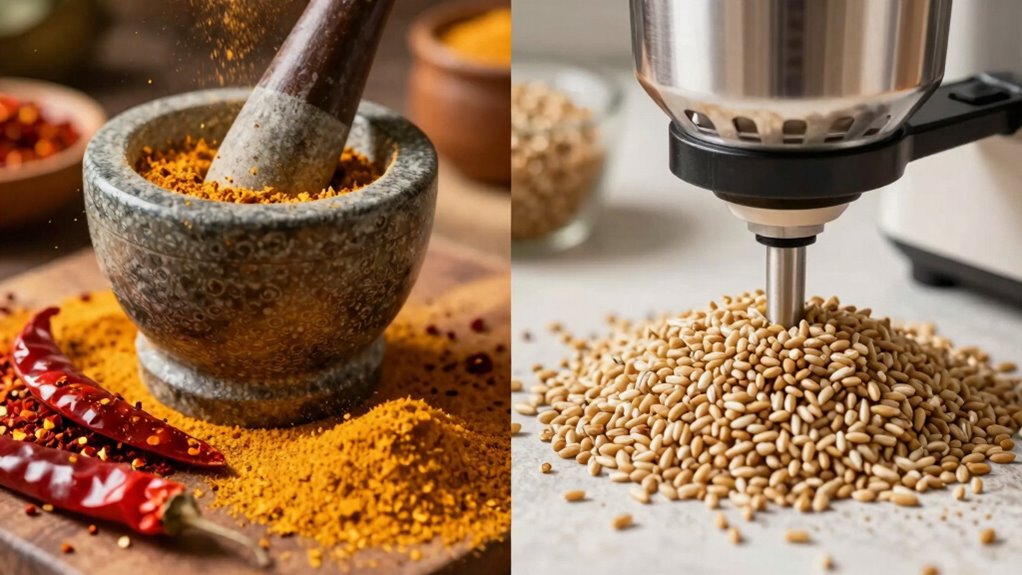
To preserve the freshness and rich oil content of your spices, storing them properly is key. Using airtight containers keeps out air and moisture, helping maintain flavor retention and preventing spoilage. Keep spices in a cool, dark place away from direct sunlight and heat sources, which can degrade their oils and aroma. Avoid frequent exposure to air by opening containers only when necessary. Consider whole spices instead of ground ones, as they retain their flavor longer. Label your storage containers with purchase dates to track freshness. Proper storage can also help prevent spice contamination and preserve their natural qualities. Additionally, maintaining an organized workspace with proper ergonomic setup can make handling spices and ingredients easier and safer. Implementing proper tool maintenance practices ensures your storage containers and utensils stay clean and in good condition. Using airtight containers prevents moisture and air from compromising the spices’ integrity. By following these storage methods, you ensure your spices stay vibrant, fragrant, and full of essential oils, making every dish more flavorful and aromatic. Proper storage is an easy yet effective way to conserve quality over time.
Getting the Perfect Texture for Your Grains: Why It Matters
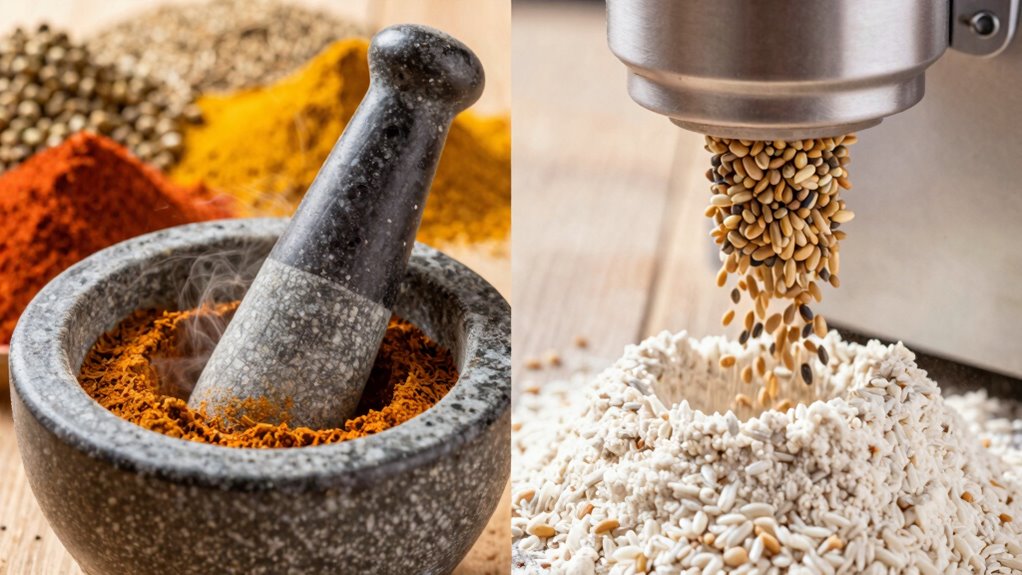
Properly storing spices helps preserve their flavor and oils, but achieving the right texture when preparing grains is equally important for a satisfying dish. The key is to guarantee texture consistency; uneven grains can ruin the overall experience. When grains are ground to the right texture, they cook evenly, releasing their natural flavors and enhancing the dish’s flavor profile. A coarse grind might add a hearty bite, while a fine grind creates a smoother, creamier texture. Adjusting the grind helps you control how flavors are released during cooking, leading to better flavor enhancement. Remember, the goal is to match the grain’s texture to the recipe’s needs, ensuring every bite delivers the perfect balance of texture and taste.
Common Mistakes When Grinding Spices and Grains: And How to Avoid Them

Many people make mistakes when grinding spices and grains that can ruin the final result. Using the wrong technique or equipment often leads to uneven textures or loss of flavor. To get the best results, you need to avoid overgrinding or undergrinding and choose the right tools for each task. Understanding the difference between haute couture and mass-produced items can help you select the appropriate grinding tools—specialized equipment for spices and grains—ensuring a consistent, high-quality outcome.
Incorrect Grinding Techniques
Using the wrong grinding techniques can markedly impact the flavor and texture of your spices and grains. For example, relying solely on industrial equipment for all tasks can lead to uneven grinds or overheating, which destroys essential oils and compounds. Conversely, sticking to traditional methods like mortar and pestle might not produce consistent results or may be inefficient for larger quantities. Avoid common mistakes such as grinding too finely with inappropriate tools, which can cause clumping and loss of aroma, or using inconsistent pressure that results in uneven textures. It’s crucial to understand which technique suits each ingredient. Properly adjusting your approach—whether adopting more precise industrial equipment or refining traditional methods—ensures your spices and grains retain their full flavor and ideal texture. Selecting the right equipment is essential for achieving optimal results. Additionally, understanding the appropriate grinding techniques for each ingredient can prevent these common issues and improve overall quality. For instance, sound science reveals that the vibrations from certain equipment can influence the preservation of delicate flavors during grinding.
Using Wrong Equipment
Choosing the wrong equipment for grinding spices and grains can lead to uneven textures, lost flavors, and wasted ingredients. For example, using a blender vs mortar may seem convenient, but blenders often produce inconsistent results with spices, while mortar and pestles offer more control. Similarly, opting for manual vs electric grinders depends on your needs; manual tools give better texture control for spices, but electric grinders are faster for grains. Using inappropriate equipment can also cause overheating, moisture retention, or uneven grinding, which affects flavor and texture. Before you grind, consider the type of ingredient and desired consistency. Additionally, understanding appropriate tools and their functions can help you select the best equipment for each task. Proper tool selection is essential to preserve flavor, avoid waste, and get the best results every time. Being aware of grain and spice characteristics can further enhance your grinding technique and results. Recognizing the impact of grinding methods can also improve the overall quality of your culinary preparations.
Overgrinding or Undergrinding
Overgrinding or undergrinding can considerably impact the flavor and texture of your spices and grains. When you overgrind, you risk losing aroma and creating a powdery texture that can affect moisture impact and overall dish quality. Undergrinding, on the other hand, results in uneven texture control, leading to inconsistent flavors and mouthfeel. To avoid these issues:
- Adjust grind size based on recipe requirements
- Pay attention to moisture levels in your ingredients
- Use the correct equipment for the desired texture
- Regularly check grind consistency during processing
Balancing these factors guarantees maximum flavor extraction and the right texture, helping you achieve professional results. Proper control over grinding avoids the pitfalls of overprocessing or underprocessing, enhancing your culinary creations.
Tips to Select the Best Grinding Method for Your Cooking Goals
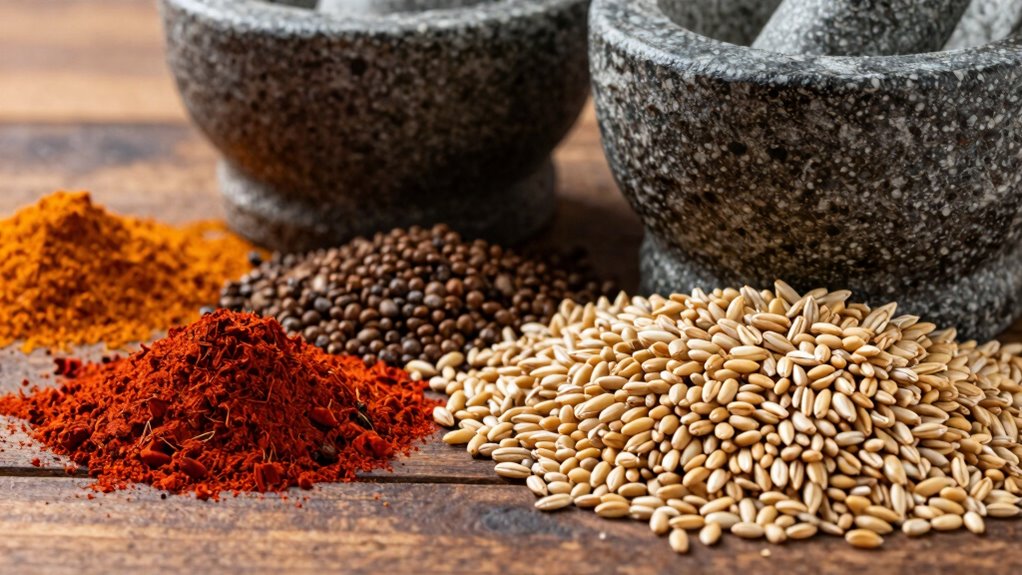
Selecting the right grinding method depends on your specific cooking goals and the ingredients involved. To maximize flavor preservation, opt for methods that minimize heat and oxidation, such as quick grinding or using a mortar and pestle for delicate spices. For texture optimization, consider whether you need a fine powder or a coarse grind, which influences the method you choose—blenders for fine textures, or manual grinders for coarser results. If you’re preparing spices, gentle grinding helps retain aromatic oils, while for grains, a more thorough process enhances digestibility. Always match the equipment to your desired outcome, balancing ease of use with the quality of the final product. Tailoring your approach ensures your ingredients deliver top-tier flavor and texture in every dish.
Frequently Asked Questions
Can Grinding Spices and Grains Together Cause Flavor Contamination?
Yes, grinding spices and grains together can cause flavor contamination. Cross contamination concerns arise because flavors from spices can transfer to grains, altering their taste. To prevent this, use separate grinders or thoroughly clean your equipment between uses. Employ flavor preservation techniques like dedicated grinding tools and proper storage. This way, you keep flavors pure, ensuring your dishes taste exactly how you intend without unwanted spice influence.
What Are the Health Benefits of Properly Grinding Spices and Grains?
You gain better health benefits when you properly grind spices and grains, as it boosts nutrient retention and antioxidant levels. Freshly ground spices and grains retain more vitamins, minerals, and antioxidants, helping your immune system and overall vigor. By grinding them correctly, you enhance flavor, digestion, and nutrient absorption. This mindful approach supports your well-being, energizes your body, and promotes long-term health, making every meal more nourishing and satisfying.
How Does Humidity Affect the Grinding Process for Spices and Grains?
Humidity impact considerably affects your grinding process; high humidity can cause moisture buildup, making spices and grains clump together. To maintain ideal grind consistency, you need to focus on moisture control by keeping your ingredients and equipment dry. Lower humidity levels help prevent these issues, ensuring a smoother process. Regularly store your spices and grains in airtight containers, especially in humid environments, to avoid moisture absorption that hampers your grinding efficiency.
Are There Eco-Friendly Tools Suitable for Grinding Both Spices and Grains?
Imagine reducing waste by choosing biodegradable grinders that handle both spices and grains effortlessly. These eco-friendly, multi-purpose tools are perfect for your kitchen, offering versatility and sustainability. For example, a family switching to a biodegradable ceramic grinder found it simplified meal prep and minimized plastic use. By selecting these sustainable options, you contribute to environmental conservation while enjoying freshly ground ingredients, making your cooking eco-conscious and efficient.
How Often Should I Clean My Grinder to Prevent Flavor Transfer?
You should clean your grinder after every few uses or whenever you switch from grinding spices to grains. Regular cleaning prevents flavor transfer and maintains grinder performance. For ideal grinder maintenance, use a dry brush or a damp cloth to remove residue, and occasionally run rice or dry beans through to absorb oils and debris. This routine keeps your grinder fresh, efficient, and ensures your flavors stay pure.
Conclusion
Remember, mastering the art of grinding is like tuning a fine instrument—you want just the right pitch. Whether you’re revealing the fiery aroma of spices or achieving the perfect crunch in grains, choosing the right technique keeps flavors vibrant and nutrients intact. Don’t let your efforts turn into a dull hum; instead, craft your grind with care, and let your dishes sing with freshness and depth, turning everyday cooking into a symphony of taste.