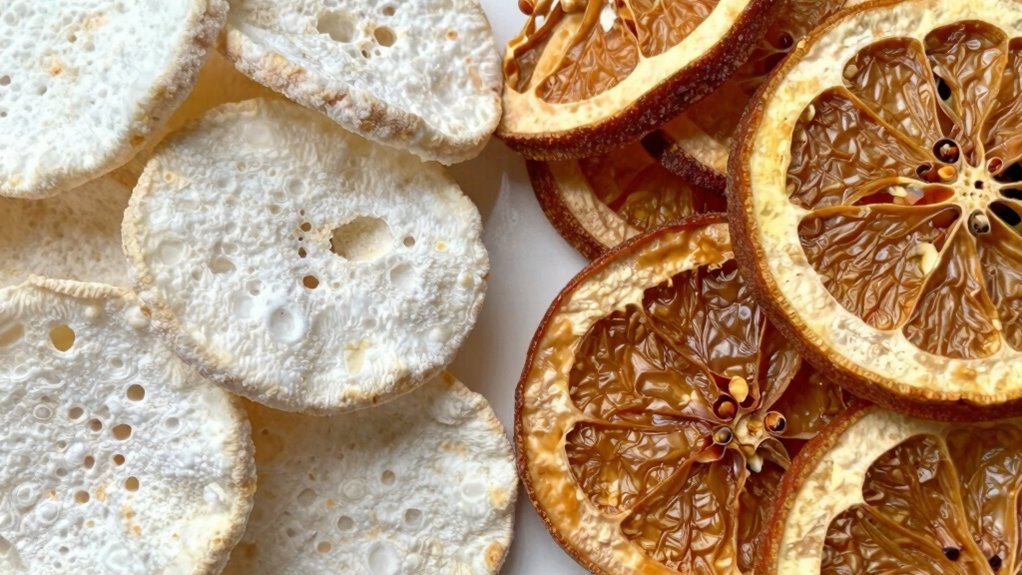
When comparing freeze drying and dehydrating, you’ll notice freeze-dried foods are lighter and crispier because almost all moisture is removed, creating a porous, fragile texture. Dehydrated foods, however, tend to be chewier and denser, with some moisture left behind, resulting in a leathery or tough feel. Understanding these differences helps you pick the right method for crisp snacks or chewy preservation. Keep exploring to discover how to optimize texture for your favorite foods.
Key Takeaways
- Freeze drying creates a porous, fragile structure that results in a crisp, crunchy texture, ideal for snacks.
- Dehydrating produces denser, chewier, or leathery textures due to higher moisture retention and structural collapse.
- Freeze dried foods maintain shape and firmness, offering a near-fresh mouthfeel upon rehydration, unlike dehydrated foods.
- Insufficient moisture removal in dehydration leads to chewy, leathery textures, while complete freeze drying yields a light, airy product.
- Texture preservation depends on the method’s control of temperature, airflow, and drying time, affecting crispness and structural integrity.
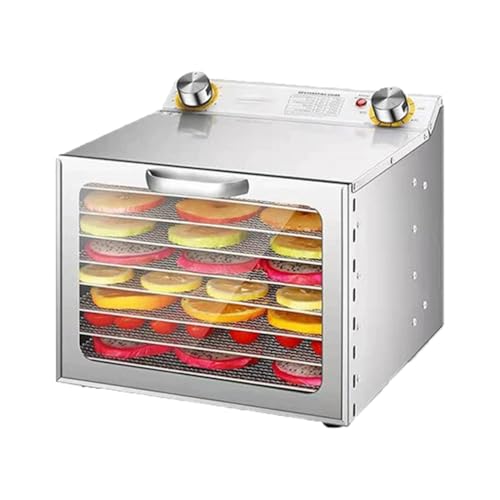
LUYMIBDO Freeze Dryer, 6/8/12 Layers Freeze Dried Machine, with 12H Timer, Stainless Steel Fruit Dryer,for Fruits, Vegetables, Meat, Seafood,8Layer
✦ Commercial-Grade Freeze Dryer: Our high-quality stainless steel food dehydrator is available with 6, 8, or 12 drying…
As an affiliate, we earn on qualifying purchases.
As an affiliate, we earn on qualifying purchases.
What Are Freeze Drying and Dehydrating? Here’s How They Differ
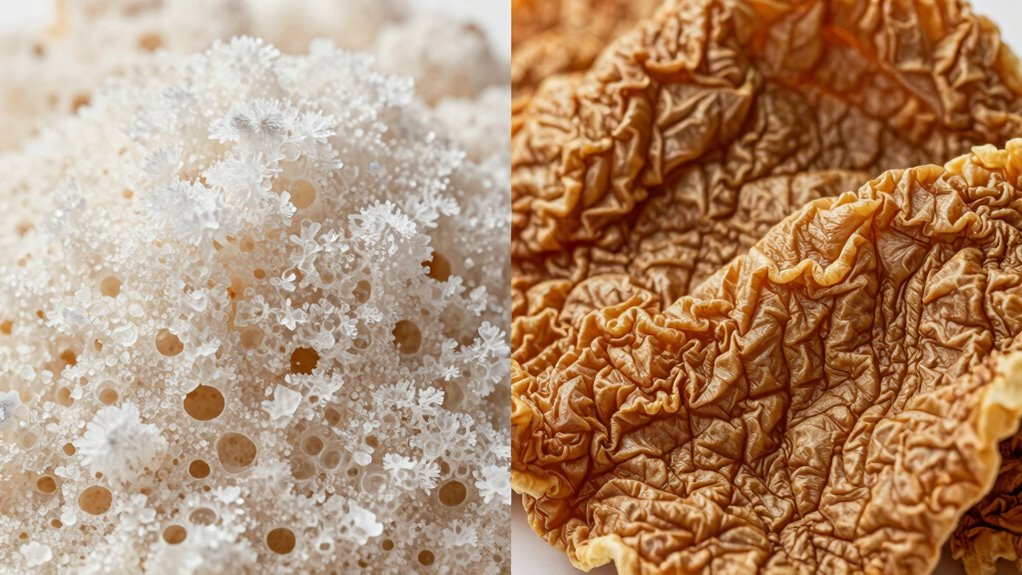
When it comes to preserving food, freeze drying and dehydrating are two popular methods, but they work very differently. Freeze drying removes moisture content by freezing the food and then sublimating the ice directly into vapor under low pressure. This process preserves more nutrients and flavors, making it a top choice for long-term storage. Additionally, freeze drying often involves advanced control systems to ensure consistent results across batches, which can include precise temperature and pressure regulation for optimal outcomes. These systems often incorporate real-time monitoring to detect and correct deviations during the process, ensuring high-quality results. Automation technology plays a significant role in maintaining the efficiency and reliability of freeze drying equipment, enhancing overall product quality. Dehydrating, on the other hand, uses heat to evaporate moisture from the food, gradually reducing its moisture content over time. It’s a simpler, more accessible preservation technique that doesn’t require specialized equipment. Both methods aim to extend shelf life, but they differ in how they handle moisture removal and the resulting preservation quality. Understanding these distinctions helps you choose the right technique for your needs. Navigation and mapping technologies are often employed in advanced freeze drying equipment to ensure uniform results.
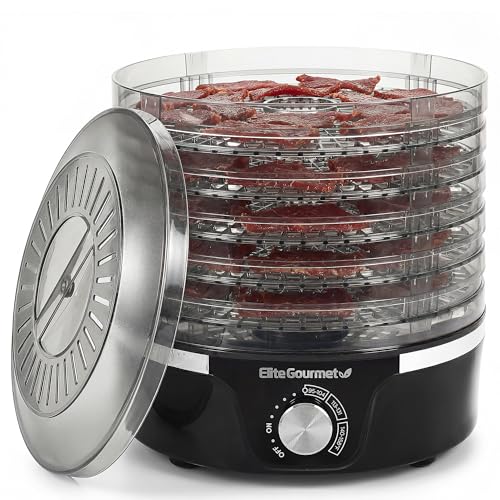
Elite Gourmet EFD319 Food Dehydrator, 5 BPA-Free 11.4" Trays Adjustable Temperature Controls, Jerky, Herbs, Fruit, Veggies, Dried Snacks, Black
CUSTOM TEMPERATURE CONTROL FOR PERFECT RESULTS: Adjustable temperature range from 95°F–158°F lets you dry fruits, vegetables, herbs, mushrooms…
As an affiliate, we earn on qualifying purchases.
As an affiliate, we earn on qualifying purchases.
How Do Freeze Drying and Dehydrating Affect Food Texture and Structure?
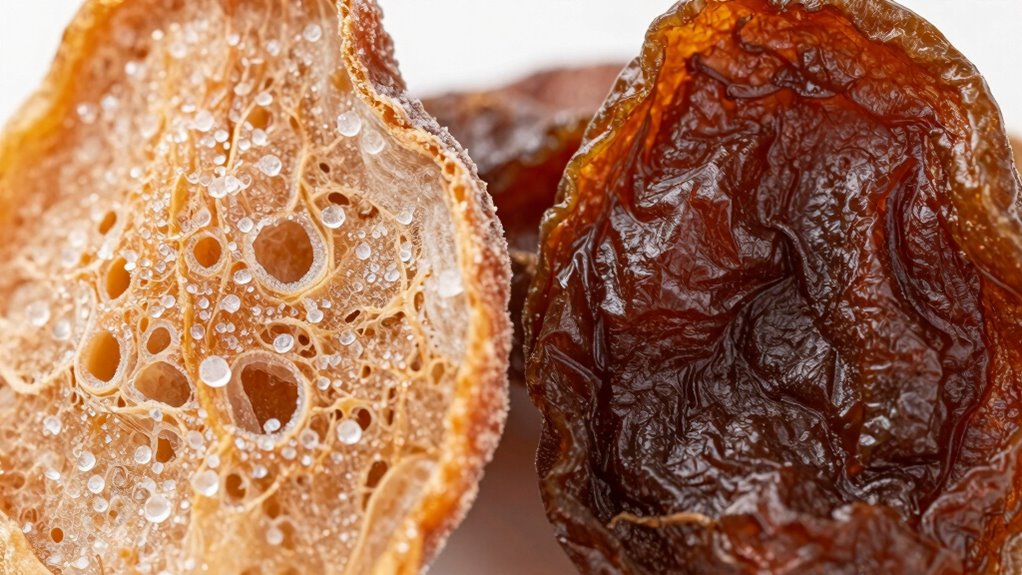
Freeze drying and dehydrating profoundly change the texture and structure of food, influencing how it feels and behaves when eaten or rehydrated. Freeze drying preserves texture by removing almost all moisture while maintaining the food’s structural integrity, resulting in a lightweight, porous product that rehydrates quickly. Dehydrating, on the other hand, reduces moisture more gradually, often leading to a chewier or denser texture with some loss of structural integrity. With freeze drying, you’ll notice the original shape and firmness are largely retained, making the food feel close to fresh once rehydrated. Dehydrated foods tend to be more brittle or leathery, which affects how they break down in your mouth. Both methods markedly impact how food feels, but freeze drying better preserves the original texture and structure. Additionally, the choice between these methods can influence the color accuracy of preserved foods, affecting visual appeal and perceived freshness. Different techniques also vary in how they impact the nutritional content of the food during processing.

Brothers All Natural Freeze Dried Fruit Crisps, Variety Pack, 24 Single Serve Bags, Fuji Apple, Strawberry, Straberry and Banana, Made with 100% Fruit, Gluten Free, Soy Free, Vegan, Healthy Snack | Packaging May Vary
100% Fruit: Our Fruit Crisps are made with freeze dried fuji apple, Asian pear, banana and strawberry slices….
As an affiliate, we earn on qualifying purchases.
As an affiliate, we earn on qualifying purchases.
Why Does Freeze Drying Make Foods Light and Crispy?
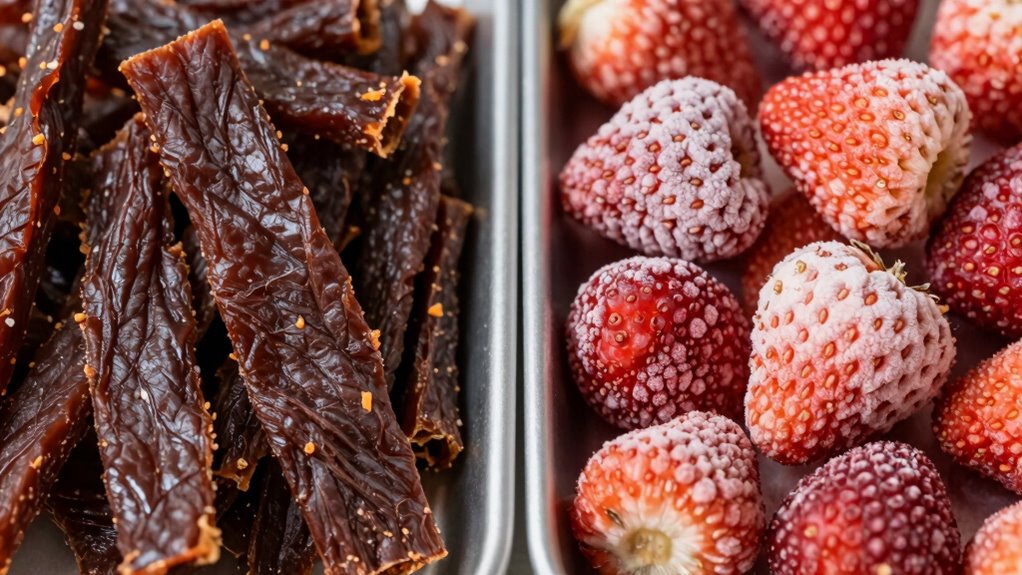
Because freeze drying removes nearly all the moisture from foods, it leaves behind a lightweight and airy structure that enhances crispiness preservation. As the water is extracted through sublimation, the food’s cellular structure remains intact but becomes porous and fragile. This porous structure contributes significantly to the crispiness of freeze-dried foods. This creates a texture contrast between the crispy exterior and the delicate interior, making the food feel light and crunchy. The absence of moisture prevents clumping or sogginess, allowing foods like fruits and snacks to stay crisp longer. Your sense of texture is heightened because of this contrast, giving a satisfying bite every time. This unique process preserves the food’s original crispiness, making freeze-dried items ideal for snacking or adding a crunchy element to meals. Additionally, the cellular structure of freeze-dried foods is crucial in maintaining their texture and flavor over time. Moisture removal plays a key role in preserving the integrity of the food’s texture during storage and use, and understanding the food preservation process helps in selecting the right method for different foods. Moreover, the porous texture created through freeze drying allows for faster rehydration when needed, enhancing versatility in food preparation.
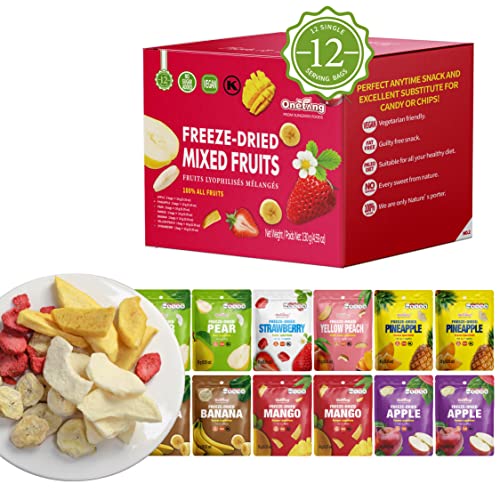
ONETANG Freeze-Dried Mixed Fruit, 12 Pack Single-Serve Pack, Non GMO, Kosher, No Add Sugar, Gluten free, Vegan, Holiday Gifts, Healthy Snack 0.35 Oz
CONTAINS: 12 convenient single-serve bags high-quality, hand-sliced delicious freeze-dried fruit with NO ADDED SUGAR.
As an affiliate, we earn on qualifying purchases.
As an affiliate, we earn on qualifying purchases.
What Causes Dehydrated Foods to Be Chewy and Leathery?
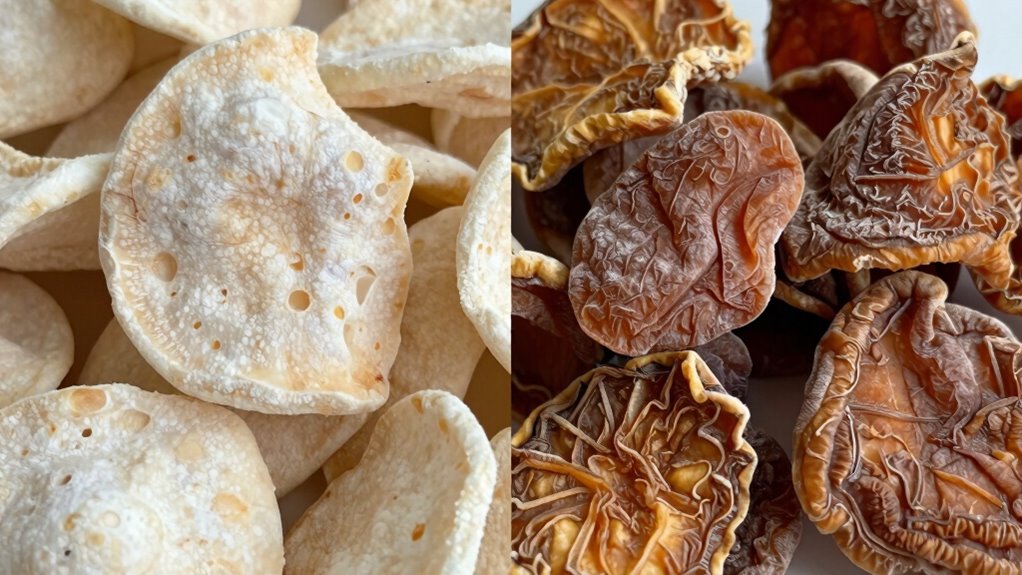
Dehydrated foods become chewy and leathery primarily due to insufficient moisture removal during the drying process. When moisture isn’t fully eliminated, the remaining water keeps the food flexible, resulting in chewy textures and leathery foods. This often happens if the dehydration is too quick or uneven, leaving behind pockets of moisture. The high moisture content causes the food to retain elasticity, making it tough to bite and chew easily. Additionally, dehydration at low temperatures or with inadequate airflow can hinder effective moisture extraction. As a result, the food develops a dense, leathery exterior and a chewy interior, which many find less desirable for snacking or cooking. Proper dehydration ensures thorough moisture removal, preventing chewy textures and producing crispy, shelf-stable products. Furthermore, understanding the importance of proper drying techniques can significantly improve the quality of dried foods. Using controlled temperature and airflow during dehydration helps achieve consistent results and preserves nutrients and flavor better than other preservation methods. Ensuring the use of dehydration equipment designed for uniform heat distribution can further enhance the drying process.
How Do Moisture Removal Methods Impact Food Preservation and Texture?
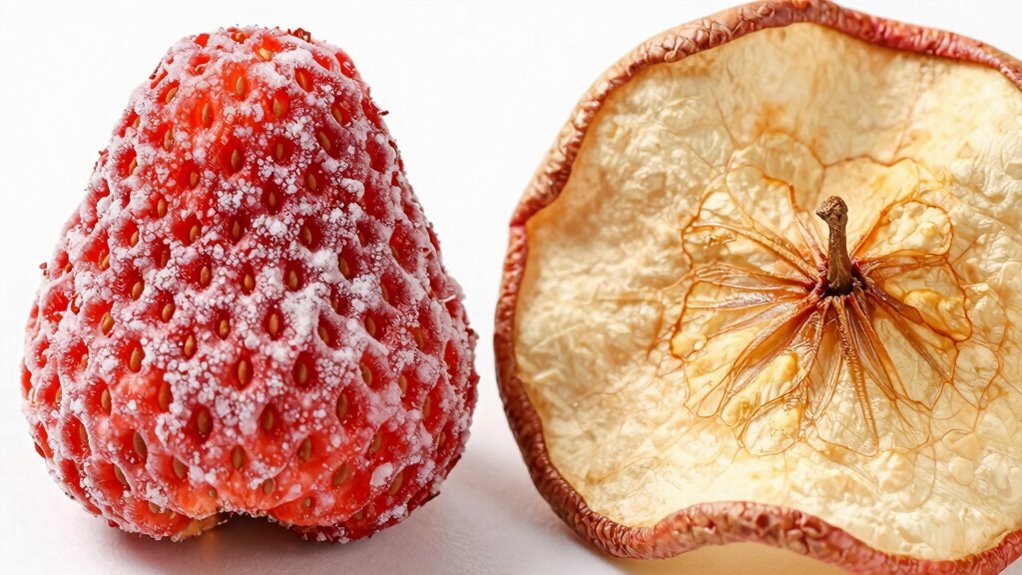
The method used to remove moisture from food considerably influences how well it preserves its quality and texture. Lowering moisture content stops bacteria, molds, and yeasts from growing, ensuring better preservation quality. Freeze drying gently removes moisture through sublimation, maintaining the food’s original structure and delicate textures. This process often results in a light, crisp product that rehydrates easily. Dehydrating, on the other hand, uses heat to evaporate moisture, often leading to a chewier or leathery texture if overdone. The difference in moisture removal impacts not only shelf life but also how the food feels and tastes when consumed. Your choice of method determines whether your preserved foods stay true to their original texture or become altered in ways that affect overall quality.
Which Is Better for Long-Term Storage or Snacking: Freeze Drying or Dehydrating?
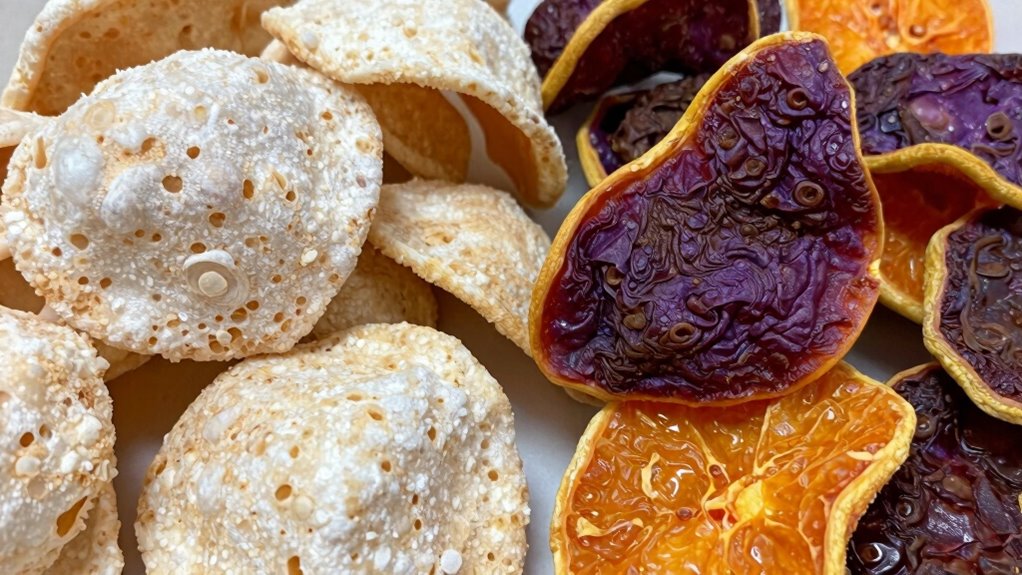
When choosing between freeze drying and dehydrating for long-term storage or snacking, your decision depends on what qualities you prioritize. Freeze drying offers a longer shelf life because it removes almost all moisture, preventing microbial growth and spoilage. It also preserves much of the food’s original flavor retention, making it ideal if you want snacks that taste fresh even after years. Dehydrating, on the other hand, is simpler and more affordable, but the shelf life is shorter and flavor retention may diminish over time due to heat exposure. If you aim for foods that last years and retain maximum flavor, freeze drying is the better choice. For quick, easy preservation with decent flavor, dehydrating works well too. Additionally, understanding the sound design process can help in creating engaging audio cues for food packaging or branding that enhance consumer appeal. Moreover, considering the philosophical implications of food preservation methods can deepen appreciation for traditional versus modern techniques and their cultural significance.
How to Choose Between Freeze Drying and Dehydrating for Your Kitchen
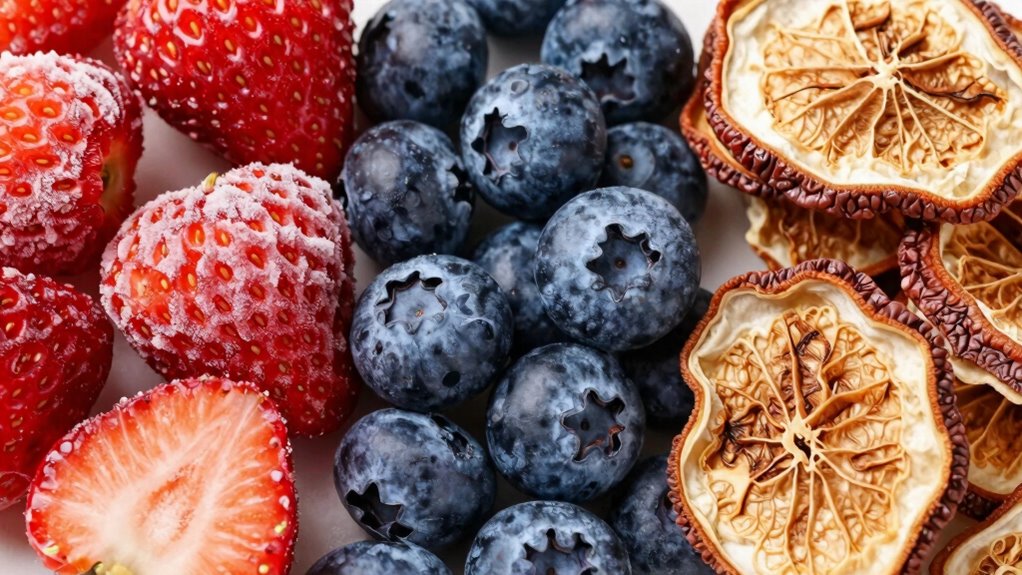
Choosing between freeze drying and dehydrating for your kitchen depends on your specific needs and priorities. If you value flavor retention and nutrient preservation, freeze drying is your best option, as it preserves more of the original taste and nutrients due to its low temperatures and vacuum process. Dehydrating, on the other hand, is simpler and more cost-effective, making it ideal for everyday snacks and quick preservation. Consider what’s more important: if you want to maintain the food’s original flavor and nutritional profile, go for freeze drying. If you prefer a straightforward, budget-friendly method and can accept some loss of flavor and nutrients, dehydrating works well. Detecting passive voice can help you make your writing clearer and more direct. Your choice ultimately hinges on your goals for preserved foods and available equipment.
Tips for Achieving the Perfect Texture in Your Preserved Foods
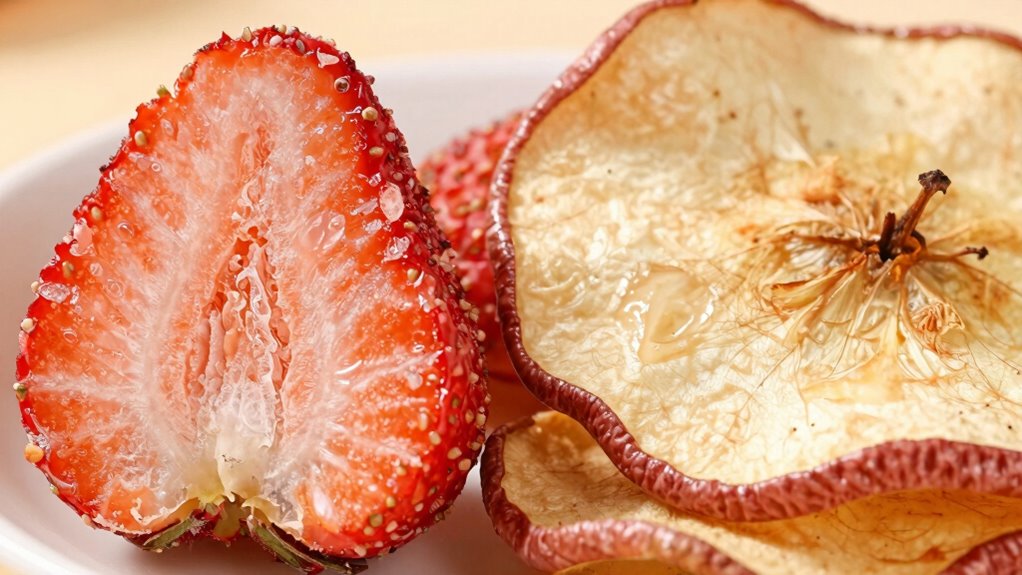
Achieving the perfect texture in your preserved foods requires attention to detail and proper techniques. To maximize flavor retention, handle ingredients carefully during the drying process, avoiding unnecessary exposure to heat or air. For freeze-dried foods, ensure your items are fully frozen before starting, which helps preserve their structure and nutrients. When dehydrating, cut foods uniformly to promote even drying and prevent soggy spots. Properly controlling temperature and drying time helps maintain nutrient preservation and prevents over-drying, which can make foods tough or brittle. Using appropriate packaging minimizes moisture reabsorption, keeping textures consistent over time. By focusing on these steps, you’ll improve both the texture and nutritional quality of your preserved foods, making sure they stay delicious and wholesome for longer.
Frequently Asked Questions
Can Freeze-Dried Foods Be Rehydrated Without Losing Texture?
Yes, freeze-dried foods can be rehydrated with good rehydration quality and retain much of their original texture. When you rehydrate, the porous structure of freeze-dried items allows water to penetrate quickly, preserving their shape and tenderness. To maximize texture retention, use warm water and soak until fully rehydrated. This gentle process helps maintain the food’s integrity, making it almost as good as fresh.
Does Dehydration Affect the Nutritional Content of Foods?
Dehydration can impact nutrient retention in foods, but it often preserves flavor quite well. You might lose some vitamins and minerals during dehydration, especially if heat is involved, but many nutrients remain intact if you control the process carefully. To maximize flavor preservation and nutrient content, use gentle dehydration methods and avoid high temperatures. This way, your dried foods stay tasty and nutritious for longer storage.
Are There Specific Foods Better Suited for Freeze Drying or Dehydrating?
Certain foods are better suited for freeze drying or dehydrating because of their food suitability and desired texture preservation. For example, fruits like strawberries and apples retain their shape and flavor well when freeze dried, maintaining a crispy texture. Vegetables such as carrots and peas often dehydrate successfully, preserving nutrients but with a softer texture. Understanding these differences helps you choose the right method to maximize flavor, nutrients, and texture.
How Does Storage Environment Influence Texture Preservation?
Did you know that improper storage can reduce a dried food’s shelf life by up to 50%? You must control moisture and maintain temperature stability to preserve texture. If moisture seeps in or temperatures fluctuate, it can cause rehydration or texture loss. Keep your storage environment cool, dry, and airtight to guarantee your freeze-dried or dehydrated foods stay crisp, flavorful, and intact for longer periods.
What Equipment Is Necessary for Home Freeze Drying Versus Dehydrating?
You’ll need specialized home equipment for freeze drying, like a freeze dryer machine, which removes moisture by sublimation and preserves texture and nutrients. For dehydrating, you can use a simple food dehydrator or even an oven set at low temperatures. Both preservation methods require proper equipment to guarantee quality, but freeze drying involves more advanced, costly gear, while dehydrating is more accessible for home use.
Conclusion
So, whether you want snacks that are ridiculously crispy or foods that feel like chewy treasures, choosing between freeze drying and dehydrating is your secret weapon. Think of it as selecting your culinary superpower—lightning-fast crunch or chewy delight! With the right method, you can turn everyday ingredients into mind-blowing treats that defy the laws of texture. Get ready to wow everyone with your epic preserved foods—your taste buds will thank you forever!