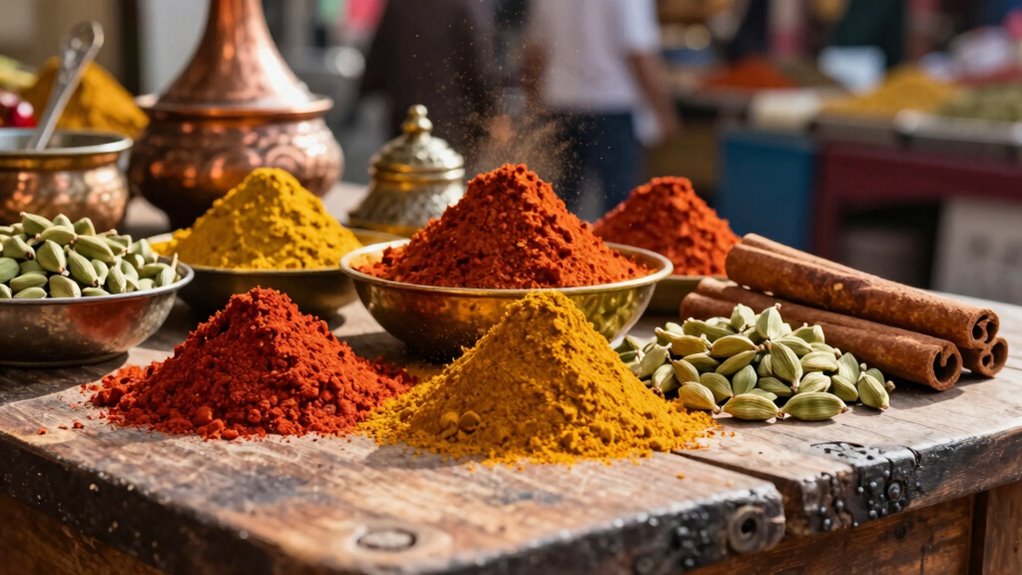

Indian food uses so many spices because of its long history of trade, cultural exchange, and tradition. Over centuries, spices like black pepper, cinnamon, and cloves traveled along trade routes from Persia, Arabia, and beyond, shaping regional cuisines. These spices weren’t just for flavor—they preserved food and offered medicinal benefits. Their diverse use reflects centuries of blending traditions, influences, and innovations. If you want to discover more about this flavorful history, keep exploring the rich stories behind Indian spices.
Key Takeaways
- Historical trade routes introduced diverse spices, leading to their extensive use in Indian cuisine.
- Spices were valued for flavor, preservation, and medicinal properties, encouraging experimentation and integration.
- Cultural exchanges through traders and invasions shaped regional spice blends and culinary techniques.
- Spices helped balance complex flavors, reflecting centuries of culinary evolution influenced by various cultures.
- Their symbolic significance represents India’s rich history of trade, conquest, and cultural exchange.
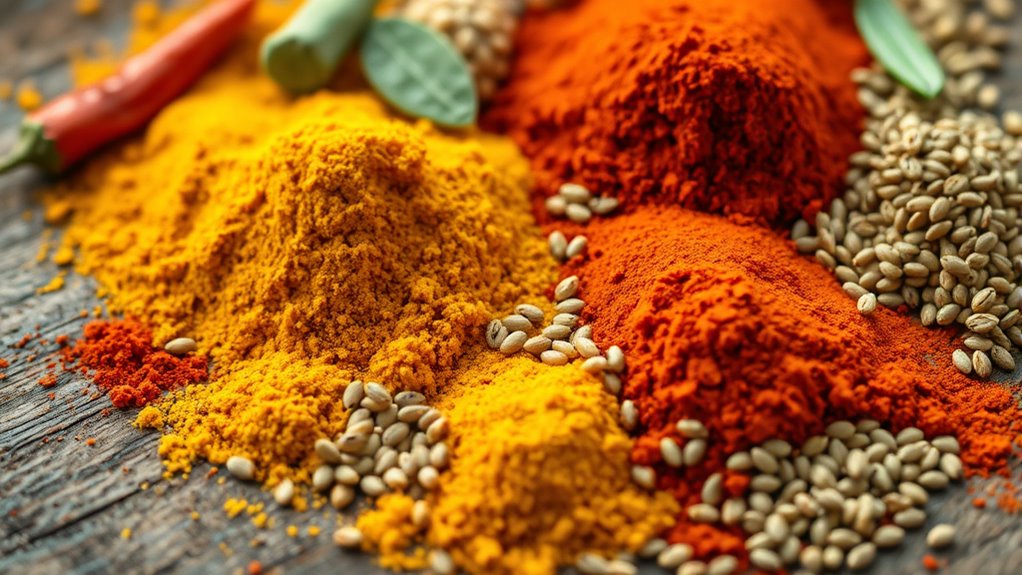
Indian food spices are renowned worldwide for their bold flavors and vibrant aromas, but their rich history goes beyond taste alone. The reason Indian cuisine uses so many spices is deeply rooted in centuries of trade, exploration, and cultural exchange. The spice trade, spanning from ancient times through the medieval period, played a pivotal role in shaping India’s culinary landscape. Traders from Persia, Arabia, and later Europe traveled along land and sea routes, bringing with them a variety of spices like black pepper, cinnamon, cardamom, and cloves. These spices were not just valued for their flavor but also for their preservative and medicinal properties, which made them highly sought after commodities. Over time, the availability of these spices transformed Indian cooking into a complex, layered experience, as each region adopted and adapted new ingredients into their traditional recipes.
The influence of the spice trade extended beyond economics; it also fostered a multitude of cultural influences that are still evident today. As traders and travelers moved between Asia, Africa, and Europe, they exchanged culinary ideas, techniques, and ingredients. This blending of tastes created a rich tapestry of regional cuisines within India, each with its unique spice combinations and cooking methods. The Mughal Empire, for example, incorporated Persian and Central Asian spices and techniques, adding a royal flair to dishes that continue to influence Indian cuisine. Similarly, coastal regions embraced spices from Arab traders, integrating them into their seafood dishes and rice preparations. These cultural influences are not incidental but essential to understanding why Indian food features such an extensive array of spices; they are a direct result of centuries of trade and interaction.
Furthermore, the use of multiple spices in Indian dishes often reflects the desire to balance flavors—sweet, sour, bitter, pungent, and astringent—creating complex and memorable tastes. This culinary approach was shaped by centuries of cultural influences, where each spice contributed its unique note to the symphony of flavors. The historical spice trade didn’t just introduce ingredients; it also fostered a mindset that valued experimentation and the integration of diverse culinary traditions. As a result, Indian cuisine became a vibrant, dynamic reflection of its long history of trade, conquest, and cultural exchange, which is why it continues to use so many spices today. When you enjoy Indian food, you’re tasting centuries of history, intertwined with the cultural influences that have made this cuisine truly extraordinary.

Spicewalla Masala Indian Spice 3 Pack | Garam Masala, Madras Curry Powder, Tandoori Masala | Non-GMO, No MSG, Gift Set
YOU'LL LOVE OUR INDIAN SPICES – The most widely known and revered masala spices from the kitchens of…
As an affiliate, we earn on qualifying purchases.
As an affiliate, we earn on qualifying purchases.
Frequently Asked Questions
How Did Trade Influence Indian Spice Varieties?
Trade routes greatly influenced Indian spice varieties by bringing diverse spices from distant lands, increasing spice diversity. As you explore Indian cuisine, you’ll notice a rich mix of flavors thanks to historic trade connections with Asia, Africa, and the Middle East. These routes introduced new spices, encouraging local farmers to cultivate a variety of aromatic ingredients, which now define Indian cooking’s vibrant and complex taste profile.
Are Spices Used for Medicinal Purposes Historically?
You might find comfort in knowing that spices have long been cherished for their healing qualities. Throughout medicinal traditions, herbal remedies often relied on spices to soothe and restore well-being. These fragrant ingredients weren’t just for flavor—they carried a gentle touch of nature’s wisdom, used to nurture the body and spirit. Their enduring role in traditional medicine reveals a deep respect for the healing power inherent in these vibrant, aromatic treasures.
Did Climate Affect Spice Cultivation in India?
Yes, climate definitely affected spice cultivation in India. You’ll find that India’s varied climate adaptability allowed diverse spices to flourish, but it also posed cultivation challenges. Hot, humid regions supported crops like black pepper and cardamom, while cooler areas suited cinnamon and cloves. These climate influences shaped where and how spices grew, impacting their availability and use in Indian cooking. So, the climate played a key role in shaping India’s rich spice traditions.
How Did Colonialism Impact Indian Spice Use?
Ever wonder how colonial trade and spice regulation turned Indian cuisine into a flavor explosion? Colonial powers prized Indian spices, controlling their trade and limiting local access to boost profits. This monopoly pushed Indians to experiment wildly with spices, turning their dishes into a sensory playground. So, you can thank colonialism for those fiery curries and aromatic blends—an unintended legacy of spice regulation that forever transformed Indian culinary traditions.
Are There Regional Differences in Spice Usage Across India?
Yes, you’ll notice regional differences in spice usage across India. Each area’s unique regional flavor reflects local cultivation and climate, influencing which spices are prominent. For example, South India favors coconut and curry leaves, while North India uses more cumin and coriander. These variations show how local cultivation shapes spice choices, creating diverse culinary traditions that highlight India’s rich, regional spice heritage.
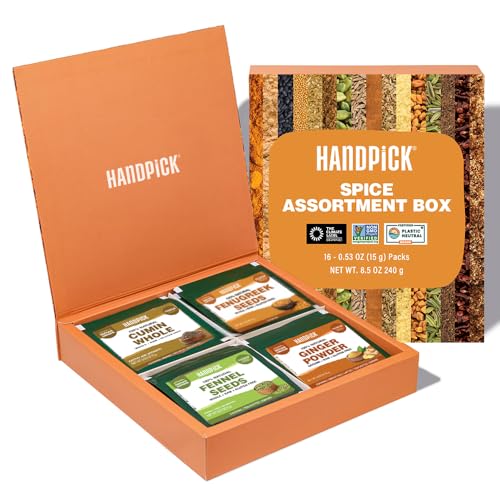
HANDPICK Assorted Spice Set – 16 Exotic Spices | Gluten-Free, Non-GMO | Essential Cooking Gift Set from India
TREASURE CHEST OF EXOTIC SPICES – Elevate your culinary adventures with an assortment box of 16 all-natural spices….
As an affiliate, we earn on qualifying purchases.
As an affiliate, we earn on qualifying purchases.
Conclusion
So, next time you enjoy Indian food’s vibrant flavors, remember it’s not just about taste—you’re experiencing centuries of history and tradition. Spices weren’t just used for flavor but also for preservation, medicine, and cultural identity. Isn’t it amazing how a simple dish can carry so much story? Every pinch of spice tells a tale of survival, trade, and innovation. So, savor every bite, knowing you’re part of a rich, flavorful legacy.

Rani Garam Masala Indian 11-Spice Blend 3oz (85g) PET Jar ~ All Natural, Salt-Free | Vegan | No Colors | Gluten Friendly | NON-GMO | Kosher | Indian Origin
You'll LOVE our Garam Masala Spice Blend by Rani Brand–Here's Why:
As an affiliate, we earn on qualifying purchases.
As an affiliate, we earn on qualifying purchases.

Cuisinart SG-10 Electric Spice-and-Nut Grinder, Stainless/Black, Mini
Electric spice-and-nut grinder with durable stainless-steel blades
As an affiliate, we earn on qualifying purchases.
As an affiliate, we earn on qualifying purchases.