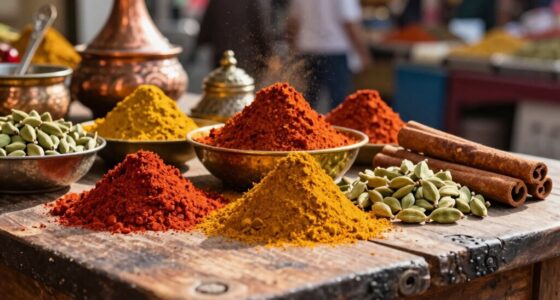
Your experience of Indian cuisine varies greatly depending on the region’s climate. In cooler northern areas, you’ll find hearty wheat-based breads and rich dairy dishes flavored with warm spices. Sultry southern regions favor coconut, tamarind, and quick, vibrant cooking styles. Meanwhile, eastern regions depend on rice and souring agents due to hot monsoon weather. As you explore further, you’ll see how these climate-driven ingredients and techniques create the diverse flavors that define Indian food.
Key Takeaways
- Regional climate determines the primary ingredients used in each area’s cuisine, such as wheat in cooler North and rice in humid East.
- Climate influences traditional preservation methods, like fermentation in cooler regions and quick cooking in tropical areas.
- Weather patterns affect ingredient availability, shaping regional dishes and cooking techniques suited to local conditions.
- Spices and flavors are adapted to climate, with warming spices in cooler zones and aromatic, fresh ingredients in tropical regions.
- Cooking methods evolve to match climate, using steaming or stir-frying in humid areas and baking or slow cooking in cooler climates.

India’s diverse climate zones directly influence its rich and varied culinary traditions. The climate of a region determines the types of ingredients that flourish there, shaping the flavors, textures, and even cooking methods you’ll find in local dishes. When you explore Indian cuisine, you’ll notice how climate influence is woven into every bite, from the spicy curries of the north to the coconut-based gravies of the south. Different weather patterns and seasonal changes create a landscape where regional ingredients thrive, giving each area its distinctive taste profile. The availability and preservation of these ingredients are also affected by the climate, further shaping regional food customs.
In the northern parts of India, where the climate is cooler and more temperate, you’ll encounter ingredients like wheat, dairy, and hearty vegetables. Flour-based breads such as chapati and naan dominate the cuisine, and dairy products like butter and paneer are staples, thanks to the cooler climate supporting livestock. The colder weather also means the use of spices like cumin, coriander, and garam masala to add warmth and depth to dishes. These ingredients and techniques are a direct result of climate influence, ensuring the food remains nourishing in the face of harsher winters. Additionally, the cooler climate encourages the storage and fermentation of dairy products, which are integral to northern dishes.
Moving south, the climate becomes tropical and humid, which promotes the growth of lush, moisture-loving ingredients. Here, coconut, tamarind, and a variety of fresh vegetables are abundant. You’ll notice the prominence of coconut milk and oil in southern dishes, which provide rich, creamy textures suited to the humid climate. The tropical weather also influences cooking styles, favoring quick methods like stir-frying and steaming that preserve the freshness of regional ingredients. The abundance of tropical fruits and spices like curry leaves and mustard seeds further defines the vibrant, aromatic profile of southern Indian cuisine.
In the eastern regions, where the climate is often hot and humid with heavy monsoon rains, rice becomes the main staple due to its resilience and high yield. The monsoon season floods fields, making rice cultivation plentiful and affordable. This influences the local diet, which features rice-based dishes such as biryanis, pulaos, and rice cakes. The climate also encourages the use of souring agents like tamarind and citrus, giving dishes a tangy flavor that complements the climate’s heat. These regional ingredients are carefully chosen for their ability to withstand the weather, shaping the culinary identity of eastern India.
Your journey through Indian cuisine reveals how climate influence and regional ingredients are inseparable. Every dish reflects the environment it comes from, making Indian food a living testament to the land’s climate diversity. The specific ingredients available in each region, cultivated by climate conditions, define the flavors you experience and deepen your appreciation for India’s culinary complexity. Understanding regional climate helps explain why certain ingredients are favored and how traditional cooking techniques have evolved to suit local conditions. Recognizing the importance of climate-driven ingredients can enhance your appreciation of the intricate relationship between environment and cuisine.

Rani Chapati Flour (100% Pure Whole Wheat Atta), For Making Roti & Indian Breads 48oz (3lbs) 1.36kg PET Jar ~ All Natural | Vegan | No Salt or Colors | NON-GMO | Indian Origin
You'll LOVE our Chapati Flour (Chakki Atta) by Rani Brand–Here's Why:
As an affiliate, we earn on qualifying purchases.
As an affiliate, we earn on qualifying purchases.
Frequently Asked Questions
How Does Humidity Affect Indian Spice Preservation?
Humidity impacts spice preservation by reducing their shelf life, causing them to lose flavor faster. When humidity levels are high, spices tend to absorb moisture, which can lead to mold and spoilage. You should store spices in airtight containers and keep them in a cool, dry place to mitigate humidity’s impact. Proper storage extends spice shelf life, ensuring your Indian dishes stay flavorful and aromatic.
Do Monsoons Influence Traditional Indian Cooking Methods?
Yes, monsoon seasonality markedly influences traditional Indian cooking methods. During monsoon season, you notice culinary adaptations like using more preservation techniques to combat humidity and moisture. You might also adjust recipes to include ingredients that thrive in wetter conditions or cook dishes that help keep your kitchen cool. These seasonal shifts shape how you prepare food, ensuring flavors remain vibrant despite the challenges posed by the monsoon climate.
How Do Extreme Temperatures Impact Ingredient Availability?
Extreme temperatures disrupt regional weather patterns and crop cycles, affecting ingredient availability in Indian cuisine. When temperatures soar or drop sharply, farmers struggle to grow key spices, grains, and vegetables, leading you to adapt recipes with seasonal or preserved ingredients. You might rely more on dried herbs or stored pulses, reflecting how climate and crop cycles influence what’s fresh and accessible, ultimately shaping the flavors and diversity of regional Indian dishes.
Are There Regional Climate-Specific Cooking Tools?
They say necessity is the mother of invention, and in Indian kitchens, climate-specific cookware proves this. You’ll find regional utensil adaptations like clay pots in hotter areas for slow cooking or brass vessels in cooler regions to retain heat. These climate-specific cookware choices help maintain flavors and adapt to local conditions, making your cooking more authentic and efficient. Embracing these tools guarantees your dishes are perfectly suited to the region’s climate.
How Does Climate Variation Alter Regional Dessert Recipes?
Climate variation directly influences your regional dessert recipes by dictating dessert ingredient adaptation and shaping regional flavor profiles. In hotter areas, you might use cooling ingredients like coconut or yogurt, while colder regions favor rich dairy or sweet spices. These climate-driven choices guarantee your desserts remain balanced and invigorating, emphasizing local flavors. As a result, your regional sweets reflect the climate’s impact, creating unique, climate-specific culinary traditions.

Amazon Grocery, Organic Refined Coconut Oil, 15 Fl Oz
One 15-fluid-ounce container of Organic Refined Coconut Oil
As an affiliate, we earn on qualifying purchases.
As an affiliate, we earn on qualifying purchases.
Conclusion
As you explore Indian cuisine, you can almost taste the sun-drenched deserts, the lush, monsoon-soaked forests, and the cool, misty mountains. Each dish reflects a climate’s whisper—spicy, tangy, or soothing—shaping flavors you savor with every bite. Imagine the warmth of southern spices or the freshness of Himalayan herbs dancing on your palate. It’s nature’s own recipe, reminding you how climate’s touch makes Indian food truly unforgettable.

Rani Garam Masala Indian 11-Spice Blend 3oz (85g) PET Jar ~ All Natural, Salt-Free | Vegan | No Colors | Gluten Friendly | NON-GMO | Kosher | Indian Origin
You'll LOVE our Garam Masala Spice Blend by Rani Brand–Here's Why:
As an affiliate, we earn on qualifying purchases.
As an affiliate, we earn on qualifying purchases.

Masontops Fermentation Jar Starter Set, Easy Vegetable Fermentation Kit, Includes Mason Jar, Pickle Kit with Fermentation Lids & Fermentation Weight
MASONTOPS SINGLE MASON JAR FERMENTATION KIT: Includes all the tools needed to turn your ordinary regular mouth mason…
As an affiliate, we earn on qualifying purchases.
As an affiliate, we earn on qualifying purchases.