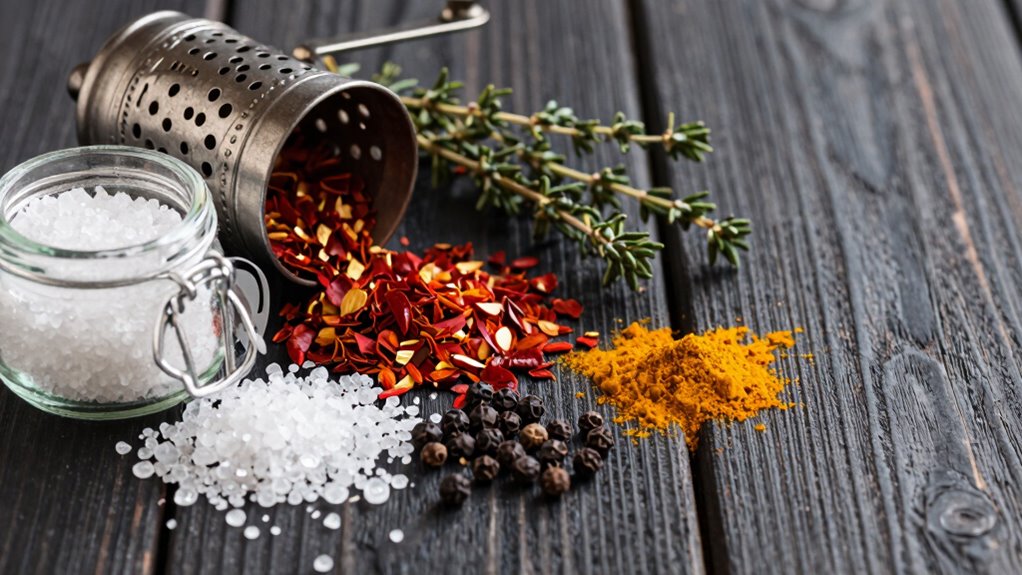

Seasoning involves adding ingredients like salt, pepper, herbs, or sauces to improve and enhance the natural flavors of your food, usually during or after cooking. Spicing, on the other hand, refers to using dried plant parts like seeds, bark, or roots that bring complex, bold flavors and aroma, often requiring preparation such as grinding or roasting. Understanding how each influences your dishes lets you create more balanced, flavorful meals—if you’re curious, there’s plenty more to discover.
Key Takeaways
- Seasoning enhances natural flavors and is added during or after cooking, while spicing introduces new, complex flavors often requiring specific preparation.
- Seasonings include salt, pepper, herbs, and sauces, whereas spices are dried plant parts like seeds, bark, or roots.
- Spices generally need roasting or grinding to unlock full aroma and flavor; seasonings typically do not require such steps.
- Seasonings refine and balance existing tastes; spices create bold, layered, or exotic flavor profiles.
- Using both thoughtfully can elevate a dish by adding familiarity with complexity and depth.
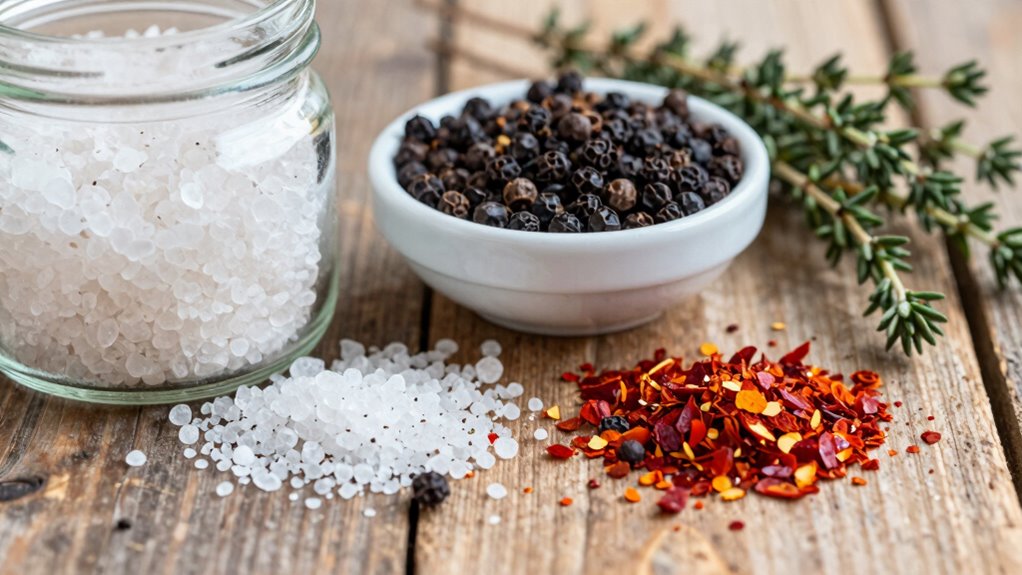
Ever wonder what truly distinguishes seasoning from spicing? The answer lies in their purpose and application in the kitchen. When you’re cooking, understanding the difference can elevate your dishes and refine your cooking techniques. Seasonings are ingredients like salt, pepper, herbs, and sauces that you add to enhance the natural flavors of your ingredients. They work by amplifying or balancing existing tastes, helping you achieve better flavor enhancement. Spices, on the other hand, are dried parts of plants—such as seeds, bark, roots, or berries—that introduce new, often complex, flavors to your dishes. They can transform a simple recipe into a vibrant culinary experience by adding depth and aroma.
As you develop your cooking techniques, it’s essential to recognize how each plays a unique role. Seasoning is usually added during the cooking process or at the end, allowing you to adjust the flavor profile to your liking. For example, you might sprinkle salt to bring out the sweetness of vegetables or add a splash of soy sauce for umami. These ingredients don’t fundamentally change the dish’s character; instead, they refine and enhance what’s already there. Spices, however, often serve as the foundation for creating bold, distinctive flavors. When you toast cumin seeds or grind cinnamon, you *access* their aromatic oils, which infuse your food with a depth that can’t be achieved through seasoning alone. Spices often require specific cooking techniques, like roasting or grinding, to release their full flavor potential. Understanding spice properties is crucial for mastering their use in various dishes, especially as different spices have distinct flavor profiles that can dramatically alter your cooking results. Developing a familiarity with spice properties can help you better control the intensity and complexity of your dishes, leading to more sophisticated culinary creations. Experimenting with combining spices and seasonings can open new avenues for flavor innovation and personal expression in the kitchen. Additionally, learning about regional spice blends can further enrich your culinary repertoire and help you craft authentic dishes from around the world.
In many recipes, the two work hand-in-hand. You might start with spices to build a flavorful base—such as curry powder or garam masala—then use seasoning to refine the taste as it cooks. Understanding when to use each not only improves your flavor enhancement skills but also allows you to craft more balanced dishes. While seasoning generally makes your food taste more familiar and appealing, spices can introduce complexity, surprise, and a touch of the exotic. By mastering the art of balancing both, you deepen your culinary repertoire and create dishes that are both flavorful and memorable. Ultimately, knowing when to season or spice is a *crucial* part of honing your cooking techniques and elevating your everyday meals into something special.

McCormick Salt & Pepper Grinder Variety Pack, Himalayan Pink Salt, Sea Salt, Black Peppercorn, and Peppercorn Medley, 6.47 oz
Add flavor into burgers, seafood and more, with a simple twist of the grinder
As an affiliate, we earn on qualifying purchases.
As an affiliate, we earn on qualifying purchases.
Frequently Asked Questions
Can Seasoning and Spices Be Used Interchangeably in Recipes?
You can often use seasoning and spices interchangeably in recipes, but it depends on the flavor pairings and culinary traditions you’re following. Seasonings like salt or herbs enhance natural flavors, while spices such as cumin or paprika add distinct tastes. Understanding these differences helps you adapt recipes to your preferences or cultural dishes. Experimenting with both allows you to create complex, flavorful dishes aligned with specific culinary traditions.
Are There Health Benefits Associated With Certain Spices?
Yes, many spices offer health benefits. For example, turmeric has antioxidant properties that may reduce inflammation, while cinnamon can help regulate blood sugar levels. Some spices are used in herbal remedies for their therapeutic effects, like ginger for nausea relief. Incorporating these spices into your diet not only enhances flavor but also provides potential health benefits, thanks to their natural antioxidant properties and traditional medicinal uses.
How Do I Store Spices to Keep Them Fresh Longer?
Imagine you’re a medieval alchemist, preserving rare herbs. To guarantee spices fresh longer, store them in airtight storage containers away from light, heat, and moisture. Keep spice blends sealed tightly to maintain flavor. Avoid the fridge unless they’re fresh herbs, as humidity can spoil them. Regularly check and replace old spices to preserve potency. This simple ritual ensures your spices stay vibrant and flavorful, just like treasured relics.
What Are Some Common Mistakes When Using Seasonings?
You often make mistakes with seasonings by overusing or underusing them, which can prevent flavor enhancement. Avoid adding seasoning too early, as heat can diminish their potency. Be cautious with ingredient substitution—using the wrong spice can alter the dish’s intended flavor. Tasting as you go helps guarantee balance, preventing overpowering or bland results. Remember, less is often more, and proper timing ensures your seasonings achieve their best flavor impact.
Do Spices Lose Potency Over Time?
You might notice your spices seem less lively over time, which is a gentle reminder of spice degradation. Spices do lose potency, impacting flavor longevity if kept too long. To keep your dishes vibrant, store spices in airtight containers away from light and heat. While they won’t spoil immediately, old spices won’t provide the same punch, so it’s best to refresh your spice stash periodically for the freshest flavors.

Wovnet 7 Pcs Electric Herb Grinder Kit, 200w Spice Grinder with 4 Pcs 3oz Spice Shakers, Cleaning Brush Label Sheet for Flower Buds Dry Spices Herbs Salts
Package Includes: the herb grinder set includes a blue 1.7 oz electric spice grinder in stainless steel with…
As an affiliate, we earn on qualifying purchases.
As an affiliate, we earn on qualifying purchases.
Conclusion
Now that you understand the difference between seasoning and spicing, you can confidently elevate your dishes. Remember, seasoning enhances natural flavors, while spicing adds bold, distinctive heat and aroma. Did you know that the global spice market is expected to reach over $20 billion by 2025? So, next time you’re cooking, mix and match wisely—your taste buds will thank you for it! Keep experimenting, and enjoy creating flavorful, well-balanced meals.

6oz Glass Spice Jars with Bamboo Lid and Label, 12 Pack Square Glass Container, Small Food Storage Containers for Kitchen, Clear Empty Seasoning Jar for Sugar, Salt, Coffee Bean, Herb, Borosilicate
Airtight & Organized Spice Storage: Keep spices, coffee, tea, snacks, nuts, and herbs fresh with these 12 pc…
As an affiliate, we earn on qualifying purchases.
As an affiliate, we earn on qualifying purchases.

Hermolante Herb Grinder Spice Grinder, 200 w Herb Grinder with Stainless Steel Blade and Cleaning Brush, Compact Size Electric Grinder for Herbs and Spices -5.11in (Black)
Fast and Even Grinding: Spice grinder with 200 w powerful motor,Allows you to grind faster and more evenly…
As an affiliate, we earn on qualifying purchases.
As an affiliate, we earn on qualifying purchases.