
Food processors beat knives in batch prep because they handle large quantities quickly, providing consistent, even cuts that save you time and effort. They require less skill and maintenance, making your prep more efficient and safer. Plus, they contribute to a sustainable kitchen by reducing waste and need less cleaning. Staying with knives might slow you down, but if you keep exploring, you’ll discover even more benefits of using these powerful tools for your kitchen tasks.

Get kitchen staples and gadgets delivered free with Prime
- Fast, free delivery on millions of items
- Prime Video, Amazon Music and more included
- Member-only deals all year
Key Takeaways
- Food processors can handle large volumes quickly and consistently, saving time during batch preparation.
- They require less skill and effort compared to manual knife slicing, increasing efficiency.
- Food processors are easier to clean and maintain, reducing downtime between batches.
- They enhance safety by minimizing the risk of cuts and injuries during repetitive chopping.
- Using food processors supports sustainability by reducing waste and promoting eco-friendly kitchen practices.

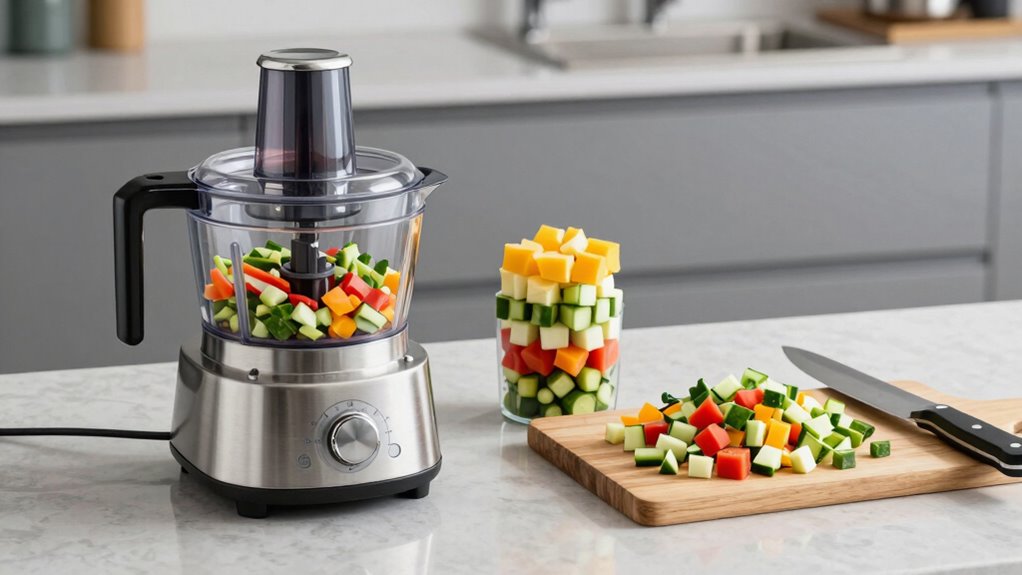
When it comes to batch prep in the kitchen, choosing between food processors and knives can considerably impact your efficiency and results. If you’re aiming to save time and guarantee uniformity, a food processor often outperforms knives in large-scale slicing tasks. While knives require skill and patience, a food processor can handle a large volume of ingredients quickly and consistently. This is especially true when chopping vegetables or preparing ingredients for soups, stews, or salads. Instead of spending time meticulously slicing each item, a processor can do the work in seconds, freeing you up to focus on other tasks.
That said, the way you use your tools matters. When working with knives, mastering slicing techniques is essential to achieve even, precise cuts. Proper slicing not only improves the presentation but also guarantees even cooking and texture. However, even the best slicing techniques depend on the knife’s sharpness and condition. Knife maintenance becomes vital here; dull blades make slicing more difficult and dangerous, increasing the risk of slips and uneven cuts. Regularly honing and sharpening your knives keeps them in top shape, but it still takes time and effort. In contrast, food processors require less maintenance—just a quick clean after use—and don’t lose their effectiveness as quickly as dull knives do. Additionally, understanding the proper maintenance of kitchen tools can extend their lifespan and performance. Recognizing the importance of biodiversity in sustainable living encourages us to appreciate diverse tools and techniques that can reduce waste and improve efficiency. Moreover, selecting the right tools can also contribute to kitchen safety, ensuring you work efficiently without risking injury. Maintaining awareness of tool longevity can help you make better choices about when to repair or replace your equipment to optimize performance. Incorporating sustainable practices in your kitchen can also involve choosing eco-friendly tools and materials that support environmental sustainability and reduce overall waste.
Products Worth Considering

De’Longhi Classic Matte Black Espresso Machine with Milk Frother

Vitamix 5200 Blender with 64 oz Container, Black

Instant Pot Duo Crisp 8-Quart 11-in-1 Air Fryer and Pressure Cooker
As an affiliate, we earn on qualifying purchases.
Frequently Asked Questions
Can Food Processors Handle Delicate Ingredients Without Over-Processing?
Yes, food processors can handle delicate ingredients without over-processing if you use the right settings and techniques. You can achieve dicing precision by pulsing gently and monitoring the texture closely. For ingredient sensitivity, opt for short, controlled pulses to prevent crushing or turning delicate items into mush. This way, you preserve the integrity of your ingredients while benefiting from the efficiency of a food processor.
How Easy Is It to Clean a Food Processor Compared to Knives?
Cleaning a food processor is generally easier than maintaining knives, especially since 70% of users find it quick to disassemble and wash. With dishwasher-safe parts, you can simply rinse or place components in the dishwasher, saving time. In contrast, knives require careful hand washing and regular sharpening to avoid rust and dullness. So, for convenience, food processors definitely win when it comes to cleaning.
Are Food Processors Suitable for All Types of Batch Prep Tasks?
Food processors are versatile for most batch prep tasks, but they’re not perfect for everything. If you prefer manual chopping or need precise knife sharpening, using knives might be better. However, for bulk tasks like chopping vegetables, shredding cheese, or blending ingredients quickly, a food processor excels. It saves time and effort, especially when preparing large quantities. Just remember, some delicate tasks still benefit from careful knife work.
Do Food Processors Require Special Storage Space?
Yes, food processors do require some storage space. To keep your kitchen organized, use smart storage solutions like stacking shelves or dedicated cabinets. Opt for space optimization by storing blades and accessories in a compact, designated container. This prevents clutter and makes it easier to access when needed. Proper storage guarantees your food processor stays in good condition and maximizes your kitchen’s efficiency.
How Do Food Processors Impact the Nutritional Quality of Prepped Ingredients?
Food processors generally preserve nutrient retention better than manual chopping, as they process ingredients quickly and evenly, reducing oxidation and nutrient loss. They also maintain ingredient integrity by providing consistent textures without over-processing. This means your prepped ingredients retain their nutritional value and fresh qualities, making your meals healthier. Proper use and avoiding over-processing will help you maximize nutrient retention, ensuring your ingredients stay nutritious and vibrant for your recipes.
Conclusion
So, while knives might seem traditional, embracing a food processor can truly transform your batch prep. It’s faster, more consistent, and saves you energy—especially when tackling large quantities. Sure, some argue it takes away the craft, but think of it as freeing up your time for creativity and flavor. Ultimately, choosing convenience doesn’t mean sacrificing quality; it means making room for more enjoyable, less stressful cooking experiences.